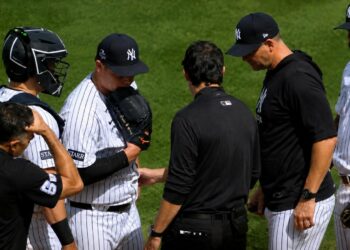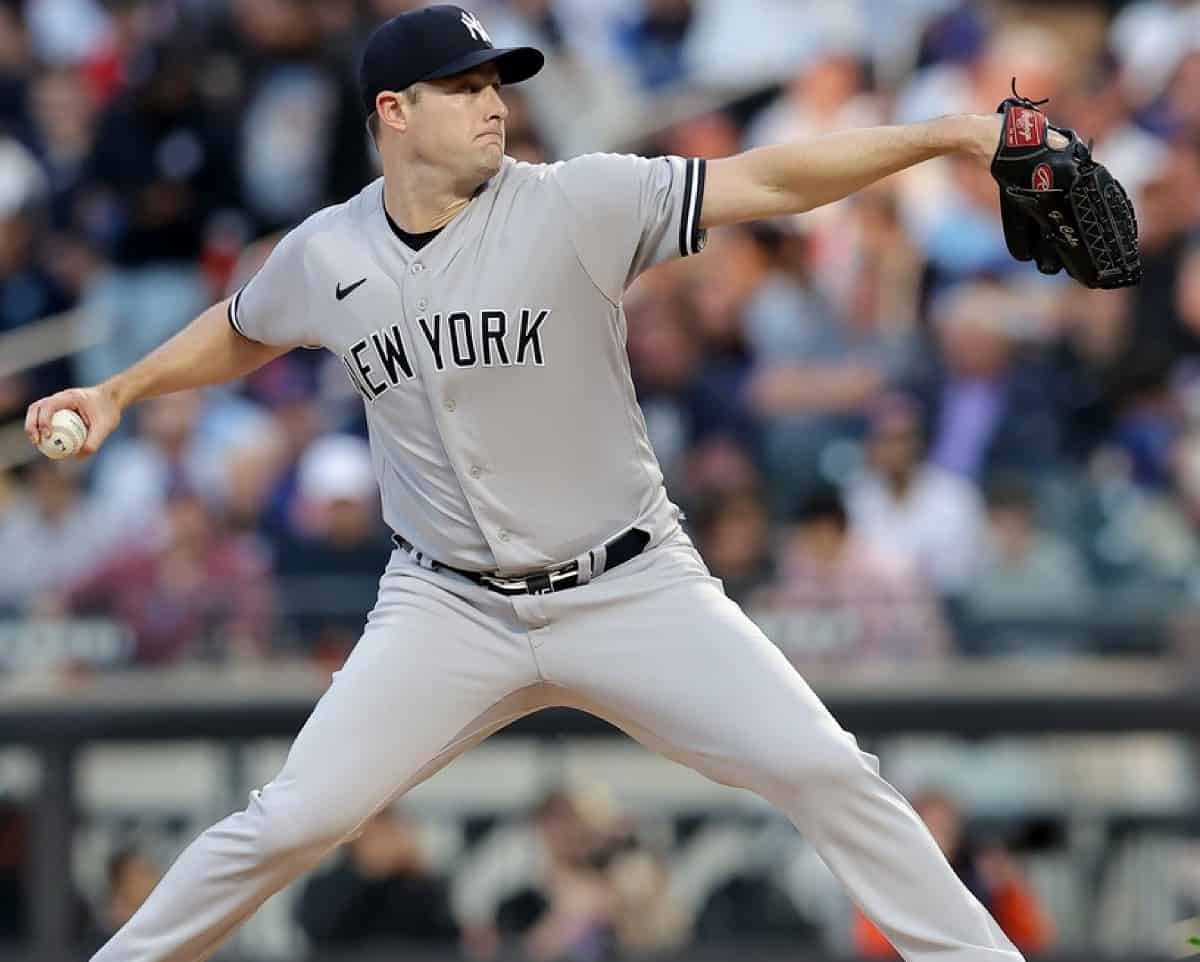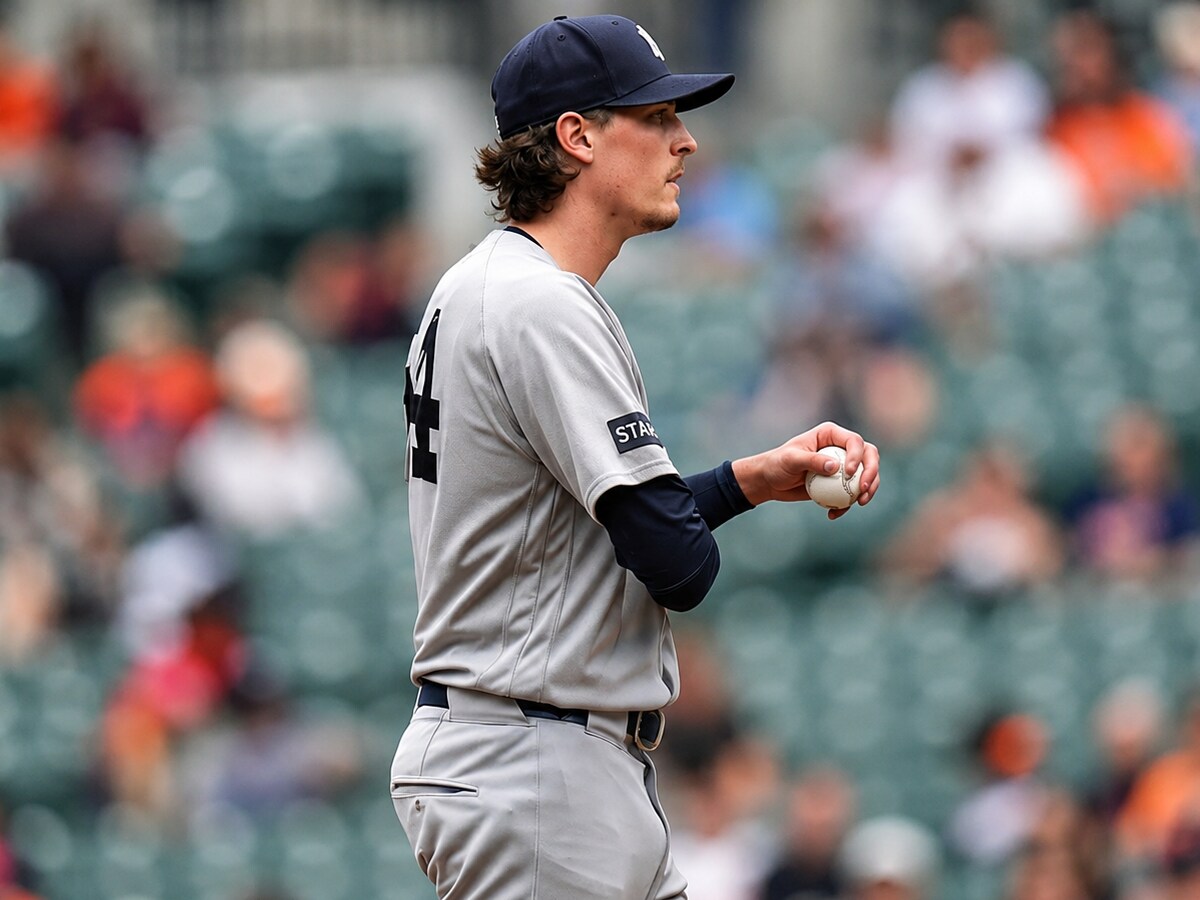
SAN DIEGO — Max Fried arrives at Petco Park with a pitching line that normally quiets concern.
The Yankees left-hander owns a 4-4 record, a 2.80 ERA and 83 strikeouts in 90 innings entering Friday’s series opener against the San Diego Padres. Yet the number carrying the most weight is 63, his pitch count from his first start back after a second injured-list stint for the same left elbow bone bruise.
Fried’s results have rarely been the problem. The uncertainty is whether the Yankees can safely stretch him into the workload they would need from a front-line starter in October. He missed more than two months after the first bone bruise surfaced in May, returned July 22, then landed back on the injured list in August after the elbow became irritated again.
The Yankees enter Friday at 80-60 after taking the final two games of their series against the Angels. Tampa Bay’s loss Thursday cut New York’s AL East deficit to three games, leaving the Yankees close enough to keep chasing the division while protecting their position atop the American League wild-card field.
Fried is central to both goals. In the five starts between his first return and the recurrence that sent him back out, he allowed five earned runs in 24 2/3 innings, a 1.82 ERA. The performance suggested ace-level effectiveness. The repeat elbow trouble showed why effectiveness alone does not answer the larger question.
His latest return came Aug. 29 against Boston at Yankee Stadium. Fried allowed one run over 3 2/3 innings in a 9-2 victory, throwing 63 pitches. The Yankees are now asking him to take another step against San Diego without treating one healthy night as proof that the elbow issue is behind him. For New York, another setback would compress the remaining calendar and complicate any attempt to prepare Fried for postseason-length starts.
Yankees build a safety net behind Fried
That caution is shaping one of the Yankees’ most unusual pitching plans of the stretch run. Aaron Boone said the club expects Will Warren to follow Fried on Friday, creating a piggyback setup that can keep Fried near the workload level of his first start back.
“We’ll have Max go Friday, [and] we’ll probably have Will go behind him,” Boone said. “We’ll probably keep Max in a similar spot. [Warren] could slide back in. We’ll see. We’ll see how it all shakes out.”
Boone did not describe Fried as ready for a standard six- or seven-inning assignment. Current reporting has the Yankees targeting roughly 65 to 70 pitches, close to the 63 he threw against Boston and more conservative than an 80-pitch estimate floated earlier in the week.
Warren provides a ready-made bridge because he is already stretched out as a starter. The arrangement can protect Fried and reduce the chance that an early exit forces Boone to empty the bullpen.
Warren’s role shows how carefully Yankees are handling Fried
Warren is coming off seven innings of one-run ball against the Red Sox, one of his strongest starts of the season. Moving him behind Fried is less about performance than roster geometry and injury management.
The Yankees currently have six starting options in the major league mix, including rookie Elmer Rodríguez. Boone has indicated that piggyback arrangements could appear again as New York navigates the September schedule and a doubleheader later in the month.
“We’ll probably have some piggyback scenarios coming up,” Boone said. “There [are] some iterations with dates and another double header coming at the end of the month.”
For Warren, the assignment could mean entering in the fourth or fifth inning rather than following a normal starter’s pregame routine. For the Yankees, the ability to protect Fried while keeping a multi-inning arm available carries more value.
Fried’s best stretch still ended with another IL trip
The most revealing part of Fried’s season is the gap between performance and availability.
After returning July 22 from his first elbow-related absence, Fried posted a 1.82 ERA over five starts. He averaged fewer than five innings per start during that stretch, then experienced renewed irritation after his Aug. 13 outing against Seattle. The Yankees placed him on the 15-day injured list retroactive to Aug. 14.
That history is why concern remains after the Boston return. Three-time All-Star and 2006 champ Adam Wainwright, who dealt with elbow problems during his pitching career, raised questions about the way Fried was finishing his pitches in that outing. The observation did not establish another setback, but it added another detail for the Yankees to monitor.
Fried’s four-seam fastball also averaged 93.8 mph against Boston, below his season average of about 95 mph. One start after an injured-list return is too small a sample to define a trend, but the Yankees have little reason to test the elbow aggressively while Warren can absorb innings.
Friday becomes a health test as much as a start
Fried is listed to face Padres right-hander Walker Buehler in Friday night’s opener at Petco Park. San Diego enters 73-67, while the Yankees are 80-60 and still chasing Tampa Bay.
The Yankees do not need Fried to throw 100 pitches. They need his command and stuff to hold as the workload rises, followed by a normal recovery that allows another increase next time.
The piggyback plan gives the Yankees a controlled way to learn whether Fried can move from protected starter to postseason workhorse without forcing the answer in one outing.
For a team with October ambitions, Friday’s most important result may come after Fried leaves the mound. If the elbow responds cleanly, the Yankees can keep building. If it does not, the cautious plan against San Diego will look less like luxury and more like warning.
What do you think? Leave your comment below.