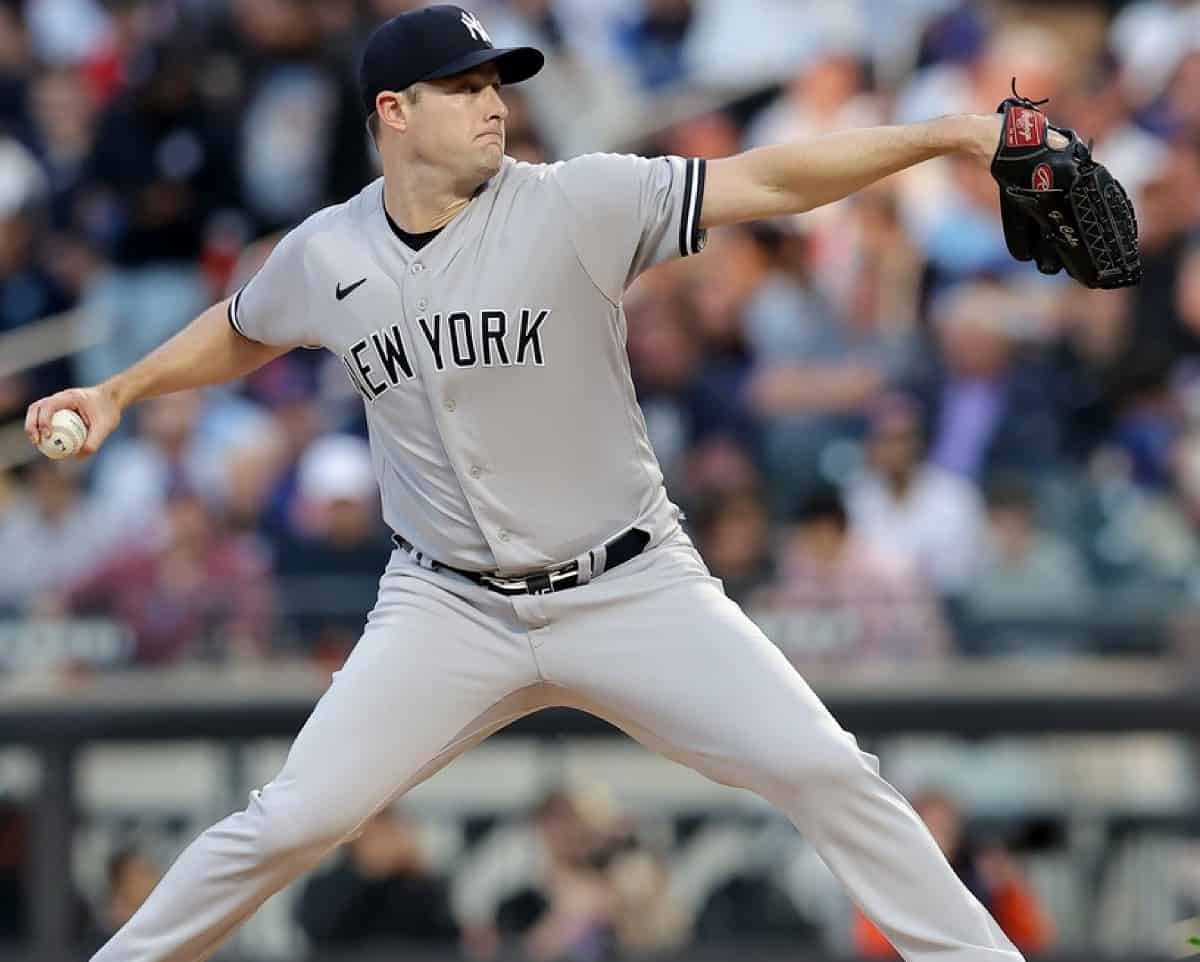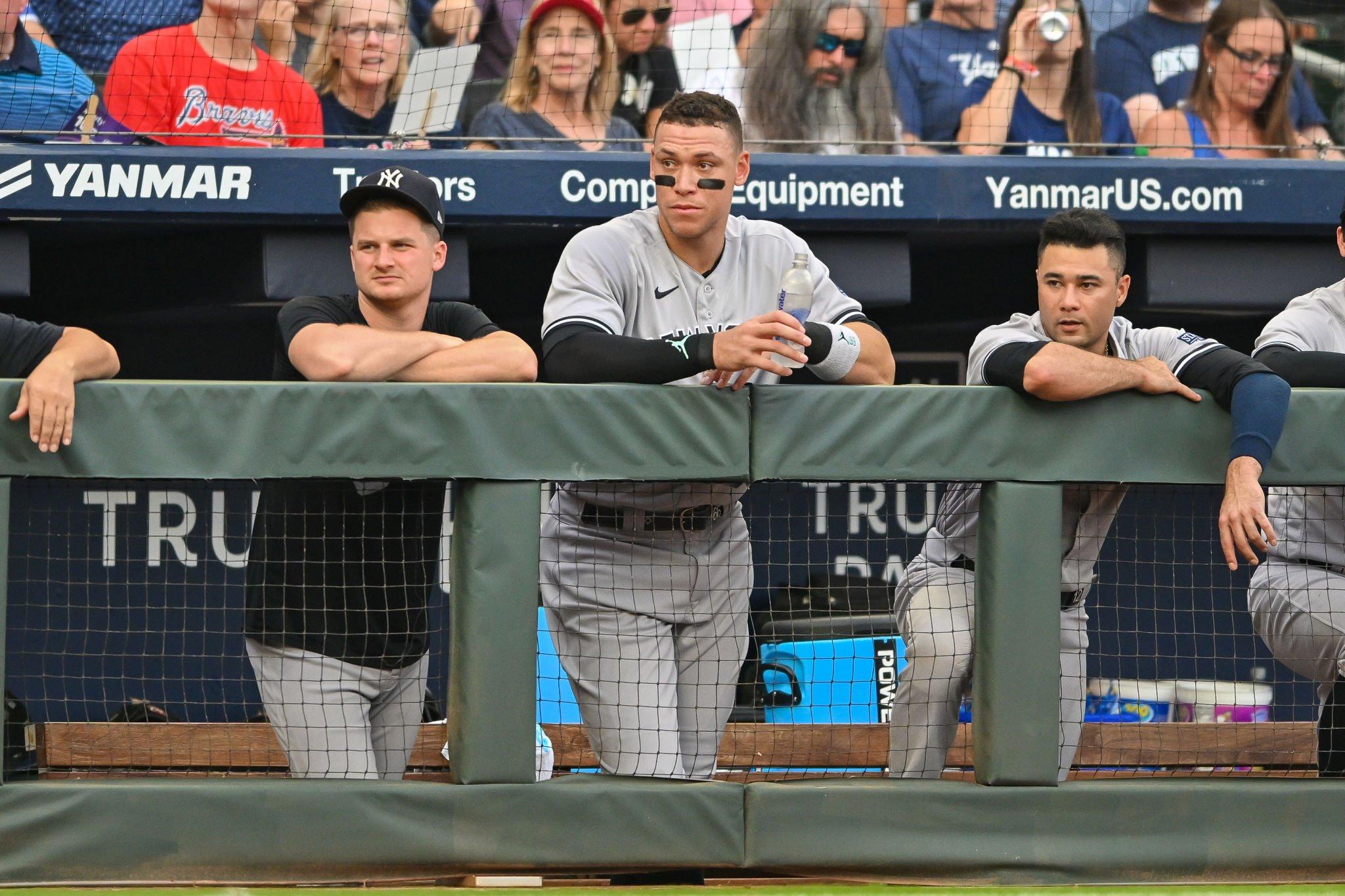
NEW YORK — The Yankees reached Sunday with a bullpen running on fumes, a season series hanging in the balance and their most unpredictable starter holding the ball. By the end of the afternoon, Yankee Stadium was standing for Will Warren.
New York’s 16-1 rout of the Boston Red Sox did more than settle a rivalry weekend. It gave the Yankees a 7-6 season-series edge, the head-to-head tiebreaker and a four-game cushion over Boston for the American League’s top wild-card spot. Warren supplied what the Yankees could not manufacture with another roster move: seven innings from a starter who kept the bullpen almost completely out of the game.
Warren allowed six hits, one run and one walk while striking out seven on 98 pitches, 67 for strikes. He survived a first inning in which two of Boston’s first three hitters reached, then retired 13 straight. Boston did not score until Nick Sogard’s RBI single in the eighth, after Warren had carried a shutout deep enough for Tim Hill to handle the final six outs.
The Yankees finally broke through against losing pitcher Ranger Suarez in the fifth. Paul Goldschmidt delivered a two-run single, then Heliot Ramos hit a three-run homer. Austin Wells later homered twice in a nine-run eighth, while Jazz Chisholm Jr. supplied a leaping defensive play behind Warren early.
For a Yankees pitching staff coming off eight games in seven days, that length mattered as much as the margin. Aaron Boone entered the finale unsure how the staff would cover another short start after Saturday’s doubleheader. Warren did more than stabilize the day. The way he attacked Boston also revealed a small arsenal change worth tracking into September.
Boone gets the length Yankees badly needed
Boone’s pregame concern explained why the outing carried extra weight. The Yankees had spent much of the weekend protecting a tired pitching staff, and their manager did not know how the finale would be covered if Warren exited early.
“Quite honestly,” Boone said, “going in [to the game], you’re like: I don’t know how we’re getting to the finish line today.”
Warren’s answer was to keep recording outs. He returned for the eighth and faced two more hitters before Tim Hill finished the inning. That workload kept the Yankees from using their high-leverage relievers in a game that eventually became a blowout.
Boone called it “probably his best performance of the year.” Warren said the depleted bullpen did not change his basic objective.
“I knew we were short [in the bullpen], but I think every week I just go out there and try to get as many outs as possible,” Warren said. “So that was my goal today was just – no matter what happens, just keep getting outs.”
Boston history makes the reversal stand out
The opponent made the performance even more striking. Warren’s major league game logs show that he entered Sunday with 20 career innings against Boston and 20 earned runs allowed, a 9.00 ERA. In his previous meeting with the Red Sox on June 26, he gave up five earned runs in 5 2/3 innings without a strikeout.
Sunday flipped that history. Warren allowed one run over seven innings, struck out seven and did not surrender a homer. He improved to 9-6 with a 4.23 ERA and reached 134 innings. The Yankees are 17-9 in his 26 starts.
That volume matters even if Warren is not guaranteed a spot in a shortened October rotation. He is already within 16 innings of 150, giving the Yankees dependable regular-season workload at a time when rotation health and bullpen usage remain central concerns.
New York also improved to 78-59 and finished Aug. 30 four games ahead of Boston at 74-63. MLB’s official standings put the Yankees in the first AL wild-card position, and the season-series victory secured the tiebreaker if the rivals finish even.
A two-pitch slider wrinkle hides in plain sight
Pitch Profiler’s postgame chart separated two of Warren’s 98 pitches as sliders, distinct from the 19 sweepers that formed his primary breaking-ball look. The service described the harder shape as a new gyro-slider wrinkle.
The classification is important because public pitch feeds can disagree when a pitcher changes the shape of an existing breaker. Some data grouped Warren’s breaking pitches as 21 sweepers. Pitch Profiler instead logged 19 sweepers and two sliders, along with 40 four-seamers, 16 sinkers, 16 changeups and five curveballs.
The attached data also shows a real shape difference. Warren’s sweeper averaged 84.0 mph with 19.6 inches of horizontal movement. The two sliders averaged 87.3 mph with 3.5 inches of horizontal movement. That creates a 3.3 mph velocity gap and a 16.1-inch horizontal separation inside the same broad breaking-ball family.
Pitch Profiler graded the slider at 112 on its Stuff+ scale, where 100 is major league average. The sample is only two pitches, so the Yankees cannot call it a finished weapon yet. But a tighter breaker gives hitters another decision when Warren’s sweeper is already moving nearly 20 inches horizontally.
A standing ovation changes noise around Warren
Warren’s 4.23 ERA and 1.40 WHIP still reflect an uneven season, which is why his postseason role remains unsettled. Sunday showed the value on the other side of that inconsistency.
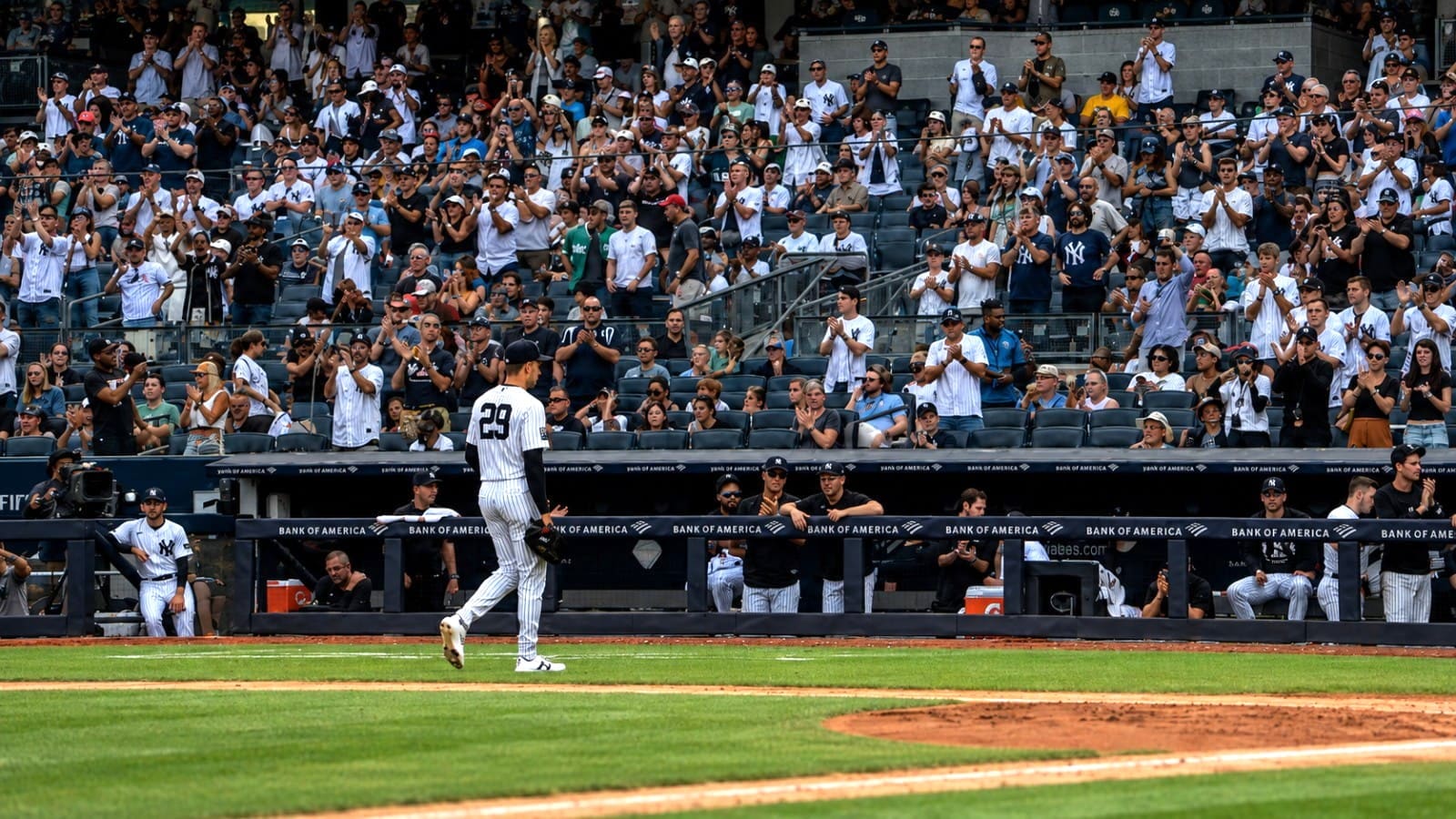
He left to a standing ovation at Yankee Stadium after taking a shutout into the eighth against a direct postseason rival and saving a tired Yankees bullpen from another extended afternoon.
The slider shape needs a larger sample before the Yankees know whether it becomes a meaningful part of his mix. Two pitches do not establish a trend. The 3.3 mph and 16.1-inch separation from his sweeper, however, gives the Yankees something concrete to monitor as Warren tries to make his best version more repeatable.
What do you think? Leave your comment below.