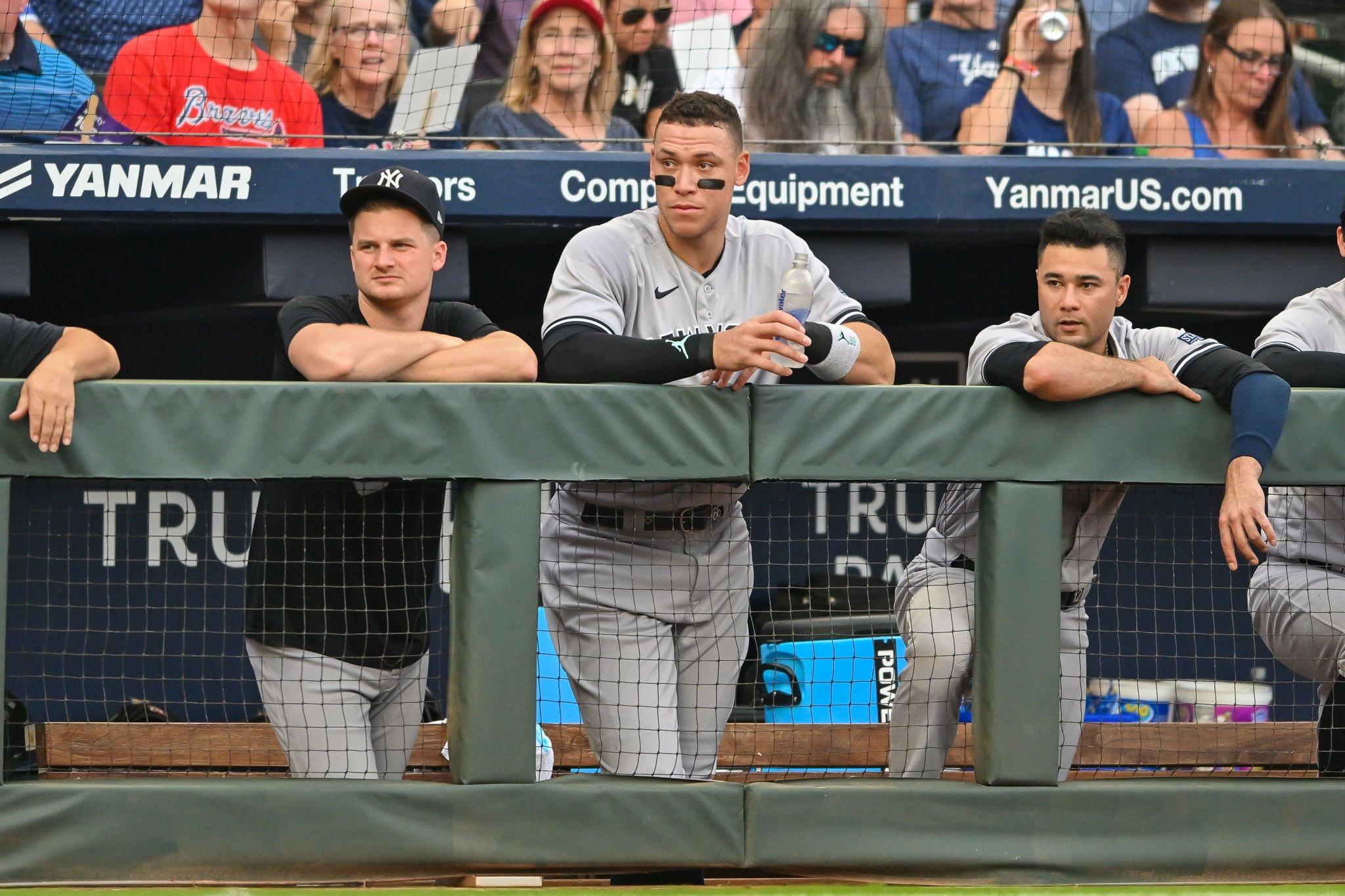
NEW YORK — A pitcher can lose a playoff game without setting off a larger conversation about his clubhouse. The Yankees’ second loss to Tampa Bay carried both consequences.
Cam Schlittler had been one of New York’s most dependable performers all season. His assignment in Game 2 of the American League Division Series was to pull the Yankees even after an opening loss. Instead, Tampa Bay won 5-2, taking a two-game lead and pushing New York to the brink of elimination.
Four errors, including three in the first inning, exposed the defense. The offense generated only two runs. Schlittler lasted 4 1/3 innings and was charged with four runs, two earned. New York needed its ace to rescue the series, but the entire performance raised uncomfortable questions about the preparation and execution surrounding him.
Those questions did not disappear with the final out. Tampa Bay completed a three-game sweep Oct. 7, sending the Yankees into another offseason without a championship. The club’s collapse came after a two-game Wild Card Series sweep of Boston in which New York had outscored the Red Sox 18-2.
With the Yankees now preparing for 2027, a brief comment from the aftermath of Game 2 has drawn attention from the top of the organization.
Steinbrenner seeks explanation of postgame remarks
At his Oct. 21 end-of-season Zoom session, owner Hal Steinbrenner said he wanted to talk to Schlittler about the pitcher’s assessment of the Yankees’ Game 2 showing. Steinbrenner also wanted to speak with team captain Aaron Judge as he sought a clearer understanding of what Schlittler meant.
Steinbrenner did not announce discipline. He said the remark concerned him, but he wanted to understand the pitcher’s meaning before reaching a judgment.
Steinbrenner explained why he wanted to hear from the right-hander directly.
“Cam is a hardcore competitor. It’s one of the things we love about him,” Steinbrenner said.
The owner said his concern remained unresolved pending that discussion.
“Of course it’s concerning. And because it’s been brought up, we’re gonna look into it, but I got to find out why, what he means, what made him feel that way. I can’t sit here and answer it right now on that,” Steinbrenner said.
Schlittler had been blunt immediately after the Yankees stumbled against the Rays.
“It didn’t seem like we really showed up today,” Schlittler said. “So that’s what happens. They played really good baseball and took advantage of those opportunities.”
Asked how a team could fail to show up for a postseason game, the right-hander narrowed the meaning of his criticism.
“The team showed up today, obviously,” Schlittler said. “I mean, these guys worked their asses off all year to get to a position like today.”
He added that the Yankees had not played their usual brand of baseball, a distinction between effort and execution that matters when interpreting his first remark.
Pitcher also took responsibility for his outing
Schlittler did not leave his criticism aimed only at teammates. He later placed the disappointment on himself, explicitly declining to blame the offense or defense.
“I’m not disappointed in our defense. I’m not disappointed in the offense. I’m really just disappointed in myself,” Schlittler said.
Cashman cautioned against treating Schlittler’s frustration as evidence that teammates did not care or prepare. He said he did not view selfishness as the explanation for the postseason defeat.
“I don’t think we had somebody selfish in there that took away from what we were trying to accomplish,” Cashman said.
The clarification matters: Schlittler’s initial criticism raised questions about preparation, while his subsequent comments pointed to execution and his own performance.
It also leaves a legitimate baseball question. New York made four errors in a game started by its leading pitcher. The mistakes turned opportunities for outs into extended trouble. Even without assigning motives or questioning effort, the difference between preparedness and performance deserves attention.
Schlittler’s regular season had given his assessment added weight. He finished 2026 with a 1.95 ERA, a 31% strikeout rate and 6.2 wins above replacement by FanGraphs’ measure. Those results made him a central figure in the Yankees’ rotation, not a marginal voice speaking from the clubhouse.
The numbers distinguish effort from execution
The Yankees’ five-game postseason run presented an extreme offensive reversal. Against Boston, New York scored 18 runs in two games. Against Tampa Bay, it managed five runs and went 12-for-92 in three contests, with 31 strikeouts.
That works out to more than seven runs fewer per game against the Rays than against the Red Sox, a striking change across consecutive series. It does not establish that the hitters lacked effort. It does demonstrate why comments about failing to play the team’s usual baseball resonated.
Steinbrenner also criticized the lineup’s production while backing Aaron Boone. Cashman is expected to continue leading baseball operations. The owner’s interest in Schlittler’s words therefore comes amid a broader review of who bears responsibility for the ALDS elimination.
Schlittler publicly supported Boone after the playoff exit, saying that the manager had the trust of his players and that responsibility ultimately belonged to them. That stance complicates any attempt to frame the pitcher’s Game 2 reaction as an attack on the manager or the organization.
The immediate question is narrower. Steinbrenner has said he wants to hear what Schlittler intended by the remark. No completed conversation or resulting action had been publicly confirmed as of Oct. 22.
What do you think? Leave your comment below.