NEW YORK — The Yankees entered the final weekend of the regular season with a Wild Card matchup against Boston set and one pitching problem that had not gone away.
New York’s rotation has enough established arms to cover a best-of-three series. The bullpen is a different matter. Clarke Schmidt is back on the injured list with right biceps neuritis and is not expected to be available for the Wild Card round. Fernando Cruz‘s season is over after he was transferred to the 60-day injured list, while Ryan Weathers remained only a possibility as he worked back from a left forearm flexor strain.
That uncertainty made Friday’s doubleheader against Baltimore more than a final-week tuneup. The Yankees lost the opener 10-2 before answering with a 6-3 victory in the nightcap at Yankee Stadium. Boston’s win earlier in the day locked the Red Sox into the No. 5 seed and confirmed a second straight Yankees-Red Sox Wild Card Series.
The format magnifies every pitching decision. In a three-game series, Aaron Boone cannot comfortably concede a middle inning if a starter exits early. A manager may need several relievers to cover six innings, and one bad matchup can become the season’s final mistake. The Yankees therefore needed something beyond another conventional one-inning arm.
The rotation itself created an opening. Cam Schlittler, Max Fried, Gerrit Cole and Carlos Rodon give New York more starting options than it can use in the Wild Card round. That meant one starter could be repurposed, but the Yankees still needed proof that the move could work under postseason conditions.
The ideal answer would be a pitcher capable of missing bats, handling hitters from both sides and covering multiple innings without forcing Boone to burn through the bullpen. It would also give the Yankees protection if a starter falters before the game reaches the late-inning relievers.
Warren’s final audition looked built for October
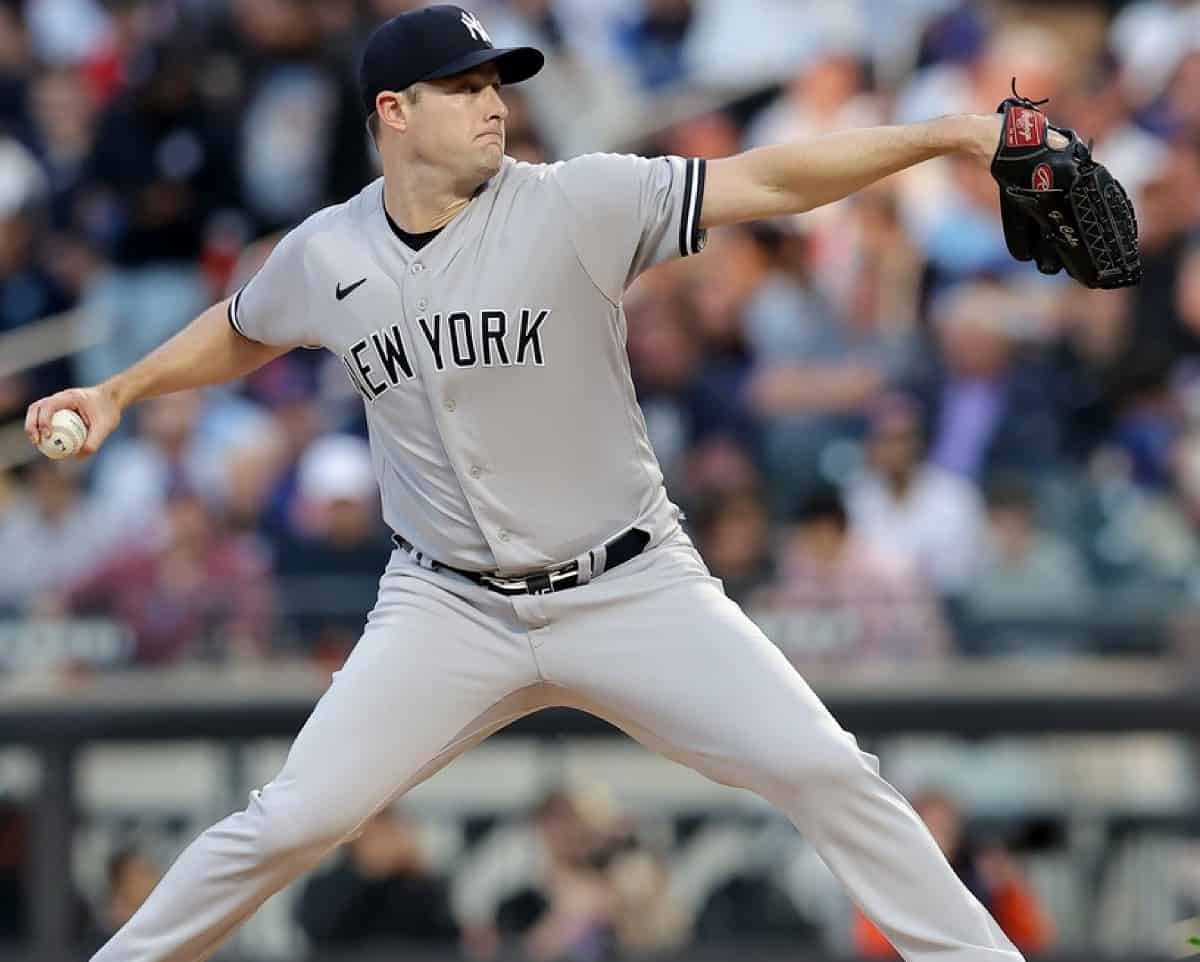
That answer may be Will Warren.
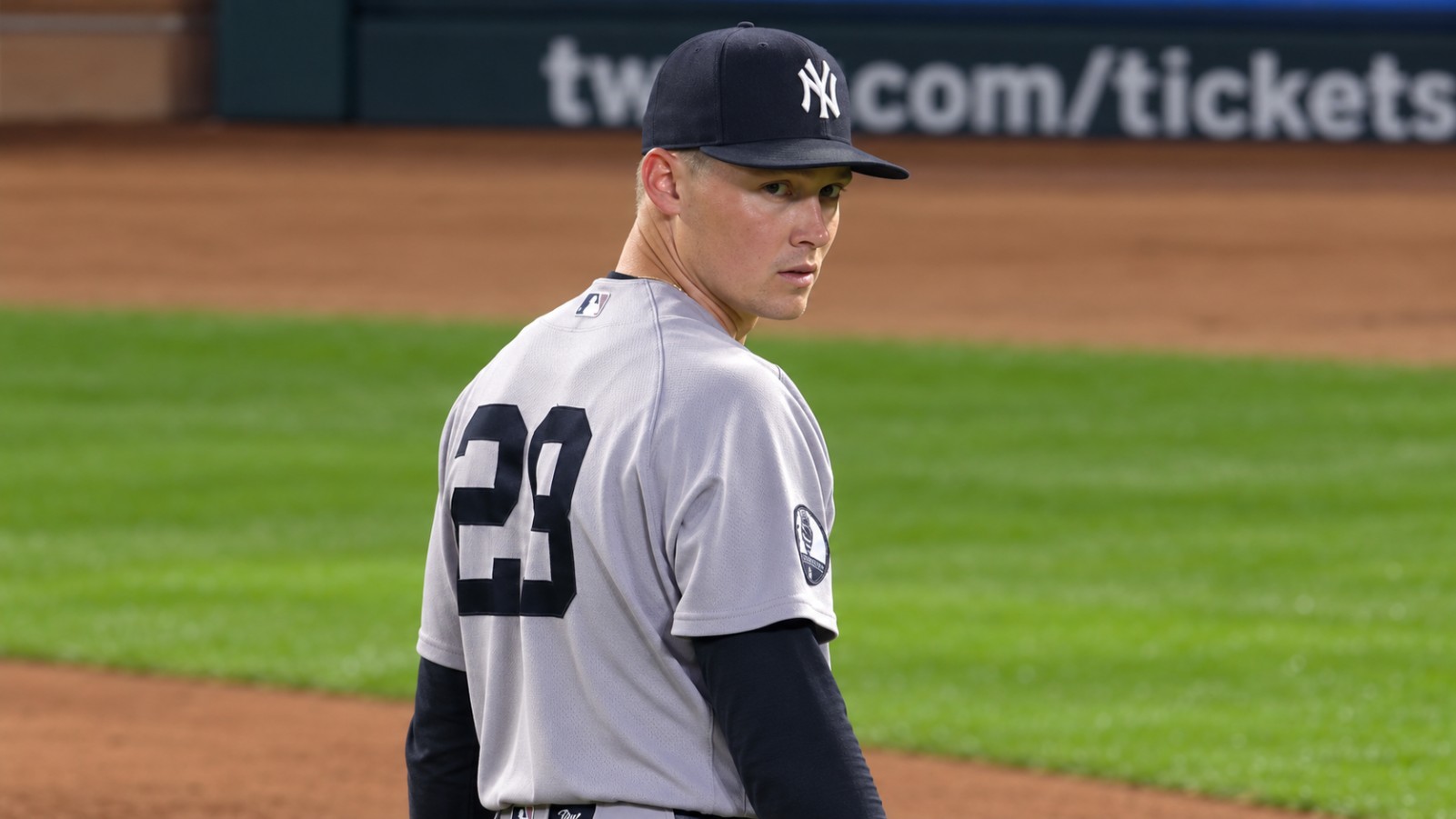
Warren entered Friday’s nightcap in relief and delivered 3 2/3 scoreless innings, allowing three hits with no walks and seven strikeouts. He generated 13 whiffs and threw 54 pitches, earning the win as the Yankees finished the doubleheader with a 6-3 victory.
His four-seam fastball averaged 94.5 mph, according to MLB Statcast data, up 0.8 mph from his season average. The shorter assignment allowed Warren to lean harder on a condensed mix while still attacking hitters from both sides.
Boone made clear afterward that the Yankees were viewing the outing through an October lens.
“He can be big for us moving forward in the postseason, and in different roles,” Boone said.
Warren also sounded more comfortable with the unusual routine after working out of the bullpen earlier this season.
“It’s obviously something new, so I want to get used to it,” Warren said. “In San Diego, I ran in and was a little bit gassed. We wanted to repeat that and just get our feet wet. I felt good, a little less blackout this time.”
The hidden number behind Warren’s role change
The quality of the misses was more revealing.
Warren induced 13 misses on 28 swings, a 46.4% whiff rate. Seven of his 11 outs came via strikeout, so nearly two-thirds of his outs required no defensive play. That profile becomes valuable in October, when one misplay or soft single can change a game.
Warren finished 11-6 with a 3.92 ERA, 158 strikeouts and 54 walks over 156 innings. He made 29 starts in 32 appearances. The Yankees are shortening the assignment for a pitcher who already handled a full rotation workload.
The pitch-quality analysis supplied with the report points to another reason. Warren’s Stuff+ was cited at 102 as a starter and 113 in relief. Opponents slugged .558 the third time through the order, compared with .406 the first time. A shorter role can remove the part of games in which his stuff has tended to fade.
Across his three relief appearances, the supplied analysis tracked Warren for 6 2/3 scoreless innings, a 30% strikeout rate and 56% ground-ball rate. The sample is tiny, but the shape of the role is clear.
The 13 whiffs were not merely a good total. The supplied pitch analysis calculated a 22% swinging-strike rate, Warren’s best mark in any 2026 outing and the second-best single-outing rate of his career. That is the kind of change the Yankees were looking for when they compressed his workload.
The misses came from several shapes. The pitch breakdown credited four whiffs to the four-seam fastball, five to the sweeper and two to the changeup, with his curveball and slider also capable of producing misses. The four-seamer played up in velocity, while the sweeper, changeup and sinker showed more movement in the shorter assignment.
The times-through-the-order split sharpens the case. Opponents slugged .406 the first time through against Warren and .426 the second time, then jumped to .558 the third time. His strikeout-minus-walk rate fell from 20.3% the first time through to 5.7% the third time through.
Boston has already seen Warren at his best
The matchup makes it more relevant.
On Aug. 30, Warren held Boston to one run on six hits over seven-plus innings in a 16-1 Yankees win at Yankee Stadium. He struck out seven and walked one as New York clinched the season series against the Red Sox.
Now Boston could see him from a different angle.
Instead of preparing for Warren from the first inning, the Red Sox could face him after Schlittler, Fried, Cole or Rodon. His length would give Boone a quicker hook if a starter struggles and could bridge several innings without requiring multiple middle-relief moves.
That is what separates Warren from a standard postseason bullpen addition. He can potentially rescue a game that starts to unravel in the third or fourth inning, or protect a lead until the Yankees reach their preferred late-game arms.
Yankees’ rotation surplus may have solved another problem
Warren’s relief sample remains small, and his longer outings have not always been clean.
But his strongest relief appearance came four days before Game 1 against Boston, with the New York Yankees actively sorting through a bullpen thinned by injuries.
The Yankees have not announced their Game 1 starter, but Warren is slated for relief work. His regular-season line says starter. His latest audition gave New York a different possibility just before October begins.
What do you think? Leave your comment below.