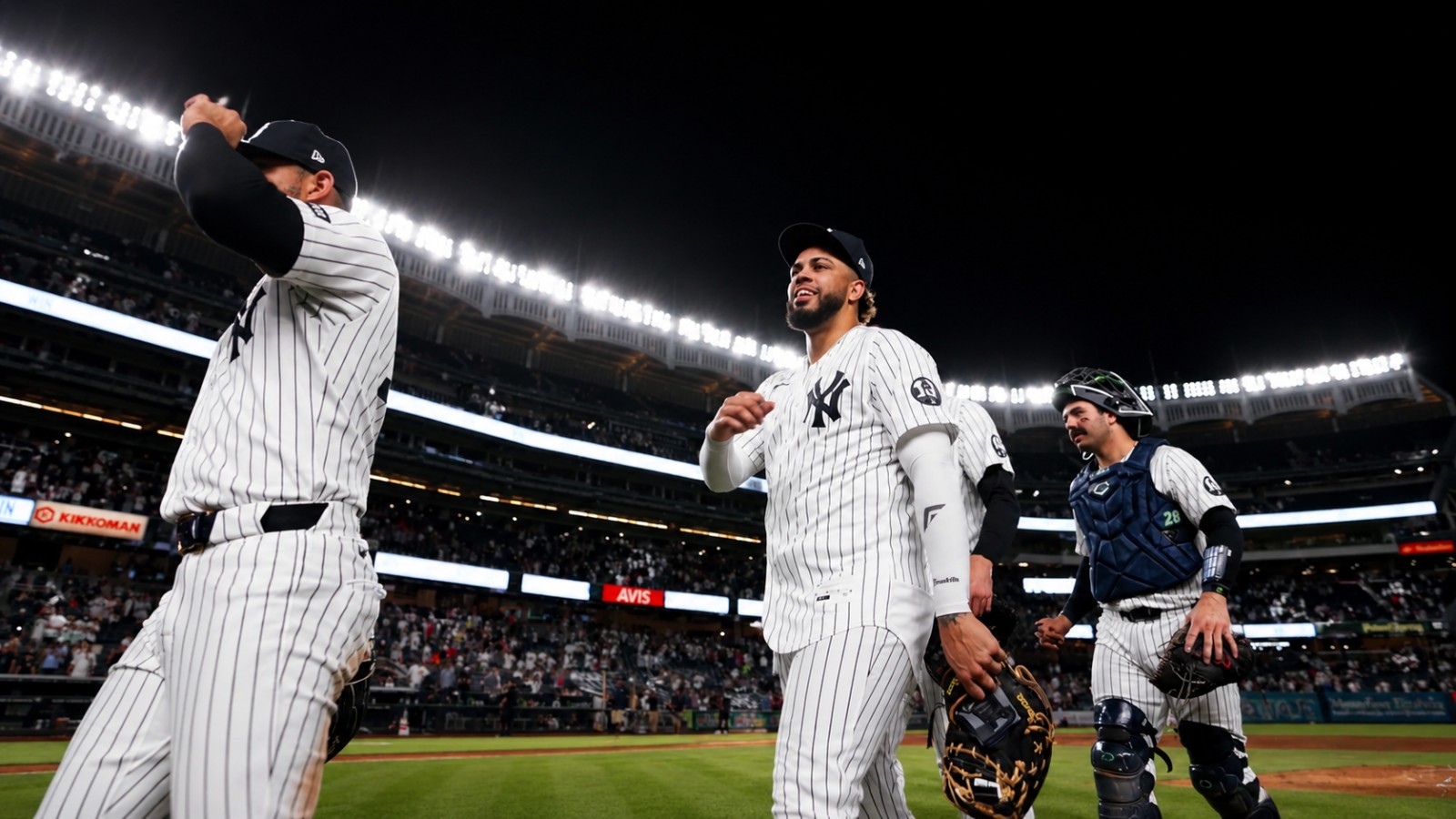
NEW YORK — The Yankees enter the offseason with two productive left-handed bats, one crowded corner of the infield and a decision that extends well beyond filling out a lineup card.
Ben Rice has established himself as a major part of the offense. Luis García Jr., acquired from Washington during the summer, gave New York another proven power threat when the club needed run production. Both have a case for regular playing time in 2027.
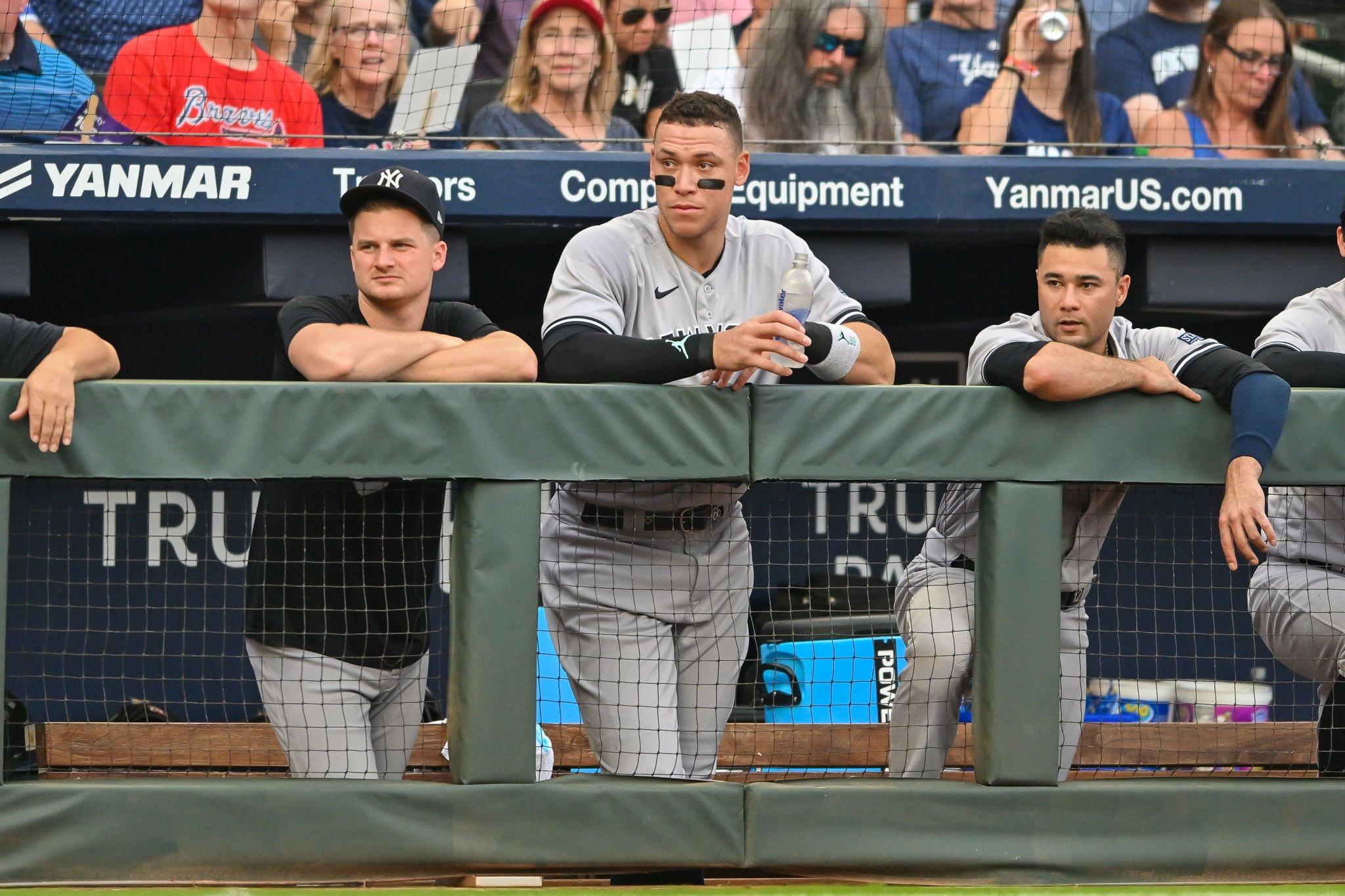
The difficulty comes on defense. First base offers a natural assignment for each hitter, but manager Aaron Boone also has a designated hitter to accommodate. Giancarlo Stanton remains under contract, and Aaron Judge could require occasional time away from the outfield without leaving the batting order.
That leaves second base as an inviting answer on paper, especially with Jazz Chisholm Jr.’s free agency creating uncertainty. García spent much of his Washington career at the position before moving to first, but the Yankees have not established that he can again handle the demands of the middle infield.
García’s offensive breakthrough makes the choice consequential. He finished the 2026 regular season batting .277 with 30 home runs, 92 RBIs and an .830 OPS. Rice hit .264 with 41 homers, 97 RBIs and an .897 OPS. Their combined 71 home runs underline why the club would want both in the lineup.
Yet keeping every bat can require a compromise elsewhere. The Yankees must decide whether an infield arrangement that maximizes offense would also withstand the defensive tests that exposed New York during its October elimination by Tampa Bay.
Yankees get a stern warning
That tension has prompted a direct warning from baseball columnist Joel Sherman, who argued on an episode of “The Show” that the Yankees should explore trading García rather than penciling him in at second base.
Sherman acknowledged García’s improvement at the plate but questioned the defensive consequences of placing García next to Rice in the same infield.
“I know the Yankees want the bats, but this idea that Luis Garcia Jr. is going to go play second base, like Washington knows him best, and to come off the second base, put him on first base, and suddenly his offense blossomed,” Sherman said. “If I were the Yankees, I would be trying very hard to trade Luis Garcia Jr., not because he’s a bad player. I think it’s quite the opposite.”
“I think the offense is real. You have Ben Rice. I don’t think they’re just eating Stanton’s money,” he added.
He argued that the Yankees could not ignore the range demands of first and second base simply because the proposed alignment preserves two hitters.
“I don’t think Luis Garcia ever fit the Yankees,” Sherman said. “I don’t think Luis Garcia ever fit the Yankees. I mean, when they traded for him, they did it because they desperately needed offense.”
Sherman also described García as an asset whose value might make a deal feasible.
“I think he’s a valuable trade piece. That’s the way I look at him, yes,” he explained. “He doesn’t look like a second baseman. I mean— No, he’s going to have to sit down to go play.”
Boone leaves positional flexibility on the table
Boone has spoken more cautiously about García’s potential to return to an earlier infield role, without committing to a specific position. His remarks leave open the possibility of a spring training experiment rather than a completed defensive plan.
“Obviously, an infielder in his [Garcia Jr.’s] past, and feel like that could even be in play, you know, moving forward in coming years,” Boone said.
García spent years as a second baseman with Washington before his move across the diamond in 2026. His change to first coincided with the most powerful season of his career, but the hitting improvement alone does not establish that the position change caused it.
New York also has firsthand evidence of how costly poor execution can be. Four defensive errors in Game 2 of the American League Division Series against the Rays contributed to a postseason collapse that intensified scrutiny of the club’s fundamentals.
The offensive math creates an unusual roster problem
The Yankees acquired García from the Nationals on Aug. 2 in exchange for four right-handed pitchers: Jake Bird, Yovanny Cruz, Jack Cebert and Ben Grable. García had 23 homers at the time and remains under team control through 2027.
That acquisition cost gives New York Yankees another factor to weigh. Trading García now would convert a recent investment into new assets, while keeping him would preserve the bat the Yankees sought at the deadline.
The postseason offered different reminders of the two hitters’ value. García homered during the Wild Card Series against Boston. Rice hit four postseason home runs and drove in nine runs across five games, reinforcing his standing as a central offensive piece.
The numbers make this more than a choice between two first basemen. Rice’s .363 on-base percentage exceeded García’s .309 mark by 54 points. Rice also out-homered García by 11, although each provided meaningful middle-order power. Moving Rice from first base simply to accommodate García would have implications for the entire lineup.
For now, the Yankees have not announced a García trade or a permanent second-base move. Sherman’s recommendation sharpens the question facing Boone and general manager Brian Cashman: whether García’s strongest value to the 2027 club comes from his bat in the lineup or the return he could generate in a trade.
What do you think? Leave your comment below.