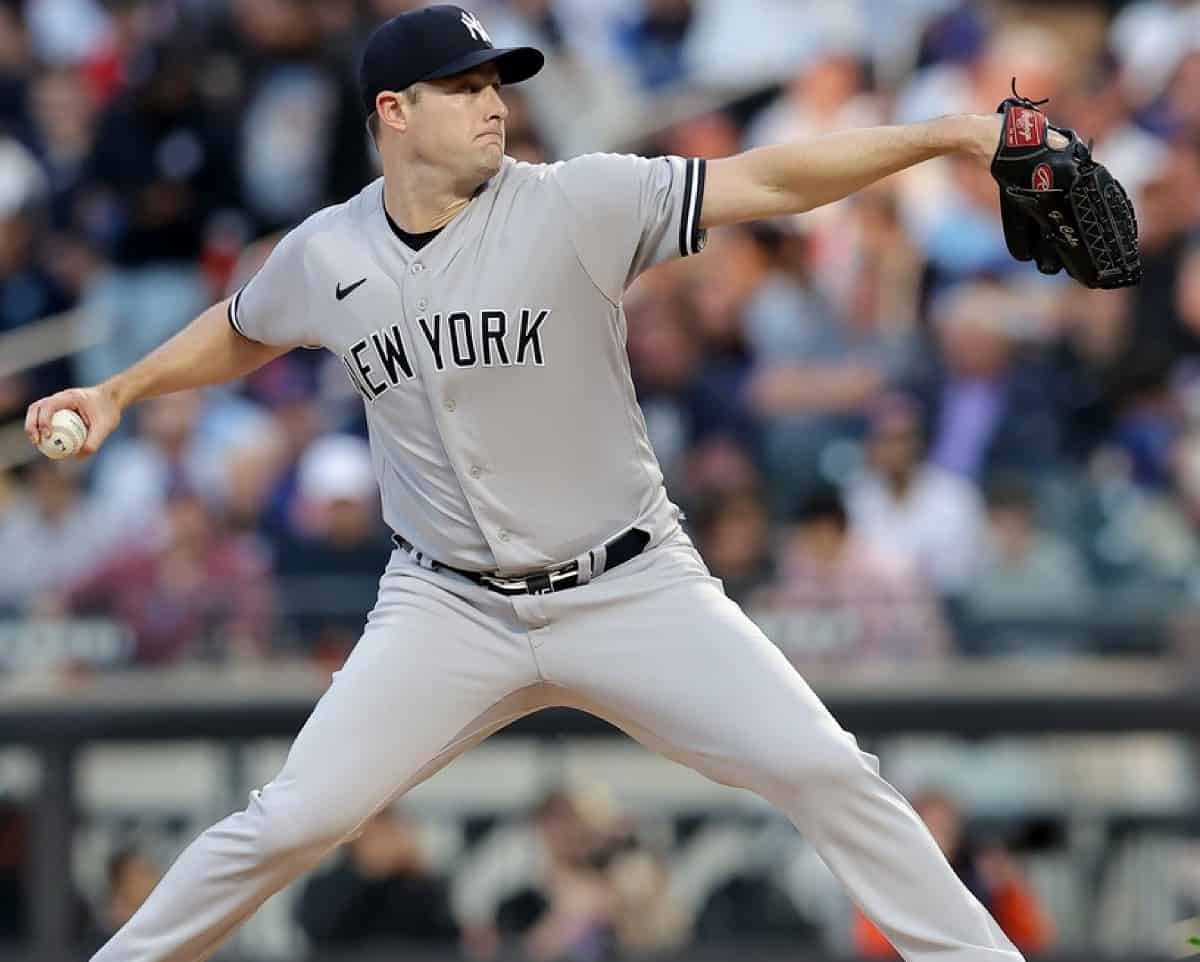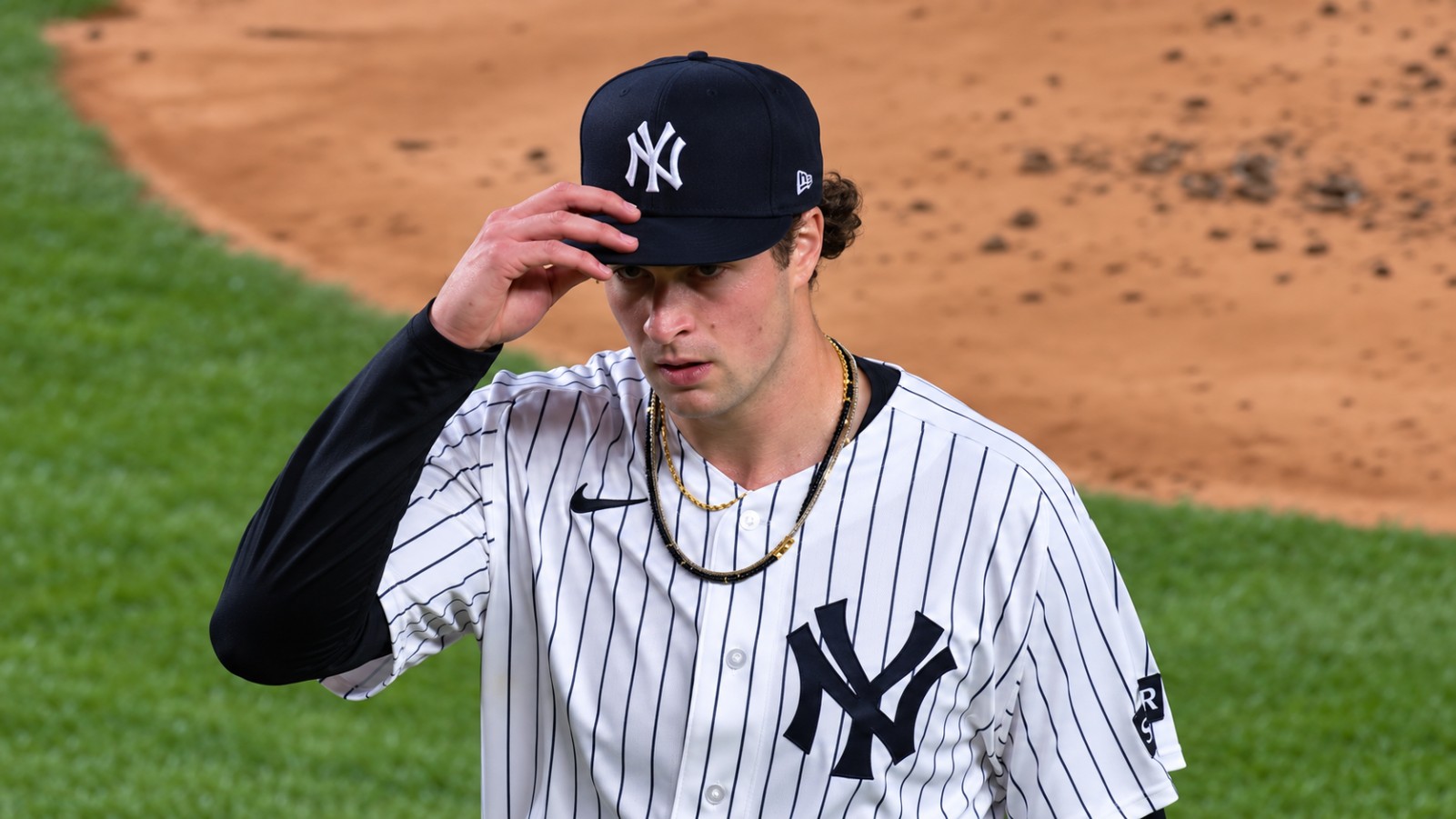
NEW YORK — Cam Schlittler ended Boston’s 2025 postseason with eight scoreless innings, five singles allowed, no walks and 12 strikeouts. Now Yankees manager Aaron Boone has arranged for the Red Sox to relive that October memory the moment their 2026 season resumes, handing Schlittler the ball in Wild Card Game 1.
Boone is not saving his most favorable recent Boston matchup for later. He is putting Schlittler on the mound from the opening pitch of the rematch and asking the Red Sox to solve a pitcher who has repeatedly controlled them.
The choice carries more than one night’s stakes. It shows how New York now weighs current production against reputation, how aggressively Boone intends to attack a short series, and how much the pitching hopes has shifted around Gerrit Cole.
Boone avoids second guessing
Schlittler gave Boone the strongest statistical case. The 25-year-old finished 14-6 with an American League-best 1.95 ERA, a 0.92 WHIP and 239 strikeouts over a career-high 193 2/3 innings, and he went 2-1 with a 0.74 ERA in four starts against Boston.
Boone still had defensible alternatives. Max Fried finished with a 2.80 ERA despite two injured-list stints and entered the postseason with additional rest, while Cole brought years of October experience and a 2.77 career postseason ERA. The Yankees did not have an obviously bad Game 1 option.
Starting Schlittler, though, removes one of the easiest second-guesses available if New York loses the opener. Boone cannot be accused of keeping his best 2026 starter on the sideline while the Yankees fall behind in a series where two losses end the season.
There was a legitimate argument for waiting. Schlittler worked more innings than ever before, finishing roughly 40 above his previous professional high, made several late-season starts on regular rest and was limited to three innings and 70 pitches in his final regular-season outing.
The Yankees had also debated whether Schlittler carried more value in Game 1 or Game 2, where his start could either end the series or keep New York alive. Giving him another day could have eased the workload concerns. Boone instead decided the greater risk was waiting.
Boone turns performance into the Yankees’ postseason order
Boone made the rotation official Sunday. Schlittler starts Game 1 against Boston on Tuesday at Yankee Stadium. Fried follows in Game 2. Cole pitches only if the series reaches a deciding Game 3. That order creates a clear Yankees hierarchy for the Wild Card round: Schlittler first, Fried second, Cole third.
Boone framed the decision around what Schlittler earned during the regular season rather than what the rotation might have looked like entering spring training.
“Cam’s going to win the Cy Young Award and has been the best pitcher in the league,” Boone said.
The Yankees could have leaned on Cole’s name, contract and postseason history, or used Fried’s extra rest to justify the opener. Instead, Boone gave Game 1 to the pitcher who produced the strongest 2026 season. That matters because it establishes how New York is making October decisions. Reputation remains important, but it no longer automatically determines who gets the first ball.
Game 1 choice preserves another Yankees advantage
The less obvious benefit of Boone’s decision is what starting Schlittler on Tuesday does not cost the Yankees. If New York eliminates Boston, Schlittler can still line up for Game 2 of the AL Division Series against Tampa Bay, then return for a potential Game 5 on regular rest.
That changes the calculation. Boone can use his best 2026 starter immediately without sacrificing the possibility of two Schlittler starts in the next round. Saving him for Wednesday carried a different danger, because if Boston won the first two games, the Yankees’ season could end without Schlittler appearing at all. Starting him Tuesday eliminates that risk.
The decision also reshapes Fried’s assignment. If Schlittler wins Game 1, Fried takes the mound Wednesday with a chance to end Boston’s season. If Schlittler loses, Fried must keep the Yankees alive. Either way, Boone has moved Fried from potential tone-setter into a start almost guaranteed to carry clinching or elimination-level pressure.
Cole’s October resume now sits behind 2026 results
For most of Cole’s Yankees tenure, postseason rotation debates began after his name. When healthy, the former Cy Young Award winner carried the status and track record of a pitcher expected to handle the biggest assignment. This season changed that order.
Cole returned from Tommy John surgery in May and threw 127 innings, finishing 10-9 with a 3.61 ERA and 131 strikeouts across 22 starts. His October resume still carries weight, a 2.77 ERA over 133 1/3 postseason innings and starts in some of the Yankees’ most important playoff games. But 2026 gave Boone different evidence.
Schlittler led the AL with a 1.95 ERA. Fried finished at 2.80 despite his two IL stints. Cole finished at 3.61. The matchup with Boston widens the contrast further. Cole owns a 5.30 regular-season ERA in 20 career starts against the Red Sox, while Schlittler allowed only two earned runs over 24 1/3 innings against Boston this season and held hitters to a .174 average.
None of that makes Cole an afterthought or signals a permanent demotion. It shows that the Yankees are separating past status from present performance. Cole remains trusted enough to handle a possible winner-take-all Game 3, but he no longer receives the opening assignment simply because of what he has done before.
Boston gives Boone little reason to hide Schlittler
Boston has already seen enough of Schlittler to understand what it is facing. The Red Sox faced him four times this season and produced little improvement, as he struck out 27 batters over 24 1/3 innings while posting a 0.74 ERA and holding hitters to a .174 average.
His previous postseason meeting with them was even more decisive. Schlittler threw eight scoreless innings, allowed five singles, walked nobody and struck out 12 in the Yankees’ 4-0 Game 3 victory that eliminated Boston last October. The Yankees are not asking him to prove he can handle this opponent or this stage for the first time. They are asking him to repeat something he has already done, now backed by an even stronger regular-season resume.
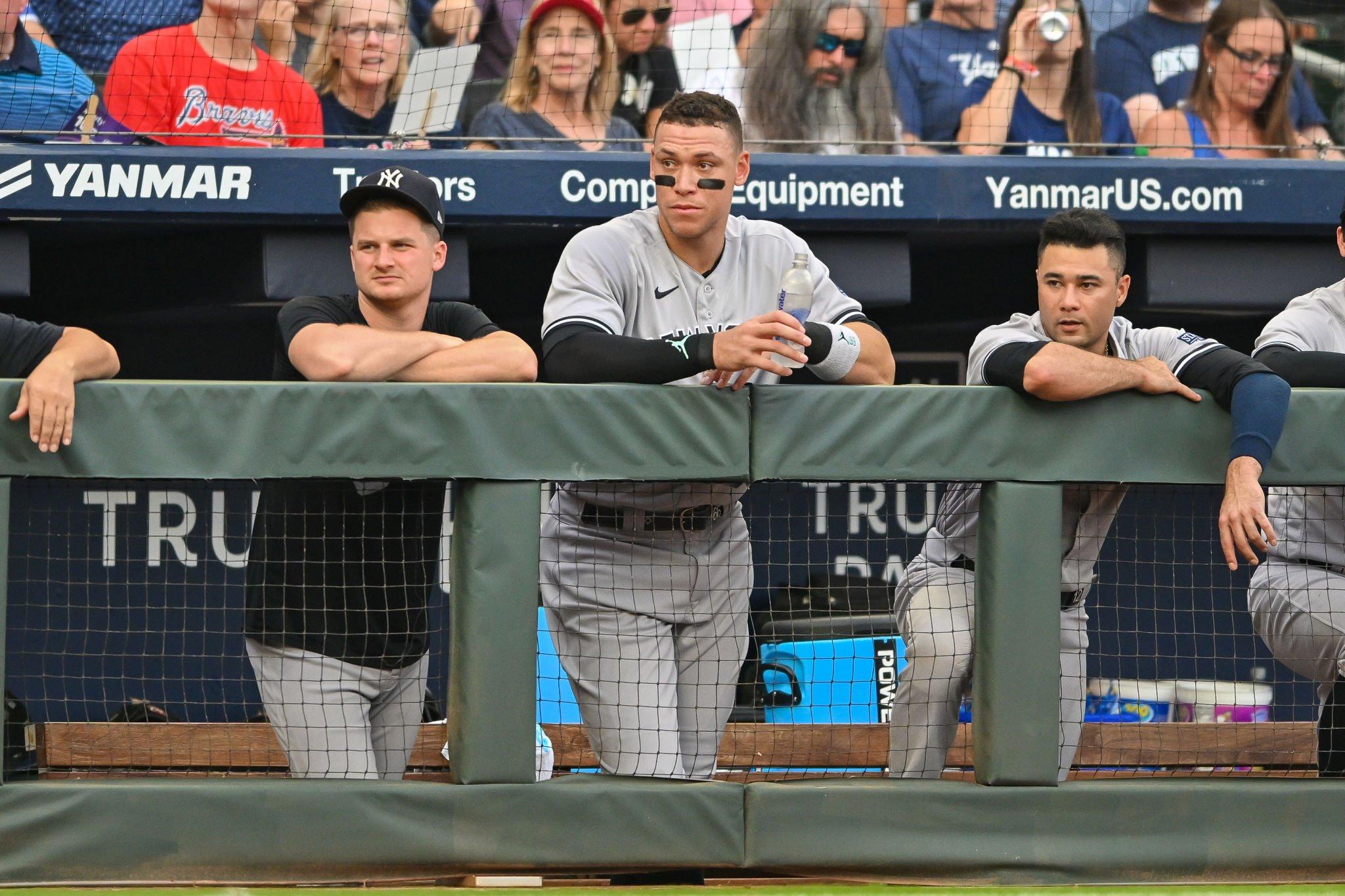
That becomes more important because Aaron Judge’s availability remains uncertain. If Judge cannot play or returns in a limited role, New York could have less offensive margin for error, and starting Schlittler gives Boone his strongest immediate run-prevention option at the moment the Yankees may need it most.
The underline Yankees impact
The decision completes Schlittler’s rapid rise inside an expensive veteran rotation. He entered his first full major league season alongside established starters such as Cole, Fried and Carlos Rodón, pitchers whose contracts, reputations and experience were supposed to define the top of the Yankees’ staff. By October, Schlittler had earned the first postseason assignment.
That reflects more than a strong statistical season. It marks a significant change in how the Yankees view the top of their rotation. Schlittler is no longer merely the young starter surrounded by accomplished veterans. For this series, the Yankees are treating him as the pitcher most deserving of the first chance to control their postseason. Fried follows with the second assignment and its Game 2 pressure. Cole waits for Game 3, and only if the Yankees need him.
The order itself delivers the message without Boone having to say it directly. October assignments are being determined by what the Yankees have seen in 2026, not by what the rotation looked like before. Schlittler gets the opener. Fried follows. Cole waits. And Boston has to begin its postseason by facing the pitcher who ended it one year ago.
What do you think? Leave your comment below.