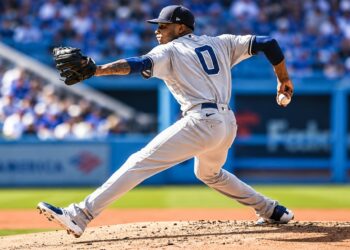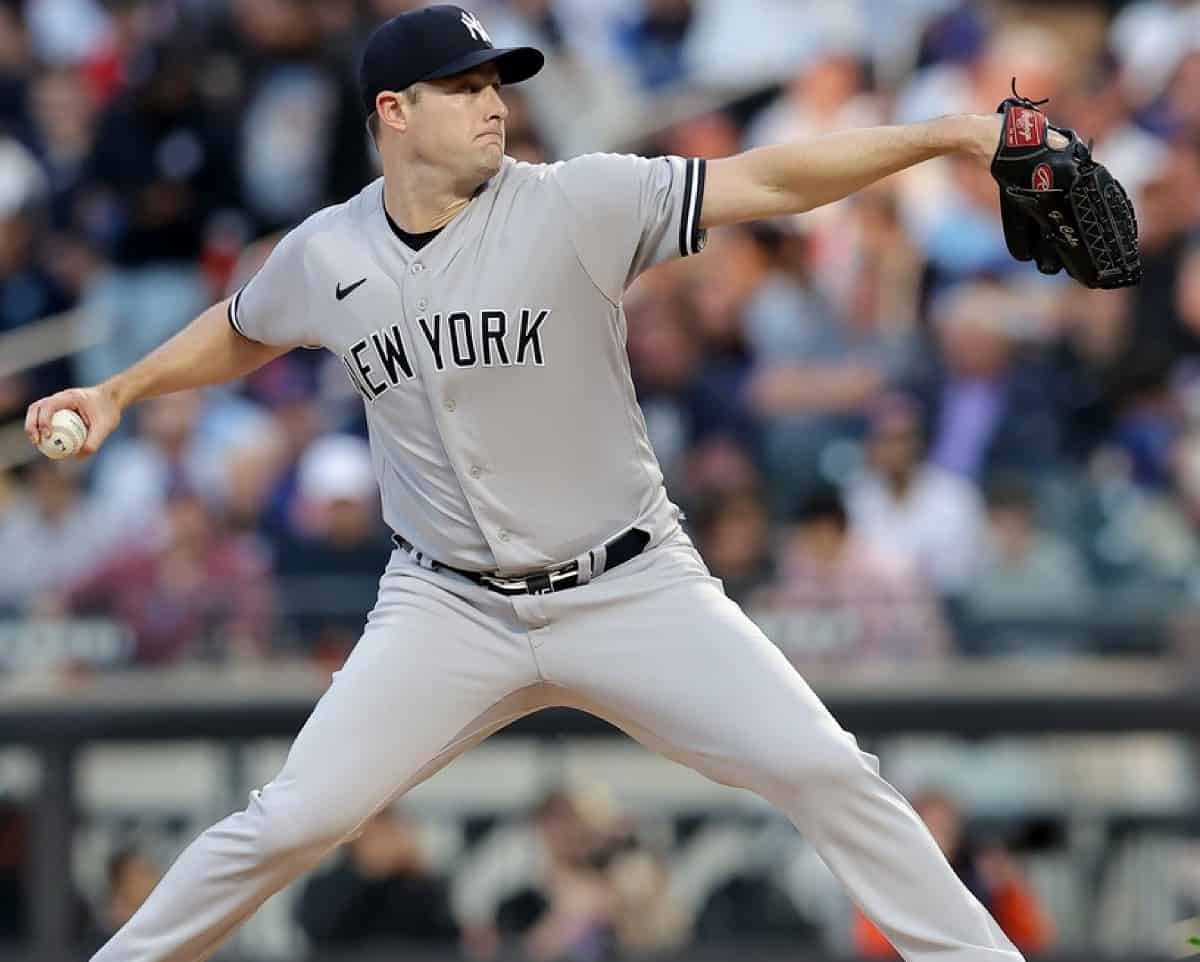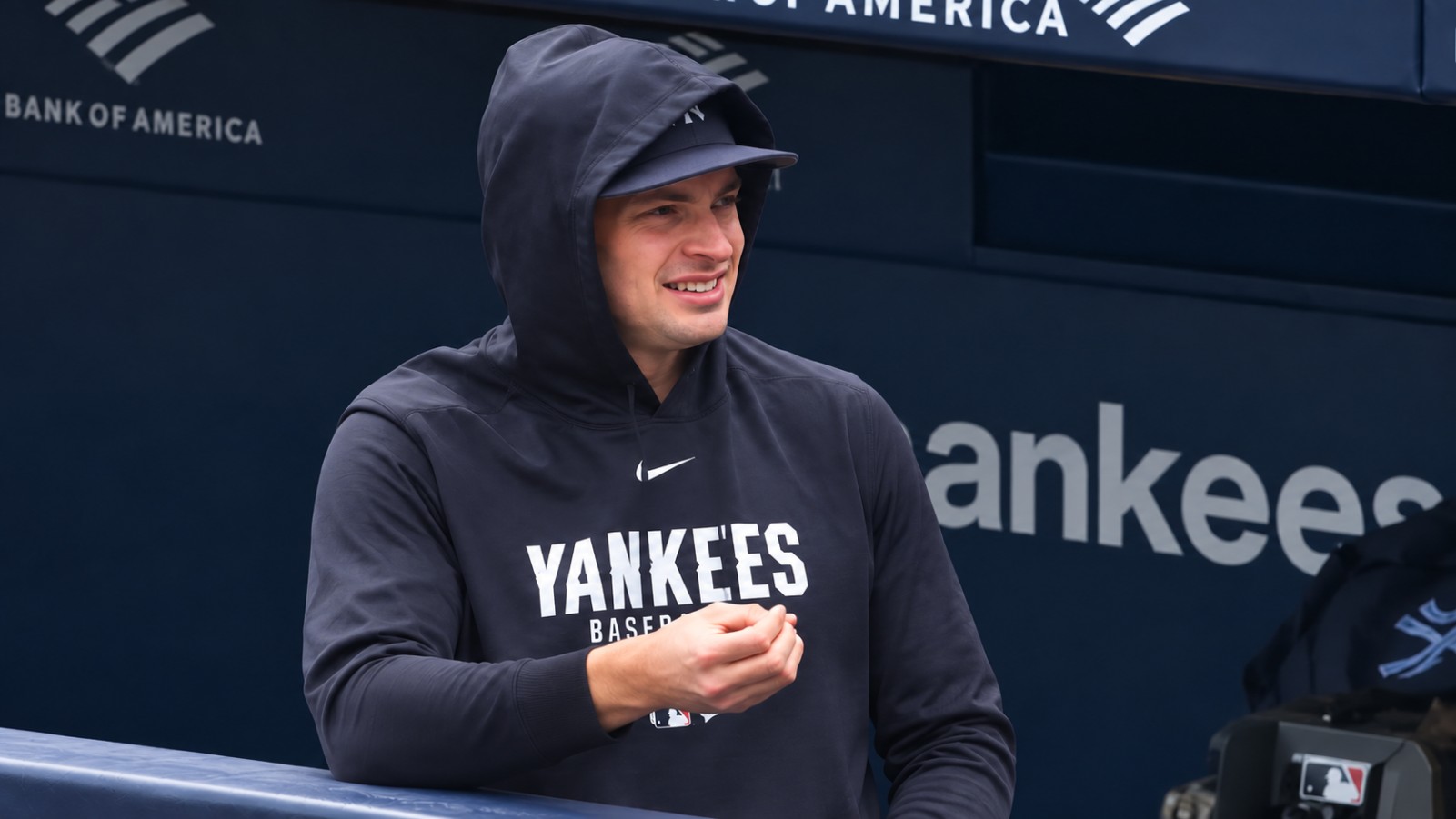
NEW YORK — Cam Schlittler has spent the season making the Yankees’ hardest pitching decision look easy. He finished his first full major league season at 14-6 with a 1.95 ERA, 239 strikeouts and a 0.92 WHIP across 193 2/3 innings, numbers that placed him at the front of the American League Cy Young race and gave New York a clear October ace on performance alone.
The case became harder to argue against because of the opponent waiting Tuesday at Yankee Stadium. Boston is back in the Bronx for a best-of-three Wild Card Series, one year after Schlittler delivered eight scoreless innings with 12 strikeouts to eliminate the Red Sox in Game 3. The Yankees also went 7-6 against Boston this season, including 4-2 at home.
Schlittler’s final regular-season start did nothing to damage that standing. The Yankees deliberately shortened him to three innings and 70 pitches Thursday against Tampa Bay. He allowed two runs, one earned, and finished with a 1.95 ERA, the third-lowest qualified mark in franchise history behind Spud Chandler in 1943 and Ron Guidry in 1978.
The workload, however, has entered territory Schlittler has never experienced. His 193 2/3 innings are a career high at any level, and the Yankees have spent the final week balancing sharpness against fatigue. That creates a different kind of postseason question than simply deciding which starter owns the best ERA or the strongest Cy Young case.
The rotation choice also reaches beyond Tuesday. MLB scheduled the Wild Card round on three consecutive days, followed by the ALDS opener two days later. New York must account for recovery, opponent fit and the possibility that one ordering could give Schlittler another start later in October without removing him from either of the first two Wild Card games.
The Yankees’ calculation starts with rest, not rank
Max Fried remains under serious consideration to start Game 1, while Schlittler could be held for Game 2. Yankees pitching coach Matt Blake said Fried is “obviously in heavy consideration,” with the club checking how Schlittler recovered from his final outing before setting the order.
Blake framed the issue around repeated short rest cycles for a pitcher at a career-high workload.
“I think it’s more just getting all the information after his last outing here and making sure he’s in a good spot to go on five days again. Max is on extended rest, and Cam would be on his third five day in a row. So just making sure he’s in a good spot before we make any rash decisions,” Blake said.
The Yankees are not questioning Schlittler’s standing. Blake said that “in a vacuum” Schlittler is the No. 1 option. The issue is whether Game 1 is the best deployment when Fried is on extended rest and another round could begin days later.
Game 2 keeps a clean ALDS path open
The Wild Card Series runs Sept. 29 through Oct. 1. If the Yankees advance, the ALDS against Tampa Bay starts Oct. 3, with Game 2 on Oct. 5 and a potential Game 5 on Oct. 10.
Holding Schlittler for Wednesday still puts him in one of the Yankees’ two guaranteed Wild Card games. It also keeps a path toward Games 2 and 5 of the ALDS.
“If there was a concern that if he doesn’t pitch Game 1 and he’s only pitching Game 3 (of the ALDS), that would dictate something,” Blake said. “Not that we’re worried about the DS as much. We’ve got to win the wild card. But you can make a case that in Game 2 (of the Wild Card Series), you’re either winning the series or staving off elimination.”
That is the Yankees’ central tradeoff: maximize Schlittler immediately or position him for the largest number of high-leverage starts across two rounds.
Fried’s Boston history adds a matchup reason
Boston’s injury picture adds another factor. First baseman Willson Contreras has a bruised right hand after being hit by a pitch Sept. 17. X-rays were negative, but MLB.com reported this week that inflammation kept him from swinging on consecutive days, leaving his Wild Card availability uncertain.
If Contreras is limited or unavailable, the Yankees could see added value in opening with the left-handed Fried against a Boston lineup missing an important right-handed threat.
A review of Fried’s five most recent Boston starts, including last year’s Wild Card opener, shows three earned runs in 29 1/3 innings, a 0.92 ERA. In two 2026 starts against the Red Sox, he allowed one earned run in 11 2/3 innings.
Fried’s full Yankees sample against Boston is even stronger. In six starts against the Red Sox, including the postseason, he has worked 36 1/3 innings with a 1.24 ERA, 1.16 WHIP, 41 strikeouts and a .218 opponent average. Three of those six starts were scoreless.
Last season, Fried started Game 1 of the Wild Card Series against Boston and delivered 6 1/3 scoreless innings, allowing four hits and three walks while striking out six. The bullpen later surrendered the lead in a 3-1 Yankees loss.
That does not make Schlittler less deserving. It gives the Yankees a second baseball reason to separate “best pitcher” from “Game 1 starter.”
The risk begins if the Yankees lose the opener
The counterargument is built into the format. In a three-game series, long-range planning can become irrelevant quickly. Schlittler has already dominated Boston under postseason pressure, and the Yankees would invite immediate second-guessing if they save him for Wednesday and fall behind 1-0.
Schlittler made clear after Thursday’s start that he wants the ball but will accept the decision.
“Who wouldn’t want to start the first game?” Schlittler said. “I feel like the whole pitching staff deserves it. We’re all competitors. I’ll let [Aaron Boone] decide.”
The Yankees had not officially named a Game 1 starter as of Sunday morning. Schlittler is expected to be among the first two starters, Fried is a genuine opening-game option, and the final call hinges on workload, matchup and preserving Schlittler for multiple October assignments.
What do you think? Leave your comment below.