NEW YORK — The Yankees reached the end of the regular season with the postseason matchup they expected, the home-field advantage they wanted and the one question they still cannot answer.
Boston comes to Yankee Stadium on Tuesday night for Game 1 of the American League Wild Card Series. New York finished 93-68 after Sunday’s finale against Baltimore was canceled and will host every game of the best-of-three round. The Yankees also won the season series against the Red Sox, 7-6, including a 4-2 mark in the Bronx.
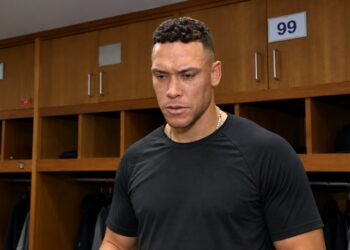
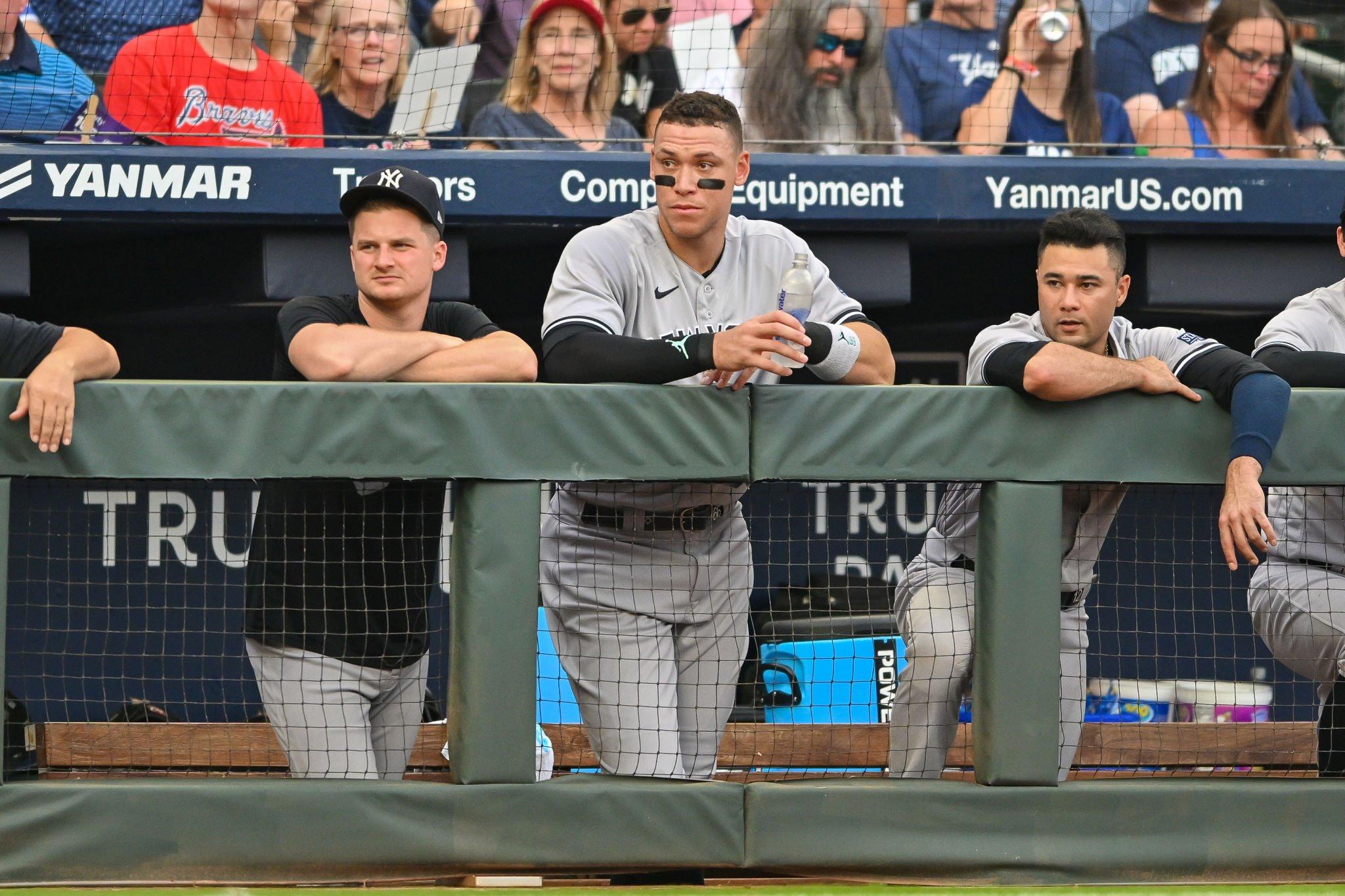
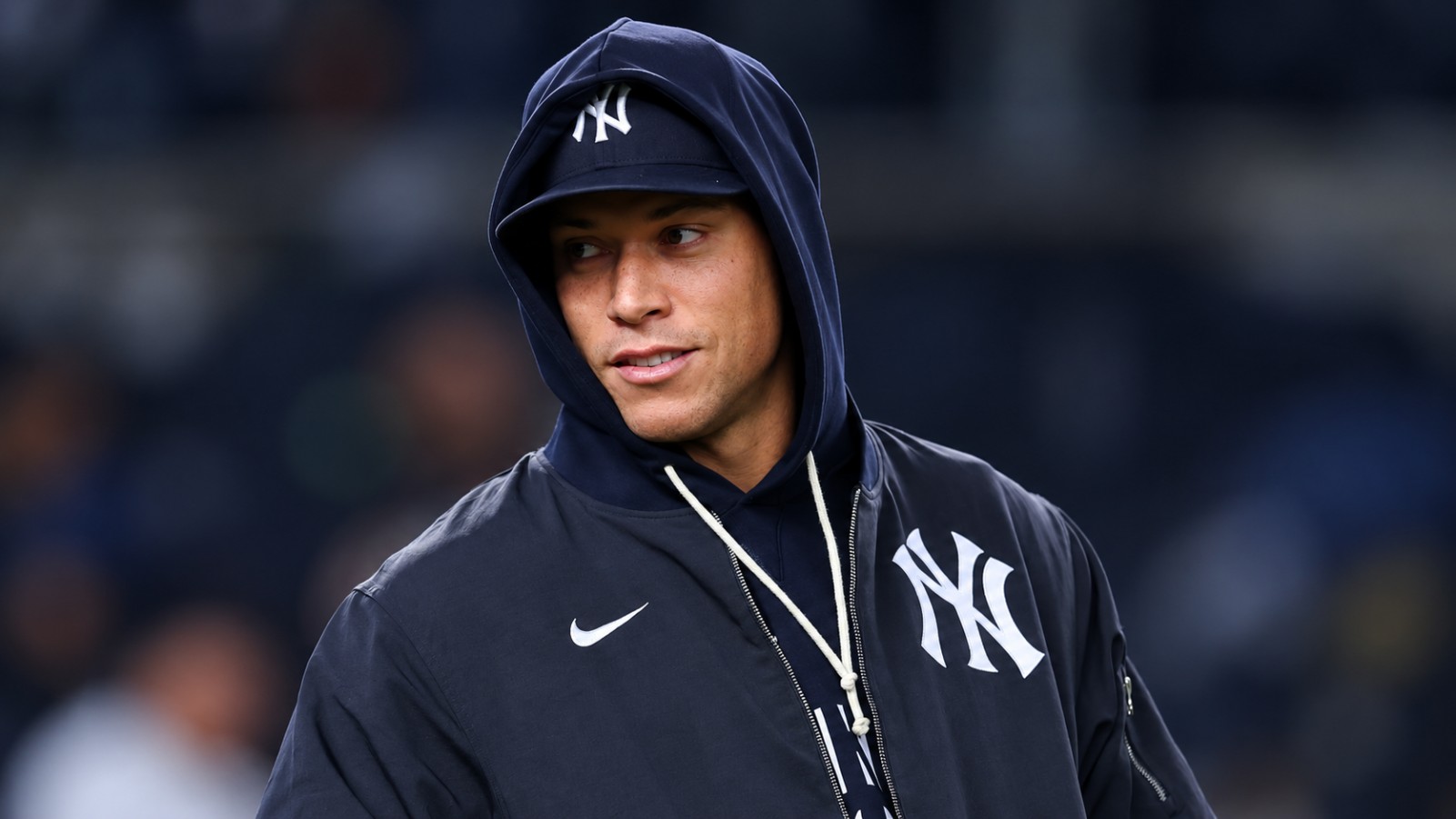
Yet the lineup New York will take into that rematch remains unsettled because Aaron Judge’s latest injury has turned a familiar medical issue into a postseason roster problem. Judge has played only 66 games this season after losing most of the summer to a fractured right rib and returning Sept. 8 without a minor league rehab assignment. He hit .241 with 18 home runs and 41 RBIs, according to MLB’s final regular-season data.
The calf injury came only seven games into that return. Judge felt trouble in his lower right leg against Minnesota on Sept. 16, and an MRI later showed a strain in the soleus muscle. The Yankees placed him on the 10-day injured list, retroactive to Sept. 17, before Aaron Boone later described the strain as moderate. Judge received a platelet-poor plasma injection Sept. 21.
The stakes are larger than simply getting one star back into the lineup. New York is trying to balance Judge’s ability to change a short series against the cost of carrying a player who may not be ready to hit, run or play the field when Boston arrives. In a best-of-three round, one unused bench spot can matter immediately.
That is why Judge’s recovery has become one of the Yankees’ most consequential decisions before the first pitch of October baseball.
The roster deadline has become the story
As of Sunday morning, Judge still had not resumed hitting, running or other baseball activity. Boone said the work had been limited to rehabilitation, plyometric exercises and treadmill work.
Boone described what Judge had been able to do over the weekend before the rain wiped out the regular-season finale.
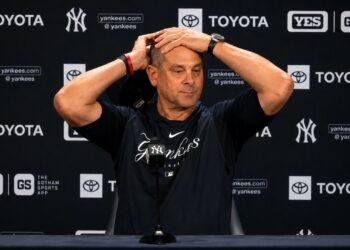
“Just still rehabbing stuff. Started to do some plyos. I know he was on the treadmill a little bit yesterday. So not a whole lot yet,” Boone said.
New York must submit its Wild Card roster Tuesday morning. Boone said the Yankees, their trainers and medical staff will take the decision to that deadline.
“Yeah, I mean, look, it’s Sunday. We’ll obviously get to Tuesday morning where we have to enter [our roster], and we’ll just kind of see what we have. Along with the trainers and medical [staff], we’ll make a decision,” Boone said.
Boone also left open the possibility that Judge could be carried even if he is unavailable for Game 1.
“I haven’t had that conversation with the trainers yet,” Boone said. “Obviously, those kinds of things would be considered.”
One roster rule makes the gamble sharper
MLB postseason rules require clubs to submit a 26-man roster before each round. A team can request an injury replacement during a series, but a player removed for injury is then ineligible for the rest of that round and the following round.
That raises the price of guessing wrong. Carry Judge while he is unavailable and the Yankees shorten their bench. Remove him later because the calf does not cooperate and the consequences could extend into the AL Division Series.
Even a limited Judge changes Boston’s approach. But the Wild Card round can end in two games, leaving little time for a player who has not cleared baseball activity.
Judge’s planned role complicates the lineup math
Judge has said he intends to play the field if he returns, an important detail because the Yankees already have several players competing for first base and designated-hitter at-bats.
Ben Rice, Paul Goldschmidt and Luis García Jr. give Boone options at those spots. Giancarlo Stanton, trying to return from his own calf problems, could also be used in a pinch-hitting role.
That makes Judge’s ability to run and defend especially important. A DH-only return would tighten the roster further. A return to right field would preserve flexibility, but as of Sunday the Yankees had not tested him in game-like running or hitting work.
Judge has continued to push toward playing despite the shrinking window.
“We got a great team,” Judge said earlier in the week. “We got a great opportunity in front of us. The future is not guaranteed, good or bad. So my job is to do whatever I can to get back, and things are feeling great.”
The medical clock is moving slower than the playoff clock
General recovery guidance cited by the Boston Sports Medicine & Research Institute places a moderate, second-degree calf strain in a three-to-six-week recovery range before full activity. Judge is trying to beat that clock because the Yankees no longer have regular-season games available to test him.
There is also a readiness issue beyond the calf. MLB data shows Judge went 4-for-23 after returning from the rib injury before the calf problem interrupted him again.
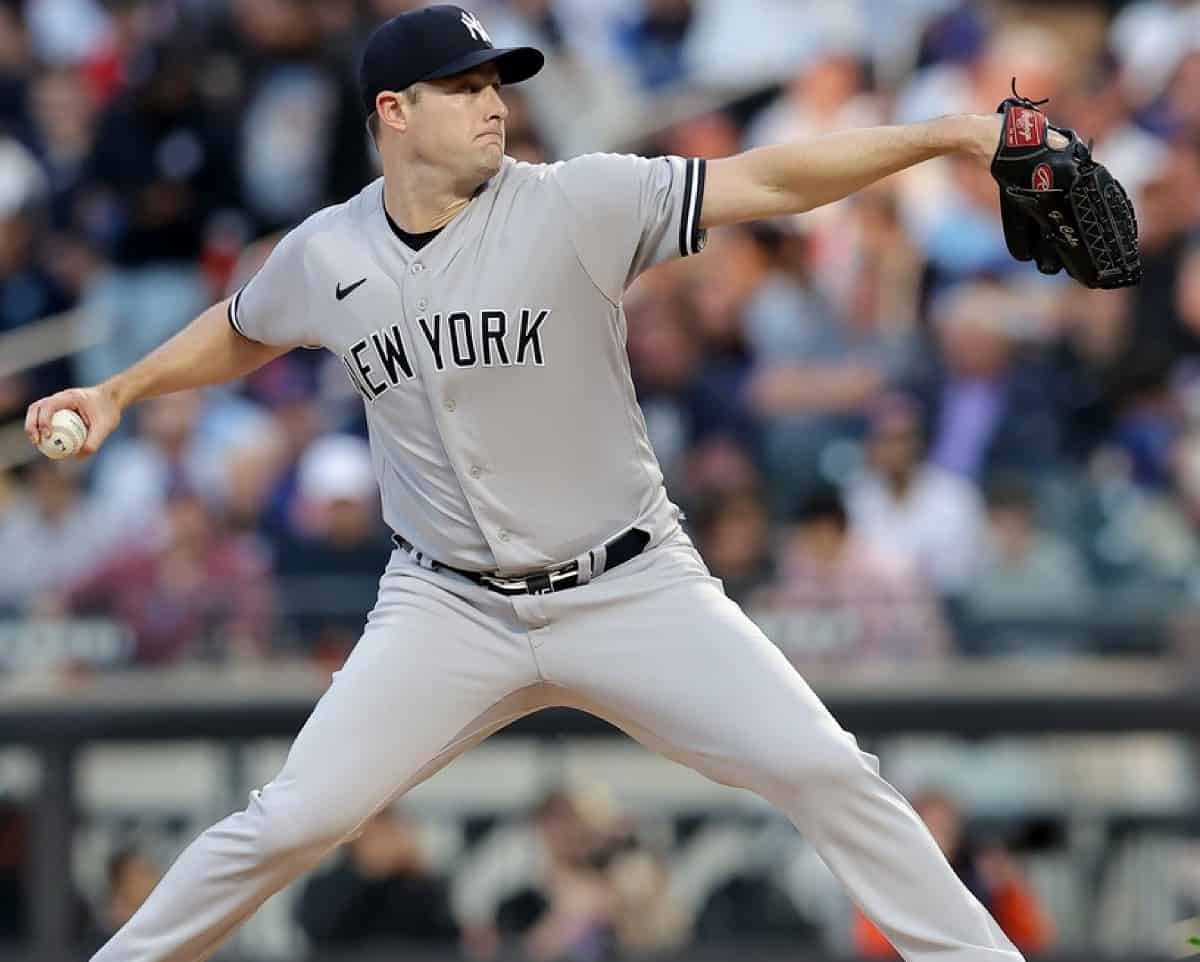
The Yankees have other major pieces settled. Cam Schlittler will start Game 1 against Boston at 8 p.m. ET Tuesday, with Max Fried lined up for Game 2 and Gerrit Cole for a potential Game 3.
By Tuesday morning, the Yankees must decide whether Judge’s potential impact is worth a roster spot before they know exactly how much of their captain they can use.
What do you think? Leave your comment below.