NEW YORK — For two months, the New York Yankees have searched for a hitter who could steady a lineup gutted by injuries.
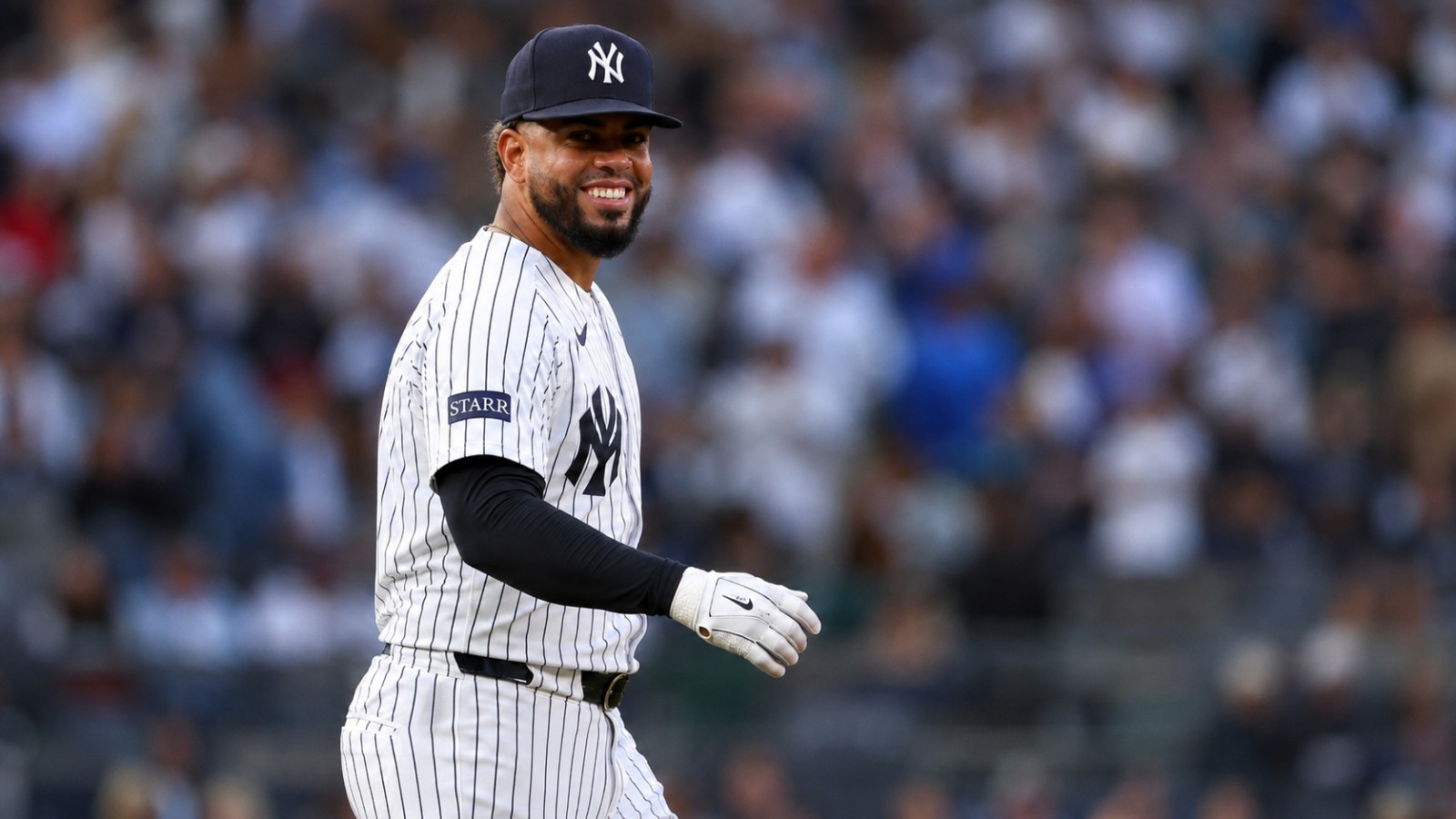
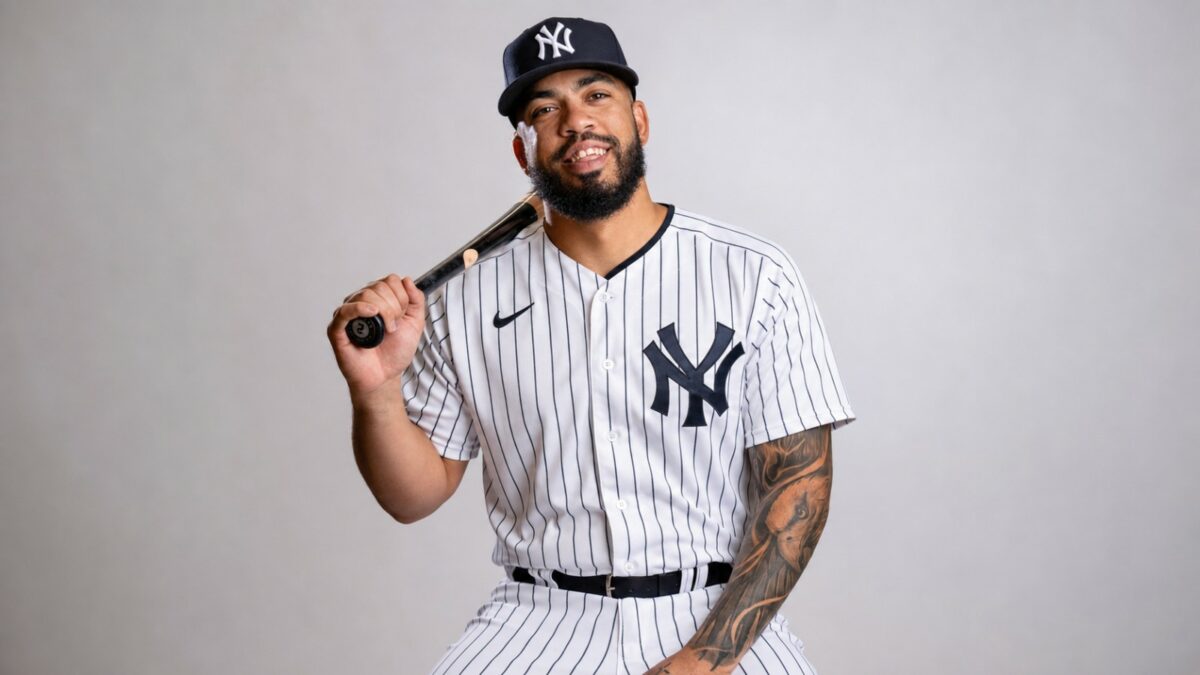
They finally found it in Luis Garcia Jr.
The player is 26 years old, swings from the left side, and just finished the best season of his career. Garcia was the longest-tenured man on his old team, the Washington Nationals, a homegrown infielder who reinvented himself at a new position this year and turned into one of the National League’s most dangerous run producers.
Garcia arrives at Yankee Stadium with 23 home runs, 76 RBIs and a slugging percentage that ranks third in all of baseball. Only two hitters in the majors have slugged higher. One of them, Ben Rice, now shares Garcia’s infield.
For a Yankees offense hitting .232 as a team, fourth-worst in the majors, that kind of production is not a luxury. It is a lifeline. The front office paid a real price to get it, and the fan base is still learning exactly who it landed.
The Yankees acquired the first baseman from the Washington Nationals late on Aug. 2, sending four right-handed pitchers to the nation’s capital in return. Garcia is under club control through 2027, and he is expected to slide into the middle of the order almost immediately.
From a baseball family to a homegrown National
Garcia was born May 16, 2000, in New York City, and baseball runs in his blood. His father, Luis Garcia Sr., pitched in the major leagues, and the son carried the family name into pro ball as a teenager. He signed with Washington out of the Dominican Republic and climbed the system fast.
He reached the majors at just 20 years old, making his debut on Aug. 14, 2020. For the next several seasons he was a fixture in the Nationals’ infield, mostly at second base, through the lean years of a long rebuild. He was one of the few constants on a roster that turned over around him.
This season brought the leap. The Nationals moved Garcia across the diamond to first base, and the change seemed to unlock his bat. He set career highs nearly across the board and pushed his slugging percentage to .560, a mark that trailed only new Yankees teammate Ben Rice and Houston’s Yordan Alvarez leaguewide.
What the Yankees are saying about their new bat
Manager Aaron Boone did not need many words to explain why the Yankees pushed to get him. Asked about the acquisition, Boone cut straight to the point.
“He can rake,” Boone said. “He can really hit.”
The praise lands against a stark backdrop. The Yankees have scuffled at the plate for weeks, and Boone has watched his lineup waste strong start after strong start. Garcia represents the opposite of that drought, a hitter who barrels the ball and drives it to the gaps and over walls.
Boone made clear the Yankees see a specific fit for the left-handed swing. He pointed to how well Garcia’s pull-side power should play in the Bronx, where the short right-field porch rewards exactly that approach.
“We think he fits our ballpark very well and should help,” Boone said. “Hopefully he’ll give a little jolt to our offense, which has obviously scuffled here a little bit over an extended period.”
Why his bat matters to a banged-up lineup
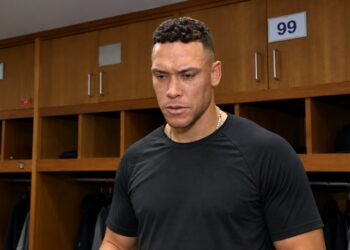
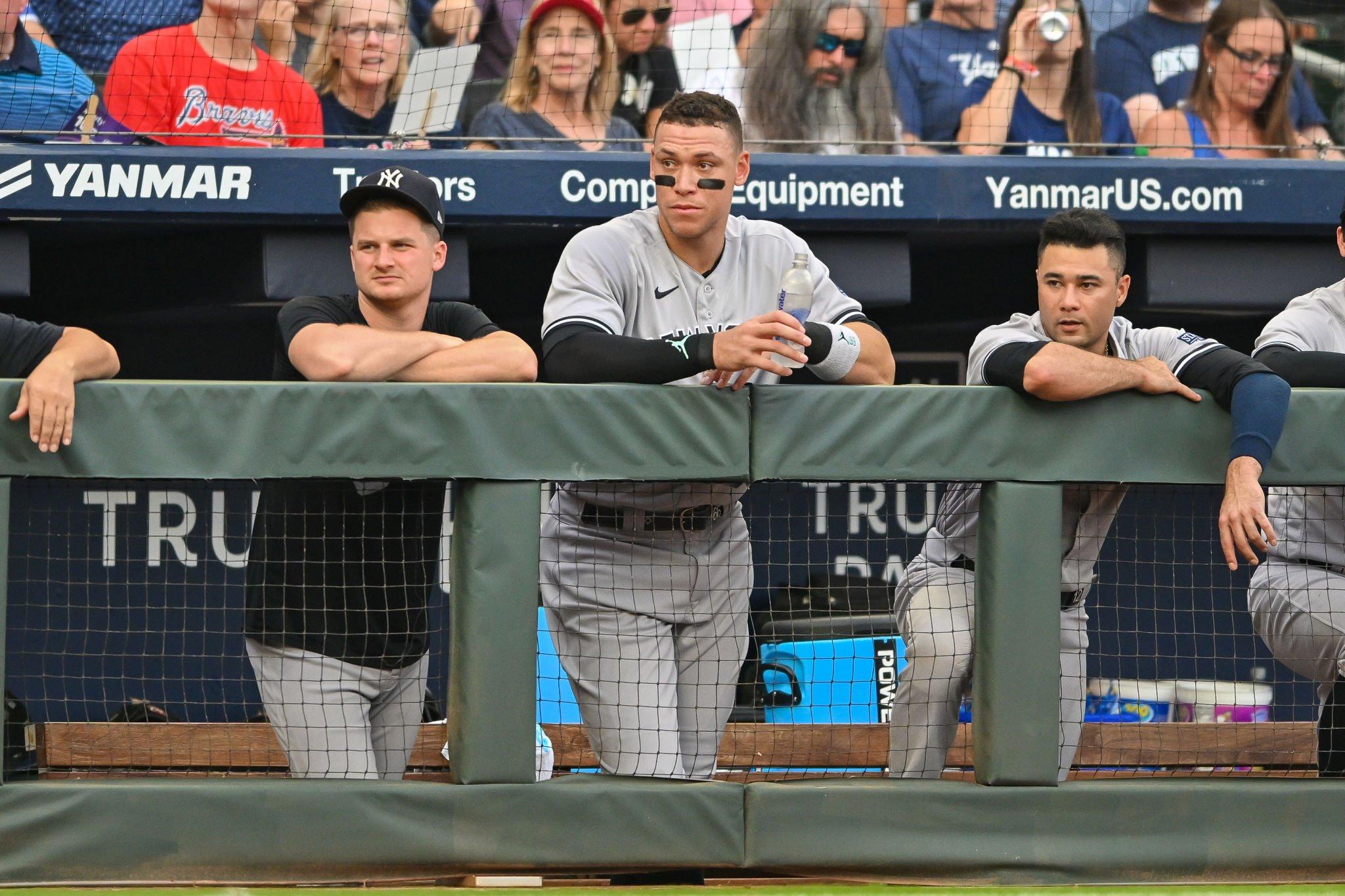
The context explains the urgency. The Yankees have played without reigning MVP Aaron Judge since late May, when a fractured rib sent him to the injured list. In the 53 games that followed, New York hit .219 and averaged just 3.9 runs. Cody Bellinger and Giancarlo Stanton have also spent long stretches sidelined.
Garcia will not replace Judge. No one bat can. But his .283 average would immediately lead the Yankees, and his power gives them a middle-order threat they have lacked. He is slashing .292 with a .588 slugging mark against right-handed pitching, the split that fits best alongside Rice and Paul Goldschmidt at first base and designated hitter.
The Yankees plan to lean on that strength. The expectation is a platoon look, with Garcia taking the bulk of the at-bats against right-handers while Goldschmidt handles lefties. It is a targeted role built to squeeze the most out of a bat that punishes right-handed arms.
His glove is a secondary question. Garcia graded poorly at second base in recent years, which is why Washington moved him to first. He has been roughly average there this season, enough to hold the position without hurting the Yankees while his bat does the work.
Where his Yankees story begins
Garcia’s arrival lands at a pivotal moment. The Yankees returned home sitting 2 1/2 games behind the AL East-leading Tampa Bay Rays while holding a spot atop the wild-card race. They opened a nine-game homestand against the St. Louis Cardinals, the start of a stretch in which they play 19 of 25 games at Yankee Stadium.
That schedule sets up as an ideal runway for a left-handed power hitter to settle in. Garcia steps into the middle of a lineup that has waited weeks for a spark, with his first Yankees at-bats coming in the Bronx rather than on the road.
The questions will follow him. Can he keep slugging outside the National League? Will the platoon hold once the injured stars return? For now, the Yankees have their new bat, a career-best hitter with pull-side pop and something to prove, and his time in pinstripes is just getting underway.
What do you think? Leave your comment below.