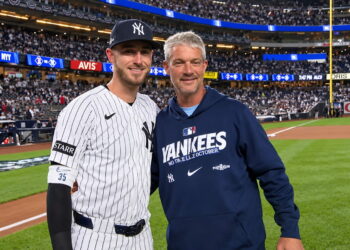
NEW YORK — Cody Bellinger’s three-point platoon gap gives Yankees a major postseason lineup advantage in October.
At 88-64, the Yankees have clinched a postseason berth but remain five games behind the Tampa Bay Rays in the AL East with 10 regular-season games left. The standings still matter. So does a lineup that will have little room for a soft spot once opponents can tailor pitching matchups around it.
That is where the 2024 postseason remains useful context. New York reached the World Series before losing to the Dodgers in five games, but left field never became a dependable source of two-way production. Alex Verdugo finished that regular season at .233/.291/.356 with an 83 OPS+, then hit .208/.309/.313 with a .622 OPS across 14 postseason games.
The problem lasted longer than one October. After Brett Gardner’s final Yankees season in 2021, left field became a rotating assignment rather than a settled strength. FanGraphs positional figures put Yankees left field at only 1.6 fWAR from 2021 through 2024, 28th in the majors over that span. That history left New York searching for both production and stability rather than another one-season patch at a premium defensive spot. The position finally looks different now.
Bellinger turns left field from compromise into strength
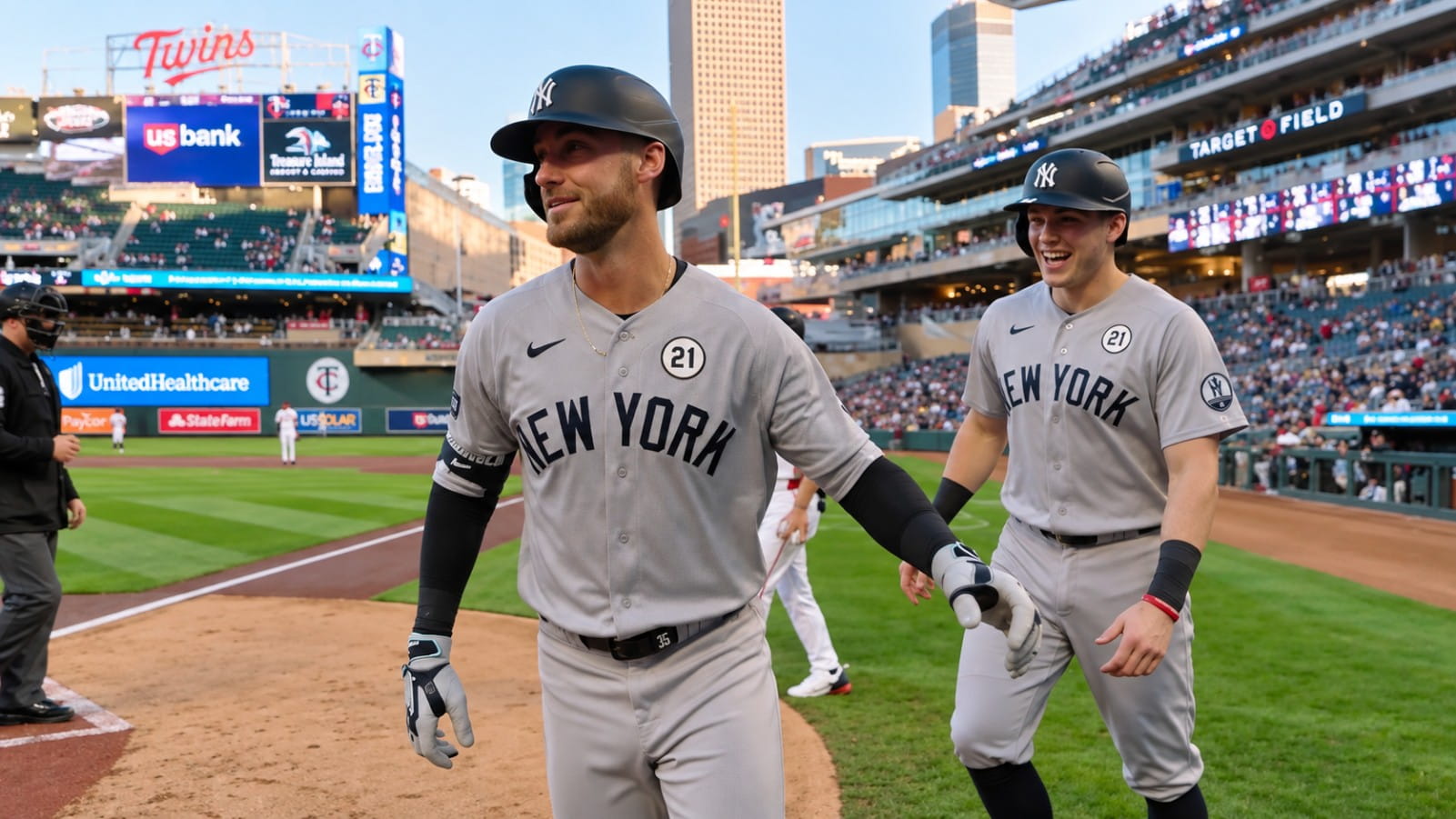
Cody Bellinger is the clearest reason. He went 3-for-5 with a walk, a run and a stolen base Wednesday, giving him multiple hits in five of his past seven games. His surge also reaches beyond a few September nights.
Bellinger has hit .340 with five home runs, 18 RBIs and a 148 wRC+ in 23 games since returning Aug. 23 from a Grade 2 left hamstring strain. He entered Friday batting .276/.351/.444 with 16 homers and 71 RBIs in 125 games.
The Yankees went 15-7 over the first 22 games after his return, hit .274/.336/.440 as a team, posted a plus-42 run differential and scored at least five runs 14 times. They reached six runs 12 times and seven runs nine times. Bellinger has supplied that offense while remaining an impact defender.
Sports Info Solutions credits Bellinger with 20 Defensive Runs Saved in left field, while Statcast has him at six Outs Above Average across the outfield. That two-way value is the central difference from 2024, and his ability to handle center field or first base gives the Yankees additional roster flexibility.
One lopsided loss showed why his bat matters
The Yankees saw the offensive side during a 12-2 loss to the Mets on Sept. 12 at Yankee Stadium. Bellinger produced both New York runs with an RBI single in the fourth and a solo homer in the sixth. It was his third home run in four games at the time.
Aaron Boone was explaining why Mets starter Zac Thornton controlled the rest of the lineup. The comment underscored how little help Cody Bellinger received that afternoon.
“He obviously got a lead there and the strike throwing was really good,” Boone said.
Bellinger’s September has since climbed to .390 over 14 games, with four homers, 12 RBIs and 14 runs. The Yankees have needed that stability while other parts of the lineup have shifted around injuries and matchups.
A three-point platoon gap changes October math
The most revealing number may be the one that barely moves. Through Wednesday, Bellinger owns a .797 OPS against left-handed pitching and a .794 OPS against right-handers. That three-point difference gives the Yankees a middle-of-the-order bat that does not need to be hidden when opponents change arms.
The Yankees’ platoon snapshot also places Aaron Judge and Ben Rice among their most balanced regular bats. Bellinger adds another hitter who can stay in the game without Boone surrendering offense for defense or defense for offense, a valuable trait when October bullpens change matchups inning by inning.
The original trade price tells only half the story
The Yankees first acquired Bellinger from the Cubs in December 2024 for right-hander Cody Poteet, with Chicago also sending $5 million. That trade price remains striking, but it is not the full cost. After Bellinger became a free agent, New York brought him back in January on a five-year, $162.5 million contract.
He produced 29 homers, 98 RBIs and 4.9 fWAR in 2025. FanGraphs’ 2026 value is now roughly four fWAR. A calculation from his MLB totals over the two Yankees seasons puts him at 45 homers, 169 RBIs and a combined batting line of about .274/.341/.464.
With the postseason berth secured and the AL East still in play, the Yankees have 10 games to sharpen their October lineup. Bellinger’s recent surge, near-identical platoon production and left-field defense give New York something its 2024 World Series club never consistently had at the position: a regular who can remain part of the plan regardless of the matchup.
What do you think? Leave your comment below.