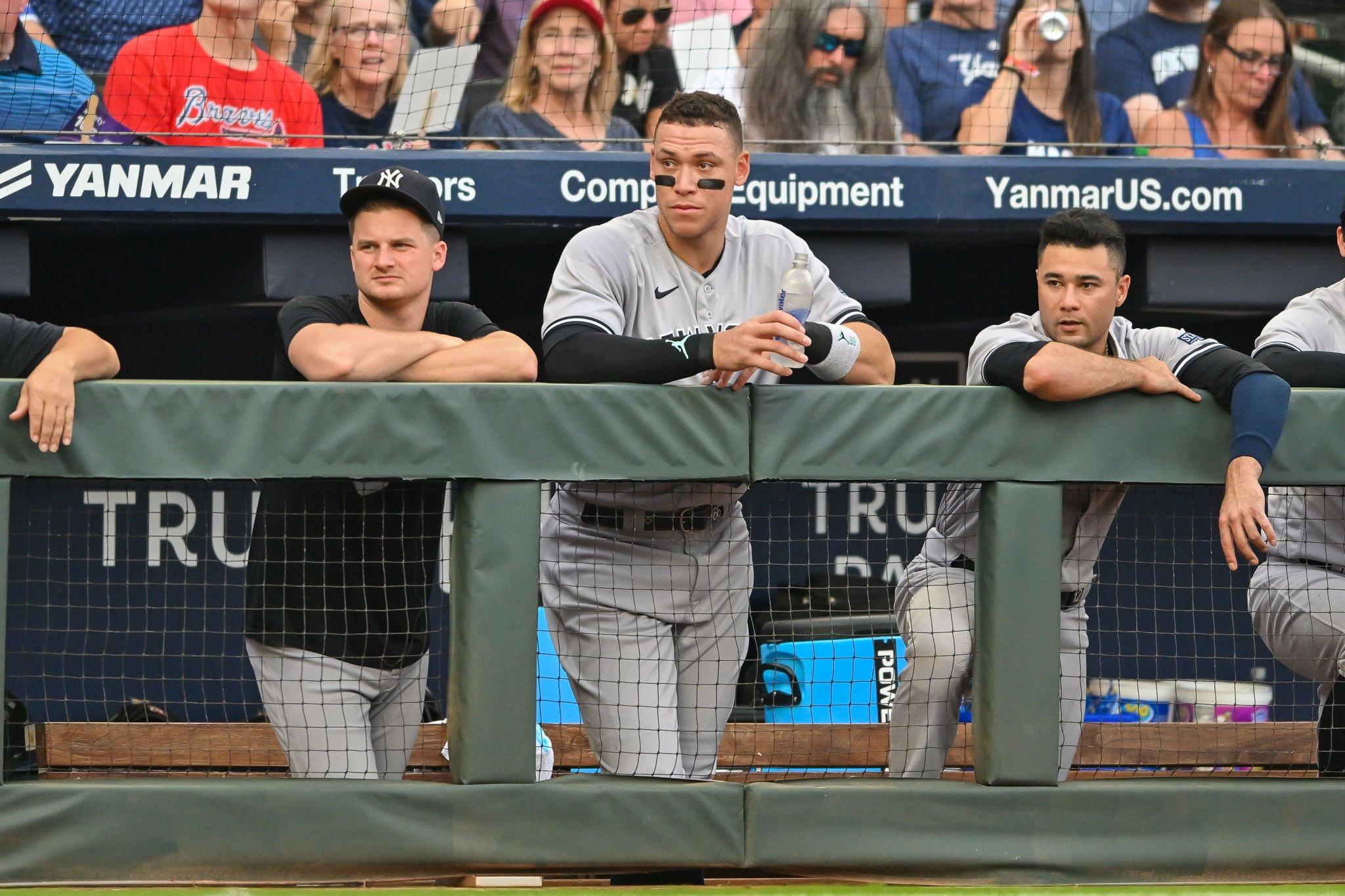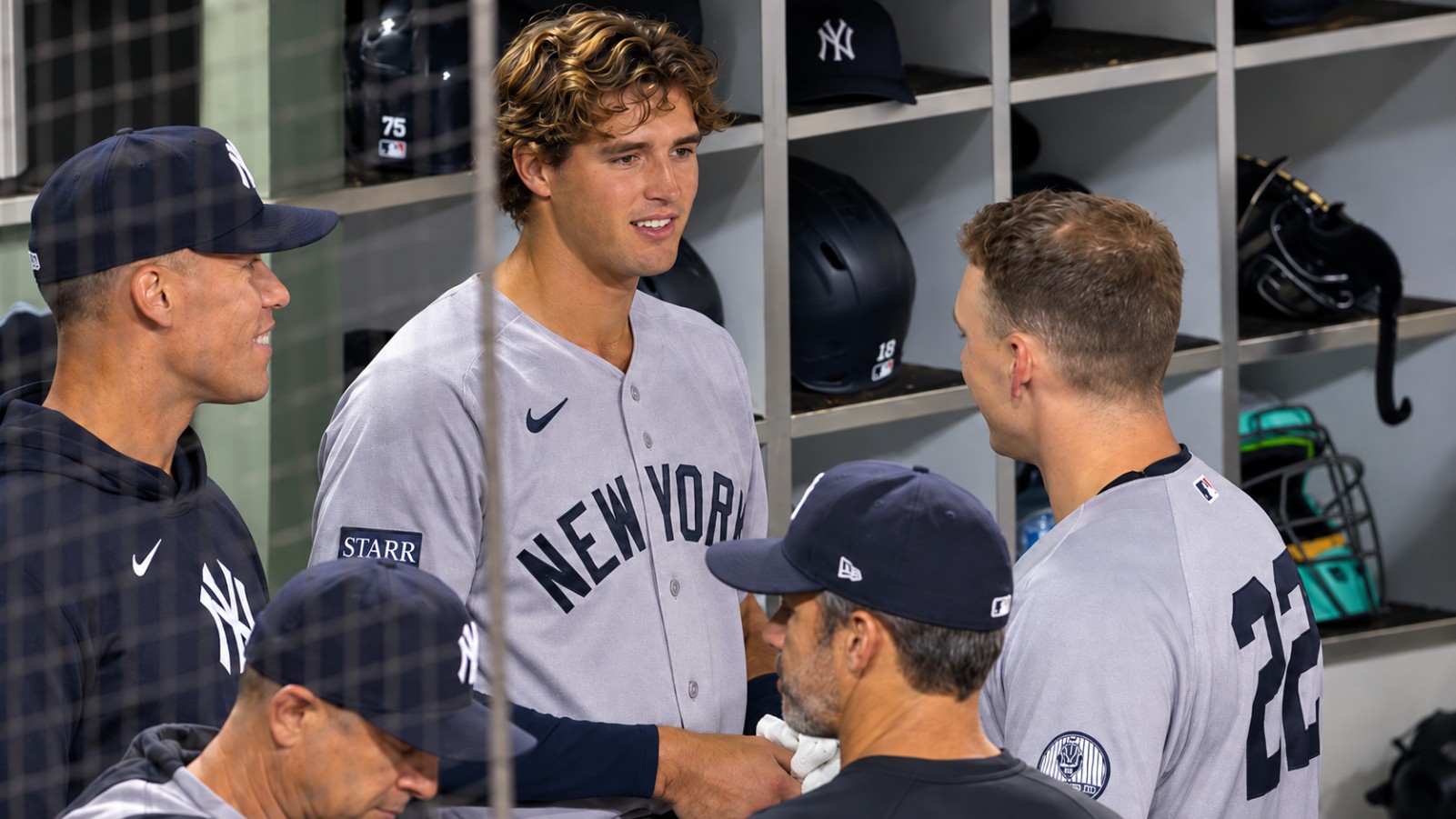
NEW YORK — Spencer Jones has given the Yankees two reasons to reconsider how they handle one of their most promising young players. His bat improved during the second half of 2026, and his performance against left-handed pitching challenged the usual assumptions about a left-handed rookie.
Yet his place in New York’s 2027 outfield remains certain but unsettled. With a vacancy in center field and outside interest in the 25-year-old, the Yankees must decide whether to give him regular playing time, use him in a reduced role or consider moving him.
The uncertainty has become more significant after a season in which the Yankees saw several young players develop while another postseason ended short of the World Series. Aaron Boone needs a dependable everyday lineup, but the club also has to decide how much opportunity Jones has earned.
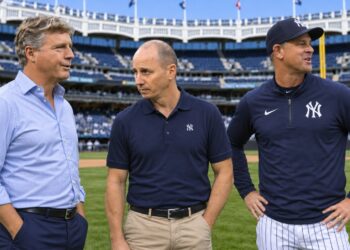
That tension came into sharper focus at the general managers meetings Tuesday in Las Vegas, when Brian Cashman praised Jones’ progress while leaving his position in the Yankees’ plans open.
Cashman confirms other clubs are asking about Jones
Cashman acknowledged that rival clubs have contacted the Yankees about Jones. He also said the rookie had made major progress from the scouting projection that led New York to draft him.
“He really improved significantly, especially offensively. He’s someone that teams are asking a lot about, and I can understand why,” Cashman said.
The general manager stopped short of identifying Jones as the 2027 center fielder. Asked to evaluate his season despite the strikeouts, Cashman made clear that the Yankees would continue examining the market.
“Not here to say he’s our center fielder or not,” Cashman said. “I just think, again, we’re going to remain opportunistic into the marketplace and see what’s available.”
He also indicated that Jones had done enough to enter the conversation for a substantial role.
“He certainly earned the consideration to be counted on as we enter 27,” Cashman said.
No prospective trade partner or formal offer was identified. Interest from other clubs does not mean the Yankees have put Jones on the trading block.
A late-season turnaround complicates the outfield search
Jones was optioned to the minors three times from May through July before returning for his fourth stint on July 26. He remained with the Yankees afterward and hit .254 with nine home runs and a .771 OPS in his final 55 games.
Over the full regular season, he batted .245/.313/.429 in 86 games, collecting 11 home runs, 40 RBIs and 10 stolen bases. His combination of power and speed remains attractive, although a 30-homer, 30-steal season is a projection rather than an accomplishment.
The hesitation is not purely offensive. Jones finished with minus-4 defensive runs saved in center field. Cashman said the 6-foot-7 outfielder can handle the position but might be better suited to a corner.
“He probably profiles better on the corner than center, but he can do center at the same time,” Cashman said.
The platoon question exposes an unusual mismatch
Jones’ batting splits make a conventional platoon difficult to justify on 2026 results alone. The left-handed hitter went 21-for-54 against left-handed pitching, producing a .389 average, .441 on-base percentage and .667 slugging percentage. He hit three homers in just 59 plate appearances against lefties.
Against right-handers, Jones batted .208 with a .279 on-base percentage and .367 slugging percentage. His 43 hits came in 207 at-bats, including eight home runs across 230 plate appearances.
That is a 181-point batting-average advantage against lefties, the opposite of the pattern that often leads clubs to shield left-handed hitters from same-side pitching. A traditional right-handed platoon partner would typically take precisely the opportunities in which Jones produced best.
The comparison has limits. Jones made only 59 plate appearances against left-handers, far fewer than the 230 he had against right-handers. His success in that smaller sample does not establish that the gap will persist.
The strikeouts also remain substantial. Jones struck out 18 times against lefties and 87 times against righties, totaling 105 for the year. Even so, cutting down his exposure to right-handed pitching would also limit the regular at-bats he needs to address his biggest offensive weakness.
According to Jack Curry on Hot Stove, the Yankees view Spencer Jones as a strong candidate to take over as their starting center fielder. However, New York is also evaluating outside reinforcements and additional defensive protection, raising questions about the organization’s willingness to give the young outfielder an everyday role. That uncertainty could push the Yankees toward a platoon arrangement, potentially reducing Jones’ playing time and slowing his development. Such an approach would risk repeating the limited opportunities that complicated his progress earlier in 2026.
Why the 2027 decision carries a developmental cost
The Yankees face a different situation with George Lombard Jr., who is projected to begin 2027 at shortstop after his August promotion. Jones has not received the same assurance in center field.
That distinction matters beyond Opening Day. Regular at-bats would let Jones test whether his second-half adjustments hold up against right-handers over a larger sample. A bench or matchup role would provide fewer such chances, even if it helps Boone manage defensive concerns.
An everyday assignment also carries risk for a team trying to avoid another early postseason exit. Jones’ strikeout rate and center-field defense give Cashman reasons to seek alternatives, especially if the Yankees can add a stronger defender without sacrificing lineup production.
The trade inquiries add another variable. Jones has become more attractive to other clubs just as New York is weighing whether he fits best in center, a corner or a crowded outfield rotation. Cashman has offered no commitment to trade him, platoon him or hand him a starting job.
For now, the Yankees enter the offseason with a player who earned more consideration through his bat, but whose next role remains dependent on the market and the club’s final roster decisions.
What do you think? Leave your comment below.