


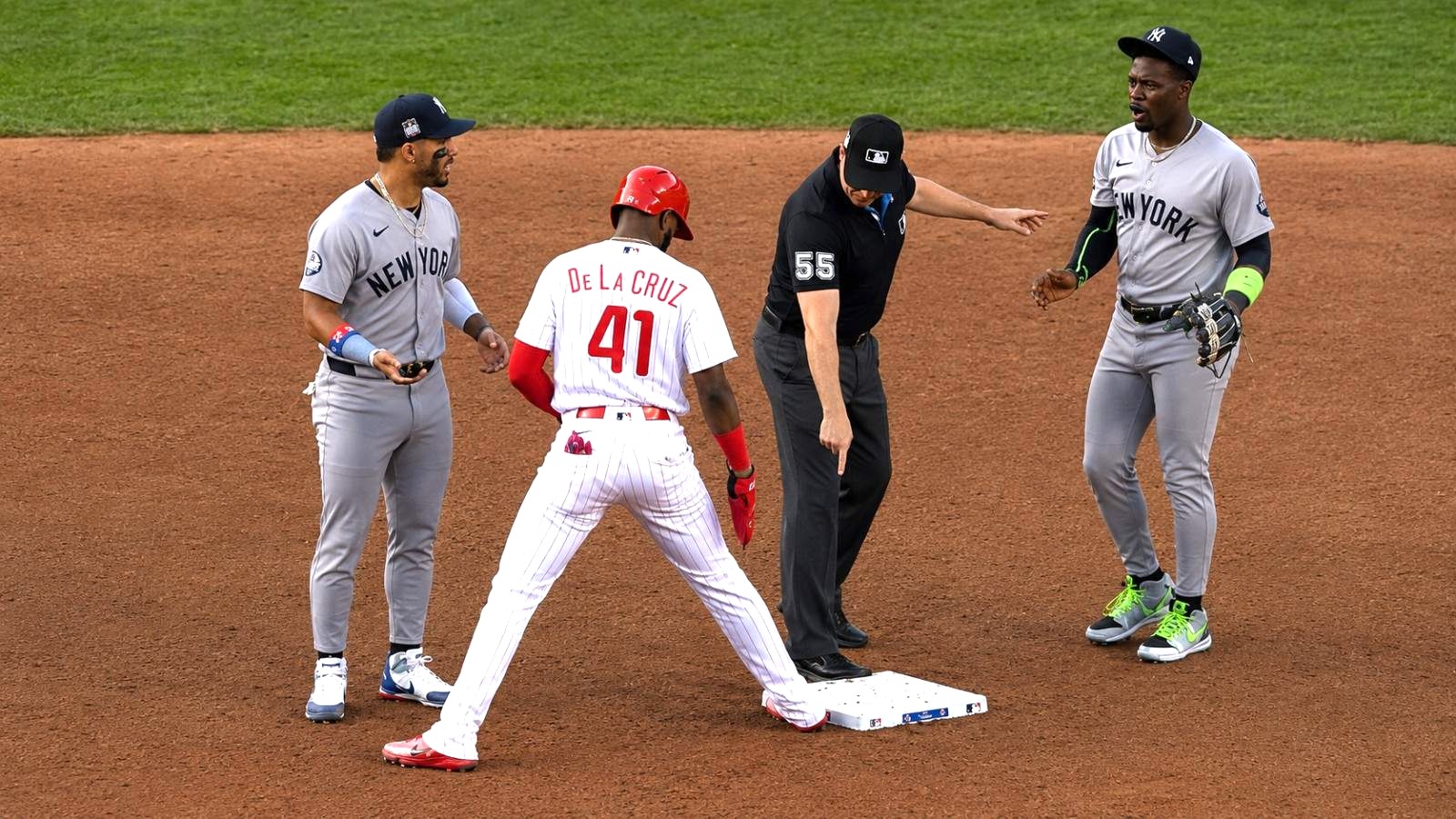
PHILADELPHIA — One catch would have ended the inning and pushed the Yankees back to the dugout. Jose Caballero thought he had made it. An umpire decided he had made it too well.
The Yankees beat the Phillies 3-1 at Citizens Bank Park to take the series and win their third straight. The final margin held up. One play in the fourth inning nearly turned the night.
The moment came in the bottom of the fourth, with the score tied at 1 and the Phillies threatening. There were runners on first and second with one out. A double play would have ended the inning and erased the threat. Bryson Stott then lined a ball toward Caballero.
What happened next looked, at first, like the second out and the end of the frame. Instead it became one of the stranger calls of the Yankees’ season.
The umpire saw something the Yankees did not, and the inning stayed alive.
A rare rule keeps the inning alive
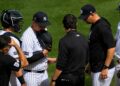
Caballero appeared to make a leaping catch on the Stott liner. He then dropped the ball, picked it up and went to second to tag Bryan De La Cruz, who had drifted back to the bag believing the ball was caught. A tag there would have been the second out, the end of the inning and a clean escape for New York.
Second base umpire Brennan Miller ruled otherwise. He judged that Caballero had intentionally dropped the ball to complete a double play, and he invoked the intentional-drop rule. The ball was declared dead before the tag could count.
Under that rule, only the batter is out. Stott was retired, but the runners returned to first and second, and De La Cruz was safe. The inning that Caballero thought he had ended kept going, with the Yankees stuck at one out instead of three.
The rule exists to protect the offense. It stops a fielder from deliberately letting a catchable ball fall to complete an easy double play on runners frozen at their bases. Miller decided that was exactly what Caballero had done, so the second out never counted.
Caballero pushes back with a sarcastic jab
Caballero did not hide his disbelief. His argument was simple: no infielder could catch a line drive, drop it, then field the bounce cleanly all in one motion by design. He framed the call as a backhanded compliment.
“I was very surprised,” Caballero said of the call. “They really think highly of me: I can catch the ball, drop the ball and catch the bounce in one motion.”
The timing added an edge. Caballero had spent the week tangling with the umpires over a sudden crackdown on his batter’s box routine, a tactic he had used to disrupt pitchers before a pitch-clock violation would be called. That history made the ruling feel personal to some watching.
Manager Aaron Boone was asked whether the call had anything to do with Caballero’s recent run-ins. He did not think so, and he kept his answer plain.
“I don’t think so,” Boone said. “I think he just missed the call.”
Caballero agreed on that point, saying he did not believe the ruling was tied to his earlier disputes. The two framed it as a blown judgment call rather than a grudge.
The Yankees escape without paying for it
With the inning still alive instead of over, the ruling could have cost the Yankees a run in a tie game. It did not, because the pitching bailed them out. Left-hander Ryan Weathers went back to work with two on and got Derek Hill looking for the out Caballero was denied.
That strikeout kept the score level at 1 and preserved the night’s larger story, another game in which the Yankees leaned on run prevention to survive. The Yankees have made a habit of it. The staff has carried the club through a stretch of shaky offense, and it did so again after the odd fourth-inning sequence.
The call also fit a theme for Caballero, a player who has drawn the umpires’ attention more than once this season. He has become known for testing the edges of the rulebook, and on Saturday the rulebook was used against him in a way few players ever see.
For the Yankees, the frustration was real but the damage was contained. A tie held, and the club went on to win by two.
A strange call fades, but the pattern lingers
There was no formal protest and no replay reversal, because judgment calls of intent are not reviewable. The ruling stood, the inning ended and the game moved on. The Yankees did not dwell on it publicly.
Still, the sequence is likely to live on in highlight form, both for its rarity and for the player at its center. Intentional-drop calls surface only a handful of times across a season, and rarely in a Yankees game with this kind of spotlight.
The win kept the Yankees at 59-45, second in the American League East and roughly two games behind the Tampa Bay Rays. Their focus now turns to a Sunday night finale and a trade deadline days away, with the odd call in Philadelphia already behind them.
For Caballero, the takeaway was familiar. The umpires had his number again, and once more he was left explaining a call he never expected to hear.
What do you think? Leave your comment below.











Inna got it a bit wrong. A tag after Cabby dropped the ball would have been the FIRST out, and then stepping on second should have been the second, as the line drive was not caught.