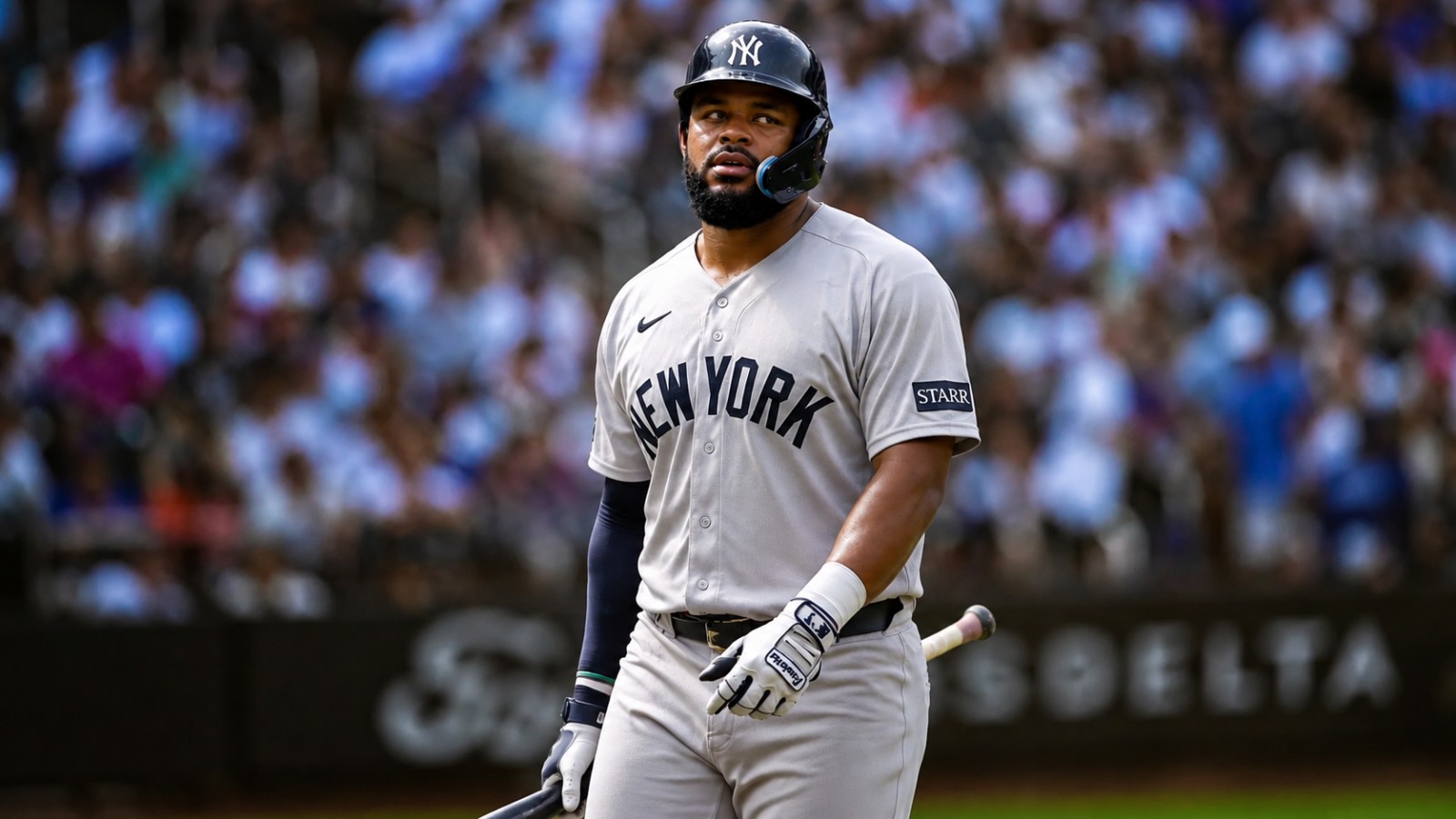
TORONTO — A routine ground ball in the sixth inning told the story the box score could not. Heliot Ramos tapped one toward shortstop, and the Rogers Centre broadcast caught him jogging up the line as Toronto retired him without urgency.
The moment was small. The timing was not. Ramos entered Saturday buried in an 0-for-23 skid, and a lazy trot on a playoff-race afternoon was the last image the Yankees wanted attached to their newest bat.
New York lost 4-1 to the Blue Jays, a third straight defeat, managing four hits, all singles. Right-hander Cam Schlittler gave the Yankees 5 1/3 innings of one-run ball and got nothing for it. Rookie George Lombard Jr. drove in the only run.
Ramos went 0-for-4 and struck out to end the ninth. Manager Aaron Boone had bumped him up to third in the order that afternoon, a vote of confidence that produced nothing.
The Cashman gamble gets harder to defend
Every hitless night sharpens a question the Yankees front office would rather avoid. What did New York actually give up to get Heliot Ramos, and has it been worth it?
The answer is starting to sting. General manager Brian Cashman acquired Ramos from the San Francisco Giants on Aug. 3, the final day of the trade deadline. The price was two prospects: left-hander Henry LaLane, ranked the Yankees’ No. 5 prospect by MLB Pipeline at the time, and infielder Kaeden Kent, the No. 13 prospect in the system and the son of former big leaguer Jeff Kent.
That was not a bargain-bin cost. LaLane was in the middle of a minor league breakout. Kent, a third-round pick last year, was hitting .302 with six home runs and 20 steals at High-A Hudson Valley.
For that, the Yankees got a right-handed outfielder who has yet to produce. Through nine games in pinstripes, Ramos is 2-for-31 with 10 strikeouts and no home runs. His slash line sits at .071/.212/.143. The strikeout rate, above 33 percent, is worse than the mark he carried with the Giants.
A move made for a matchup that has not paid off
Cashman targeted Ramos for a specific reason. With Aaron Judge, Cody Bellinger and Giancarlo Stanton all on the injured list, the Yankees needed a right-handed bat to punish left-handed pitching. Ramos arrived with that reputation and a career for mashing lefties.
The plan has not survived contact. Through his first eight games, Ramos went 0-for-6 with two walks against left-handers, the exact matchup the Yankees paid to exploit. Cashman had said on the day of the trade that Ramos would get everyday at-bats in August while the roster healed, so the sample keeps growing without results.
Ramos knows the numbers look ugly and traces the strikeouts to pressing.
“Probably just trying to do too much,” Ramos said Friday at Rogers Centre. “Because I see the ones that I hit not landing. I feel like you’re going to get out, things happen, baseball happens, you’re going to get out. So whenever that happens, I’ve tried to do too much and that’s when the strikeouts happen.”
Boone has defended his new outfielder, pointing to hard contact that has found gloves rather than grass.
“OK, for not having any results, really,” Boone said of Ramos’ at-bats. “He’s squaring the ball up a fair amount. He’s just got to get some to fall and get him going, get him settled a little bit more. I haven’t felt like, ‘Oh man, he’s struggling,’ even though he obviously hasn’t gotten results.”
The effort question changes the tone
For a week, Ramos’ slump came with an excuse built into the data. He was hitting the ball hard. On the 15 balls he put in play as a Yankee, his average exit velocity was 93.8 mph, and six of his seven hardest-hit balls turned into outs. That is the profile of a hitter running into bad luck.
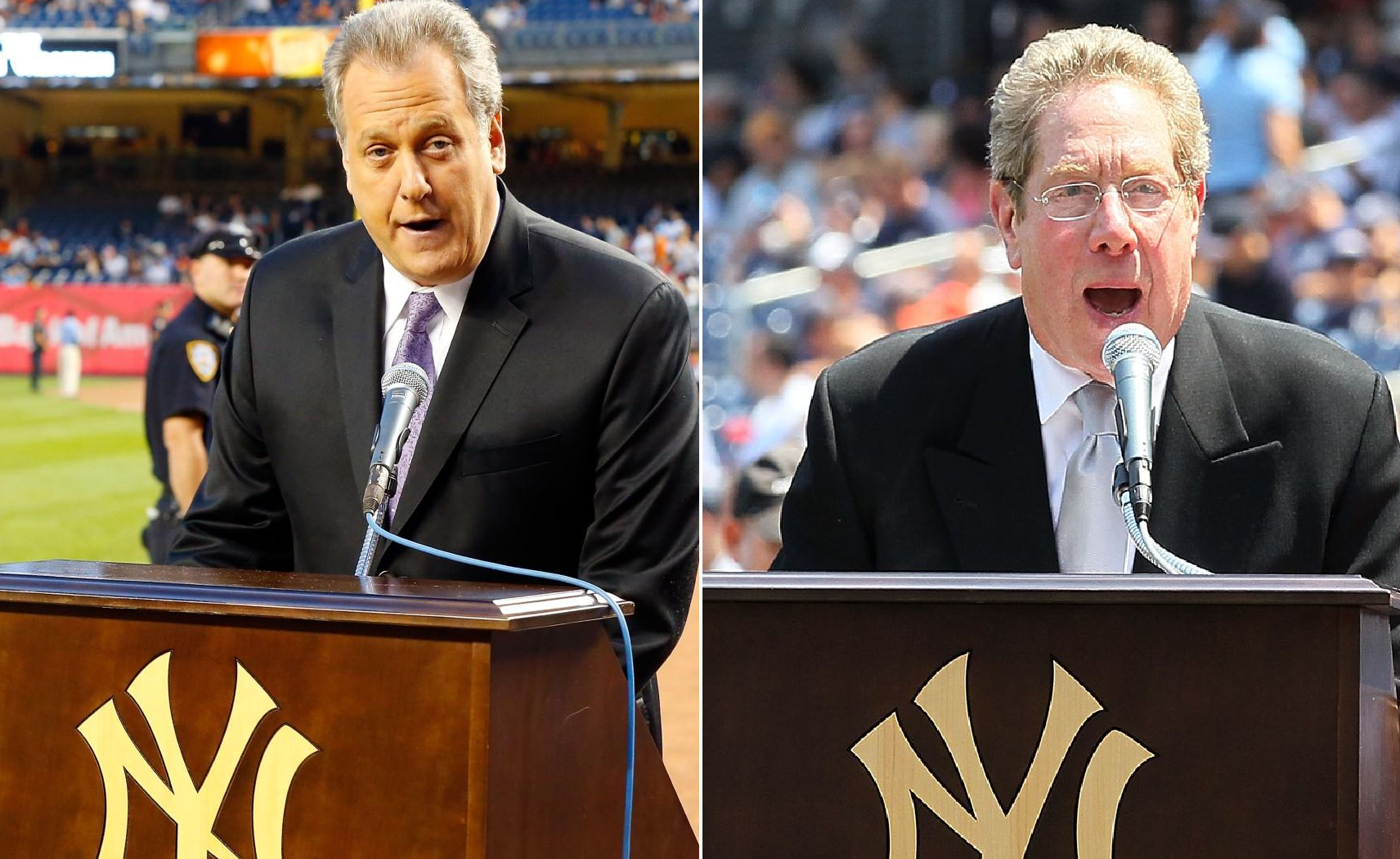
The jog to first erased that grace period. When play-by-play voice Michael Kay watched Ramos amble down the line Saturday, he said flatly what many were thinking.
“Was he running hard? Not exactly,” Kay said on the broadcast.
Now the conversation includes effort, not just fortune. A slump paired with hard contact draws patience. A slump paired with a lack of hustle draws heat, and it puts the front office decision back under the microscope.
The comparison Yankees fans fear
There is a deeper worry lurking under the trade. The Yankees moved for Ramos in part because Jasson Dominguez had failed to seize the same outfield role. Yet the two profiles rhyme. Both are streaky bats with real defensive limits.
The defense has not helped Ramos’ case. In 65 innings in left field, he has posted minus-1 outs above average and minus-1 defensive runs saved. He also carries a .689 career OPS against right-handers, the pitchers he faces most, which undercuts the everyday role injuries have forced on him.
Ramos is under team control through 2029, so the Yankees are not making a rental bet. But the prospect cost, paired with the early production, has fans and analysts asking whether a lesser price could have landed a similar player.
For now the Yankees sit 68-55, second in the AL East and well behind the Tampa Bay Rays, leaning on their wild-card lead for comfort. Bellinger could begin a rehab assignment as soon as this week, a return that would push Ramos toward the platoon role the Yankees originally envisioned. Until then, every ground ball he hits, and how hard he runs it out, will be watched closely. The gamble Cashman made is still waiting for its first payoff.
What do you think? Leave your comment below.