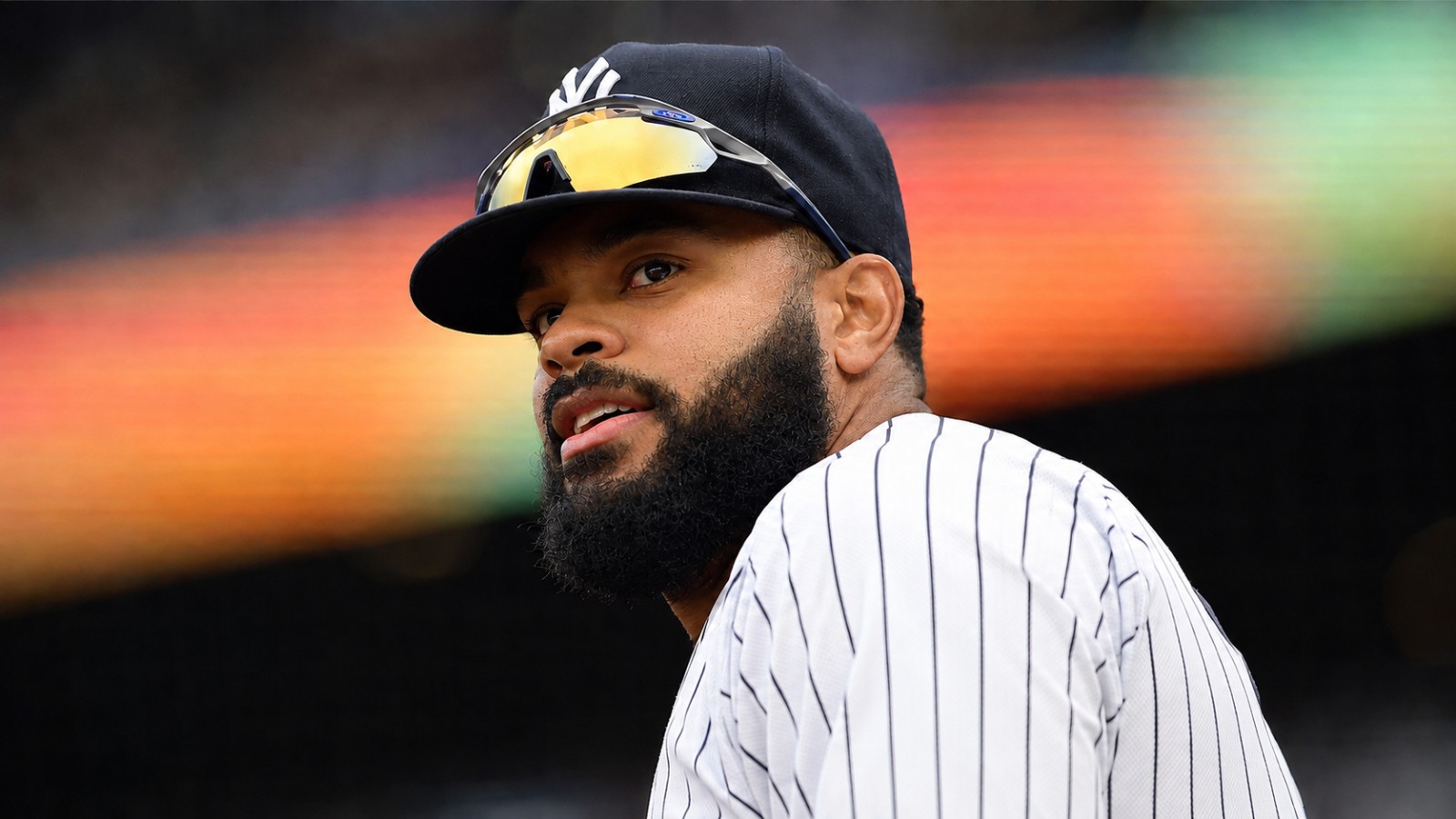
NEW YORK — The Yankees spent Sunday searching for one hit that could change another low-scoring game. Heliot Ramos had four chances to supply it from one of the most prominent spots in Aaron Boone’s lineup.
Ramos batted third against the Atlanta Braves at Yankee Stadium and finished 0-for-4 with two strikeouts in a 2-1, 10-inning loss. Trent Grisham’s eighth-inning home run accounted for New York’s only run, and the Yankees finished with four hits while going 0-for-6 with runners in scoring position.
The rough afternoon extended a quiet first week for a player the Yankees acquired at the trade deadline to add right-handed impact while their outfield was depleted. Through five games with New York, Ramos is 2-for-17. Both hits are doubles. He has no runs or RBIs, with two walks, two hit-by-pitches and seven strikeouts in 21 plate appearances.
That makes some of the early frustration understandable, although one part of the social-media reaction has outrun the official numbers. Ramos has grounded into one double play with the Yankees, not several. His New York slash line sits at .118/.286/.235, a .521 OPS, entering Tuesday’s series opener against Seattle.
Sunday’s loss sharpened the stakes around every lineup decision. Michael Harris II singled home the automatic runner in the 10th. Raisel Iglesias earned the win, Paul Blackburn took the loss and Tyler Kinley recorded the save. The Yankees entered Tuesday 66-52, second in the AL East and six games behind Tampa Bay.
Ramos still owns offensive traits that explain the Yankees’ interest. Statcast has his average exit velocity at 92.2 mph and his hard-hit rate at 49.3%, both strong MLB marks. Yet his first week in pinstripes has also brought a different part of his profile back into focus, one that can matter just as much when his bat is quiet.
A familiar problem has followed Ramos
The more stubborn issue is in left field.
Ramos committed nine errors in left field in 2025, while Statcast credited him with minus-9 Outs Above Average. The Giants spent the offseason working on his positioning and footwork.
There has been improvement, but the weakness did not disappear. Ramos has no official fielding errors in 2026. Statcast still rates him at minus-3 Outs Above Average and minus-3 Fielding Run Value, with his range in the 16th percentile.
The Yankees saw the distinction Saturday during their 5-4 win over Atlanta. With Mauricio Dubon on second in the fifth, former Giants teammate Mike Yastrzemski drove a ball toward left. Ramos retreated, but the liner carried over him for an RBI double that tied the game 1-1.
MLB’s official scoring charged no error. The Yankees telecast still viewed it as a catch opportunity.
“Yastrzemski hit it well, but this is a ball, for the most part, that needs to be caught.”
Ramos’ play showed why a 1.000 fielding percentage does not settle the question about his outfield value.
Yankees bought power upside with a defensive tradeoff
New York acquired the 26-year-old from San Francisco on Aug. 3 for left-hander Henry Lalane and infielder Kaeden Kent. Ramos was batting .264/.304/.424 with nine home runs and 34 RBIs in 74 games for the Giants.
Ramos hit .292/.343/.492 against lefties for San Francisco this season, his clearest matchup strength.
Statcast still sees offensive upside. Ramos has a .261 expected batting average, a .447 expected slugging percentage and an 88th-percentile barrel rate.
The swing decisions are less forgiving. Ramos owns a 27.2% strikeout rate for the season, while his chase and whiff rates sit near the bottom quarter of MLB. With the Yankees, seven strikeouts in 21 plate appearances have made that problem immediately visible.
When Ramos is not converting hard contact into damage, his below-average range gives the Yankees less defensive value to offset a cold stretch.
Batting third put the early mismatch in full view
Boone’s decision to use Ramos in the No. 3 spot Sunday magnified the slow start.
The Yankees faced right-hander Grant Holmes, who held them scoreless for six innings. Ramos struck out to end the sixth with Austin Wells on third, one of New York’s better chances before Grisham tied the game two innings later.
Injuries to Aaron Judge, Cody Bellinger and Giancarlo Stanton have opened regular at-bats for Ramos. He has started all five games with the Yankees in left field.
His two Yankees hits came against St. Louis and Atlanta. He went hitless in the final two games of the Braves series with four strikeouts.
Batting third against Holmes also asked Ramos to produce outside his clearest matchup advantage against left-handers.
Ramos has two problems to solve at once
Five games are not enough to define a trade, but they have identified what the Yankees need in a tight postseason race.
The bat must turn strong contact quality into production. The outfield work must also keep a long-standing range issue from costing runs when the offense is quiet.
Ramos’ defense has improved from 2025, but minus-3 Outs Above Average still grades well below average. Saturday’s play showed why San Francisco spent so much time trying to correct his reads and positioning.
The Yankees host Seattle on Tuesday night at Yankee Stadium, with Ramos still receiving everyday work in left field.
For a deadline addition brought in to help stabilize an injured lineup, the immediate task is clear. The Yankees need the offensive upside they traded for to arrive quickly enough to outweigh the defensive flaw that followed Ramos from San Francisco.
What do you think? Leave your comment below.