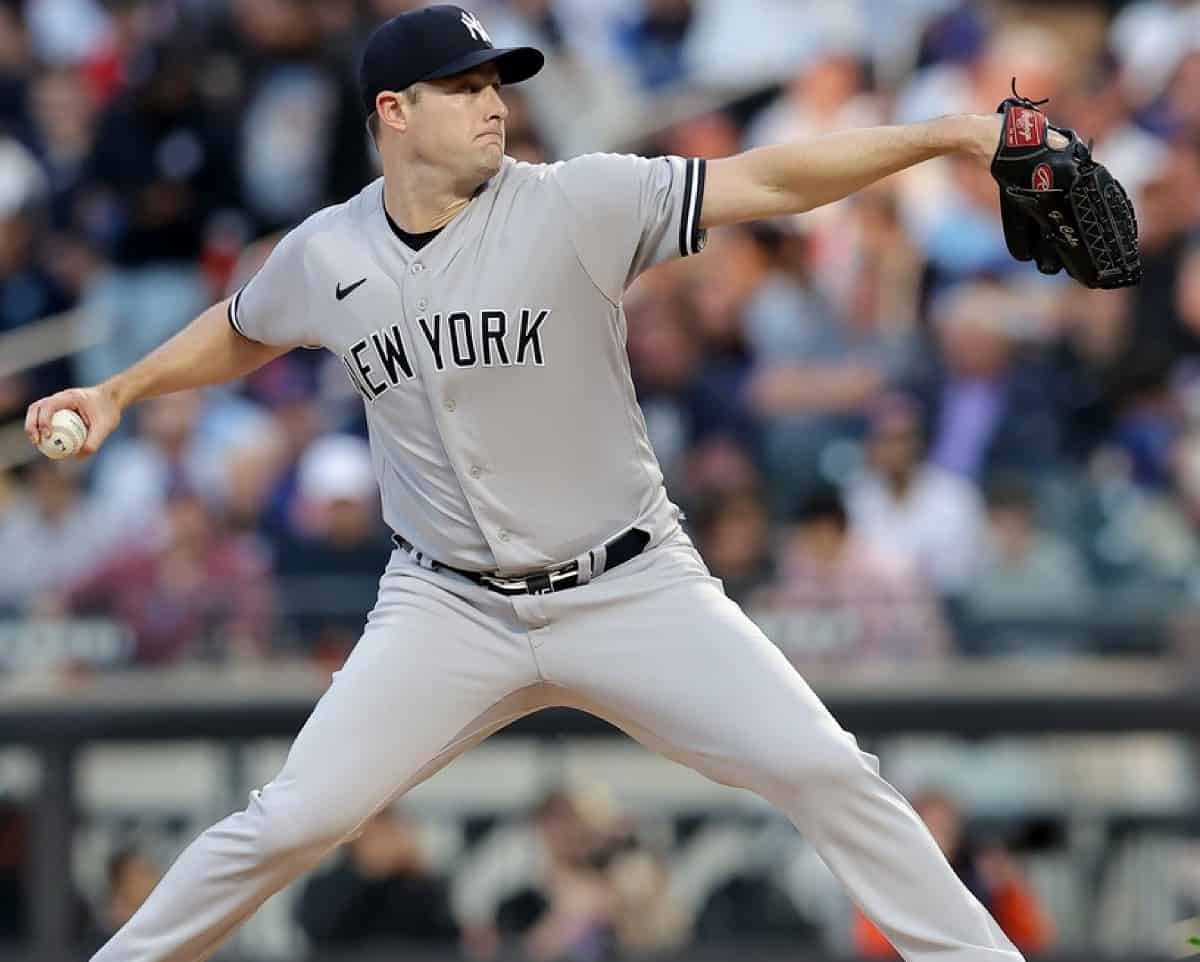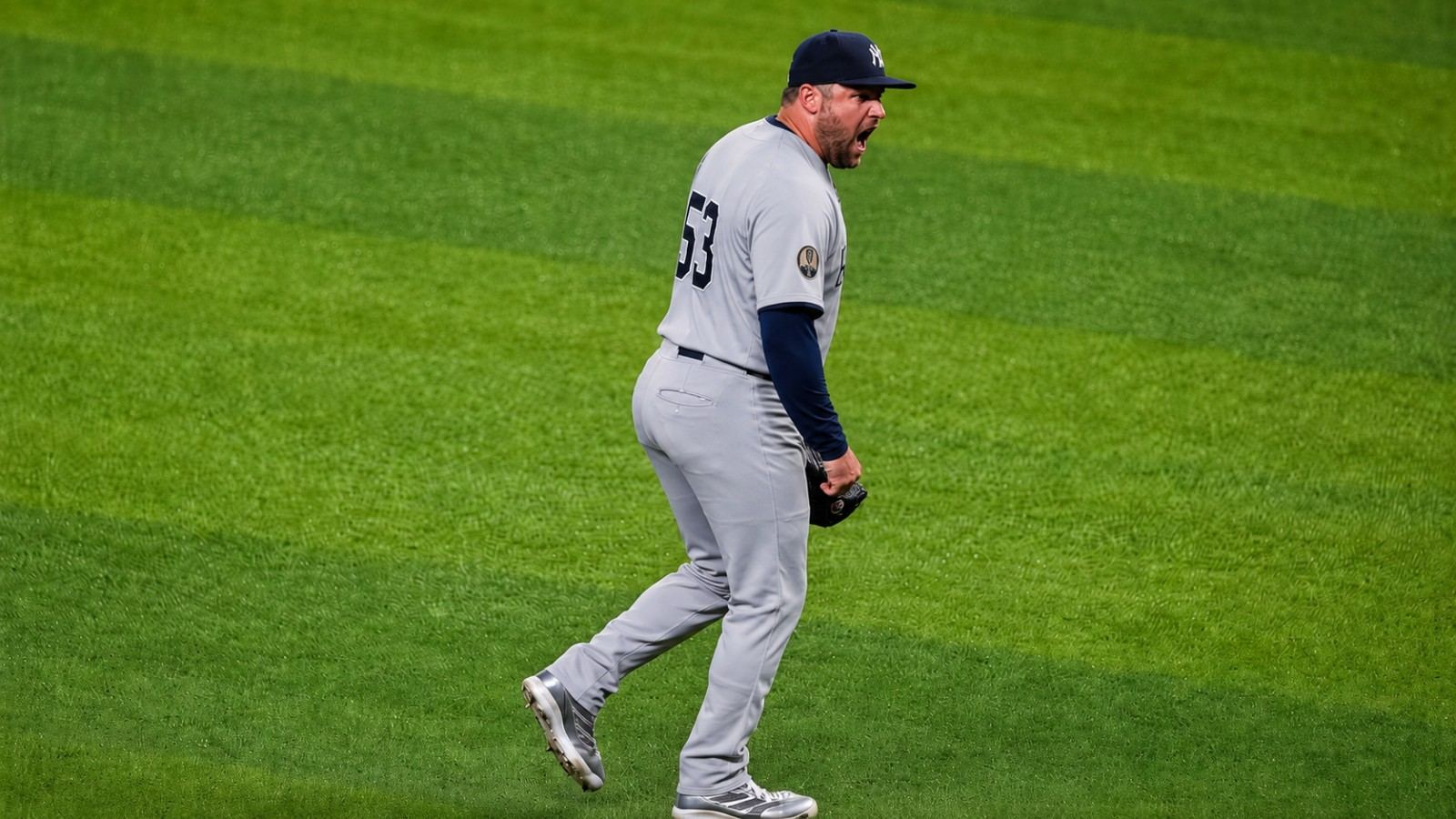
NEW YORK — David Bednar finished the Yankees’ season the way a dependable closer is supposed to: getting outs when the margin for error had disappeared. The final result still belonged to Tampa Bay, but his work offered New York a reminder of what it would risk losing this winter.
Bednar retired all five batters he faced in the Yankees’ 4-3 elimination loss to the Rays at Yankee Stadium on Oct. 7. He struck out two in 1⅔ scoreless innings as New York’s American League Division Series ended in a three-game sweep.
That performance capped a season in which the late innings became one of the Yankees’ relative strengths. Their bullpen posted a 3.13 ERA, second-best in the majors, after considerable work to rebuild the relief corps. But maintaining that advantage comes with an immediate price.
Several experienced relievers are approaching free agency, including Paul Blackburn, Tim Hill and Ryan Yarbrough. General manager Brian Cashman faces the prospect of replacing useful innings while protecting the ninth inning, a role that has already required expensive adjustments in recent seasons.
Bednar, who turned 32 on Oct. 10, is entering the market at a moment when contenders have limited proven closing options. He gives the Yankees a familiar answer, but a substantial one-year commitment could complicate decisions elsewhere on the roster.
A qualifying offer may not solve Yankees’ closer problem
The Yankees are expected to tender Bednar a one-year, $23.15 million qualifying offer after the World Series, while reportedly leaning against making the same offer to second baseman Jazz Chisholm Jr. The club has not announced either decision as of Oct. 16. Jon Heyman of The New York Post was the first to report it.
A qualifying offer would give Bednar the choice to accept a guaranteed 2027 salary or decline and negotiate a multiyear contract. It would also preserve New York’s eligibility for draft compensation if he signs elsewhere. For a club paying the competitive balance tax, that compensation would fall after the fourth round.
The central risk is not merely the high annual salary. A qualifying offer would secure Bednar for only one season if accepted. If he declines, the Yankees would still have to compete with other clubs for his services and could lose the closer who stabilized their bullpen.
A direct multiyear agreement would instead secure several seasons of the position, with the possibility of a lower annual salary than $23.15 million. Such a deal would require a larger total guarantee and expose New York to the usual volatility associated with aging relievers.
Bednar’s numbers support a longer commitment
Bednar saved 35 games in 39 opportunities in 2026, going 7-3 with a 2.47 ERA, 76 strikeouts and 20 walks across a career-high 69⅓ innings. His 1.04 WHIP reflected how rarely opponents reached base against him.
Those numbers only tell part of his year. He posted a 1.39 ERA over 45⅓ innings from the beginning of June, overcoming a difficult stretch in May. His greater use of a splitter helped offset some loss in fastball velocity, an important adjustment for a pitcher entering his early 30s.
Since arriving from Pittsburgh at the 2025 trade deadline, Bednar has recorded 45 saves and a 2.39 ERA in 94 regular-season innings for New York. His nine postseason innings with the Yankees have produced a 1.00 ERA and 12 strikeouts.
The Yankees also have recent evidence of the value of retaining a known closer. Bednar’s steady finish helped erase uncertainty created by previous changes in ninth-inning personnel. Replacing him would require either trusting a less-established internal arm or paying another free agent for the same responsibility.
What a multiyear contract could actually cost
One estimate circulating in offseason discussion puts a potential Bednar contract near four years and $66 million. That is not a reported offer from the Yankees or another club. At an average of $16.5 million annually, however, it illustrates why a longer agreement could be more manageable within a single season’s payroll than the qualifying offer.
The contrast is meaningful: a $23.15 million qualifying offer exceeds that hypothetical annual average by $6.65 million. Across four years, the proposed arrangement would commit $42.85 million more in guaranteed money than a one-year offer. The Yankees would be buying continuity, not immediate savings overall.
Reliever contracts have produced mixed outcomes around the league. The Yankees would have to balance Bednar’s workload, age and pitch development against the premium attached to an established closer. Their decision also affects how much room remains for other bullpen additions.
The Yankees‘ reported reluctance to offer Chisholm the same one-year guarantee underscores how sharply they are separating their roster priorities. Chisholm hit .231 with 19 homers in 2026, while Bednar delivered a dependable ninth inning. Those assessments, rather than a completed transaction, explain the contrasting plans.
No contract decision has been made
The qualifying-offer window does not open until after the World Series. The Yankees can negotiate with Bednar about a multiyear return, issue the offer under MLB’s timetable or allow him to explore the market without that protection.
For now, the confirmed facts point in one direction: Bednar remains unsigned beyond 2026, the Yankees have not formally tendered an offer and the bullpen has multiple potential vacancies. Whether New York chooses a one-year safeguard or a longer commitment will help determine how much of its late-inning success survives into 2027.
What do you think? Leave your comment below.