BRONX, N.Y. — The Yankees have spent much of this season asking their bullpen to protect thin margins while an injury-thinned lineup searches for runs. That formula has turned the final innings into a pressure point for a club trying to chase Tampa Bay in the AL East and hold its postseason position. With little margin for error, late-game certainty has become one of New York’s most valuable assets.
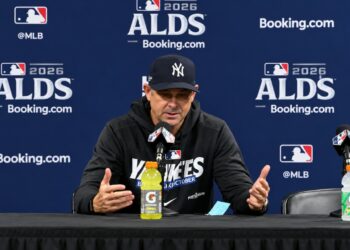
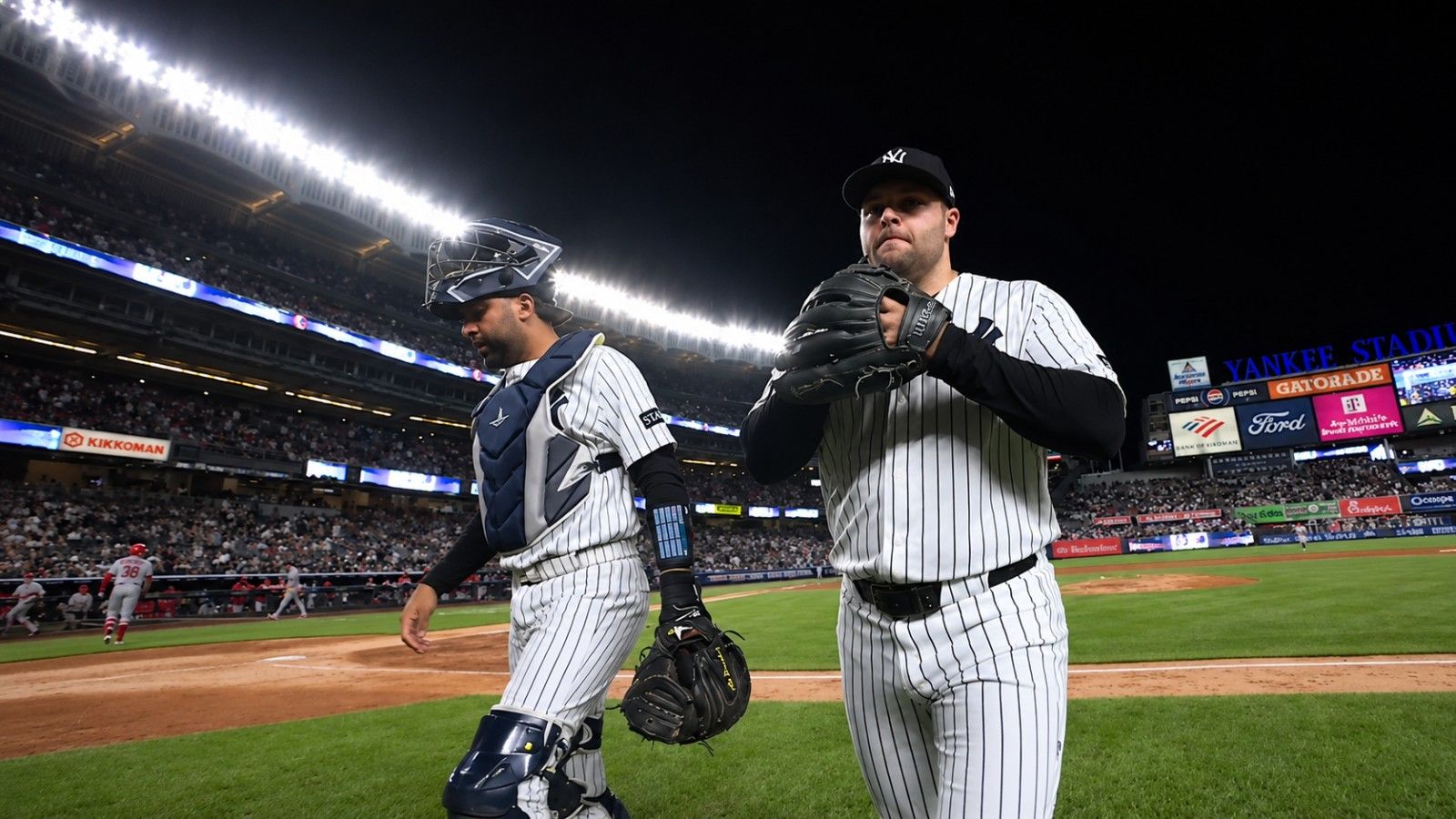
The clearest example came Tuesday at Yankee Stadium. New York led the St. Louis Cardinals 2-0 when the eighth inning tightened, with two runners in scoring position and the tying run at the plate. Aaron Boone did not wait for the ninth. He called on David Bednar for the final four outs, asking the right-hander to protect the lead before the traditional save situation began.
Bednar intentionally walked Alec Burleson to load the bases, then struck out Nelson Velazquez on three pitches. He returned for the ninth and retired the side, striking out the final two hitters. Ryan Weathers earned the win, Hunter Dobbins took the loss and Bednar collected his 25th save. George Lombard Jr. and Jazz Chisholm Jr. supplied the Yankees’ runs with solo homers, while Lombard turned two double plays in his major league debut.
The Yankees lost the series finale 3-1 Wednesday and entered Friday at 64-51, 4.5 games behind Tampa Bay. They remained in the top American League wild-card position, but the offense’s recent struggles have made every protected lead more important. Through Wednesday, Yankees relievers owned a 3.33 ERA, the best mark in MLB, and a 2.56 ERA over their previous 55 games. The club now opens a home series against Atlanta with its margin in the division compressed and its bullpen carrying outs that cannot easily be recovered elsewhere.
Bednar is turning dominance into an offseason decision
That late-inning stability is creating a larger Yankees question: how much are they willing to pay to keep the reliever who has become the most dependable part of Boone’s endgame?
Bednar is earning $9 million in 2026 after avoiding arbitration and can become a free agent after the season. He turns 32 on Oct. 10. The Yankees acquired him from Pittsburgh at the 2025 trade deadline for Rafael Flores, Edgleen Perez and Brian Sanchez.
Through Wednesday, MLB listed Bednar with a 2.54 ERA, 1.05 WHIP and 57 strikeouts in 49 2/3 innings across 46 appearances. His 25 saves were tied for sixth in the majors and account for 39% of the Yankees’ 64 victories.
Bednar has converted 15 consecutive save chances. Over 29 2/3 innings during that stretch, he has a 0.91 ERA and 0.71 WHIP with 34 strikeouts against nine walks.
That surge followed the low point of his season. Bednar carried a 4.95 ERA after blowing a ninth-inning lead against the Mets on May 17. Since then, he has restored the ninth inning as one of the Yankees’ most predictable phases.
Yankees have moved away from premium reliever deals
The contract issue stands out because the Yankees have increasingly built bullpens without paying top free-agent prices.
Earlier Boone-era teams carried several expensive late-inning arms. Aroldis Chapman, Zack Britton and Adam Ottavino were central to a heavily funded bullpen in 2019. Since then, New York has leaned more on trades, development and lower-cost signings.
Clay Holmes became a closer after a modest trade with Pittsburgh. Luke Weaver developed into a leverage reliever after arriving on a low-risk deal. The Yankees also found useful innings from Ian Hamilton and Jake Cousins without a major long-term investment.
Last winter reinforced that direction. Devin Williams left the Yankees for a three-year, $51 million Mets deal. Weaver also crossed town on a two-year, $22 million contract. New York brought Bednar back on his one-year arbitration deal rather than buy another premium free-agent reliever.
The Yankees doubled down at the 2026 trade deadline. They added Heliot Ramos and Luis Garcia Jr. to the lineup but no reliever, trusting Bednar, Fernando Cruz, Brent Headrick, Paul Blackburn and the rest of the staff to handle the late innings.
Bednar presents the exception question
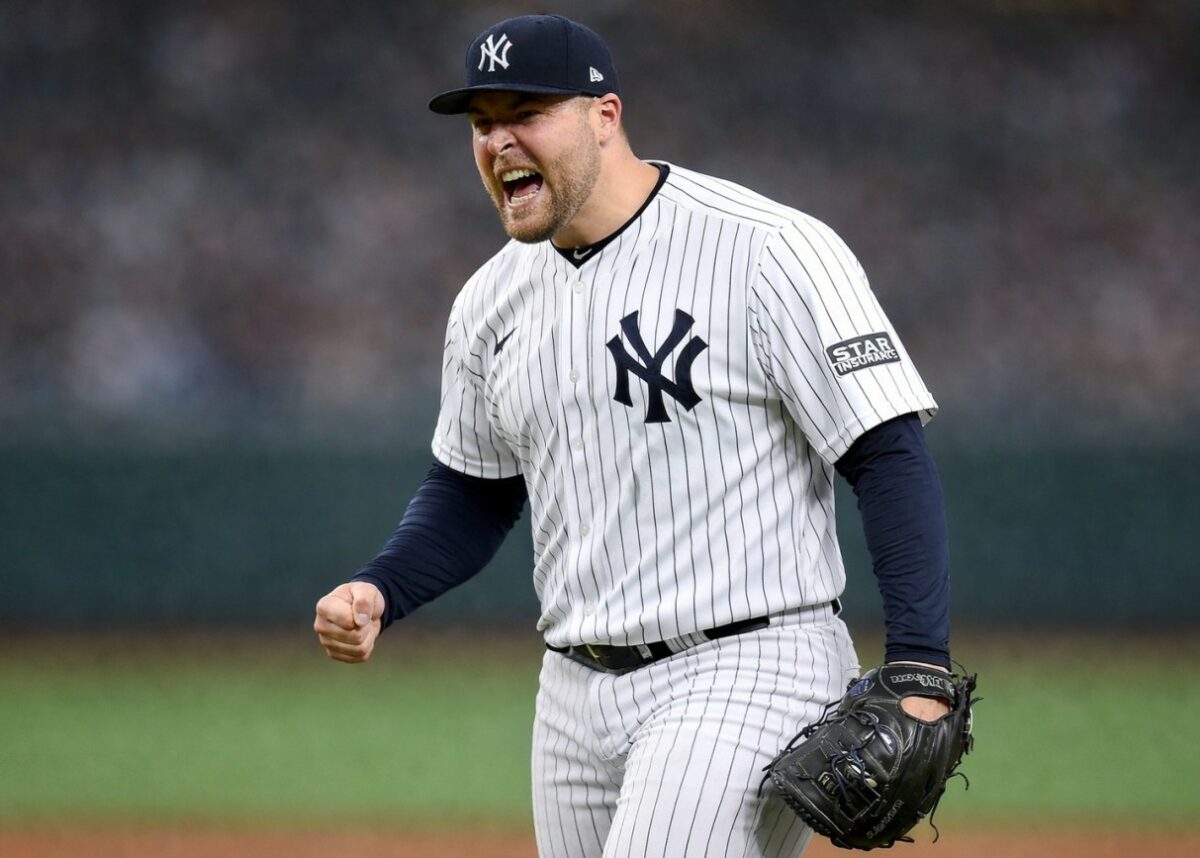
That success gives the Yankees competing evidence.
Their bullpen model is working. New York has produced MLB’s best relief ERA without buying a top-of-market closer. A multiyear commitment to a pitcher entering his age-32 season would run against the approach that built the current group.
Bednar, however, is no longer an unfamiliar rental. He has handled Yankee Stadium, postseason pressure and multi-inning saves. The organization has more than a year of direct information on his preparation, recovery and fit in the clubhouse.
The recent market shows what late-inning certainty costs. Williams received $51 million over three years from the Mets. Edwin Diaz landed a three-year, $69 million deal with the Dodgers. Bednar’s price will be set this winter, but those contracts frame the market for established late-game arms.
Yankees’ bullpen bet now runs through Bednar
The Yankees did not add relief help at the deadline while chasing Tampa Bay. That choice placed more responsibility on the pitchers already on the roster.
Bednar sits at the center of that bet. Tuesday showed why. Boone asked him to enter before the ninth, inherit two runners, face the tying run and finish the game. Bednar delivered without allowing a hit.
For now, the Yankees need him to keep shortening games in a postseason race. After the season, the question changes.
New York has spent several years proving it can build bullpens without paying heavily for relievers. Bednar is giving the Yankees their clearest test yet of whether that rule should have an exception.
What do you think? Leave your comment below.