NEW YORK — The Yankees enter another offseason with a bullpen that delivered strong regular-season results but faces significant turnover. Their most dependable late-inning pitcher is positioned to become one of the biggest names in the relief market.
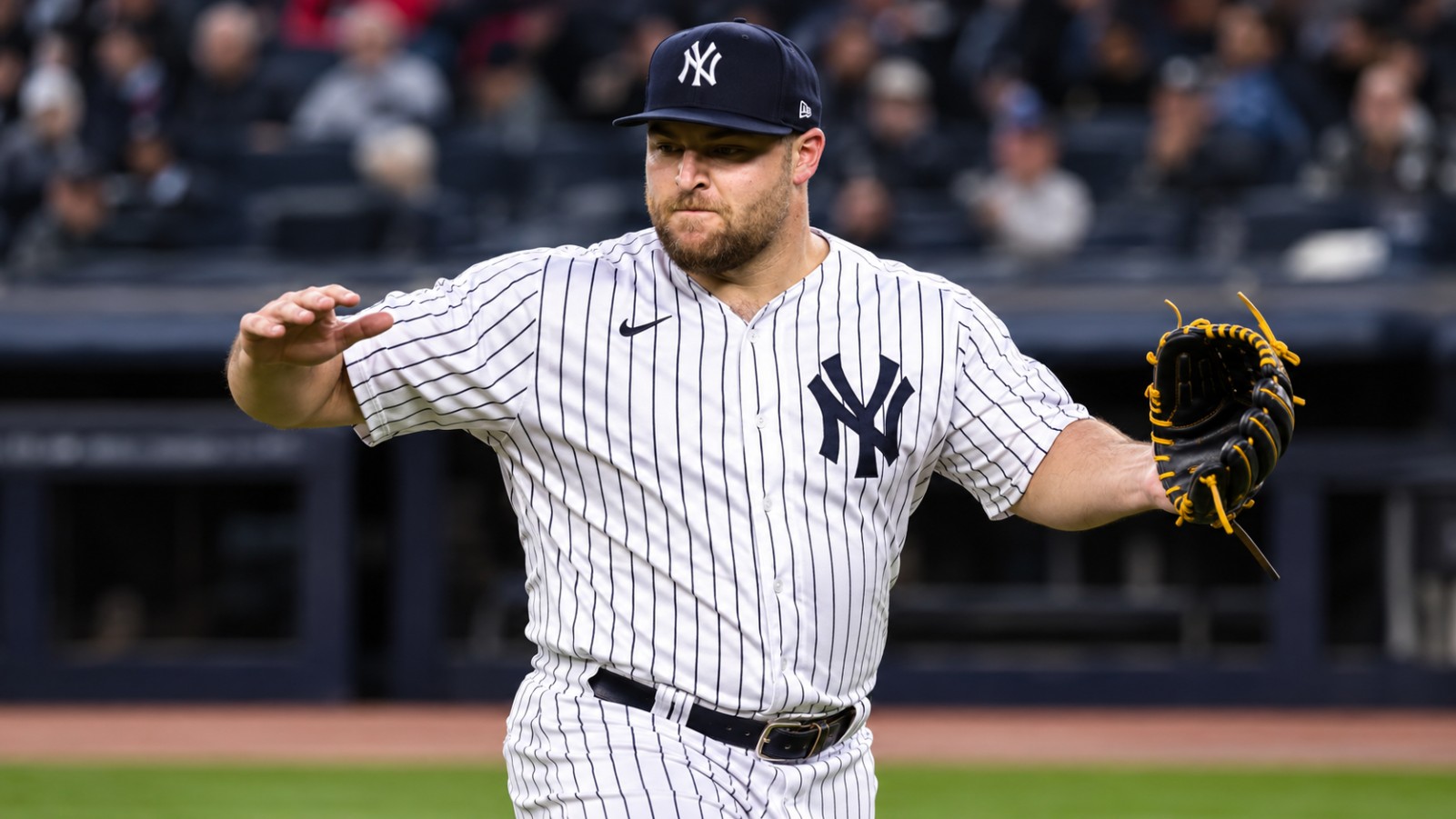
David Bednar finished his first full season in pinstripes with 35 saves and a 2.47 ERA. His reliability became especially valuable as New York built a relief group that ranked near the top of Major League Baseball, only to face multiple departures after its postseason exit.
The immediate question is not whether the Yankees value Bednar. It is whether a large salary for one season can satisfy a 32-year-old closer with a chance to secure the longest guaranteed contract of his career.
That distinction matters for general manager Brian Cashman. The Yankees need a closer, but they also need to rebuild the supporting cast, and their decisions now could determine how much money and flexibility remain for the rest of the pitching staff.
A $23.15 million offer creates a contract crossroads
On Monday, Nov. 2, the Yankees extended Bednar a one-year, $23.15 million qualifying offer for 2027. He has until Nov. 17 to accept or reject it. MLB insider Joel Sherman expects a rejection, with Bednar instead seeking a multiyear contract.
Sherman framed the choice as one between guaranteed annual salary and longer-term security. He estimated Bednar could pursue an agreement comparable to the three-year, $51 million contract former Yankees reliever Devin Williams received from the Mets.
“I would think the likelihood is he’ll refuse the qualifying offer and try, since he’s in his 30s now, to see if he can get a multi-year deal someplace else,” Sherman said. “I think he probably falls into the area of (0:23) about what Devin Williams got last offseason, which is three years at 51 million.”
He also described why New York might prefer to keep the risk confined to a single season rather than commit through multiple years.
Sherman said the Yankees would prefer a higher one-year salary to a long-term commitment, putting the club’s shorter-term approach in contrast with the multiyear security Bednar could pursue.
The qualifying offer does not prevent negotiations on a longer contract. If Bednar rejects it and signs with another team, the Yankees would be eligible for draft-pick compensation.
“He’s certainly been helped by his year and a half with the Yankees. So he’s gone to the largest market,” Sherman added.
What Bednar’s performance says about the price
Bednar converted 35 of 39 save chances in 2026, an 89.7% success rate, and went 7-3 in 64 appearances covering 69 1/3 innings. He struck out 76 and walked 20. His 35 saves tied for third in the American League.
Since joining New York from Pittsburgh in July 2025, Bednar has recorded 45 saves with a 2.39 ERA across 86 regular-season appearances. His 2026 ERA was backed by a 2.61 fielding independent pitching mark, and his heavy workload did not prevent him from delivering scoreless outings in three postseason appearances this year.
The financial difference is substantial. Sherman’s suggested $51 million benchmark averages $17 million per year, $6.15 million less annually than the qualifying offer, but guarantees $27.85 million more in total. The competing values are immediate salary for the club versus multiyear security for the pitcher.
Bednar earned $9 million in 2026. Accepting the Yankees’ offer would increase his salary by $14.15 million for one season. Rejecting would leave him free to test how other clubs value a proven closer entering his age-33 season.
A strong bullpen still faces a costly rebuild
The Yankees’ bullpen posted a 3.13 ERA in 2026, second best in the majors, and a 1.22 WHIP, fourth best. Yet six relievers entered free agency: Bednar, Paul Blackburn, Michael Fulmer, Tim Hill, John Schreiber and Ryan Yarbrough.
That turnover adds urgency to Bednar’s decision. Brent Headrick is among the established returning options, while Fernando Cruz is recovering from a partially torn ulnar collateral ligament. Losing Bednar would mean finding a new ninth-inning answer in addition to replacing several other bullpen innings.
Sherman also noted that pitching in New York has helped Bednar’s standing, pointing to his postseason work and demeanor under pressure.
“He’s pitched well in his brief playoffs. He’s pitched well. He’s looked kind of fearless,” Sherman said. “And the Yankees are in kind of a desperate situation when it comes to bullpen.”
Qualifying-offer history adds another layer to Yankees decision
Only 18 of the 157 qualifying offers issued before this offseason were accepted after the system began in 2012. That history favors Bednar exploring the market, although each player’s situation is different.
The Yankees experienced the other outcome a year ago when outfielder Trent Grisham accepted a $22.025 million qualifying offer. This year they offered Bednar the deal but declined to extend one to second baseman Jazz Chisholm Jr., who hit .231 with 19 home runs and 41 steals in 2026.
The next deadline is Nov. 17, when Bednar must make his qualifying-offer decision. MLB’s collective bargaining agreement expires Dec. 1, adding another calendar pressure to an offseason in which the Yankees must determine how much long-term money to commit to their bullpen.
What do you think? Leave your comment below.