NEW YORK — The Yankees’ search for a right-handed catcher has reached a familiar offseason problem: The player who best fits their lineup may not want the job they have available.
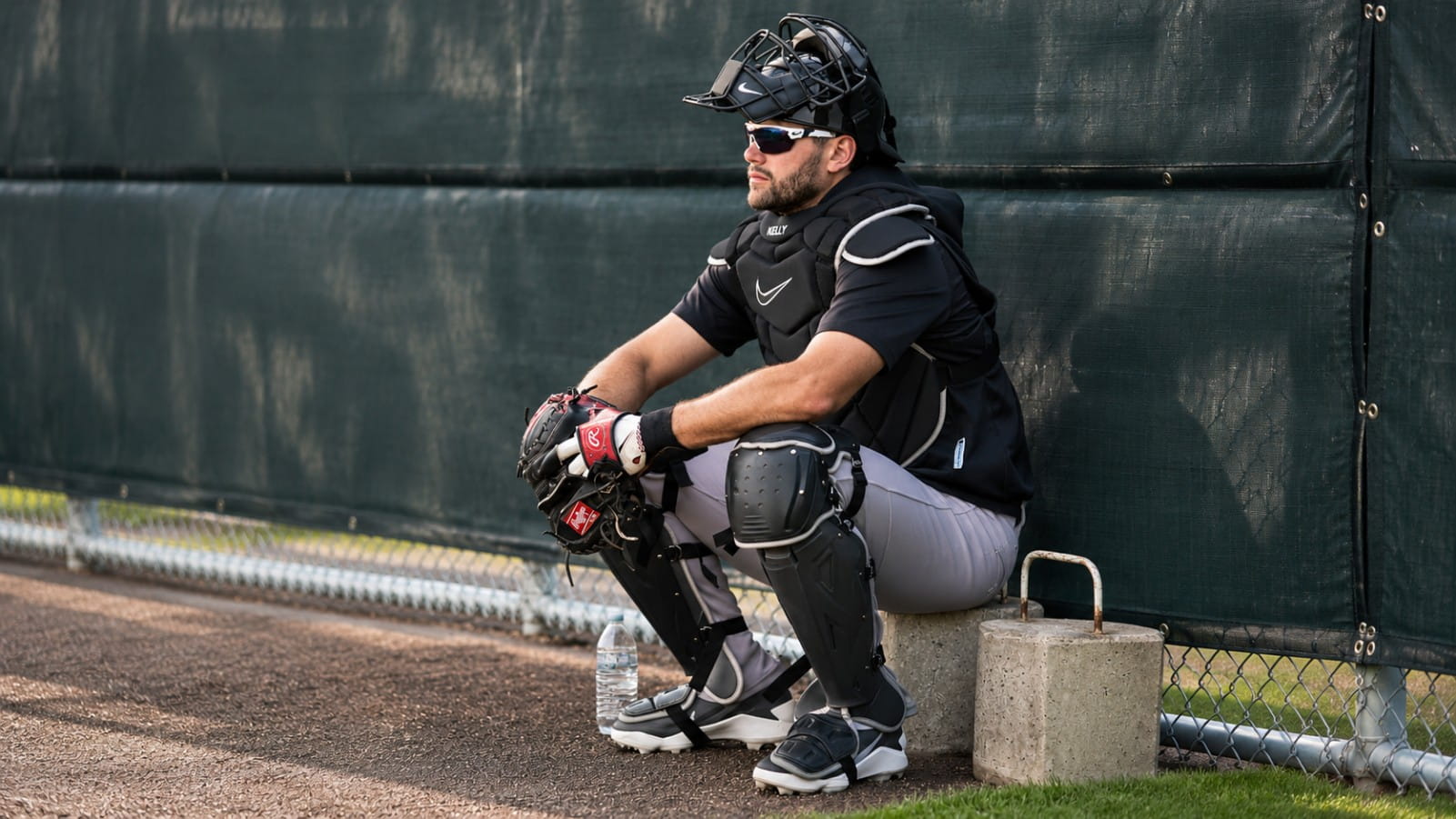
New York has explored the free-agent market for a partner to Austin Wells, whose difficulties against left-handed pitching have created an obvious need behind the plate. Carson Kelly offers an answer, particularly against southpaws, but his experience makes him a candidate for a larger role elsewhere.
The Yankees are trying to improve their catching production without abandoning Wells, a former first-round pick who remains under team control. That approach limits the number of starts they can guarantee a veteran newcomer.
With the anticipated Dec. 1 labor stoppage approaching, a prolonged negotiation could leave general manager Brian Cashman searching for another option before the offseason market pauses.
The Yankees have discussed Kelly as part of their search for right-handed catching help. The obstacle is playing time: Kelly could pursue a starting assignment rather than accept a fixed platoon, and the Yankees have not indicated they intend to hand him the primary job.
Kelly’s potential role complicates Yankees’ pursuit
Ken Rosenthal raised the central question Thursday while assessing the fit between Kelly and Wells. The issue is not whether he can help New York’s lineup, but whether the Yankees can offer enough opportunities to persuade him to sign.
Rosenthal described Kelly as a strong right-handed alternative after two productive seasons with the Chicago Cubs. He then identified the uncertainty around Kelly’s willingness to divide the position.
“The question is whether Kelly would want to platoon with Wells when he might land an everyday job with another club,” Rosenthal wrote.
Rosenthal also noted that the Yankees’ appeal and the possibility of earning more starts could influence Kelly’s choice. That is different from a reported demand that Wells be benched or traded.
New York’s pursuit follows the Cubs’ decision not to retain Kelly through a mutual option. He declined his side of a $7.5 million option, entering free agency after completing a two-year, $11.5 million contract.
Yankees have a measurable reason to want his bat
Kelly, 32, hit .258 with 10 home runs, 58 RBIs and a .712 OPS over 121 games in 2026. Those overall numbers make him a useful complementary hitter rather than a clear offensive centerpiece.
The left-right split is much more compelling. In 121 at-bats against left-handed pitching, Kelly batted .298 with a .375 on-base percentage, .496 slugging percentage and .871 OPS. He collected six home runs in those opportunities.
Wells hit .186 with a .292 on-base percentage and .332 slugging percentage in 2026. The left-handed hitter also posted a poor second-half line against lefties, leaving the Yankees exposed whenever opposing managers used a southpaw.
Kelly’s offensive profile would permit manager Aaron Boone to start him against left-handers while keeping Wells in favorable matchups against right-handers. It would also provide experienced injury protection during a 162-game season.
But the same split that makes Kelly attractive to the Yankees could make him desirable to other clubs. If a team offers regular starts regardless of the opposing pitcher’s handedness, New York would need to compete on salary, opportunity or both.
The playing-time math makes the disagreement real
Kelly logged 425 plate appearances in 2026. A strict matchup arrangement in New York might provide substantially fewer opportunities if Wells remains the primary catcher against right-handed starters.
That matters beyond the contract’s guaranteed dollars. Playing time influences a catcher’s counting statistics, future earning potential and opportunities to demonstrate he deserves a first-choice role.
There is a potential compromise. The Yankees could begin the season with Wells receiving most starts against right-handers and Kelly handling left-handers, while allowing performance, defense and workload to determine the balance later in the year.
Such an arrangement would leave Kelly with a realistic route to more playing time without requiring the Yankees to reverse their plans for Wells before spring training. It would also give Boone a more credible option than the thin offensive production available from New York’s backup catchers in 2026.
The defensive equation is not identical. Wells has shown value as a pitch framer, while Kelly’s 2026 fielding run value and framing figures were slightly below average. The Yankees would be buying a substantial matchup upgrade, not necessarily a defensive improvement across every category.
New York still has a choice to make before free agency stalls
Cashman’s interest in Kelly is consistent with the Yankees‘ preference for upgrading a weakness without spending heavily to replace a controllable young player. The risk is that an experienced free agent may view the club’s proposed division of starts as a ceiling rather than an opportunity.
The Yankees can offer a contract that reflects Kelly’s value, outline a competitive path to more starts or pivot to another catcher willing to accept a clearly defined backup role. None of those alternatives has been publicly confirmed as the team’s decision.
As of Nov. 22, Kelly remains a free agent, the Yankees have not announced an agreement and the question surrounding his workload remains unresolved. Their interest is established; whether it produces a deal now depends in part on how much catching time they are prepared to make available.
What do you think? Leave your comment below.