NEW YORK — The Yankees finished another 90-win season with a roster good enough to control long stretches of the summer and still not balanced enough to survive October. The final reminder came in Game 3 of the ALDS, when Tampa Bay erased New York’s season with a 4-3 win at Yankee Stadium.
Victor Mesa Jr.’s two-run homer off Max Fried in the sixth inning supplied the decisive blow. Ian Seymour earned the win, Fried took the loss and Bryan Baker closed out the sweep. Anthony Volpe’s apparent game-tying homer became an RBI double after fan interference, leaving the Yankees one run short and out of the postseason.
That ending sharpened a problem the Yankees have spent years trying to solve. Star power has carried them through the regular season, but the roster has too often lacked the matchup flexibility and inexpensive depth that can decide short October series. New York scored 739 runs in 2026 and posted a plus-138 run differential, according to MLB standings, yet still finished behind Tampa Bay in the AL East before losing all three Division Series games.
The offseason therefore does not have to begin with another blockbuster. The Yankees also need complementary players who can protect weak platoon spots, cover premium defensive positions and give Aaron Boone more lineup choices without forcing Brian Cashman to devote premium dollars to every need.
That is especially relevant at catcher and in the outfield. Austin Wells finished strongly after a poor first half, but his production against left-handed pitching remained a major vulnerability. The Yankees also head into the winter with questions about how much outfield responsibility should fall on Spencer Jones and which veteran can absorb center-field innings while keeping the lineup from becoming too left-handed against October pitching staffs. Those are smaller questions than a star pursuit, but they directly affect lineup construction.
Two Chicago names fit the lower-cost blueprint
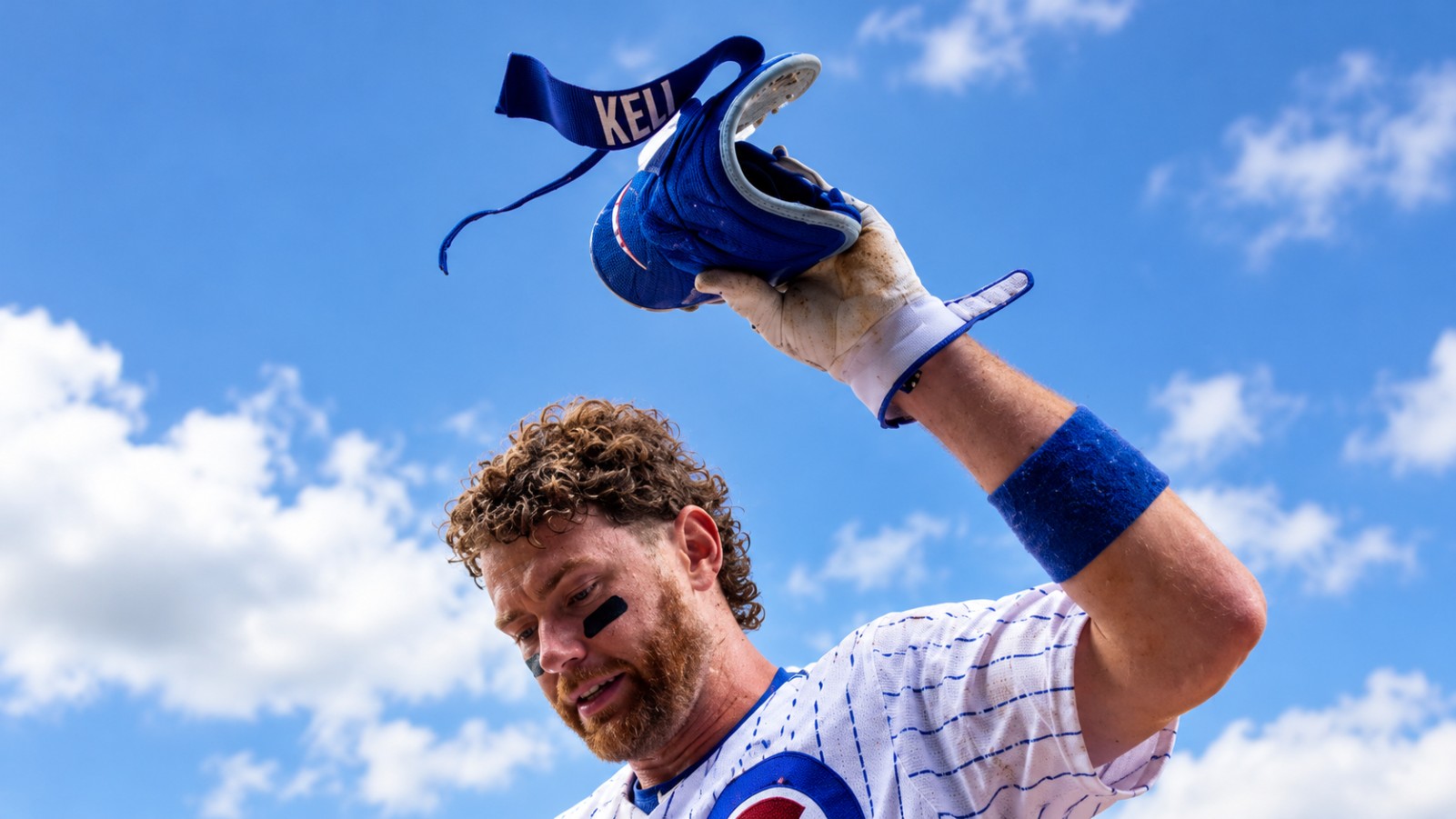
The two players being floated as fits are Carson Kelly and Tyrone Taylor, both right-handed hitters who finished 2026 with the Cubs and bring skills that line up with specific Yankees needs.
Kelly hit .258 with 10 home runs and a career-high 58 RBIs in 120 games. He was far more dangerous against lefties, batting .298 with six homers and an .871 OPS in 136 plate appearances. His contract status also needs an important qualifier. MLB lists Kelly among the upcoming free-agent class, but his Cubs deal includes a $7.5 million mutual option for 2027 with a $1.5 million buyout.
Taylor is an unrestricted free agent after making $3.8 million in 2026. He hit .279 with 11 homers, 38 RBIs and an .827 OPS in 97 games between the Mets and Cubs. Baseball Savant shows he hit .318 with six homers and a .921 OPS in 118 plate appearances against left-handed pitching.
Executive sees Kelly as the cleaner catching fit
Kelly’s value to the Yankees is easiest to see beside Wells. Baseball Savant lists Wells with a .436 OPS against lefties in 2026, while Kelly posted an .871 mark in those matchups. That 435-point gap is the type of platoon contrast the Yankees could exploit without replacing Wells as the primary catcher.
Kelly also brings receiving value. Baseball Savant credited him with positive framing and ABS value in 2026. An MLB executive who evaluated the fit pointed to the combination of at-bat quality and defense.
“Kelly is a tough out. He grinds his at-bats. Is he an All-Star? No. But you’re talking about a platoon with Austin Wells, who I think will be better next year. Kelly does well back there. He’s a good receiver. I think that’s a good fit for the Yankees. Kelly makes more sense to me than signing Jeffers,” the executive said to NJ.com.
Taylor offers coverage without demanding an everyday job
Taylor’s appeal is different. He can defend all three outfield positions and does not require the Yankees to lock one position into a full-time veteran. MLB records show he appeared in left, center and right field in 2026.
His season finished on an upswing. After the Cubs acquired him from the Mets with Clay Holmes on Aug. 3, Taylor hit .351 over his final 30 regular-season games. He finished the year with 16 doubles and 11 homers in only 219 at-bats.
The same executive viewed Taylor as the kind of adaptable roster piece the Yankees have lacked at times.
“Tyrone is a gamer who’s got versatility in the outfield. That’s the reason he keeps finding a job. He can play center, too. Is he a Gold Glover? No, but he’s going to be just fine out there, just like Spencer Jones is. At the plate, Tyrone always has been a tough out. I’ve always liked him,” the executive said.
Platoon math gives both targets a clearer Yankees case
Kelly and Taylor combined for 254 plate appearances against left-handed pitching in 2026 and hit 12 home runs in those matchups. Both produced an OPS above .870 against lefties.
That matters because the Yankees would not be paying either player to carry the offense. Kelly could take selected starts from Wells against left-handers while strengthening the catching defense. Taylor could serve as a fourth outfielder, cover center field and give Boone a right-handed option without blocking Jones.
The Yankees still have larger offseason decisions. Kelly and Taylor fall into a different category. They are not franchise-changing additions, but their production and flexibility fit a buy-low approach aimed at creating more usable October combinations.
What do you think? Leave your comment below.