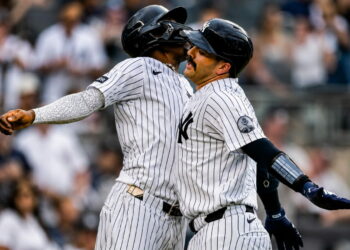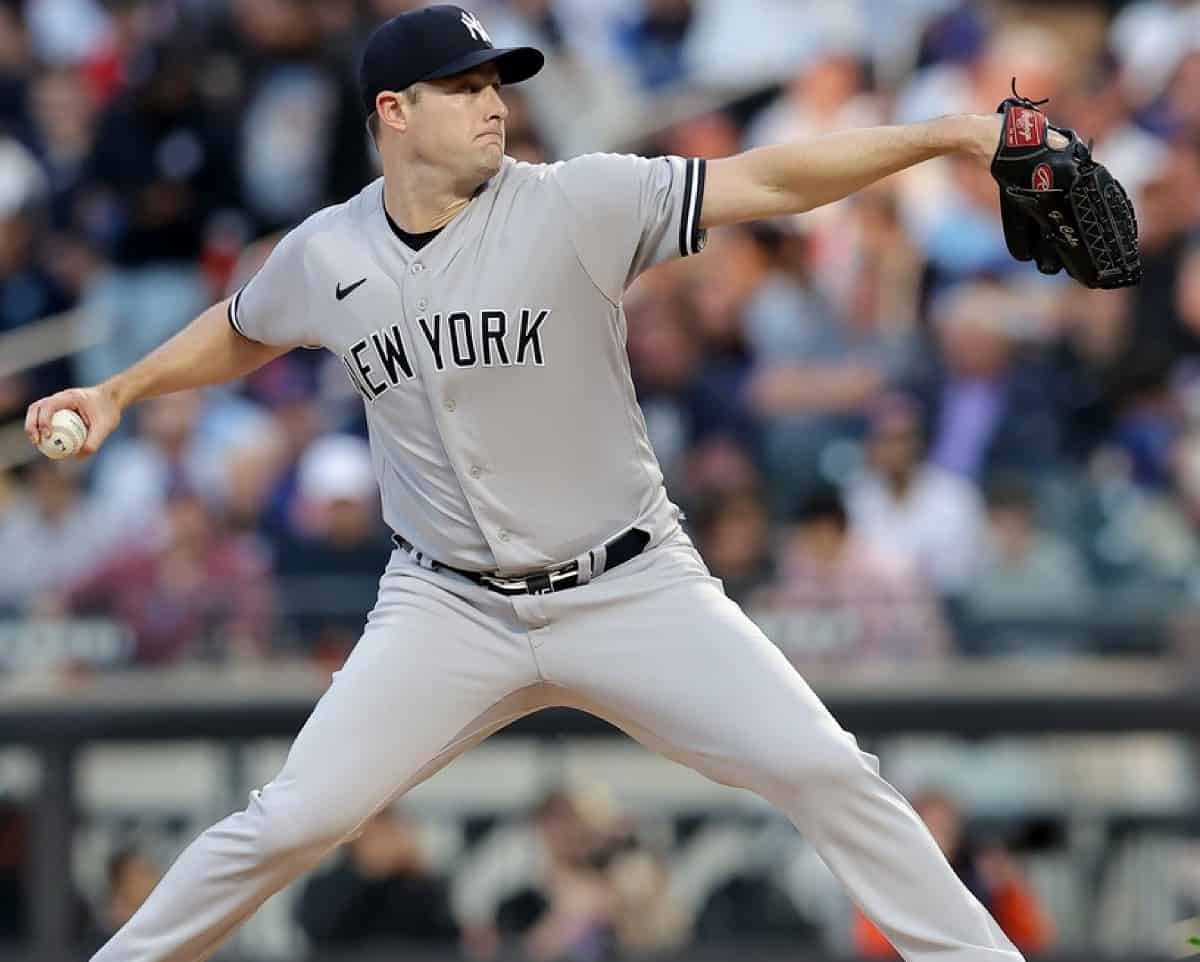
NEW YORK — The final image of the Yankees’ season carried a familiar sting. Tampa Bay celebrated at Yankee Stadium after a 4-3 victory in Game 3 of the American League Division Series on Oct. 7, while New York absorbed a three-game sweep without its biggest star taking a swing.
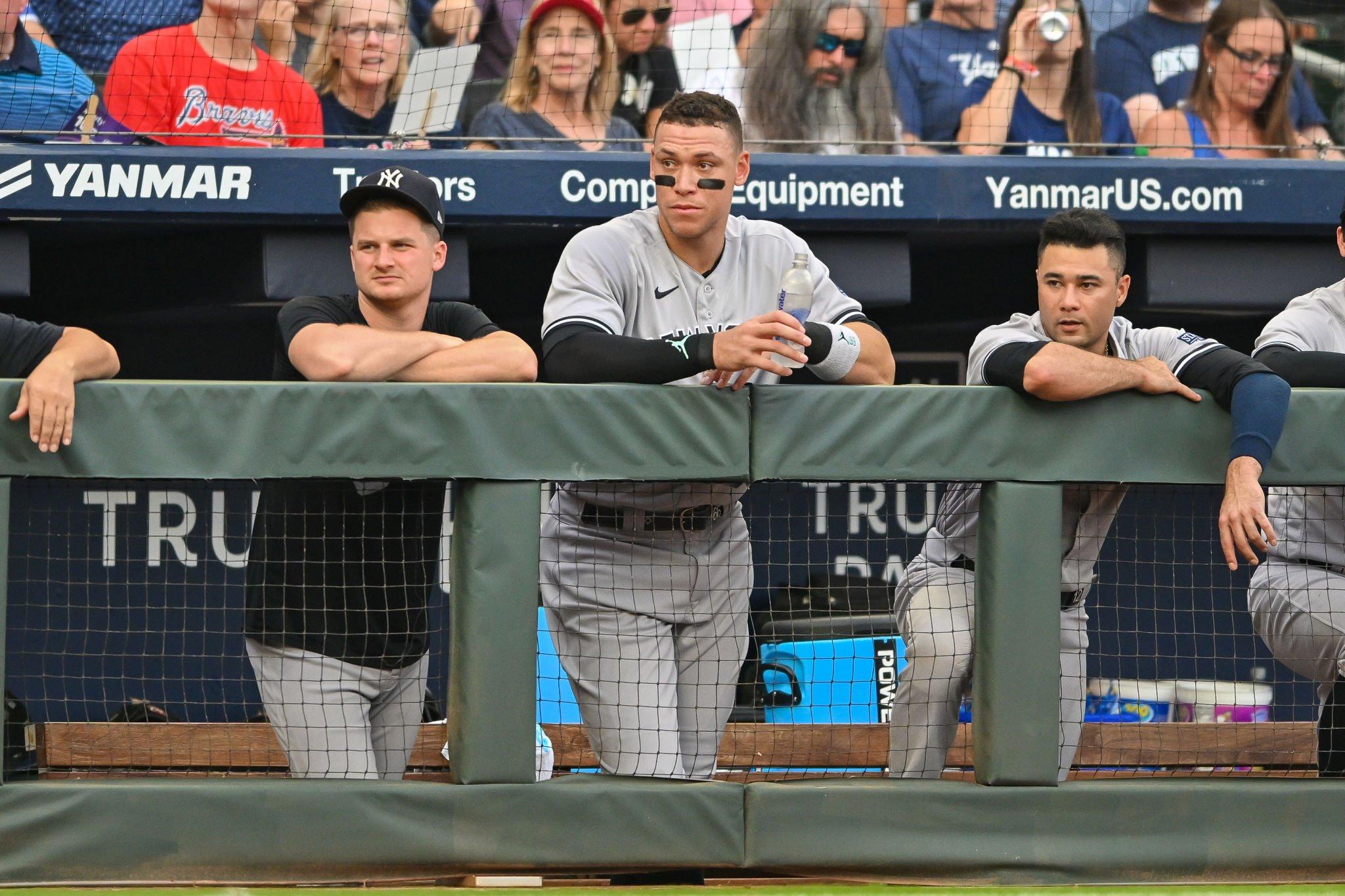
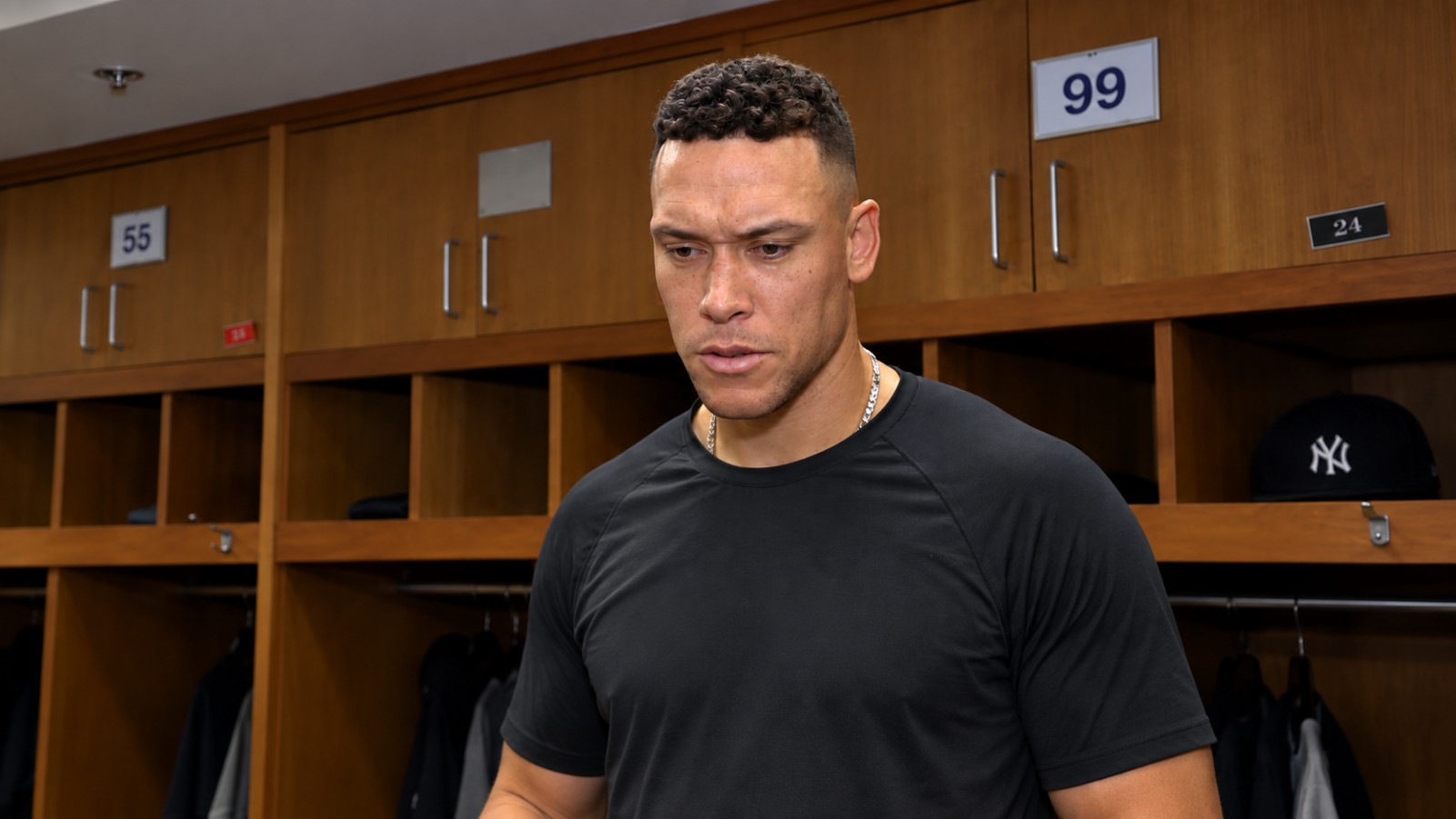
Aaron Judge watched from the dugout because of a strained right calf. The Yankees captain had already missed much of the season with a fractured rib, returned in September and then suffered the calf injury seven games later. He finished 2026 at .241 with 18 home runs, 41 RBIs and an .871 OPS in 66 games, according to MLB statistics.
The Yankees still won 93 games, finished second in the AL East and swept Boston in the Wild Card Series by a combined 18-2 score. That momentum vanished against Tampa Bay. The Yankees never led in the ALDS, scored five runs in three games and saw Anthony Volpe’s apparent game-tying homer in the sixth inning of Game 3 reduced to an RBI double because of fan interference.
Judge’s words afterward widened the discussion beyond one series. Asked how owner Hal Steinbrenner and general manager Brian Cashman should respond, the captain pushed for an aggressive winter and tied that demand directly to the standard he believes should define the Yankees.
“We’re the Yankees,” Judge said. “I feel like they should go all-in and do what they need to do. If we got holes, it’s finding certain players or personnel, whatever we need; you gotta go out there and get it. That’s why I signed back here to play with the Yankees, to fight for a championship every single year. We go all-in. That’s what I do every offseason: get ready to give this team and this city everything I got. So I expect them to do the same.”
Judge’s wording leaves a larger Yankees question
Judge was also asked after the elimination whether the front office had done enough to give the Yankees their best chance to win a championship. He paused, acknowledged the limits of roster building and kept the pressure on the organization.
“It’s tough to say,” Judge said. “I want to trade for everybody and sign everybody every single year, but I know that’s not realistic. So they give us a winning team every single year, but that’s not good enough here in New York. We’re the Yankees. You gotta go out there and expect championships and go all-in every year, so I’m excited to see what they do.”
That qualification is central to the disagreement. Judge did not accuse the Yankees of refusing to spend. Kay instead challenged the captain to define what additional commitment would actually mean.
The exchange comes as scrutiny of Judge’s leadership grows. The Athletic’s Chris Kirschner recently questioned on WFAN whether Judge shows the same visible championship urgency as Giancarlo Stanton. Another examination contrasted the Yankees’ preparation with the Dodgers, where Mookie Betts and Freddie Freeman were cited as stars setting daily work standards.
Michael Kay pushes back on Judge’s challenge
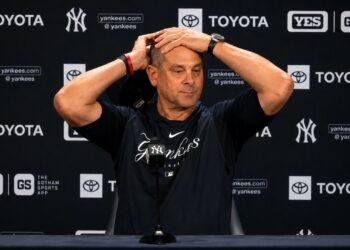
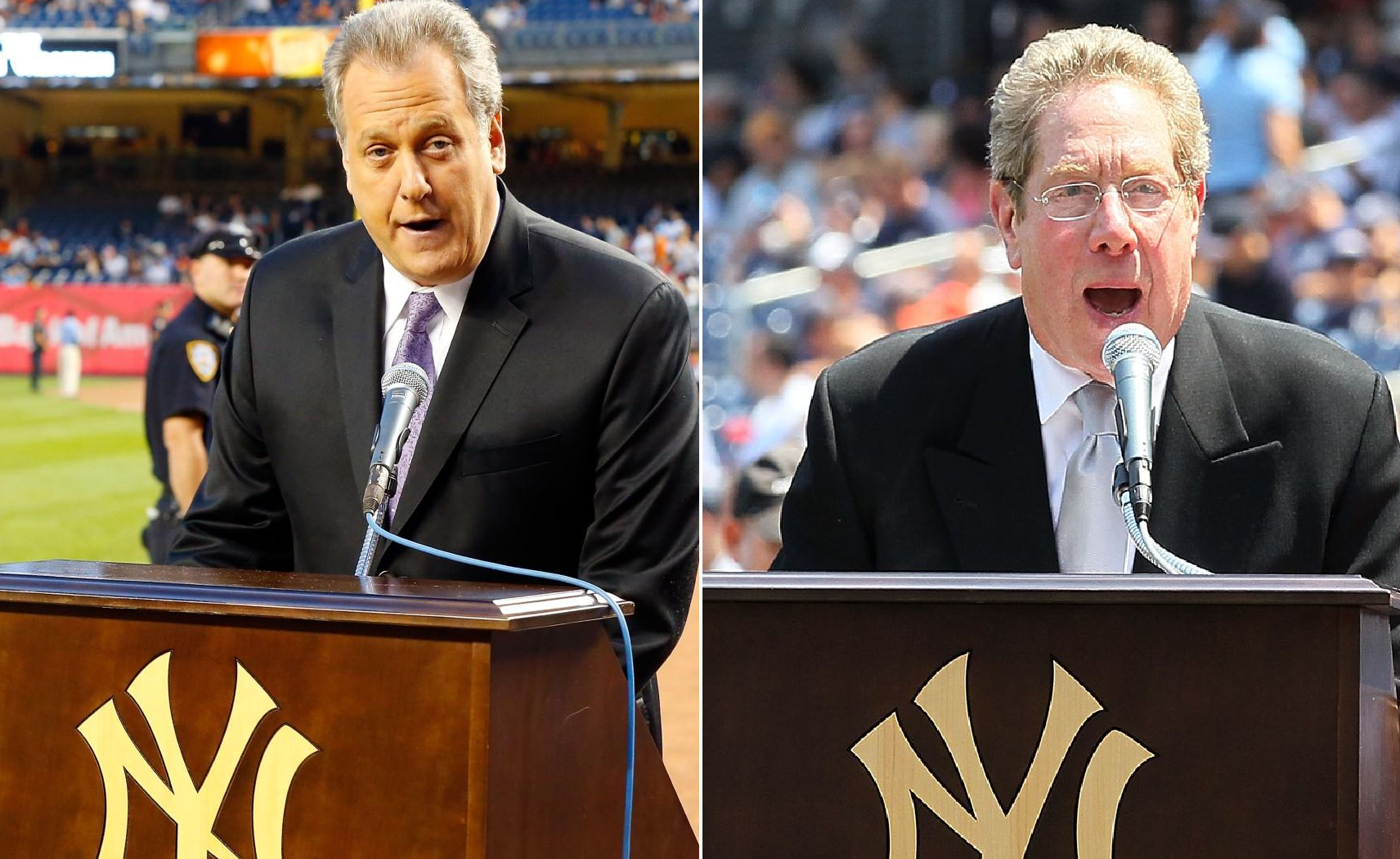
Five days later, Michael Kay, the Yankees’ longtime television play-by-play broadcaster and an ESPN New York host, delivered a pointed response. Kay questioned what Judge believed the organization had failed to do.
He framed the issue around spending, the Yankees’ past pursuit of Juan Soto and whether “all in” could reasonably mean pushing payroll toward the Dodgers’ level.
“And then Judge, after the game, Game 3, where the Yankees lost 4-3, he said, we’ve got to go all in. And that’s the one that confuses me the most. Go all in. What have they not done that would indicate that they’re all in? And if I owned the Yankees and I had a $330 million payroll, and my most important player, the face of my franchise, said that we’ve got to go all in, I would be on the phone with that player and go, what does that mean? Do you think I’m going to have a $480 million payroll like the Dodgers?… No other team, not even Steve Cohen’s Mets, would ever get to a $480 million payroll. So when you’re saying all in, what does that mean? Who have the Yankees passed up on? Who have they passed up on? I mean, they offered Juan Soto $50 million a year for 16 years. So they didn’t go cheap on that. That’s the one that really hurts,” Kay said.
The numbers sharpen the debate
The Yankees’ 2026 results show why the argument is not simply about spending. New York scored 739 runs and allowed 601, a plus-138 differential, while winning 93 games despite Judge missing 95.
October produced a different picture. The Yankees scored five runs in the series. In Game 3, Victor Mesa Jr.’s two-run homer off Max Fried in the sixth supplied the decisive lead. MLB’s official box score lists Seymour as the winner, Fried as the loser and Baker with his third save.
Judge’s postseason record also remains part of the conversation. MLB lists him with a .236 average, 17 home runs, 41 RBIs and an .822 OPS in 65 career postseason games. He had no chance to change those numbers this October.
The Yankees now enter the offseason with their captain publicly asking for an all-in response and one of the organization’s most prominent voices asking him to explain what that means. The unresolved issue is whether the next step is more spending, different roster construction, higher clubhouse standards or better October execution.
What do you think? Leave your comment below.