NEW YORK — For months, a reliever with one of the best numbers in the entire Yankees organization sat at Triple-A and waited for a phone call that never came. The bullpen leads the majors in ERA, and that comfort nearly cost the club an arm it could not afford to lose.
Days earlier, the situation looked like a self-inflicted wound in the making. A right-hander posting a sub-2.00 ERA in Scranton was on the verge of walking away for nothing, free to sign anywhere because the Yankees had not added him to the major league roster in time.
Then the front office blinked. Facing the loss of a live arm three weeks before the trade deadline, the Yankees reversed course and kept him, a quiet admission that letting him leave would have been a mistake.
The Yankees, at 54-43 and chasing the first-place Tampa Bay Rays in the American League East, needed bullpen depth too much to let this one slip. The move also carried a heavy cost on the other side of the roster.
The reliever the Yankees nearly let walk
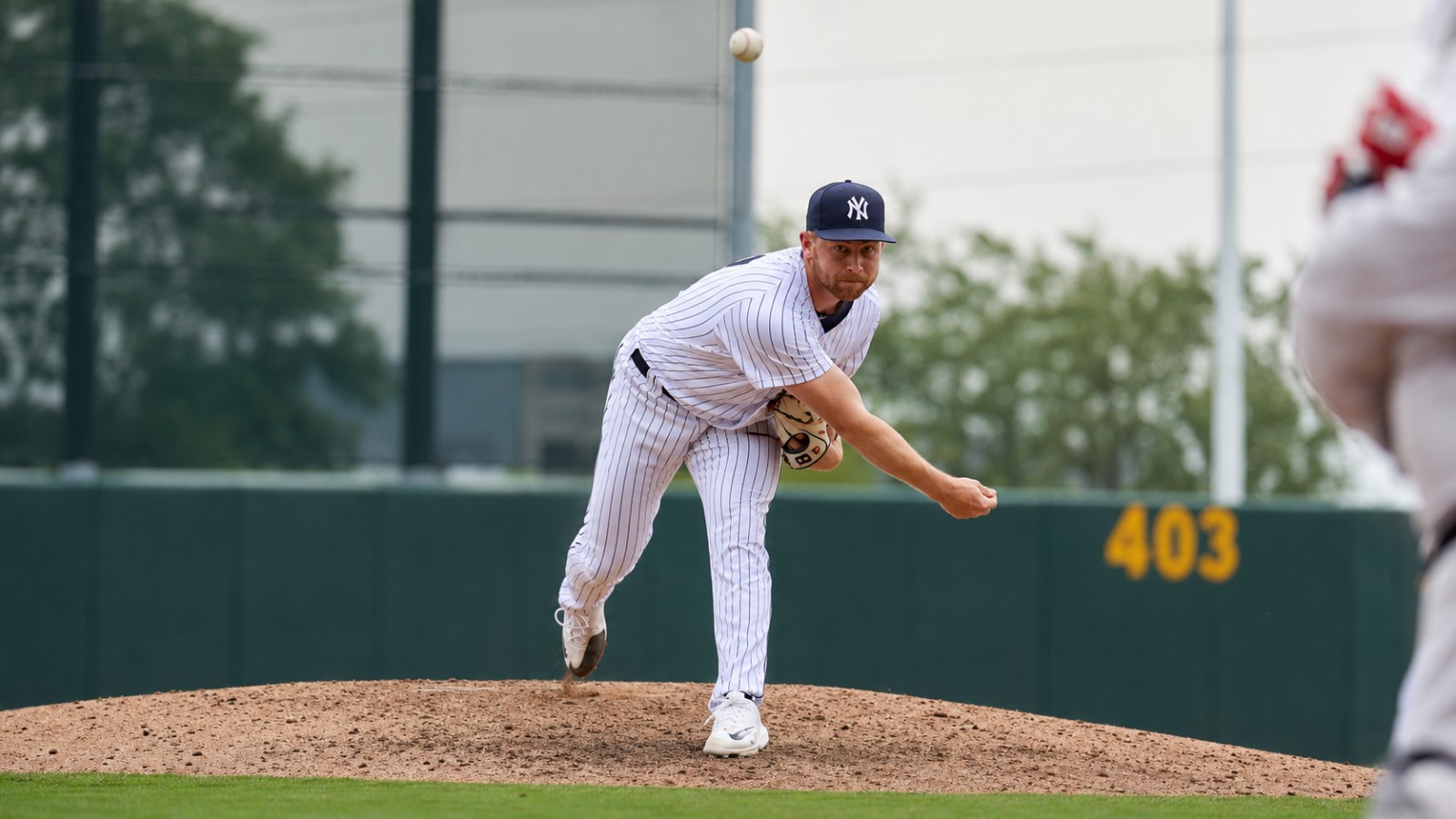
The pitcher is Bradley Hanner, a 27-year-old right-hander who signed with the Yankees as a minor league free agent on Dec. 11, 2025. Before this week, most fans had never heard his name. His numbers made the case the front office could not ignore.
On Saturday, ahead of the club’s series game against the Los Angeles Dodgers, the Yankees announced they had signed Hanner to a major league contract and optioned him to Triple-A Scranton/Wilkes-Barre. The move placed him on the 40-man roster and protected him from the opt-out that would have set him free.
The timing was not an accident. Reporting earlier in the week indicated Hanner intended to trigger an opt-out clause in his minor league deal, a provision that let him leave if he had not been promoted to a big league roster by a set date. The Yankees added him before that door closed.
The reversal stood out because the club had shown no urgency to promote him for months, even as the need for bullpen help grew clearer.
Numbers that forced the issue
Hanner has been dominant in the International League. He has gone 4-1 with a 1.99 ERA across 40 2/3 innings and 32 relief appearances this season, allowing 31 hits and nine earned runs with 50 strikeouts and 16 walks.
The swing-and-miss stands out most. Hanner has struck out 30.5 percent of the batters he has faced, an 11.1 strikeouts-per-nine rate, while holding opponents to a .208 average. Those are the exact traits a contender covets in October.
His track record is more modest, which is why the Yankees can frame this as low risk. Over six minor league seasons in the Minnesota, Cleveland and New York systems, Hanner has gone 35-23 with 24 saves and a 3.98 ERA in 235 games. A Fairfax, Virginia, native, he was originally a 21st-round pick by the Twins in 2019 out of Patrick & Henry Community College.
The gap between his career ERA and this year’s mark suggests his true level sits somewhere in between. Even so, an arm missing bats at this rate was worth far more than the nothing the Yankees would have received had he left.
A roster cost tied to Aaron Judge
Keeping Hanner required a corresponding move, and it was a notable one. To open a spot on the 40-man roster, the Yankees transferred outfielder Aaron Judge to the 60-day injured list.
The Yankees confirmed the transaction through the club’s communications channel, spelling out both halves of the move in a single announcement.
“Today, the New York Yankees have signed RHP Bradley Hanner to a Major League contract and optioned him to Triple-A Scranton/Wilkes-Barre,” the team said. “To make room on the 40-man roster, the Yankees have transferred OF Aaron Judge to the 60-day injured list.”
The Judge move is largely procedural given the length of his absence, but it underscores how the Yankees are managing a roster stretched thin by injury. Clearing his spot let them protect a reliever they had nearly lost.
A bullpen that needs the help
The surface numbers say the Yankees do not need bullpen reinforcements. The relief corps entered the second half with the lowest ERA in baseball, a headline that masks a shakier reality underneath.
The peripheral metrics tell a more cautious story, with the group ranking middle of the pack in strikeout rate. For a team built to win in October, a bullpen that struggles to miss bats is a real concern, not a footnote. Hanner’s profile speaks directly to that weakness.
The internal depth behind him is thin. Several of the arms the Yankees hoped could provide a second-half lift have either scuffled at Triple-A or landed on the injured list, leaving Hanner as the one name whose production demanded a look.
For now he heads back to Scranton, but this time on the 40-man roster and a step from the Bronx. The Yankees spent months treating him as organizational depth. With the deadline closing in, they decided he was worth keeping after all.
What do you think? Leave your comment below.