BRONX, N.Y. — On paper, the New York Yankees bullpen is the best in baseball. The relief corps carried a 3.04 ERA into the All-Star break, the lowest mark in the majors. The team beat the Washington Nationals 5-3 on Sunday to close the first half on a four-game winning streak.
That is the version of the story the standings tell.
The version the numbers underneath tell is far less comfortable. Yankees relievers rank fourth in FIP at 3.68. They rank ninth in xFIP at 4.01 and ninth in SIERA at 3.73. Both of those metrics are among the strongest predictors of what a pitching staff will actually do going forward, and both peg this group as good rather than great.
The bigger red flag sits in the strikeout column. The Yankees rank 16th in bullpen strikeout rate at 22.3 percent. For a contender built to win in October, a relief corps that struggles to miss bats is a structural problem, not a footnote.
The shaky arms behind the shiny ERA
The names tell the story better than the rankings do.
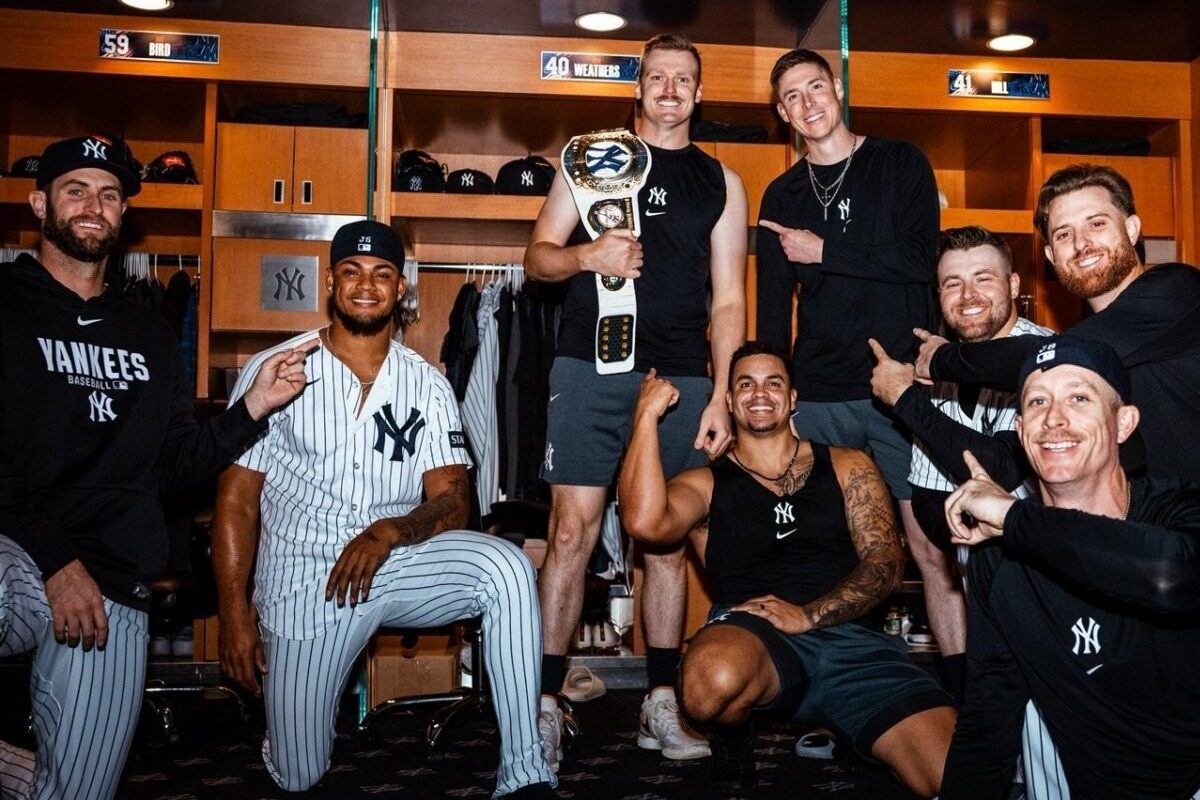
Camilo Doval has been a liability in high-leverage spots and has already made unwanted franchise history this season. Jake Bird, the other reliever the Yankees brought in at last year’s deadline, has been ordinary. Veteran lefty Tim Hill is showing signs of wear. Brent Headrick has been excellent, but he leads the league in appearances, and every additional outing raises the risk of a breakdown in September.
Manager Aaron Boone has kept leaning on the same arms because the alternatives have not forced his hand. That is the part of this story that stings.
Down at Triple-A Scranton/Wilkes-Barre, one of them had been forcing it for months.
The reliever the Yankees are about to lose
Bradley Hanner is 27 years old, and most Yankees fans have never heard his name. That is about to become a problem the front office cannot undo.
Hanner has pitched to a 1.99 ERA across 40 2/3 innings and 32 appearances for the RailRiders this season. He has struck out 30.5 percent of the batters he has faced, good for an 11.1 K/9 rate. Opponents are hitting .208 against him. His walk rate sits at a manageable 9.8 percent.
Those are the exact traits the major league bullpen has been missing. Swing and miss. Hard contact suppressed. Runs kept off the board.
He never got the call. Now he is leaving.
Brendan Kuty of The Athletic reported Monday that Hanner intends to trigger the opt-out clause in his minor league contract on Wednesday. The clause allows him to walk away and sign elsewhere if he has not been added to a major league roster by that date. With three days left before the All-Star break ends, the Yankees have run out of runway.
“Reliever Bradley Hanner, who has put up strong numbers at Triple A for the Yankees, intends to use his opt out Wednesday, a source says,” Kuty wrote. “In 32 appearances (40 2/3 innings), he’s had a 1.99 ERA and 11.1 K/9 with a .208 batting average against.”
Why the timing could not be worse
The Yankees are three weeks from the trade deadline and shopping for relief help. Losing an arm with a sub-2.00 ERA for nothing, in the exact window they need bullpen depth, is a self-inflicted wound.
The internal cupboard is close to empty behind him. Rafael Montero was signed to be the veteran safety net at Scranton, but he has posted a 5.03 ERA across his first 20 appearances after a visa issue delayed his season. Harrison Cohen struggled to a 9.00 ERA in Triple-A and was sent down to Double-A Somerset. Eric Reyzelman pitched well at Somerset, then ran into a wall in Scranton with an 11.70 ERA over his first 10 innings.
Yovanny Cruz has given the Yankees no reason to doubt him, yet the organization has consistently declined to give him an extended run. Right-hander Carlos Lagrange, once viewed as a possible second-half boost, is out with a shoulder injury and will not be walking through the door.
That leaves Hanner as the one internal arm with numbers that demanded a look. He is the one they are letting go.
What the Yankees are actually walking away from
Hanner is not a finished product, and the Yankees can point to that. He signed a minor league free agent deal last winter after several seasons in the Cleveland Guardians system, where he carried a 4.74 ERA. That number was inflated by a brutal 2.37 home runs per nine innings.
His turnaround this year has been built on the opposite extreme. He has allowed home runs at a rate of 0.23 per nine innings. Neither figure is likely to hold. The truth almost certainly sits somewhere in between.
Nobody is arguing Hanner is a long-term answer or a future closer. The argument is simpler than that. The Yankees needed a fresh arm that misses bats, they had one on the farm posting a 1.99 ERA, and they had weeks to find out whether it would translate. They chose not to look.
Doval and Bird have already answered the question about what they are. Hanner never got the chance to answer his.
Barring a roster move in the next 48 hours, the Yankees will lose him for nothing on Wednesday and head into the deadline needing to pay a trade cost for the kind of reliever they already had.
What do you think? Leave your comment below.