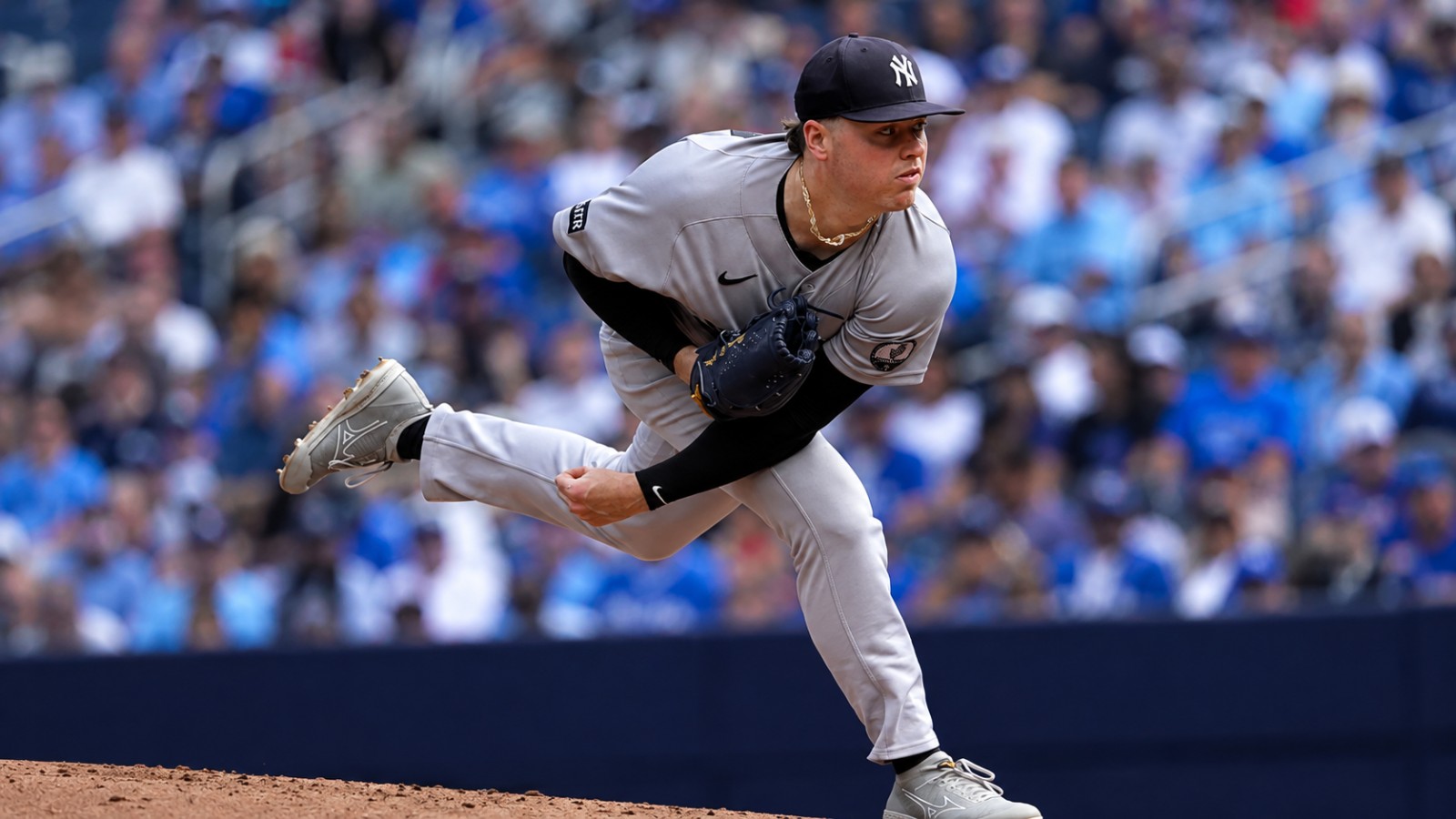
TORONTO — Ryan Weathers walked off the mound Sunday without a decision and with the Yankees still locked in a one-run game. His work nevertheless gave New York the chance it badly needed.
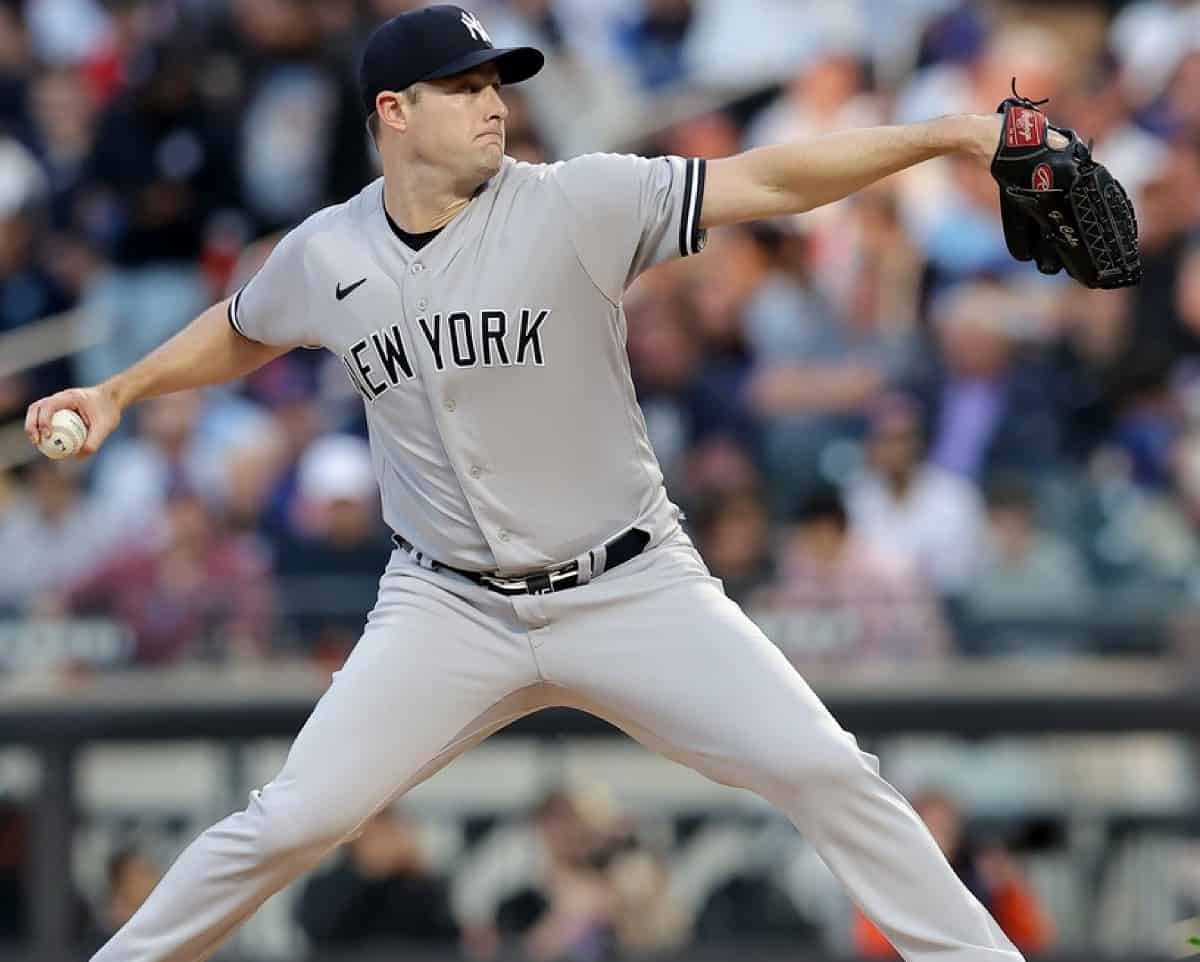
The left-hander carried the Yankees into the eighth inning at Rogers Centre, allowing one run on six hits and one walk over 7 1/3 innings. He struck out four and retired the first 10 Blue Jays he faced before Toronto broke through on back-to-back doubles by Kazuma Okamoto and Daz Cameron in the fifth. It was his longest start since April 19 and came one day after the Yankees had dropped the first two games of the series.
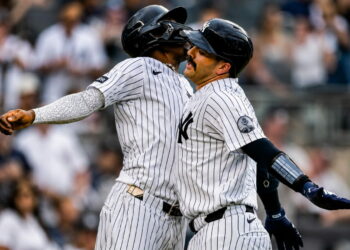
New York eventually won 4-3 in 10 innings when Ben Rice followed a costly ninth-inning error with a two-run homer off Braydon Fisher. David Bednar earned the win despite allowing an unearned run, Fisher took the loss and Tim Hill recorded his second save. The Yankees improved to 69-55 and avoided a three-game sweep. Jose Caballero also drove in the go-ahead run in the seventh, but the advantage disappeared in the ninth before Rice restored it in extras.
For Weathers, the outing was less an isolated gem than the latest sign that his season has changed shape. He has allowed three earned runs across 31 2/3 innings over his last five starts, good for a 0.85 ERA with 25 strikeouts and nine walks. Opponents have hit .194 against him in that span. His season line now sits at a 3.56 ERA, 1.19 WHIP and 140 strikeouts against 38 walks in a career-high 134 innings. That run has arrived while the Yankees have been navigating a thin offensive stretch, an unsettled lineup and a postseason race that has made every low-scoring game harder to absorb. Weathers has repeatedly supplied the innings and run prevention that kept those games within reach.
A four-seam fastball, thrown away
Weathers was the seventh overall pick in the 2018 draft, and the fastball was why. It still averages nearly 96 mph, among the harder heaters thrown by any left-hander in baseball. For years it defined his profile.
This season it nearly disappeared. Beginning with a July 10 start against Washington, Weathers slashed his four-seam usage to the lowest rates of his career. Over his past six starts, the pitch has accounted for barely 10 percent of his offerings, at times dipping under 8 percent in a single game.
The reason was hiding in the damage. Through early July, opponents had teed off on the four-seamer, slashing well over .600 in slugging against it and taking it deep nine times. The pitch that was supposed to be a strength had become a liability.
So Weathers and the Yankees rebuilt his mix around everything else. He now leans most on a changeup that has become his best pitch, backed by a sinker, slider and sweeper. The changeup has added depth this season, dropping several inches more than it did a year ago, and it has anchored the reinvention.
The results validate the Yankees’ plan. Since he pared back the fastball, opponents have managed a batting average near .090 against the pitch on the rare occasions he throws it. He has surrendered just two home runs across his past six starts after allowing 16 over the first half.
Boone sees a pitcher at his best
Weathers matched Dylan Cease deep into a low-scoring game and handed the bullpen a lead in the eighth. The Yankees offense needed 10 innings to secure the 4-3 victory, but Boone did not have to cover half the afternoon with relievers. No single start can save a season. Weathers’ transformation, however, has helped stabilize a Yankees club playing too many tight games.
Manager Aaron Boone has watched the transformation up close and credited Weathers for mastering a deep arsenal rather than leaning on raw velocity.
“Just feel like he’s handled the season really well,” Boone said. “New environment coming to New York. Feel like he’s gotten better as the season’s gone along. Feel like in a lot of ways he’s at his very best right now, throwing the ball.”
Boone pointed specifically to the secondary pitches that now carry Weathers through lineups.
“Really has a good understanding of his arsenal, doing a good job,” Boone said. “His secondary has really been excellent now for a while. The changeup, slider, to go along with both fastballs.”
Weathers has framed the shift as a matter of trust, in the plan and in his catcher. He pointed to his growing partnership with Austin Wells as a driver of the hot streak.
“I think it’s just trusting the game plan, trusting Wells behind the plate,” Weathers said. “I feel like we’re starting to work real well as a battery together. I just want to give the team a chance to win, that’s my job.”
A success the Yankees must now manage
The turnaround has created an unusual problem. Weathers was acquired as rotation insurance while Gerrit Cole and Carlos Rodon recovered from surgery. Rodon is now healthy and pitching, and the Yankees suddenly have more capable starters than spots.
The crunch is real. Cole, Max Fried and Cam Schlittler are locked in, and Rodon’s return leaves Weathers and Will Warren competing for the final rotation job. By performance, Weathers has made that a difficult case to argue against. He has been the better starter this year.
There is a catch. Weathers entered 2026 with a long injury history and a career high of 94 2/3 innings. Sunday’s start pushed him to 134 innings on the season, deep into uncharted territory for his arm. That workload gives the Yankees a reason to consider a bullpen role, less as a demotion than as protection.
For now, the Yankees need the innings too badly to move him. The Yankees offense has been among the worst in baseball, forcing the pitching staff into a string of tight, high-leverage games. Weathers has repeatedly given a taxed bullpen a night off, and that value is hard to surrender in a playoff race.
A path his father walked first
There is history layered under all of it. Weathers’ father, David, was acquired from the Marlins at the 1996 trade deadline and helped the Yankees win the World Series, posting an 0.82 ERA across 11 postseason innings. Thirty years later, his son arrived in New York from the same Marlins organization and is now pitching his way into the team’s October plans.
Weathers carries a 3.56 ERA, a 1.19 WHIP and a 140-to-38 strikeout-to-walk ratio over a career-high 134 innings. He draws Toronto again in his next start, this time in the Bronx. The pitcher the Yankees valued for his fastball has become essential by throwing it less.
What do you think? Leave your comment below.