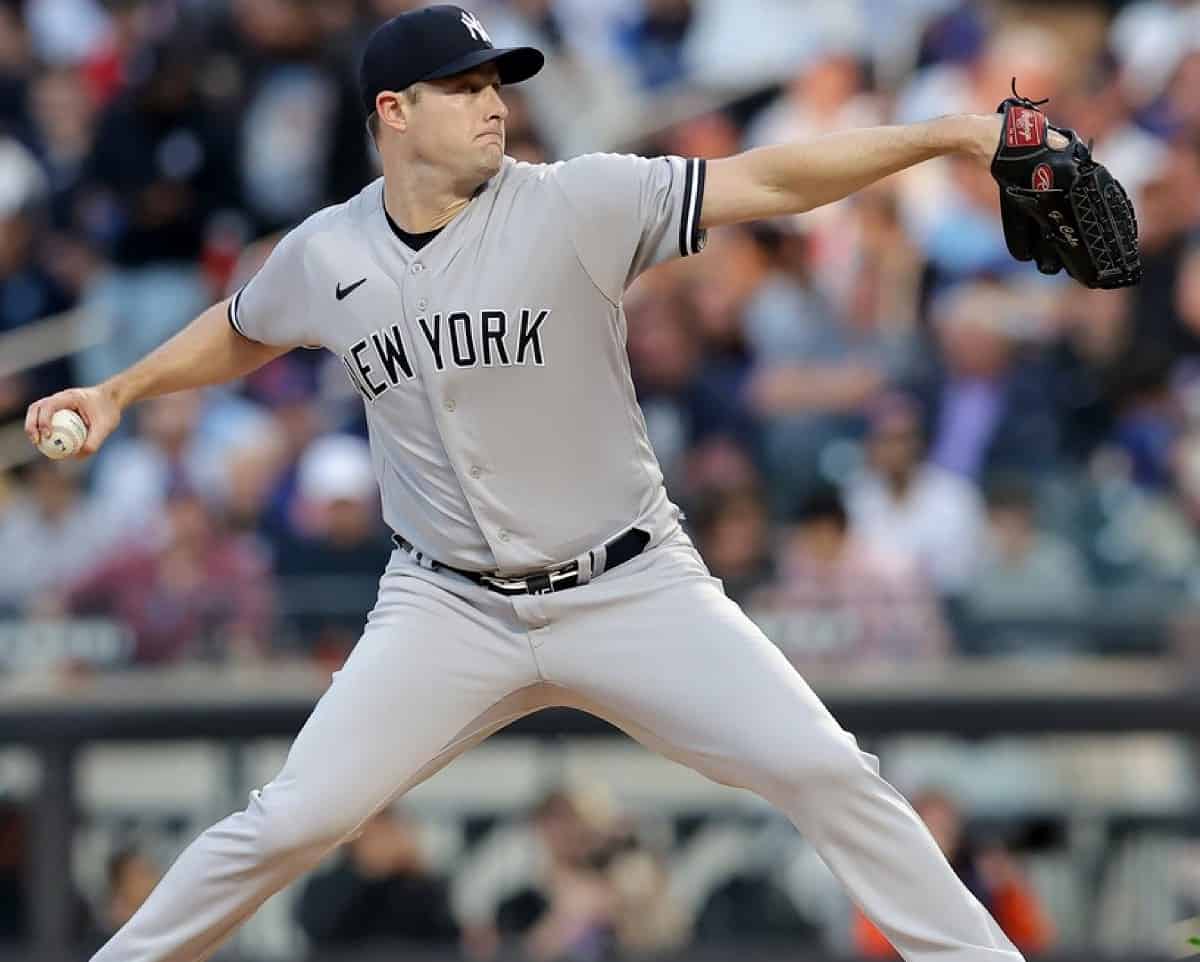
NEW YORK — Michael King has walked away from a $53 million salary with the San Diego Padres, reopening the possibility of a reunion with the Yankees while raising the price of bringing him back to the Bronx. The former New York right-hander declined his 2027 player option Thursday and will enter free agency with a $5 million buyout.
The choice gives the Yankees a chance to pursue King without surrendering another player in a trade. It also suggests that a one-year offer, even at $28 million, was not the arrangement he wanted. A return would now require New York to compete for his services on the open market.
That creates an awkward fit for a team already carrying an established starting rotation. Aaron Boone can pencil in Gerrit Cole, Max Fried, Carlos Rodon and Cam Schlittler for 2027, with Will Warren and Ryan Weathers providing additional options. Any sizable investment in King would have consequences elsewhere on the roster.
The Yankees have reasons to value the familiar arm. King succeeded as both a starter and reliever in New York before going to San Diego in the Juan Soto trade. His ability to cover different assignments offers flexibility, particularly for a pitching staff that has faced postseason pressure.
But the Yankees also must weigh their bullpen needs and an offense that struggled at decisive moments in October. King is coming off a healthy, productive season after injuries limited him the year before. The issue for Brian Cashman is no longer whether he can become available. It is how much the Yankees should commit to bring him back.
King’s Padres decision puts a price on a Yankees reunion
For King, the opt-out follows a full season back in the Padres’ rotation and gives him a chance to seek a longer commitment. San Diego remains eligible to negotiate a new contract, while the Yankees and other clubs can weigh the cost of adding an experienced starter.
King, 31, went 12-10 with a 3.21 ERA, 1.18 WHIP and 159 strikeouts over 185 innings and 32 starts in 2026. The workload was a striking reversal from 2025, when shoulder and knee problems held him to 15 starts and 73 1/3 innings.
King can still negotiate with San Diego, but his choice points toward multiyear security and a significant hurdle for New York.
King’s words keep Padres firmly in the picture
After the Padres were eliminated, King discussed what San Diego means to his family.
“San Diego’s been—been incredible for me, and it’s all the way across the country from home… But now I feel like I have a—a second home on the West Coast, so it’s been awesome. And yeah, I hope to—hope to continue,” King said.
The Padres can negotiate a fresh deal, while King can consider other contenders.
His October work strengthened his position. He recorded a 0.64 ERA with 15 strikeouts in 14 innings across three postseason appearances, including a seven-inning, one-hit start against the Chicago Cubs and a two-inning save against Milwaukee.
The Yankees’ rotation makes the price harder to justify
King’s 2026 workload was 111 2/3 innings higher than his injury-shortened 2025 total. Yet his strikeout rate dropped from 27.7% in 2024 to 21% in 2026. His 70 walks translated to 3.4 per nine innings, compared with 159 strikeouts and 7.7 per nine.
Those figures show a durable 2026 starter, not an automatic return to his peak swing-and-miss form. The Yankees would have to price both realities into a long-term offer. They would also have to decide where he fits alongside Cole, Fried, Rodón and Schlittler.
King’s Yankees background adds a tactical advantage. In 2023, he posted a 2.75 ERA with 127 strikeouts over 104 2/3 innings while making nine starts in 49 appearances. That history suggests flexibility, although a pitcher declining a $28 million starter’s salary would have little reason to seek a lower-priced bullpen assignment.
The Padres acquired King in December 2023 as part of the Juan Soto trade. His first season in San Diego produced a 2.95 ERA and 201 strikeouts in 173 2/3 innings. That transformation makes a Yankees reunion expensive.
The $23 million decision creates a revealing dividing line
The opt-out also provides a useful way to measure the market. King surrendered a $28 million 2027 salary but retained a $5 million buyout, a $23 million difference between the two immediate outcomes. The difference illustrates the financial bet he made.
For the Yankees, a contract that replaces that security would likely involve multiple seasons and substantial total guarantees. Such a commitment would not simply add depth. It could reduce the money available to retain relief help or improve an offense that again became a central postseason concern.
King brings organizational familiarity, starting experience and postseason success. New York already has four established starters, while free agency gives him negotiating leverage.
As of Thursday, King is a free agent and no Yankees agreement has been announced. The opt-out opens the door to a reunion, but his established value and New York’s rotation depth make the contract terms, rather than the connection to the Bronx, the decisive issue.
What do you think? Leave your comment below.