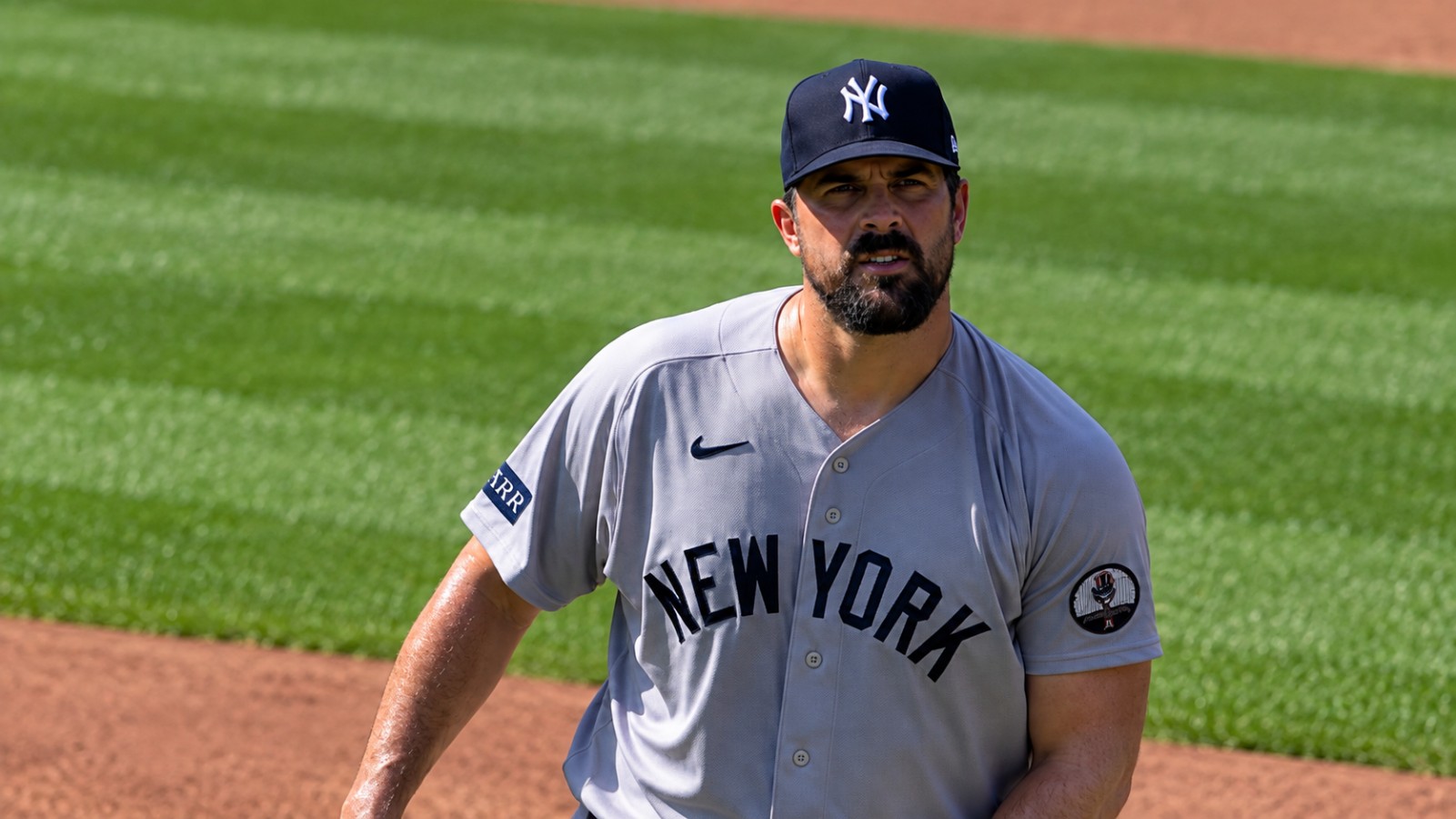
MINNEAPOLIS — Carlos Rodon gave the Yankees six innings Wednesday and kept a difficult afternoon from getting away from them, but the final line did not tell the whole story. The left-hander allowed two runs on four hits, walked three and struck out five over 102 pitches in New York’s 5-4, 13-inning loss to the Minnesota Twins at Target Field.
Rodon left with the Yankees trailing 2-0. Anthony Volpe erased the deficit with a two-run double in the ninth, and New York later moved in front in both the 10th and 11th innings. Minnesota answered each time before Victor Caratini’s pinch-hit single ended it in the 13th. Tommy Nance earned the win, while John Schreiber took the loss.
The defeat dropped the Yankees to 88-64. Tampa Bay won later Wednesday, leaving New York 4.5 games behind the Rays in the AL East with 10 games remaining. The Yankees have already secured a postseason berth, but their remaining rotation decisions now carry division and October seeding implications.
Rodon’s results still look sturdy. Wednesday marked his 25th consecutive start allowing three earned runs or fewer, a Yankees franchise record. It also gave him back-to-back quality starts and his fifth quality start in 15 outings after he worked 6 1/3 innings against the Mets in his previous start.
His workload has moved in the right direction, too. Rodon threw a season-high 102 pitches Wednesday after reaching 93 pitches against the Mets. Since returning from the injured list in mid-August, he has a 2.40 ERA, a 0.93 WHIP and a 31-to-12 strikeout-to-walk ratio over 30 innings.
For the Yankees, however, the question coming out of Minnesota is not whether Rodon can survive a start. It is whether he can reach his normal power quickly enough when October lineups leave less room for a slow ramp-up.
The calendar gives the Yankees little time to separate a temporary fluctuation from a repeatable trend.
The first 55 pitches tell a different story
The concern showed up across Rodon’s entire pitch mix early, not only on his four-seam fastball. The pitch-tracking snapshot attached to the outing showed all five of his pitches below their season-average velocity through 55 pitches.
His four-seamer averaged 92.6 mph compared with a 94.4 mph season average, a 1.8 mph drop. His slider was down 1.4 mph, his changeup 2.3 mph, his sinker 1.9 mph and his curveball 1.1 mph.
He leaned on the four-seamer for 45% of those first 55 pitches and the slider for 29%. That means nearly three-quarters of his early mix came from two pitches running 1.8 mph and 1.4 mph below their season norms.
That makes the early dip more notable than a single fastball reading. The changeup showed the largest gap, while both fastball shapes were nearly 2 mph under their yearly levels.
Rodon did not stay there. His four-seam fastball averaged 92.3 mph in the first inning, 92.8 in the second and 92.4 in the third. In the fourth, that average jumped to 94.9 mph, and he later threw several pitches above 95 mph.
Rodon needed time to loosen up
Rodon addressed the slow start afterward. The available postgame information did not specify that the tightness involved his elbow. He described how he felt at the beginning before his velocity improved as the game progressed.
Rodon said he started the outing a little “tight” before loosening up.
That wording matters because of his 2026 medical history. Rodon opened the season on the injured list after offseason surgery to remove a bone spur from his left elbow. He later returned to the IL with left elbow inflammation and was reinstated Aug. 18 after a rehab assignment.
The tightness was not identified as an elbow issue, and no new Rodon injury was reported after the start. Still, the Yankees will have reason to watch how quickly his velocity appears in his next outing after an injury-shortened season.
Strong results are masking a harder workload
Rodon’s effectiveness has remained intact even while the path to six innings has changed. Against the Mets on Sept. 11, he needed 93 pitches for 6 1/3 innings, walked one and struck out eight. Five days later, he needed 102 pitches for six innings, with three walks and five strikeouts.
Only 59 of Wednesday’s 102 pitches were strikes, just under 58%. He still limited Minnesota to four hits and two runs, but the extra traffic and deeper counts made the outing more labor-intensive than his previous start.
Using his season totals entering Wednesday and his final line against Minnesota, Rodon now sits at roughly a 2.95 ERA over 76 1/3 innings in 15 starts. The Yankees have received frontline run prevention from him when he has been available.
The Rays start raises the stakes
Rodon’s next turn is expected to come during the Yankees’ four-game home series against Tampa Bay, which begins with a split doubleheader Tuesday at Yankee Stadium. New York is 3-6 against the Rays this season.
That matchup could be his final regular-season start. It also gives the Yankees a direct test of whether Wednesday’s early velocity dip was a one-day issue or something that follows Rodon into the postseason.
The Yankees will get their next data point when Rodon takes his turn against Tampa Bay, with the division race and postseason rotation still in view.
What do you think? Leave your comment below.