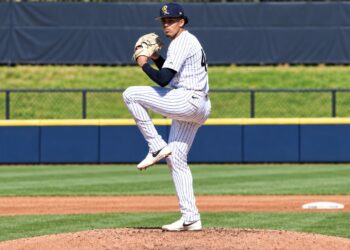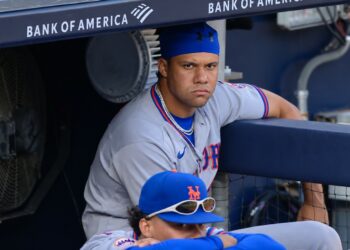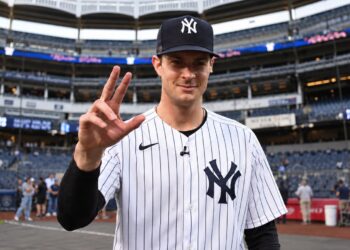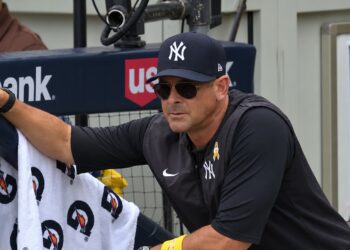
NEW YORK — The Yankees entered Saturday’s doubleheader with a pitching problem that was easy to miss on the roster sheet. Two accomplished left-handers were available. Neither was positioned to give Aaron Boone a normal starter’s workload. The timing made that gap especially important with New York trying to protect the top American League wild-card spot against Boston and several pitching injuries already narrowing Boone’s options.
Carlos Rodon kept Boston within reach in the opener at Yankee Stadium, but he could not supply the innings New York needed. He lasted 4 2/3 innings in a 6-0 loss, allowing two earned runs on three hits and one walk while striking out five. Wilyer Abreu homered in the first, but Rodon then settled down before a fifth-inning jam ended his afternoon at 88 pitches.
That early exit changed how the Yankees handled the rest of the afternoon. Max Fried was scheduled to return from the injured list in Game 2 on a limited workload, so Boone stayed away from his highest-leverage relievers in the opener. Ryan Yarbrough absorbed three innings, and Boston scored four times in the ninth. The choice protected arms for later, but it also showed how quickly one short start could reshape an entire doubleheader. Jake Bennett earned the win with six scoreless innings. Rodon took the loss.
The Yankees recovered with a 9-2 victory in the nightcap, moving to 77-59 and restoring a three-game advantage over Boston for the top AL wild-card position. Fried threw 63 pitches over 3 2/3 innings. New York’s bullpen covered the final 5 1/3 frames, including Paul Blackburn’s escape from a two-on, no-out threat in the sixth. Across 18 innings, Rodon and Fried combined for only 8 1/3 innings, leaving relievers to record 29 outs. For the Yankees, the strain was already visible.
Rodon’s innings problem started before the latest IL stint
In Rodon’s last six Yankees starts, spanning both sides of his seven-week absence for left elbow inflammation, he has thrown 512 pitches over 28 innings. That is 18.3 pitches per inning. He has not completed six innings in any of those six outings.
The pattern existed before the injury. Rodon needed 99 pitches for five innings against the White Sox on June 17, 87 for 5 1/3 at Detroit on June 23 and 96 for five at Boston on June 28. In that final start before the IL, he walked four despite allowing only one hit.
Since returning Aug. 18, the progression has been 66 pitches over four innings at Baltimore, 76 over four against Toronto and 88 over 4 2/3 against Boston.
Through Saturday, Rodon has worked 59 innings in 12 major league starts this season, an average of just under five innings per outing. He has reached six innings only three times, all from May 29 through June 10, and has not recorded an out in the seventh inning.
The control issue appeared in his delayed season debut, too. Rodon walked five and threw just 42 of 78 pitches for strikes over 4 1/3 innings at Milwaukee on May 10. Six days later, he lasted 3 2/3 innings against the Mets.
Boone’s Rodon admission looks different after 88 pitches
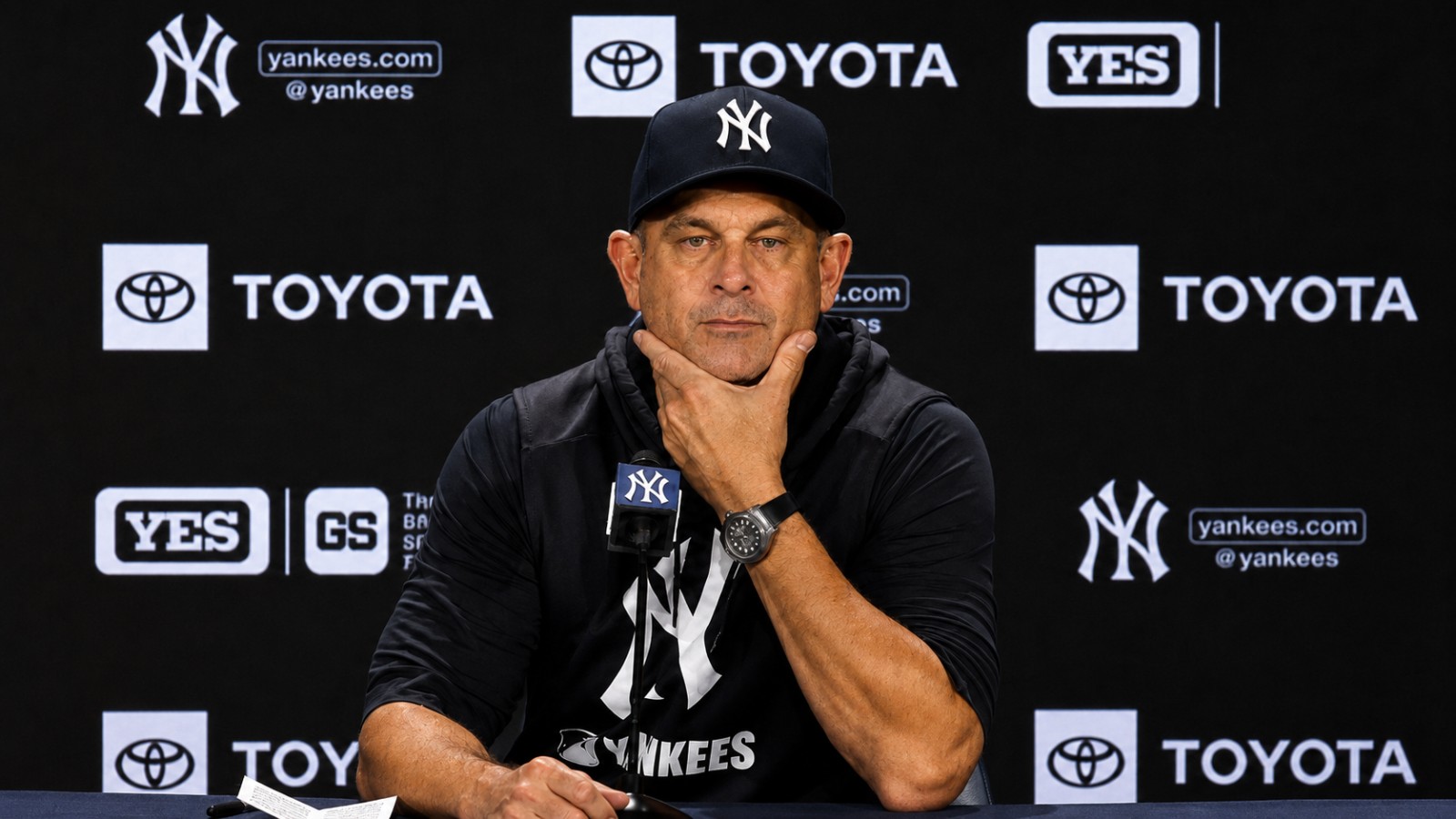
Before the doubleheader, Boone acknowledged that Rodon had not yet reached a normal workload. Boone said Rodon was “not quite” fully built up but getting close after throwing 76 pitches in his Aug. 23 start against Toronto.
Rodon increased his pitch count by 12 on Saturday, yet gained only two outs compared with that Toronto outing. His exit was not simply the product of a rigid pitch limit. A single, walk and hit batter loaded the bases in the fifth and forced Boone to make the move.
Rodon pointed directly to efficiency.
“Could’ve been in earlier counts, been in the strike zone a lot more. First-pitch strikes could’ve been better, a bit more efficient, gone deeper,” Rodon said.
The left-hander also said his elbow felt good, making command and workload the more immediate Yankees concern.
“Health-wise, I feel pretty good. Velo was pretty decent this afternoon,” Rodon said.
Yankees’ rotation health still carries a bullpen cost
Fried’s return Saturday came after his second injured-list stint this season with a left elbow bone bruise. His 3 2/3 innings meant the Yankees needed another long bullpen bridge only hours after Rodon’s early exit.
That safety net is thinner. Fernando Cruz has a partial UCL tear in his right elbow and is seeking another opinion. Ryan Weathers is on the injured list with a left forearm flexor strain. Clarke Schmidt has started a rehab assignment after Tommy John surgery, but the Yankees expect to use him as a reliever if he returns in September.
The Yankees therefore have more rotation names available than earlier in the summer, but availability and length are not the same thing.
Rodon’s next step is about outs, not merely pitches
Rodon has limited damage since returning, allowing four earned runs in 12 2/3 innings over three starts. His stuff has been effective enough to keep the Yankees in games.
The next test is whether a rising pitch allowance produces more length. Saturday showed why that matters. An 88-pitch start that ends in the fifth still sends Boone to the bullpen early, regardless of how close Rodon is to being fully built up.
For the Yankees, that is the hidden pitching problem behind Boone’s admission as September arrives.
What do you think? Leave your comment below.