ST. PETERSBURG, Fla. — The Yankees arrive at Tropicana Field carrying the kind of October momentum usually associated with home runs. Their two-game Wild Card Series sweep of Boston offered something broader. New York scored 18 runs, collected 26 hits and closed the series with a 9-2 win Wednesday at Yankee Stadium, but the decisive Game 2 rally was built as much on speed and contact as power.
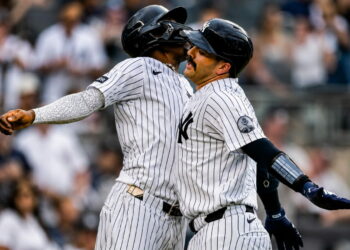
Max Fried earned the win with six innings of one-run ball. Sonny Gray took the loss after allowing two runs over 4 2/3 innings. No save was recorded. The Yankees broke the game open with six runs in the sixth, when Spencer Jones reached on a wild-pitch strikeout, stole second and advanced on an error before George Lombard Jr. singled him home. Trent Grisham bunted, Austin Wells lifted a sacrifice fly and Ryan McMahon produced a run-scoring groundout before Cody Bellinger supplied the three-run homer.
That sequence matters because Tampa Bay presents a different problem. The Rays went 55-26 at Tropicana Field, the best home record in the majors, and New York won only two of nine games there during the regular season. Tampa Bay also won the season series 7-6. Its offense led MLB in sacrifice bunts, led the American League in stolen bases and posted the majors’ lowest strikeout rate at 18.8%, a style designed to force defenders to handle the baseball repeatedly.
Yankees attack Trop traps before Rays can use as ALDS weapon
The Yankees devoted Friday’s workout to eliminating the home-field surprises Tampa Bay uses to speed up opponents. Austin Wells rolled balls down both foul lines while senior director of advance scouting Brett Weber studied their path and the turf lip. Weber and infield coach Dan Fiorito then hit one- and two-hoppers to Wells to mimic relay throws and measure the bounce on the synthetic surface.
A machine behind home plate fired high popups into the white roof before the Yankees moved into infield and pitcher-fielding work. The drill had extra value for rookies George Lombard Jr. and Spencer Jones, neither of whom has played a major league game at the Trop.
Jose Caballero, a Ray in 2024 and 2025, warned teammates that the biggest adjustment comes overhead, where the roof and catwalks can turn a routine read into something unpredictable.
“It’s really tough to see, with the roof being the same color as the ball. … It could hit the catwalk and kick any direction,” Caballero said.
The Yankees were trying to remove that familiarity edge before Tampa Bay’s speed and contact game can force rushed decisions.
Rays’ right-handed options could simplify Boone’s board
The Yankees may have one subtle advantage hidden inside Tampa Bay’s pitching plan.
As of early Saturday, the Rays had announced only Drew Rasmussen for Game 1. MLB’s Oct. 2 rotation preview listed Griffin Jax and Freddy Peralta as leading Game 2 possibilities, with Nick Martinez also in the Game 3 mix. Rasmussen, Jax, Peralta and Martinez are all right-handed.
Tampa Bay has not set the rest of its rotation, and left-hander Ian Seymour remains a possible bulk or relief weapon. Still, the leading starting options point in one direction.
That matters because it can keep Aaron Boone from making the defensive concessions he used against Boston left-hander Payton Tolle. Baseball-Reference’s final regular-season split records show the Yankees went 58-48 in games started by right-handers and 35-20 against left-handed starters. The edge is not a simple hitting split. It is lineup continuity.
The platoon edge is really a defensive edge
Against Tolle in Wild Card Game 1, Boone started Paul Goldschmidt at first base, Heliot Ramos in right, Amed Rosario at third and Anthony Volpe at second. Jones shifted to center. Luis García Jr., Grisham, Jazz Chisholm Jr. and McMahon were out of the starting lineup.
Against right-hander Gray in Game 2, the Yankees restored García at first, Chisholm at second, McMahon at third and Grisham in center, with Jones moving to right. Five defensive positions changed from the opener.
That alignment is useful at the Trop. McMahon is the Yankees’ primary third baseman. Grisham has far more major league experience in center than Jones. Jones in right has less unfamiliar territory to cover under the roof, while Chisholm returns to the position where he made 129 regular-season starts.
It also produced 14 hits against Boston, including 12 singles, while the Yankees pressured the Red Sox with four stolen bases and productive outs.
Tampa’s style makes clean defense a series issue
The Rays’ contact-heavy approach raises the value of every clean exchange.
Boone acknowledged that challenge after Friday’s workout while discussing Tampa Bay’s speed, bunting and ability to force hurried decisions.
“They put the ball in play. They can run. They push the envelope,” Boone said. “You’ve got to take care of the ball against them.”
A possible all-right-handed starting sequence would give Boone fewer reasons to remove regular left-handed bats for platoon matchups or shuffle defenders into secondary roles.
One Tampa wrinkle can still change the equation
The advantage remains conditional. Cash can deploy left-hander Ian Seymour behind a right-handed starter or rearrange the rotation after Rasmussen. Judge’s roster status also remained unresolved early Saturday, and any activation could alter Boone’s defensive alignment.
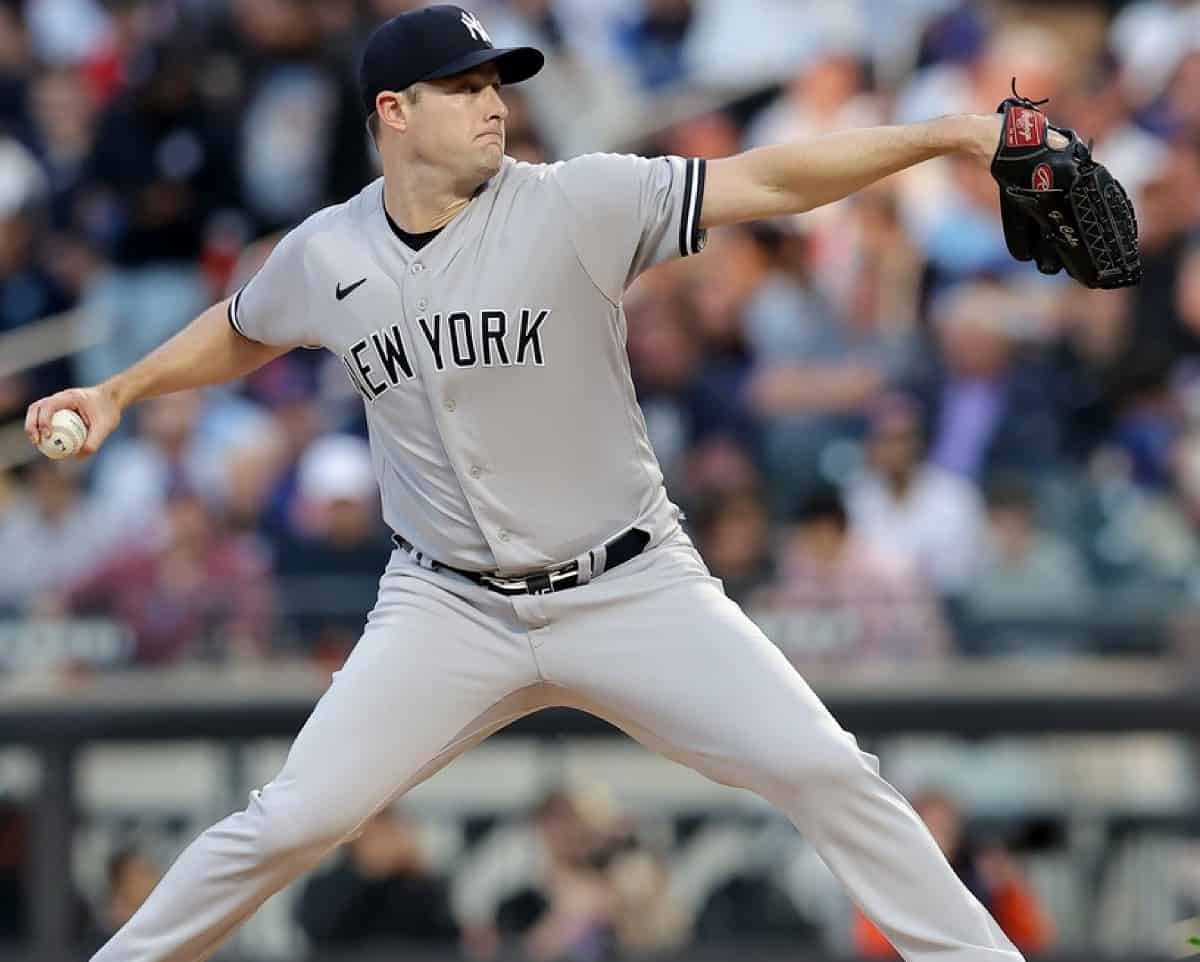
For now, Game 1 is set for 6:30 p.m. ET, with Gerrit Cole facing Rasmussen. The Yankees know the Trop has already exposed them this season. Their best counter may be simple: keep the lineup stable, keep defenders in their preferred spots and make Tampa Bay earn every extra base.
What do you think? Leave your comment below.