NEW YORK — The Yankees face an expensive choice as they try to rebuild an infield that failed to deliver enough offense in October. A familiar name is back in the conversation, but landing him would require more than a straightforward exchange of major league players.
New York’s challenge extends beyond finding another bat. The organization must decide whether to sacrifice pitching depth, move away from Anthony Volpe and commit to an infield alignment that could change again when top prospect George Lombard Jr. reaches the majors.
That decision follows a postseason exit in which the Yankees’ lineup fell short against Tampa Bay. An impact middle infielder could give Aaron Boone another run producer and more speed, but the cost could reshape the club’s roster several seasons beyond 2027.
Washington also has a decision to make. Its young All-Star is approaching arbitration, and his breakout season has increased both his value and the price any contender would have to pay. The Nationals have previously indicated they will listen to offers rather than actively shop him.
A four-player route to a 30-30 infielder
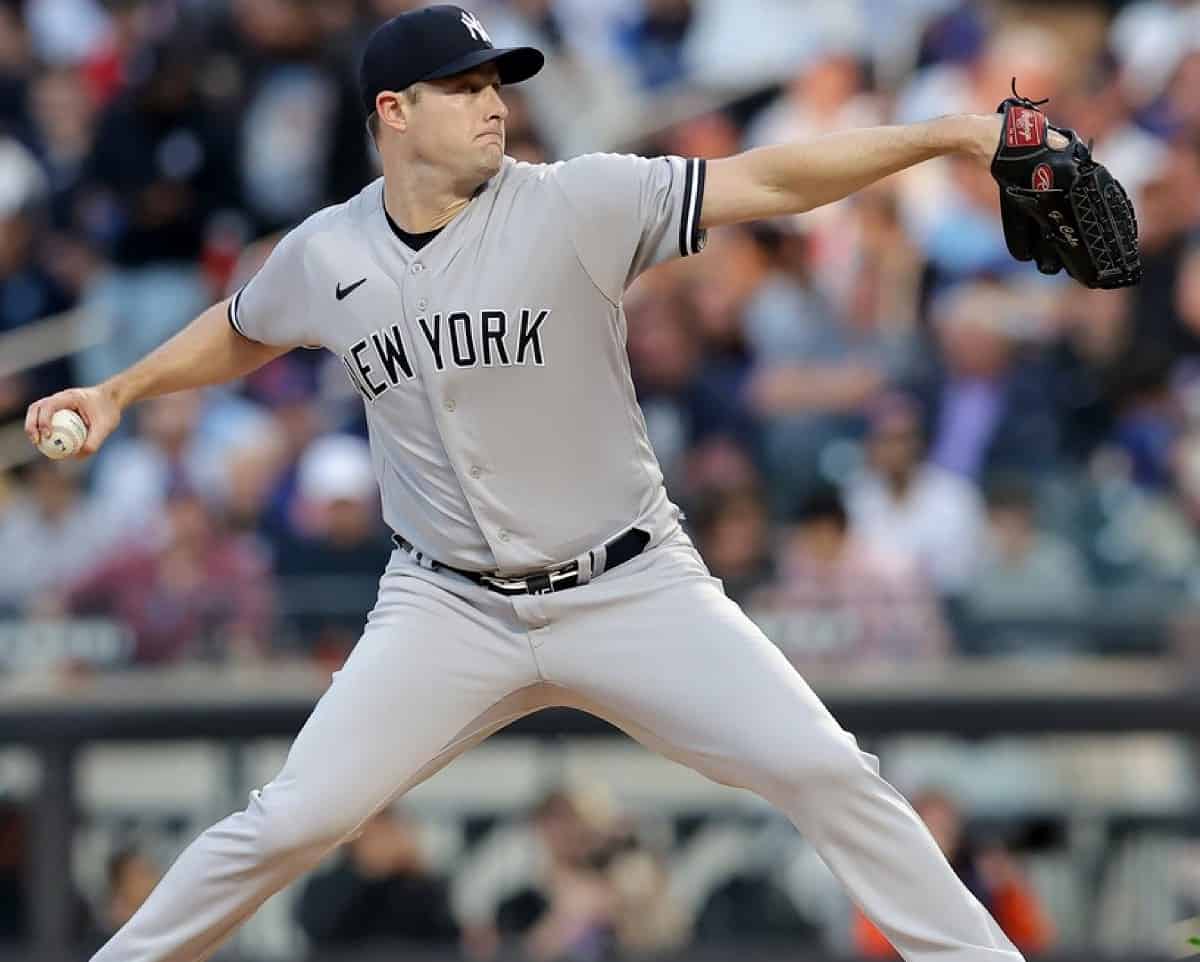
One outside trade proposal would bring CJ Abrams to the Yankees from the Nationals in exchange for Volpe and three right-handed pitchers: Elmer Rodríguez, Rory Fox and Mac Heuer. The four-for-one framework was floated by baseball writer Stephen Parello.
Abrams, 26, produced his first 30-30 season in 2026. He hit .261 with 33 home runs, 106 RBIs, 34 stolen bases and an .833 OPS across 152 games. His .336 on-base percentage and .497 slugging percentage represented meaningful gains over 2025, when he hit 19 homers with a .748 OPS.
The Yankees have more than a hypothetical reason to assess the fit. New York checked on Abrams before the 2026 trade deadline, when Washington was willing to hear proposals. His combination of left-handed power, speed and remaining club control would address an immediate offensive need without depending on a free-agent bidding war.
But the price is substantial. Volpe has already moved around the Yankees’ infield, while Rodríguez represents starting-pitching depth and Fox and Heuer would take additional young arms out of the system. It is the kind of package a rebuilding club would have to prefer over rival offers.
Defensive trade-off behind offensive leap
Abrams’ upside comes with a measurable weakness. His defensive work at shortstop has been criticized, and MLB’s midseason review placed him at the bottom of the majors in cumulative Outs Above Average since 2022. Moving him to second base could reduce some demands, but it would not automatically erase concerns about range and positioning.
That creates a distinctive Yankees calculation. The four-player proposal assumes Lombard eventually handles shortstop, Abrams slides to second and Jose Caballero remains a utility option. It would make the Yankees younger and more athletic up the middle, while asking Boone’s staff to manage another position transition.
Abrams’ growth is also clearer when measured across consecutive seasons rather than by his home run total alone. He raised his home runs from 19 to 33, a gain of 14, and his OPS from .748 to .833, a rise of 85 points. His stolen-base total climbed only three, from 31 to 34. The largest new ingredient was power, not speed.
That matters for Yankee Stadium. A left-handed hitter who can pull the ball for damage gives the Yankees a potential second source of offense on nights when their established sluggers are contained. The Yankees would still need to weigh that production against the pitching talent surrendered.
A market that could push Washington’s asking price higher
The Yankees would not be assessing Abrams in isolation. The Dodgers were named among potential fits during the summer, although Los Angeles’ infield alignment made that possibility less urgent. The Mets also have the resources to pursue major acquisitions, but an active Mets pursuit of Abrams has not been established.
Washington retained Abrams through the 2026 deadline despite widespread interest. He has two seasons of club control remaining before reaching free agency after 2028, giving the Nationals room to demand a premium return instead of acting under immediate pressure.
The Yankees’ proposal avoids parting with Lombard, an important distinction from earlier trade concepts that involved their top infield prospect. Yet removing three pitchers would shift the risk toward future rotation and bullpen depth, especially if injuries force New York to rely on young arms.
For now, the four-player arrangement remains an outside trade concept. The Yankees have a confirmed history of interest, Abrams has a genuine 30-30 breakout on his résumé, and Washington still controls the decision. Whether that specific package would satisfy the Nationals is the unanswered question heading into the offseason.
What do you think? Leave your comment below.