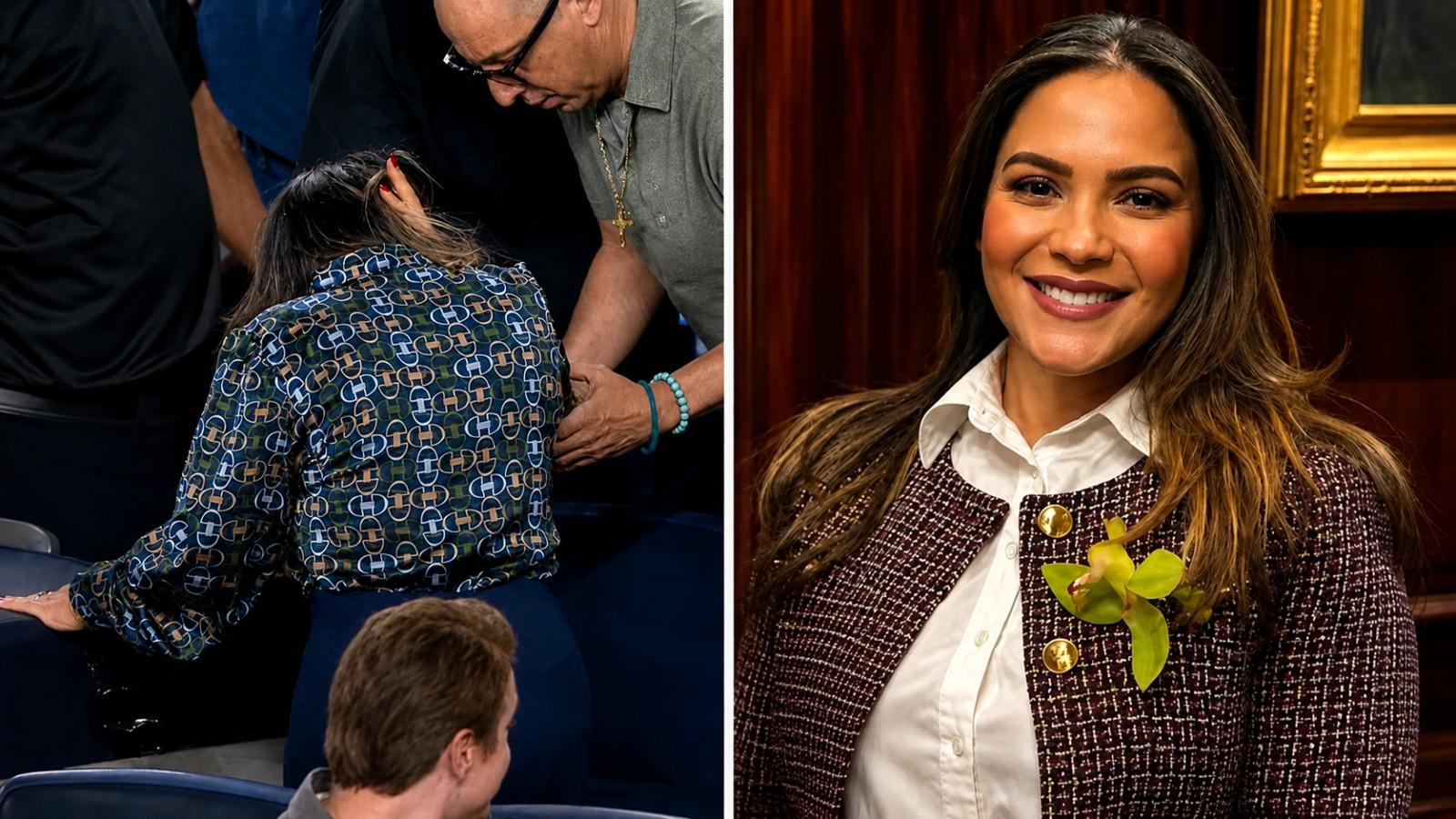
NEW YORK — Stephanie Duluc, a 37-year-old health care executive and chief of staff at the Bronx-based SOMOS Community Care, has sued the Yankees for $10 million in Manhattan federal court. Her lawsuit stems from a game at Yankee Stadium on June 2, when the Yankees hosted the Cleveland Guardians.
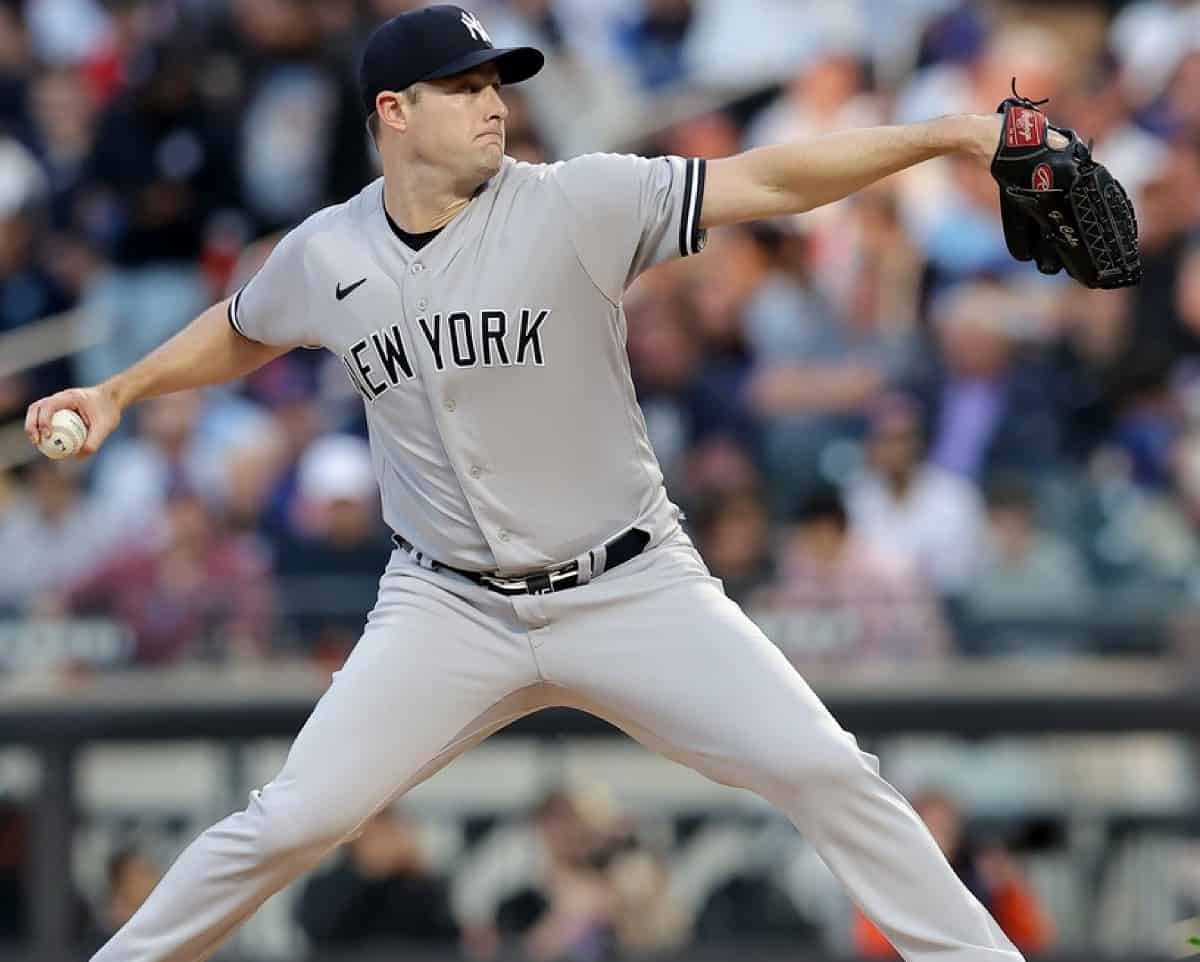
In the fifth inning, Guardians star Jose Ramírez lost his bat mid-swing against Cam Schlittler. It flew into the seats behind home plate, where Duluc was sitting in the fourth row. Her company holds season tickets in the section, among the priciest at the Stadium. The bat struck her in the head.
The suit says the impact knocked Duluc from her seat and threw her to the ground. She alleges a traumatic brain injury, a concussion, severe light sensitivity, and permanent damage to her neck and hands. She says she has been unable to return to her professional duties.
Her central claim is not that a bat reached the stands. It is that the netting in her section was built to fail. The lawsuit alleges the screen in front of her seats was significantly lower than the netting in adjacent sections, leaving what her attorneys call an unprotected opening.
Duluc’s attorney answers questions about her injuries
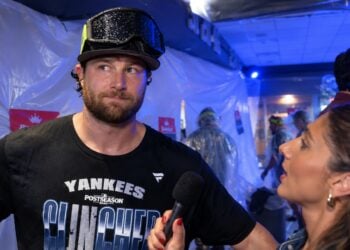
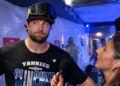
The case drew early scrutiny because Duluc appeared on the PIX11 program “Monica Makes It Happen” less than two weeks before the suit was filed, discussing a company event and appearing composed under studio lights. Her attorney, Jon L. Norinsberg, pushed back on the idea that the segment undercut her claims.
“Ms. Duluc continues to suffer significant residual deficits from her traumatic brain injury, including persistent headaches, sensitivity to light, balance issues, and other cognitive impairments,” Norinsberg said.
He added that a short television hit says nothing about whether she can hold up over a full workday.
“A brief television appearance does not mean she has recovered or is capable of performing her professional duties on a sustained basis,” Norinsberg said.
The lawsuit itself leans on the same legal ground that has tripped up ballpark operators before, quoting the principle directly.
“It is the one location where the law has long required a stadium operator to provide adequate protective screening,” the suit states.
The Correa case that maps almost exactly onto Duluc
The closest parallel in the Yankees’ own history is a case called Correa v. City of New York. A stadium security guard, Ziograin Correa, was working a game at Yankee Stadium on May 28, 2000, when a foul ball struck him behind home plate. He alleged the ball reached him through an opening in the protective netting and backstop, a gap created so an ESPN television camera could shoot through the screen.
The setup is uncanny next to Duluc’s claim. Both involve an alleged opening or shortfall in the netting directly behind home plate, the one zone New York law says the Yankees must screen. Both turn on the same question: not whether a screen existed, but whether the screen did its job at the spot where the fan was hit.
The Yankees moved for summary judgment, arguing they had met their duty by providing a protected area behind the plate. In a June 2008 decision, Supreme Court, Bronx County denied the Yankees’ motion, keeping the club in the case. That headline result is what should catch a reader’s eye, because it shows the Yankees could not simply invoke the Baseball Rule and walk away, according to Justia legal portal.
The reasoning, though, is a warning for both sides. The court applied the same 1981 precedent that governs Duluc’s case and found the Yankees had discharged their qualified duty by screening the area behind home plate. Crucially, the judge noted there was no evidence in the record that the netting itself was defective, poorly designed, or left unmaintained with a hole. The plaintiff’s claim that the camera opening made the netting unsafe was deemed unsupported, because his witness spoke only as a fact witness and offered no expert proof tying the gap to a design defect or industry standard.
The Yankees stayed in the case for a different reason. Open questions remained over indemnification and over who hired the electricians that arranged the netting around the camera, along with ESPN’s role. That is the fine print Duluc’s lawyers will study. Correa shows the Yankees can be held in a netting case past the first hurdle, but it also shows that beating the Baseball Rule likely requires expert testimony that the low screen was a genuine defect, not merely an opening a bat happened to find.
How similar ballpark lawsuits were filed, and how they ended
The Baseball Rule itself grew out of New York case law that still governs the Yankees. In the 1981 decision Akins v. Glens Falls City School District, the state’s highest court held that a ballpark operator generally satisfies its duty by providing adequate screening behind home plate, where the danger is greatest, with enough protected seating for fans who want it. That is exactly the zone where Duluc says she was sitting.
When the injured fan sat outside that zone, teams have won. In the 2017 case Zlotnick v. New York Yankees Partnership, a fan struck in the eye by a foul ball several rows down the first-base line saw his claim dismissed. A New York appellate court found the Yankees had appropriate screening behind home plate and protected seating available, satisfying their legal obligation even though the plaintiff chose an unscreened area.
The Mets used the same shield. In Davidoff v. Metropolitan Baseball Club, a 14-year-old girl lost vision in one eye after a foul ball struck her behind first base at Shea Stadium. New York’s high court upheld dismissal in 1984, finding the team had provided the required protected seating and was not obligated to screen every area a foul ball might reach.
The pattern is instructive. When the fan sat outside the protected home-plate zone, as in Zlotnick and Davidoff, the team won outright. When the injury allegedly came from a gap in the screening behind the plate, as in Correa, the Yankees were kept in the case, though the court still found they had met their basic screening duty and faulted the plaintiff for offering no expert proof of a defect. Duluc’s seat, four rows behind home plate, places her in the zone where these cases have been fought, and Correa signals that her path likely runs through expert evidence that the low netting was a true defect.
A shifting legal landscape as the Yankees stay silent
The timing is awkward for a franchise that has spent years responding to netting scares. After a young girl was struck by a line drive at Yankee Stadium in September 2017, the Yankees expanded their protective netting for the following season, extending it past the dugouts. The Duluc suit now questions whether the screening directly behind the plate, the most critical stretch of all, was adequate this year.
The broader legal ground is also moving. A California appeals court allowed a spectator’s injury suit to proceed in 2020, in the case of a 12-year-old who lost sight in one eye, signaling that some courts view the modern expansion of netting as a reason to narrow the old defense. Whether a Manhattan federal court takes a similar view of Duluc’s claims is an open question.
Recent cases show why the framing matters. Former big leaguer Darin Ruf sued the Cincinnati Reds in 2025 over what he called a career-ending knee injury, alleging he collided with an unpadded metal tarp roller while chasing a foul ball at Great American Ball Park in 2023. His argument was that the roller was an avoidable hazard, not an inherent risk of the game. Courts tend to listen harder when a plaintiff frames the injury as a dangerous condition the stadium created, which is the same lane Duluc’s lawyers are driving in with the netting.
The Yankees have not commented on the lawsuit.
For now, the case sits in federal court, and the Yankees face a claim that turns on inches of netting behind home plate. Many observers expect a settlement rather than a trial. What makes this filing different is not the dollar figure. It is that the Yankees are being asked to defend the one part of the Stadium the law says they were never allowed to leave exposed.
What do you think? Leave your comment below.