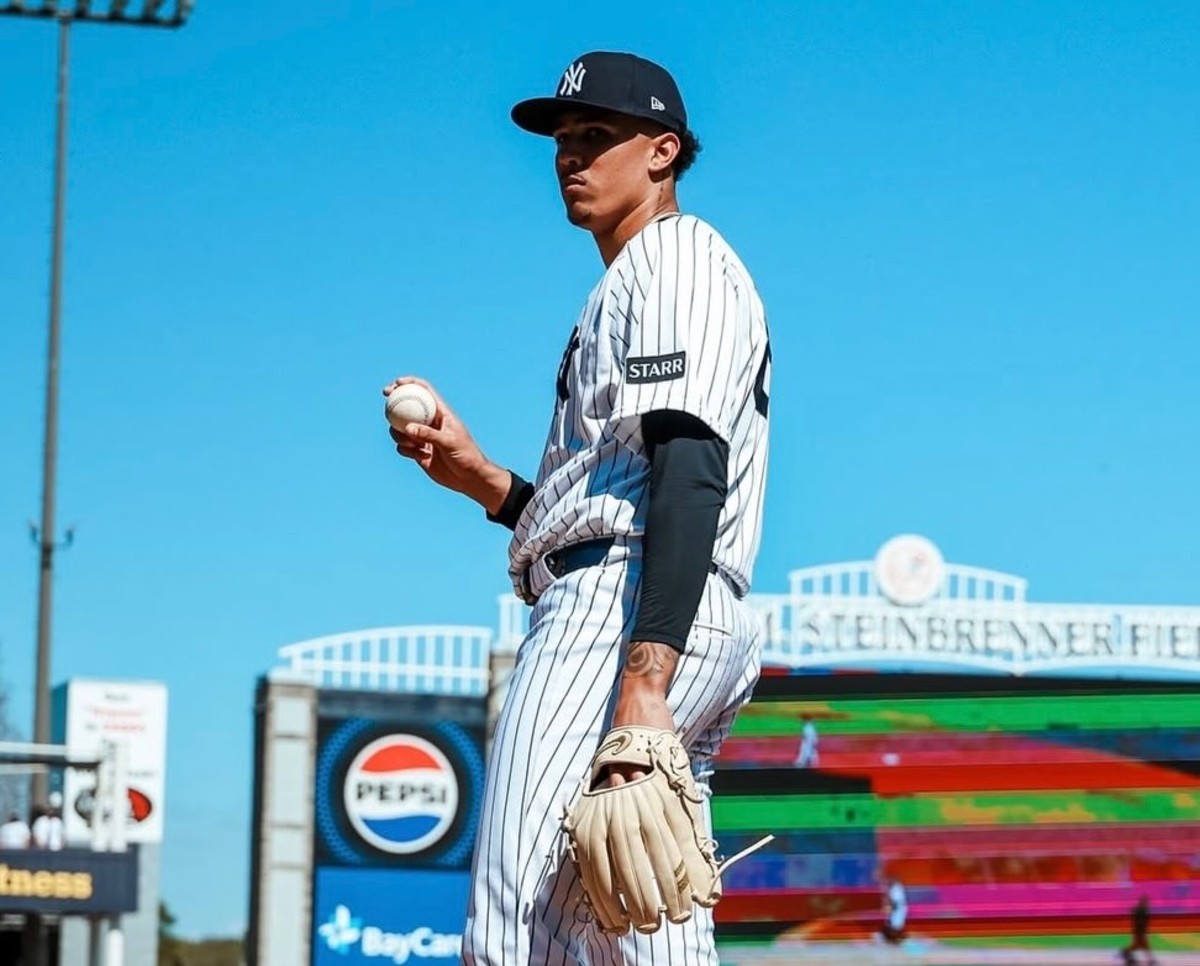
NEW YORK — His fastball touched 103 mph in spring training. Now the Yankees have made a decision that could bring Carlos Lagrange‘s triple-digit heat to the Bronx far sooner than anyone planned. The move looks small on paper. The signal behind it is loud.
The flamethrower is no longer working only as a starter in the minor leagues. The Yankees are reshaping Lagrange’s role, and the timing tells you exactly what they have in mind.
A role change with a clear purpose
The Yankees announced Tuesday that the 23-year-old Lagrange will move to a relief role with Triple-A Scranton/Wilkes-Barre. The shift is designed to speed up his path to the majors at a moment when the bullpen could use an injection of power.
Manager Aaron Boone framed the decision as a way to unlock Lagrange’s value this year without closing the door on his future as a starter. The long-term vision has not changed, but the present need is real.
“We definitely view him long term as a starter,” Boone said. “But in the 2026 lens, there’s a chance for him to potentially impact us out of the bullpen while not really disrupting anything moving forward.”
This was not a snap decision either. Boone made clear the front office had been weighing it for some time before pulling the trigger.
“It’s been a conversation for a couple of weeks now,” Boone said.
A fastball unlike anything in the system
Here is what makes Lagrange so tempting. The velocity is genuinely historic at his level. He has averaged 98.9 mph on his fastball this season at Triple-A and topped out at 103.0 mph. He has thrown the 29 fastest pitches by any Triple-A starter this season, and 46 of the 51 fastest overall.
YES Network’s Jack Curry reported the bullpen switch on Tuesday and added the line Yankees fans will not forget, noting they should get ready for 103 mph in the Bronx. Curry also said the organization has long believed Lagrange could help its relief unit this season.
The arsenal goes beyond the heater. The 6-foot-7, 248-pound right-hander pairs his fastball with a slider, a changeup and a sweeper. Cole, Max Fried and others came away from spring training convinced he could help right away. Catcher Austin Wells said late in camp that he had no doubts Lagrange could contribute at the big league level immediately.
Why the bullpen simplifies his game
The conversion makes sense for a specific reason. Lagrange’s biggest question has always been command, not stuff. As a starter this season, he went 0-3 with a 4.41 ERA across 11 outings, walking 25 batters in 49 innings while striking out 63 and holding hitters to a .215 average.
Those walk totals are the worry. A relief role helps mask that flaw. In short bursts, Lagrange’s fastball can play up even more, his breaking ball can sharpen, and the occasional control lapse does less damage than it would over five or six innings. The bullpen lets the Yankees simplify the assignment and lean on the raw power.
Signed for just $10,000 as an international free agent in February 2022, Lagrange has turned into one of the system’s best arms. MLB Pipeline rates him as the Yankees’ No. 4 overall prospect and their No. 2 pitching prospect. Boone has been struck by more than the radar gun.
“It’s electric stuff,” Boone said. “The exciting thing for me was really being around him for the first time, seeing the person and the competitor. How he works. You love to see a young guy go out there and perform and do well and relish the competition.”
A timeline that requires patience
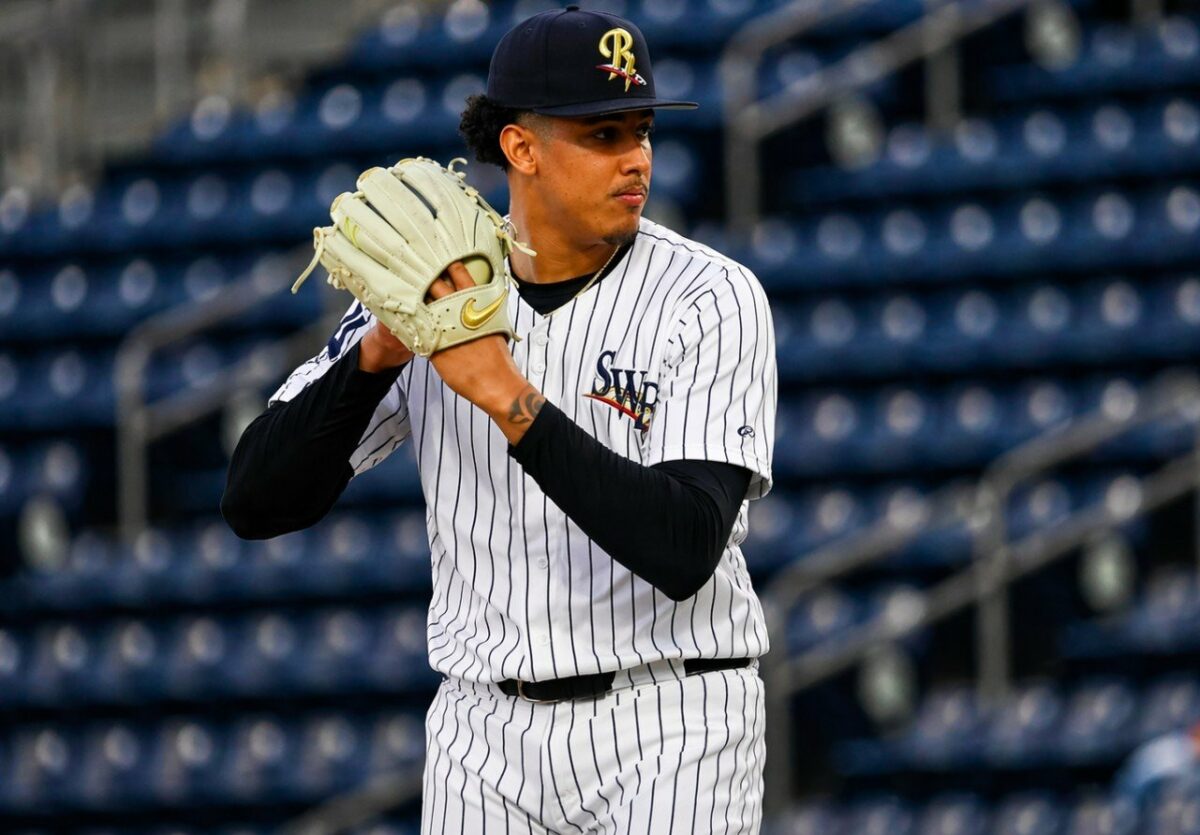
The move hints at a fast call-up, but fast does not mean immediate. Boone explained that a full transition from the rotation to the bullpen will take most of June to complete. The process involves easing back Lagrange’s workload before building him up to pitch on a reliever’s schedule.
“You’re talking about several weeks of de-loading and then building in the appearances every other day,” Boone said. “So that takes a while, but we’ll see.”
That means Yankees fans hoping to see Lagrange this week will need to wait. The groundwork being laid now, though, points clearly toward a summer debut rather than a vague someday.
What it means for the Yankees bullpen
The context matters. The Yankees relief corps has been solid but not dominant. Entering Tuesday, the bullpen carried a 3.59 ERA that ranked 10th in the majors, yet its 25.8 percent whiff rate sat only tied for 14th. Put simply, the Yankees need more swing-and-miss, and Lagrange offers exactly that.
He would join a group that already features David Bednar in the late innings, Fernando Cruz with his strikeout stuff, Camilo Doval with big velocity, and Brent Headrick as a cheap, useful left-hander. A 103 mph weapon would give the unit a different look entirely.
There is a roster-building angle too. If Lagrange can deliver a handful of high-octane outs each week, general manager Brian Cashman may feel less pressure to chase every expensive reliever on the trade market before the deadline. An internal power arm changes the math.
Lagrange still has to prove he can throw enough strikes in high-leverage spots. The bullpen, though, gives the Yankees the cleanest and quickest way to find out. For a contender hunting late-inning answers, the message in Tuesday’s move was unmistakable. The Yankees are putting their hardest thrower on the fastest road to the Bronx.
What do you think? Will Lagrange get the Yankees call this month?