NEW YORK — The Yankees used two simple words to describe what is keeping Aaron Judge out of the lineup. Bone bruise. The phrase sounds minor, almost harmless, like something a couple of days of rest would erase. The truth is far more layered. It explains why the Yankees are not yet willing to attach any timeline to their captain’s return.
Judge has a bone bruise in his right rib cage, an injury he feels mostly in his right shoulder and almost entirely when he swings a bat. To know how worried Yankees fans should be, it helps to first understand what that diagnosis really means, and why a baseball swing makes it so dangerous.
What a rib bone bruise really is
A bone bruise is not the purple mark people picture on skin. It is an injury inside the bone itself. The Cleveland Clinic describes it as damage where the bone has been hit hard enough to bleed internally without cracking apart like a true fracture. Think of it as a deep, internal injury to the rib’s structure, one layer short of a break.
On an MRI, the kind the Yankees ran on Judge, that damage shows up as bone marrow swelling. Radiology references explain the image reflects tiny disruptions in the bone’s internal lattice, along with bleeding and fluid buildup. In modern sports medicine, the terms bone bruise, bone contusion and marrow edema overlap almost completely. They all describe a bone that has been hurt internally but has not clearly snapped.
That matters because of what a bone bruise can become. Doctors view these injuries on a spectrum. At the mild end is a simple contusion that heals on its own. Further along is a stress reaction, where the bone is struggling to keep up with the load placed on it. At the far end is a stress fracture, an actual crack that forms when that load never lets up. A bone bruise can sit anywhere on that line, and where it sits decides everything about recovery.
The rib cage is more than just a rib
When a team says rib bone bruise, the injury usually involves more than the bone alone. The rib cage is a complex piece of anatomy. Each rib has a hard outer shell and a soft marrow center. The ribs connect to the breastbone through cartilage, and bands of muscle run between every rib to help with breathing and twisting.
Location within that cage changes the stakes for the Yankees. The ribs wrap from the spine around to the chest, and the top ribs sit just beneath the collarbone. If the injured rib is very high, near the first or second rib, it lies close to major nerves and blood vessels that feed the arm. The first rib in particular is pulled in different directions by several powerful muscles, which is one reason upper-rib injuries can be stubborn to heal. Reports indicate Judge’s bruise is likely in that first or second rib region, which is part of what makes his case delicate.
There is also a chance the problem involves the cartilage between or around the ribs. That tissue is notably painful when injured and has a poor blood supply, which can slow healing considerably. The uncertainty over exactly which structure is hurt is a major reason the Yankees want a specialist to take a closer look.
Why the swing hurts when daily life does not
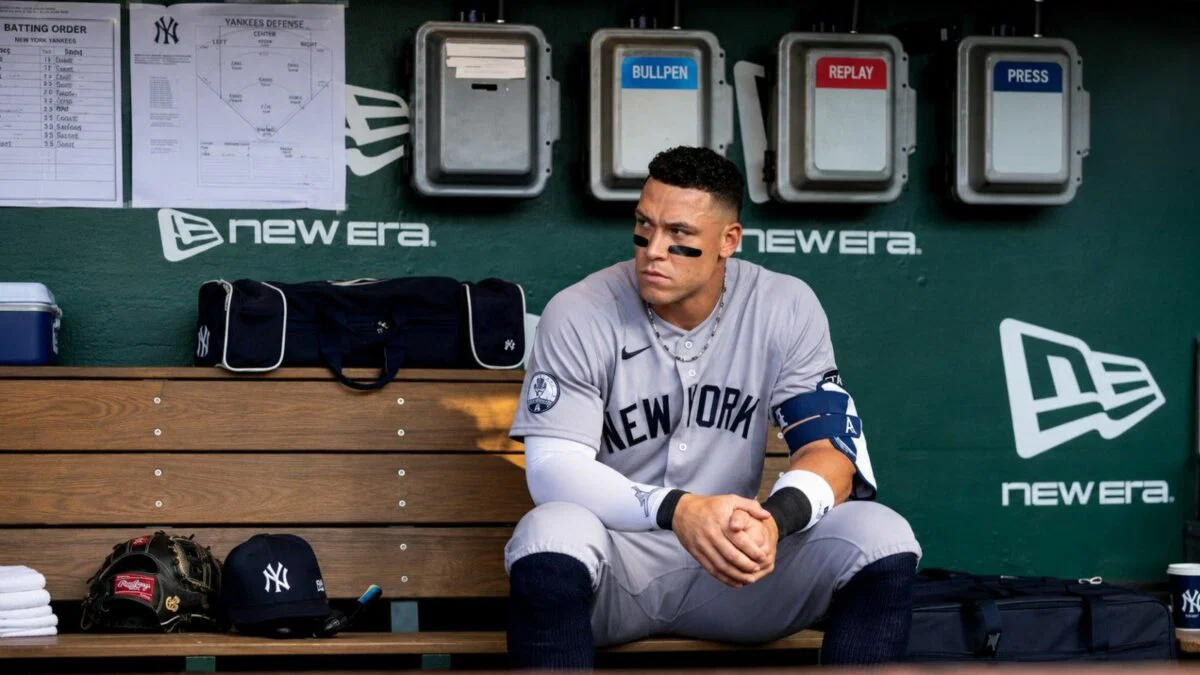
Here is the detail that ties the whole story together. Judge can reportedly move through normal daily activity without much trouble, yet feels the injury sharply the moment he swings. For an upper-rib problem, that pattern makes complete medical sense, and it is where the baseball impact becomes clear.
A major league swing is one of the most violent rotational movements in sports. It is a kinetic chain that starts in the legs and hips, whips through the core and trunk, and finishes through the shoulders and arms. Elite hitters generate enormous trunk rotation at high speed. The ribs, the muscles attached to them, and the chest wall all absorb that force, especially during the acceleration into contact and the follow-through.
That load is the problem the Yankees are now managing. A player can walk, jog, field a slow grounder, or go through a normal day and never provoke the injury. But the instant he unleashes a full-effort swing, the torque through the rib cage spikes, and a bruised or stressed rib lights up with pain. This is why Judge could keep playing for weeks while the issue hid in plain sight, and why it finally became impossible to ignore once it started affecting his swings.
Baseball injury research reinforces the point. Trunk and core injuries are common in the sport, and many involve the muscles that attach near the ribs. The chest wall is simply under heavy stress every time a hitter turns on a pitch. For a slugger like Judge, whose game is built on generating massive bat speed, a compromised rib attacks the exact engine of his power.
Why a rib injury masquerades as shoulder pain
One of the trickiest parts of this injury is where the pain shows up. Judge has felt his discomfort largely in his right shoulder, not along the side of his ribs. That mismatch is classic for an upper-rib problem. The nerves around the upper ribs can refer pain toward the shoulder and chest, so the source and the symptom sit in different places.
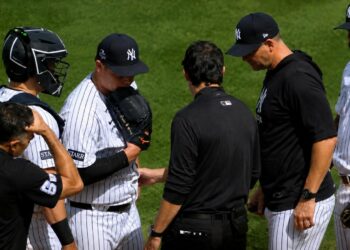
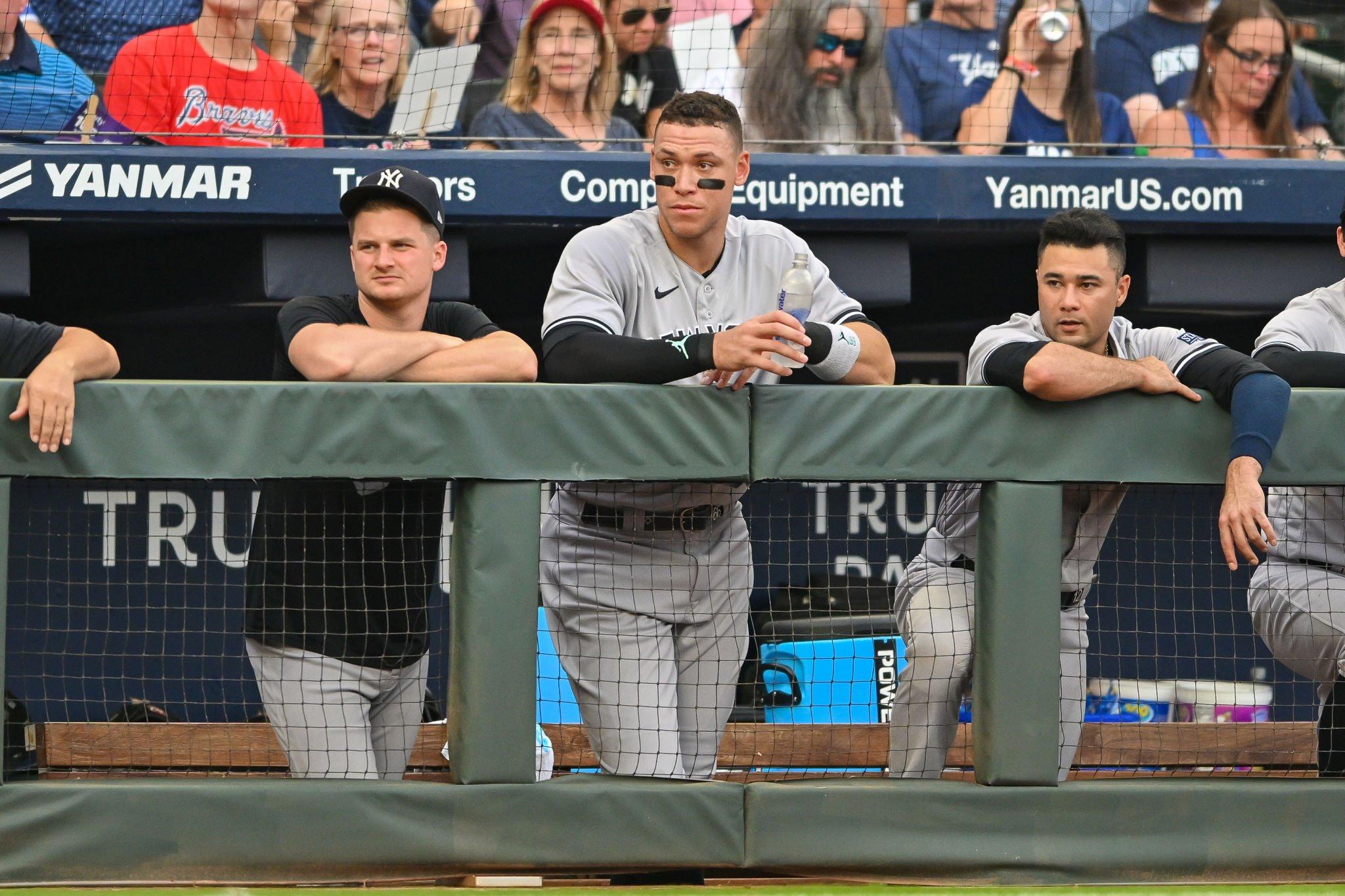
Manager Aaron Boone has been open that the issue affects Judge’s swinging far more than his throwing, and that the captain had been quietly managing soreness for a couple of weeks before it worsened during the recent series in Sacramento. Judge never volunteered that anything was wrong. It took his manager noticing something off in his swings.
“I kind of said something,” Boone said of the moment he raised it with Judge.
The 2020 history doctors cannot ignore
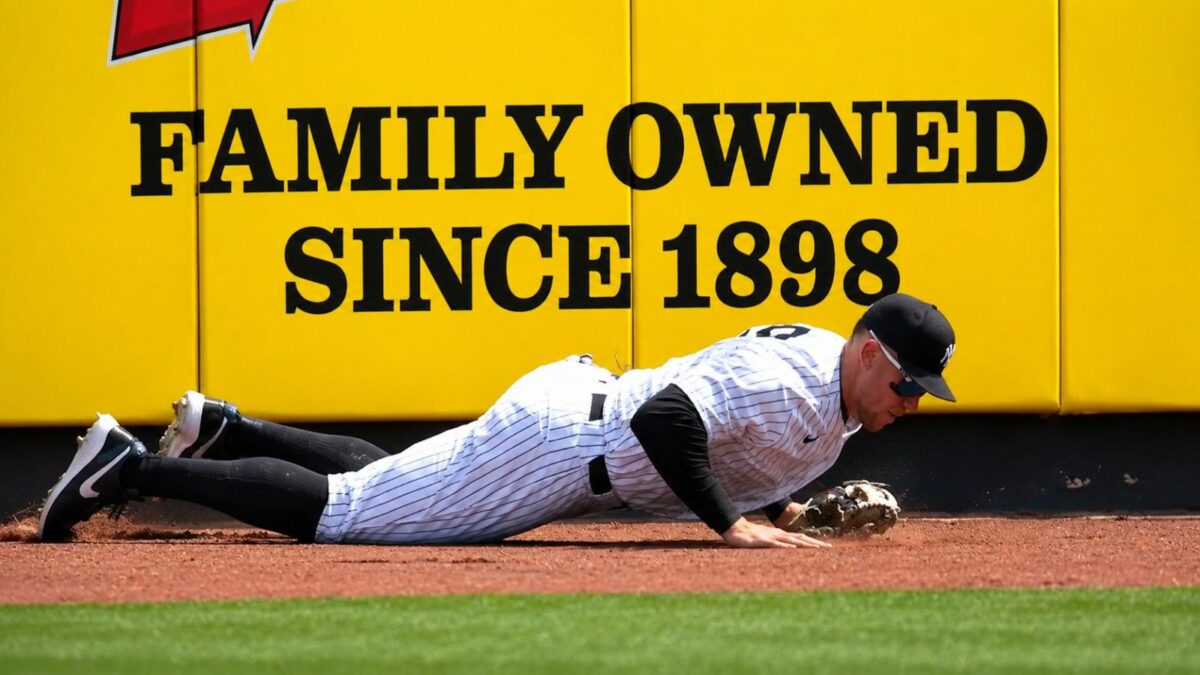
This is where the middle of the story turns serious. The reason the Yankees are seeking a second opinion is not routine caution. Judge has lived this almost exactly before. In March 2020, he was diagnosed with a stress fracture in his first right rib, an injury that also showed up as right shoulder and pectoral discomfort. It took multiple MRIs, bone scans and X-rays before a CT scan finally found the fracture for the Yankees medical staff.
For the Yankees, the parallel is hard to miss. Same side, same general area, same shoulder-referred symptoms. That is precisely why Boone called the current injury a unique spot and why the team is determined to rule out a recurrence, a stress reaction, or a hidden fracture before treating it as a simple bruise. The current imaging shows a bone bruise, but upper-rib injuries are famously difficult to diagnose with certainty.
Boone offered the most hopeful read he could while leaving the door open.
“Hopefully we avoided something serious,” Boone said, adding the Yankees would have a clearer picture as the next couple of days unfolded.
How long Judge could be out
The range of outcomes is wide, and that uncertainty is the whole story. Dr. Spencer Stein, a sports orthopedic surgeon at NYU Langone who is not treating Judge, explained the spread in a phone interview with the New York Post.
“It needs rest,” Dr. Stein said. “This injury can happen with repetitive overuse, so it could be as simple as resting for a week or two, but if it’s more like a stress fracture, that could be more like 8-10 weeks.”
Those numbers frame the three realistic scenarios. In the best case, Judge has a minor isolated bruise that settles within days to two weeks, and he might even avoid the injured list. In the typical case, a deeper rib contusion takes roughly two to six weeks, and a 10-day injured list stint becomes likely. In the worst case, the bruise is the early label for a stress reaction or fracture near his old 2020 site, which can mean six to 12 weeks or more. Pro-baseball data has pegged rib stress fractures at an average of about 14 weeks to return.
Treatment and the road back to the lineup
Care for an isolated rib bone bruise is conservative, and the Yankees are likely to follow that path. It begins with rest, avoiding the painful motion, ice and pain control, then a gradual return once symptoms calm. Doctors stress maintaining deep breathing rather than guarding the chest, because protecting the area too tightly can create secondary problems like shallow breathing or chest stiffness.
A sensible return path for Judge would climb in clear stages. First, pain-free breathing and normal daily movement. Then full trunk and shoulder range of motion without provocation. Then dry swings, followed by tee work and soft front toss. Then full batting practice against live velocity. Then throwing and defensive work at game intensity. Only after he proves he can handle full-effort swings on back-to-back days would a return to games make sense.
For the Yankees, the swing stages are the real test. Because the injury is provoked specifically by high-torque rotation, Judge clearing breathing and daily motion tells the Yankees very little. The honest checkpoint is whether he can take a full cut without pain, and then do it again the next day.
What it all means for the Yankees
The bottom line is that two very different futures remain open. In the optimistic version, Judge has a small upper-rib bruise that flares only on maximal swings and quiets fast with a short shutdown, costing him days. In the concerning version, bone bruise is simply the first public label for a stress injury near the same rib that sidelined him in 2020, a problem that could stretch across months.
For now, the Yankees are not ruling out the injured list, and Judge is officially day-to-day. If he cannot clear those early swing stages quickly, placing him on the injured list would be the rational call, because uninterrupted healing is worth more than chasing day-to-day hope with the franchise player’s rib cage.
Judge entered Tuesday hitting .248 with 17 home runs, 38 RBI and a .907 OPS, and his recent slump now looks consistent with a swing-limiting injury rather than a simple slump. The Yankees sit at 36-23, second-best in the American League. Until the specialist weighs in and the Yankees confirm there is no fracture component, the only honest verdict on Judge’s rib is that it could be brief, or it could quietly reshape the entire Yankees season.
What do you think? Pray for Aaron Judge and the Yankees.