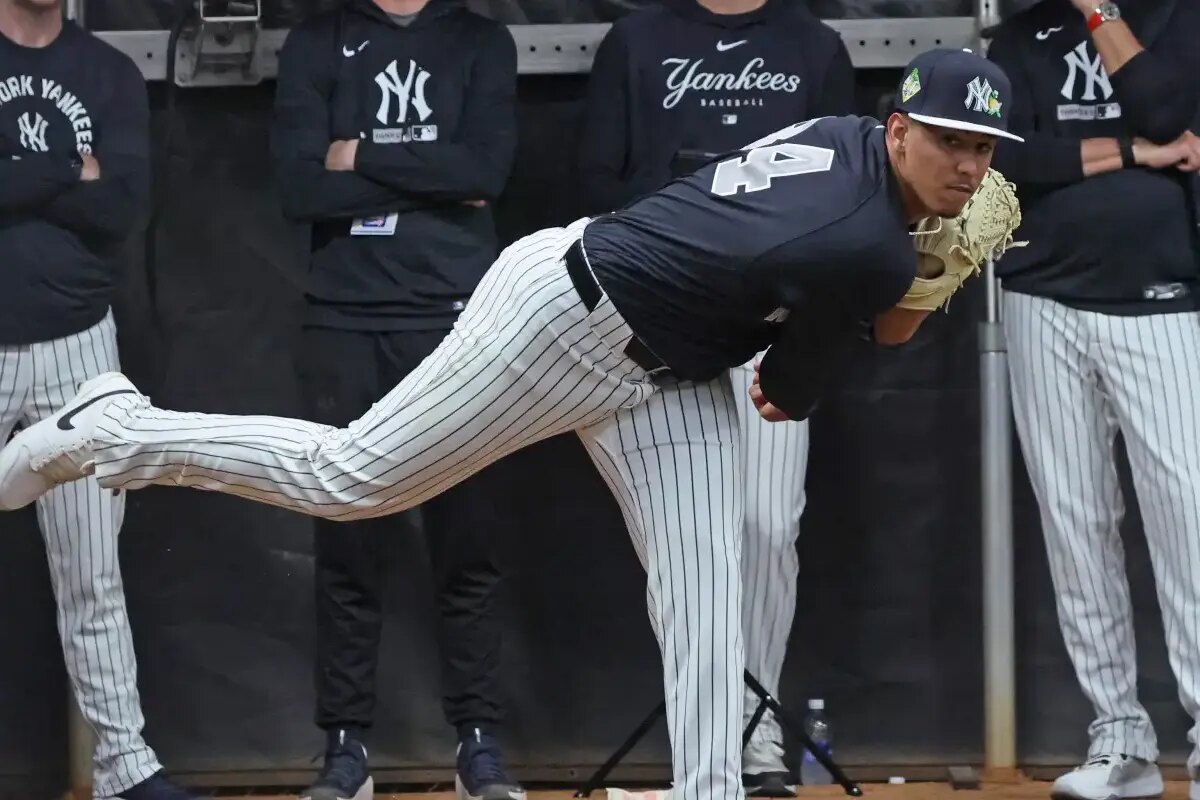
NEW YORK — Carlos Lagrange throws a baseball 102 mph. That is his calling card, and at 6-foot-7, he can do it with a frame and repertoire that attract scouts’ attention. It is the kind of weapon teams build pitching plans around.
The Yankees are weighing a role change for their top pitching prospect. The plan is to move the hard-throwing right-hander to the bullpen this season.
The possible move would accelerate the timeline for one of the organization’s most talented arms. It solves a short-term need. But it has drawn questions fearing that the move could limit Lagrange’s long-term potential.
What Cashman revealed about the Lagrange plan
The news came directly from the top of the Yankees organization. General manager Brian Cashman addressed the team’s thinking on Lagrange in a conversation with Joel Sherman of the New York Post. His words confirmed this is an active idea, not a passing thought.
Cashman framed the bullpen move as a live discussion rather than a finished decision. The candor underscored how seriously the Yankees are weighing it.
“There have been ongoing discussions about moving Lagrange to the bullpen at some point this season,” Cashman said, per Sherman.
The concept is not brand new. Manager Aaron Boone hinted during spring training that Lagrange might shift to relief. What is new is the urgency. With the Yankees’ bullpen in need of help and the rotation completely full, the fastest route to the majors for Lagrange runs through relief, not the starting five.
Why the plan risks wasting Lagrange’s biggest weapon
Here is the core of the concern for the Yankees. Lagrange’s value is not just the velocity. It is the velocity attached to a starter’s build and a starter’s arsenal. Moving him to the bullpen now could cap that ceiling before he ever gets a chance to reach it.
For the Yankees, a front-line starter is far more valuable than a late-inning reliever. Teams covet 200-inning arms who can dominate a lineup three times through. Lagrange has the raw stuff to dream on that profile. Once a pitcher is converted to short relief, that path often closes for good. The skills required to pace a six-inning outing can atrophy when a pitcher only airs it out for one frame at a time.
The skeptics of the Yankees plan are vocal. Critics argue the Yankees would be better served letting Lagrange keep starting at Triple-A, where he can refine his command in lower-stakes innings rather than being thrown into a pennant race before he is ready. The worry is that a rushed promotion stunts the development of a pitcher with genuine top-of-the-rotation potential.
There is also the matter of where his command plays in the Yankees bullpen. Relief work often means entering with runners on base and almost no margin for error. A pitcher who walks hitters at a high rate can turn a one-run lead into a loss in a single inning. Asking Lagrange to handle those spots now, before his control is fixed, may set him up to fail in the highest-leverage moments.
The command numbers fueling the debate
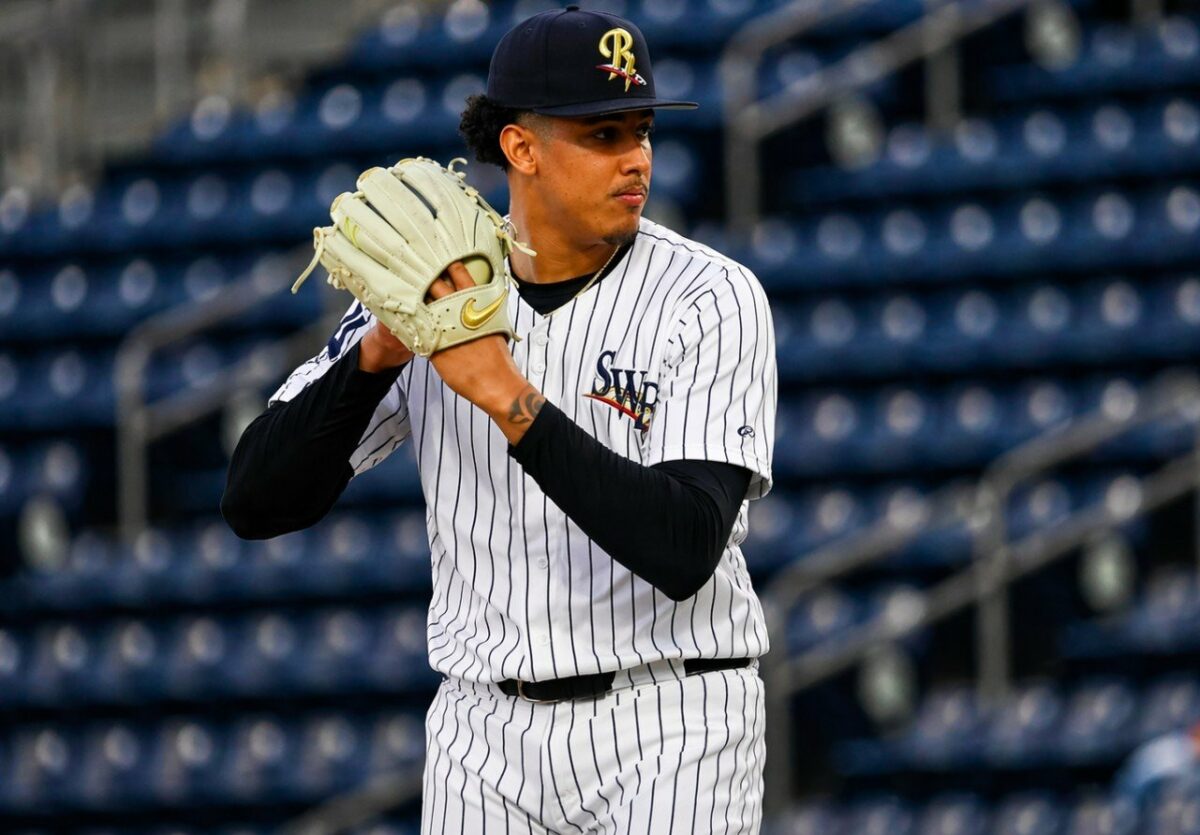
Lagrange’s 2026 season at Triple-A captures both the promise and the problem. The strikeouts dazzle. The walks alarm.
| 2026 Triple-A stat | Carlos Lagrange on May 31, 2026 |
| ERA | 4.41 |
| WHIP | 1.33 |
| Strikeout rate | 29% |
| Strikeouts per nine | 11.6 |
| Walks per nine | 4.6 |
| Walk rate | 11.5% |
| K-BB rate | 17.5% |
| First-pitch strike rate | 46.5% |
| Top fastball this season | 99.8 mph (102 in spring) |
He owns a 4.41 ERA with a 1.33 WHIP across his starts. He is striking out 29 percent of hitters, an elite figure, and averaging 11.6 punchouts per nine innings. But he is walking 11.5 percent of batters, with a 4.6 walks per nine rate that mirrors a career-long issue. His lifetime minor league mark sits at 5.1 walks per nine.
The trouble for the Yankees starts on the first pitch. Lagrange has thrown a first-pitch strike just 46.5 percent of the time this season. Fellow Yankees prospect Elmer Rodriguez sits at 51.8 percent. Falling behind hitters is exactly the kind of habit that punishes a reliever with no innings to settle in.
There was a flash of progress recently. Lagrange spun 5 2/3 innings, his longest outing of the season, allowing three hits and one earned run while walking just one across 21 batters. That is the version the Yankees hope to keep developing, and it is the version that argues for patience rather than a quick role change.
The case the Yankees are making for the move
To be fair to the front office, the logic for the bullpen plan is not empty. Lagrange’s overpowering fastball plays up in short bursts, and a one-inning role removes the burden of holding command deep into games. Both FanGraphs and Baseball America have projected him as a future reliever for years.
Opportunity is the other driver for the Yankees. The Yankees have a crowded rotation featuring Gerrit Cole, Cam Schlittler, Will Warren, Carlos Rodon, and Ryan Weathers. Max Fried is expected back before the deadline, and Clarke Schmidt could return from elbow surgery later in the year. Even if injuries hit, there is no short-term rotation opening for Lagrange. The bullpen is simply where the door is open.
The Yankees could call him up this summer, audition his triple-digit arm in relief, and decide whether he sticks before pursuing veteran help at the deadline. A strong showing would not necessarily end his starting future, the team insists.
History offers one hopeful template. Dellin Betances struggled badly with control before becoming a dominant late-inning force for the Yankees, and Joba Chamberlain also moved from starting to relief. But for every Betances, there are arms whose walks never stopped hurting them. The exception is not the rule.
What the Lagrange decision means for the Yankees
For the Yankees, the debate comes down to short-term need versus long-term value. The Yankees want bullpen help now, and Lagrange has the loudest arm in their system. Yet the same wildness that limits him as a starter could sink him in relief, and committing him to the bullpen risks closing off a much higher ceiling.
Cashman has never shied from aggressive moves, and converting a prized starting prospect into a midseason relief weapon would fit his track record. The 23-year-old’s 102-mph upside is tempting enough to gamble on. The danger is that the gamble trades a potential ace for a setup man.
Whether the plan is genius or a misstep may hinge on those first-pitch strikes. If Lagrange throws the ball over the plate, the Yankees may unlock a weapon either way. If he cannot, they could waste the best raw talent on their farm. The conversation is no longer hypothetical. The Yankees have put it squarely on the table.
What do you think?