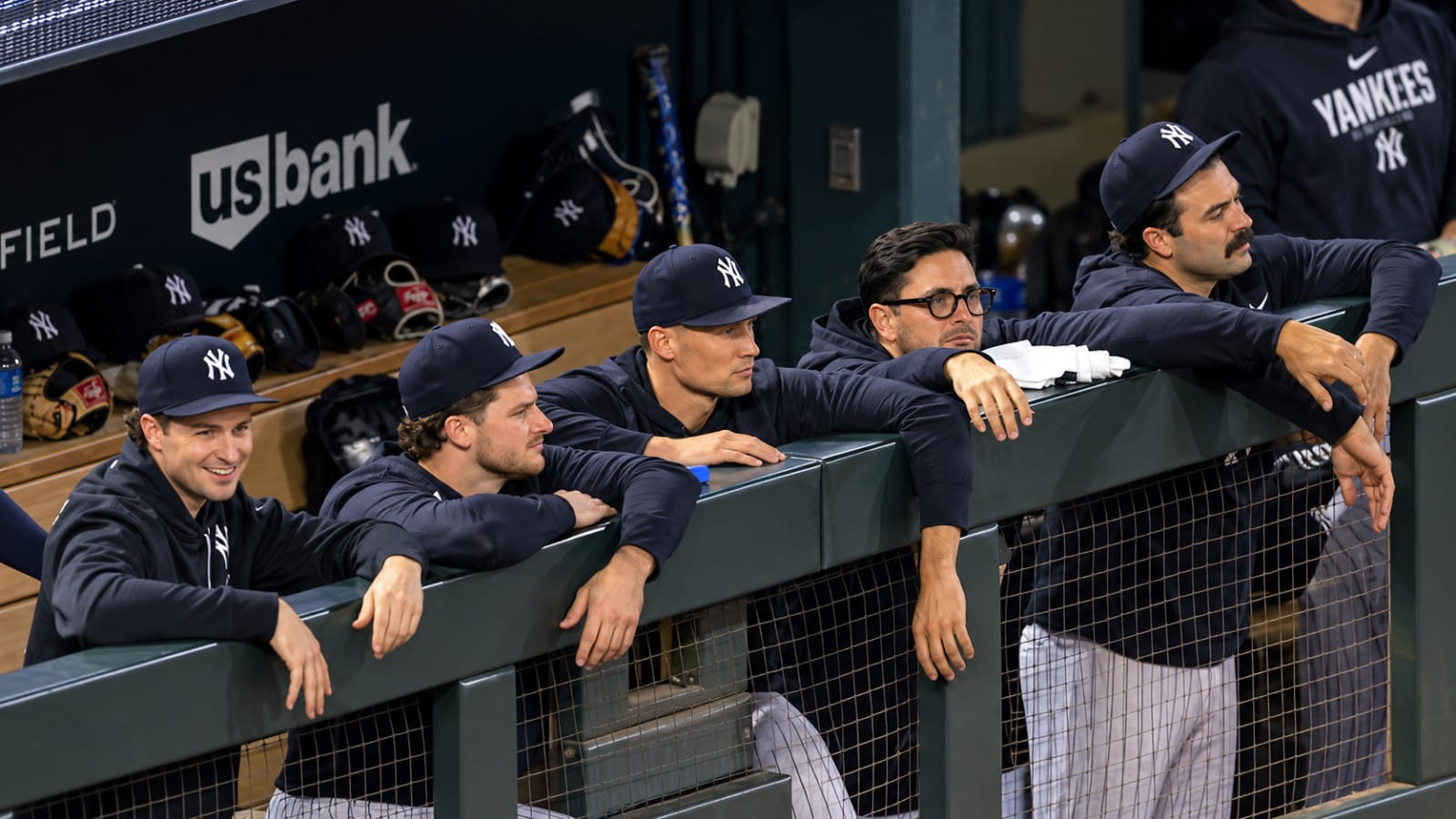
MINNEAPOLIS — The Yankees have answered September’s biggest question. They are going back to October.
Now Yankees manager Aaron Boone has another decision gaining urgency: who should be at third base when the postseason begins?
For most of the season, Ryan McMahon looked like the straightforward answer. He was the established third baseman and proven defender.
But New York’s roster has changed around him, giving the Yankees more than one way to build the infield when every postseason plate appearance and defensive inning carries more weight.
The Yankees also have a faster, more versatile infield option who can cover multiple positions without forcing Boone into a narrow platoon structure. A position that looked settled has become a legitimate postseason question.
Tuesday’s lineup changed the third-base conversation
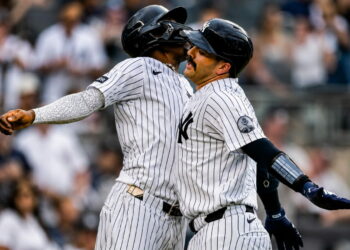
McMahon was on the Yankees bench Tuesday. Jose Caballero started at third one night after his two-hit, two-RBI performance helped New York clinch.
More telling, Minnesota started right-hander Bailey Ober. McMahon, a left-handed hitter, had resumed handling most third-base starts against right-handed pitching after returning from a Grade 2 left thumb sprain on Sept. 1. Caballero’s start was therefore more than an obvious platoon move.
It does not amount to a permanent change. It does make the comparison difficult to ignore.
Through Tuesday, Caballero has played 127 games and owns a .235/.292/.376 slash line with 14 home runs, 49 RBIs and 32 stolen bases in 429 plate appearances. McMahon has played 117 games and is batting .214/.280/.353 with 10 homers, 34 RBIs and three steals in 340 plate appearances.
The supplied Stathead comparison shows Caballero at 2.3 WAR to McMahon’s 0.2. Caballero also holds an 85 OPS+ to McMahon’s 75.
The offensive difference is not massive, but Caballero leads in every listed rate category while adding four more homers, 15 more RBIs and 29 more stolen bases. In October, that extra speed can matter even when neither player is expected to anchor the lineup.
Caballero kept forcing his way into the lineup
When Caballero returned from the injured list in May, Boone said both he and Anthony Volpe had earned playing time and that the Yankees would have to move pieces around to create it.
Boone described the competition as a strength rather than a problem.
“It’s a good situation to be in,” Boone said, “because we have two players that we feel like can play vital roles in us winning games.”
Since then, the roster has changed repeatedly. Jazz Chisholm Jr.’s thumb injury pushed Caballero into second-base duty last week. George Lombard Jr. and Volpe have handled shortstop. Caballero has continued appearing wherever Boone needed him.
That flexibility has now created a much bigger October question.
McMahon offers experience and a long defensive track record. Caballero offers speed, defensive versatility and the ability to handle second, shortstop and third without forcing Boone into a narrow platoon role.
Caballero’s case extends beyond glove
McMahon’s defensive history keeps this from being a simple offensive comparison. Baseball-Reference credits him with 69 career Defensive Runs Saved at third base. This season, however, he is at minus-1 DRS across 825 1/3 innings there.
Caballero does not have McMahon’s volume at the position, but his defensive record travels.
Across his major-league work at the three infield spots, Caballero has produced plus-10 DRS and plus-7 Fielding Run Value at second base over 903 innings, plus-5 DRS and plus-4 FRV at third over 568 1/3 innings, and plus-17 DRS with plus-10 FRV at shortstop over 1,763 2/3 innings.
That is why his case is different from a bench player getting hot at the right time. The Yankees can put Caballero at third without sacrificing the multipositional defense that already makes him useful elsewhere.
His baserunning widens the gap. Caballero’s 32 steals give Boone a late-game weapon without requiring him to reserve Caballero strictly for pinch-running duty. If he starts, that speed is already on the field.
Alsoat the plate, he is better than McMahon. Through Sept. 15, he is hitting .235/.292/.376 with 14 home runs, 49 RBIs, 32 stolen bases and a .668 OPS. McMahon sits at .214/.280/.353 with 10 homers, 34 RBIs, three steals and a .633 OPS. Caballero also owns a 2.3 WAR, compared with McMahon’s 0.2, giving the Yankees more offensive production, speed and overall value without sacrificing positional flexibility.
Neither has been an above-average hitter, but the gap matters as Boone weighs his October lineup. Caballero’s advantage is no longer built only on versatility. He has simply produced more at the plate this season.
A 2.1-WAR gap now sits inside an October decision
The clearest overall separation is the 2.1-win difference in WAR.
Caballero has produced 2.3 WAR in 429 plate appearances. McMahon has produced 0.2 in 340. Caballero has needed only 89 more plate appearances to build that gap.
McMahon still brings real advantages. He owns a long defensive résumé at third, remains under contract through 2027, and can change the conversation with a strong finish. He also returned only two weeks ago from the thumb injury, giving the Yankees reason to account for recent disruption.
But postseason roles are not awarded on contract status or past usage. New York has already clinched, turning the remaining schedule into both a division chase and an October audition.
Monday showed Caballero can change a game with his bat and legs. Tuesday showed Boone is willing to use him directly at McMahon’s position, even against a right-handed starter.
Nothing guarantees that arrangement will survive into October. The Yankees still have time to test it.
What has changed is the burden of proof. Caballero no longer looks like a utility player the Yankees need to squeeze into a postseason game. He looks like a player capable of forcing his way into the starting lineup.
If that continues, McMahon’s October role may be the one that has to shrink.
What do you think? Leave your comment below.