NEW YORK — The Yankees spent Wednesday night creating the outline of a comeback without producing the swing that could complete it. They forced St. Louis pitchers to work, reached base repeatedly and kept the tying run within reach. Yet the pressure never became damage in a 3-1 loss at Yankee Stadium.
New York collected four hits, drew eight walks and had Heliot Ramos hit by a pitch. That added up to 13 baserunners. The Cardinals threw 188 pitches, including 84 balls, but the Yankees scored only when Jazz Chisholm Jr. drew a bases-loaded walk in the sixth inning.
The decisive damage arrived with two outs in the fifth. Rookie JJ Wetherholt drove a two-run double over Trent Grisham in center field, then Iván Herrera followed with an RBI ground-rule double. Will Warren had kept St. Louis scoreless through four innings before the three-run sequence changed the game.
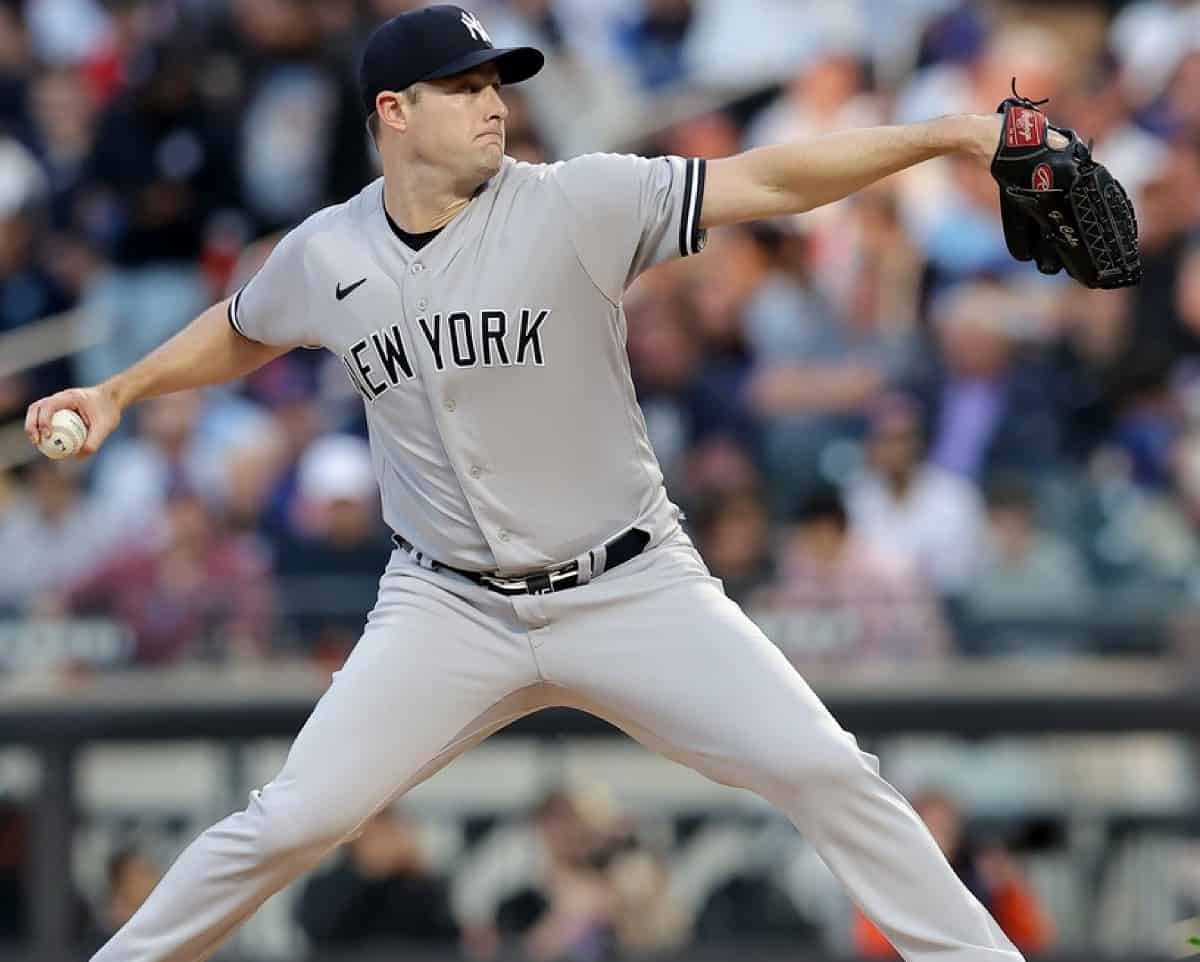
Andre Pallante earned the win after allowing one run and three hits in 5 1/3 innings. Warren took the loss after surrendering three runs and seven hits over the same distance. Riley O’Brien handled the ninth for his 27th save after the Cardinals bullpen protected the lead for 3 2/3 scoreless innings.
The Yankees finished 0-for-10 with runners in scoring position and stranded 11. Luis García Jr. was picked off first base in the opening inning. Austin Wells grounded into a double play with two aboard in the fifth. Ryan McMahon struck out with the bases loaded in the sixth, and George Lombard Jr. went down with two runners aboard in the eighth.
The result gave St. Louis the series and dropped the Yankees to 64-51. New York remained in the first American League wild-card position, but stood 4 1/2 games behind Tampa Bay in the AL East and only one game ahead of Boston. The margin for accepting another night of missed opportunities had narrowed.
Boone strips away the usual cushion
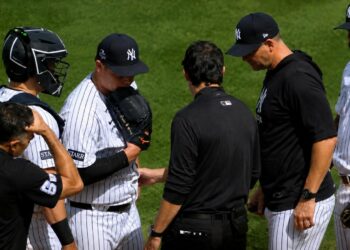
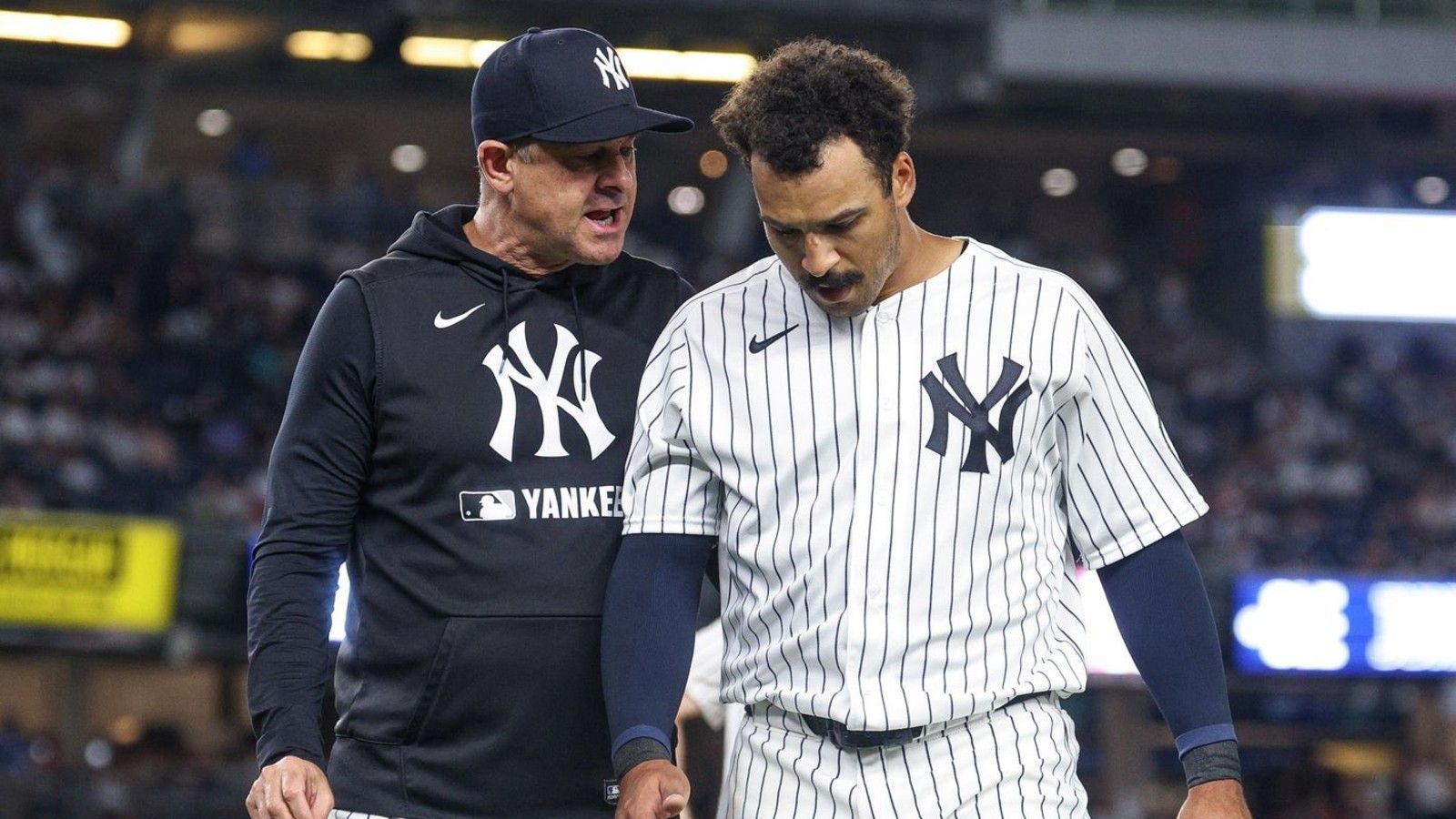
Aaron Boone did not blame the rain, the brief lighting interruptions or the absence of injured stars. The Yankees manager also avoided framing the loss as bad luck. His postgame answer reduced the problem to execution.
The wording mattered because it left the Yankees lineup with nowhere to hide. Boone was responding to a game in which patience produced traffic but not a timely hit.
“We got to get it done. We got to come through in those situations,” Boone said. “Like the opportunities tonight. Had a lot of chances, felt like baserunners every inning, but we got to be able to deliver, and we haven’t done that enough.”
The message was unusually direct. Boone often protects players publicly and emphasizes process over one result. This time, he named the failure without softening it. The Yankees had enough chances. They did not convert them.
Empty pressure defines the loss
The Yankees reached base in seven of nine innings. They put at least two runners aboard in six different frames. No batter delivered a hit with a runner in scoring position.
Ramos doubled in the second, but Pallante struck out Chisholm and McMahon. Two walks in the fifth disappeared when Wells rolled a grounder back to the mound for an inning-ending double play.
The sixth represented the best chance. Ben Rice and García walked, Ramos was hit and Chisholm forced in the only run. George Soriano then struck out McMahon with the bases loaded.
Goldschmidt doubled and Lombard singled in the seventh, but the Yankees again came away empty. Two more walks created an eighth-inning opening before Ryne Stanek struck out Lombard on three pitches.
New York’s pitching staff kept the deficit manageable. Kervin Castro and Tim Hill each worked a scoreless inning, while Paul Blackburn supplied 1 2/3 scoreless frames. The bullpen gave the lineup time. It never found two runs.
A depleted lineup still faces a contender’s standard
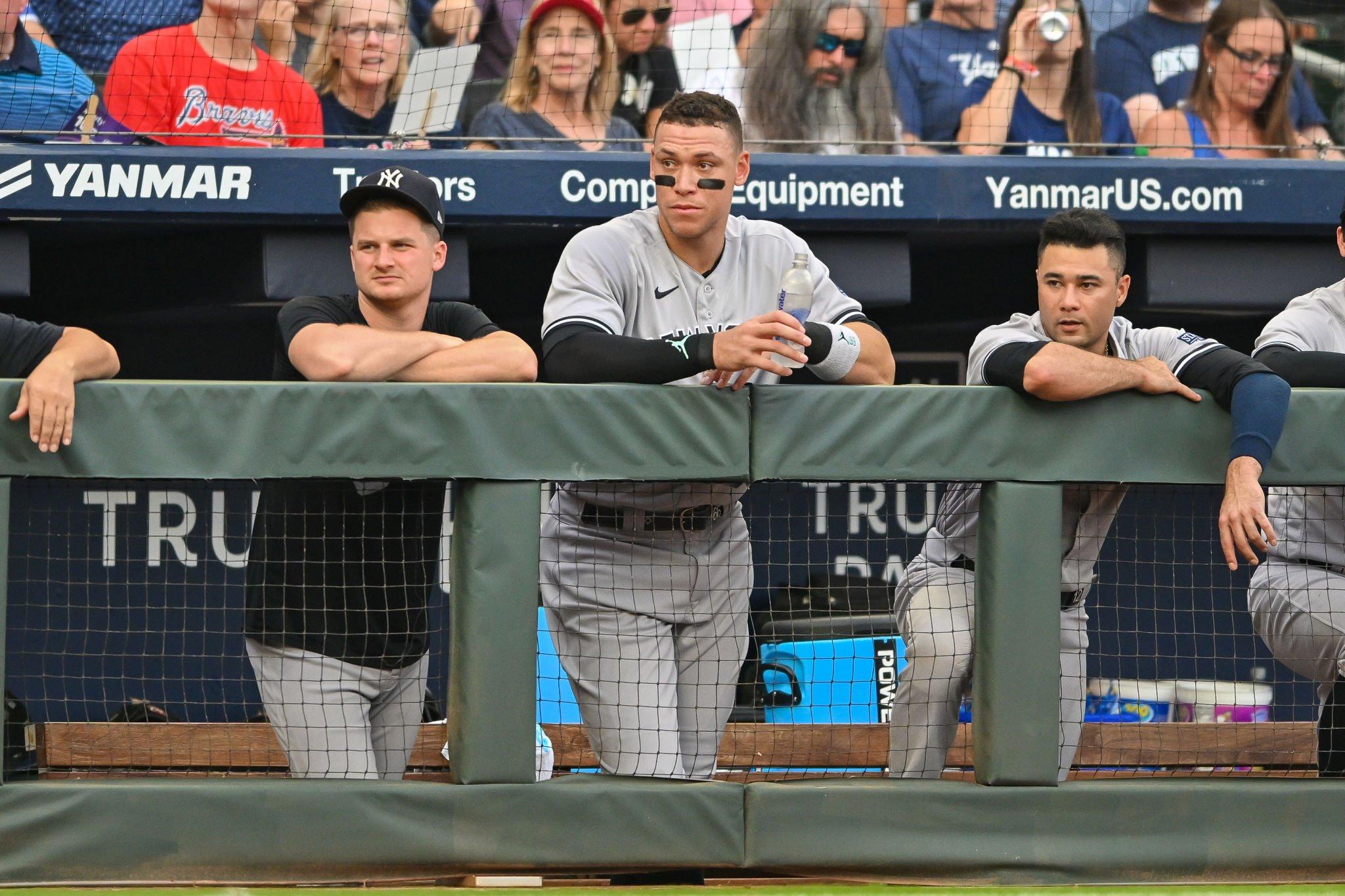
The Yankees are without Aaron Judge, sidelined since May 31 by a fractured right rib. Judge was cleared for light activities this week but has not resumed baseball work. Cody Bellinger also remains out with a left hamstring strain.
Those injuries explain why the Yankees lineup has changed. They do not erase the opportunities that were available Wednesday.
Deadline addition García reached twice. Ramos doubled and was hit by a pitch. Rookie Lombard recorded a hit and made two sharp defensive plays. The newcomers created traffic, but the Yankees’ established hitters did not finish enough at-bats.
The problem extends beyond one game. The Yankees have averaged 3.3 runs over their past 43 games and have scored more than three only three times in their past 10. Wednesday supplied a concentrated version: long at-bats, baserunners and no decisive contact.
That is why Boone’s bluntness carried more weight than a routine reaction. He was not asking for a different approach. The Yankees already drew walks and forced deep counts. He was asking for production when the inning and postseason race made the next swing matter.
The next response comes against Atlanta
The Yankees were off Thursday before opening a three-game home series against the Atlanta Braves on Friday. Atlanta entered Thursday at 69-45, giving New York another test against one of MLB’s strongest clubs.
Boone’s clubhouse has no standings crisis yet. The Yankees hold a seven-game cushion over the nearest team outside the AL playoff field. Their position is secure enough to recover, but not comfortable enough to ignore an offense that repeatedly leaves games within one swing.
The Cardinals series exposed both sides of the roster. New York received a 2-0 win behind pitching and Lombard’s debut Tuesday, then wasted another competitive start Wednesday. The pitching staff and bullpen kept the finale alive. The lineup did not answer.
After the Yankees forced 188 pitches and scored once, Boone used fewer explanations than usual. The next series will show whether the message changed anything.
What do you think? Leave your comment below.