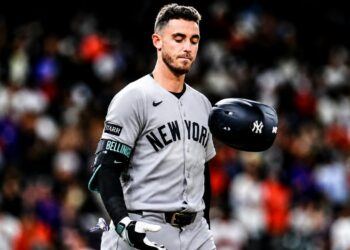
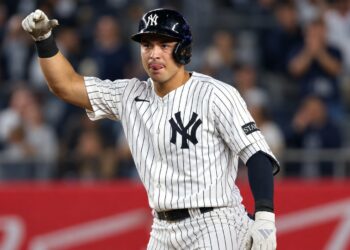
NEW YORK — The final swing came with the tying run in scoring position and another season hanging on one at-bat. Trent Grisham struck out on four pitches Wednesday night, ending a 4-3 loss to Tampa Bay at Yankee Stadium and another October run before the American League Championship Series.
The Rays had already beaten the Yankees 1-0 and 5-2 in St. Petersburg. In Game 3, New York briefly answered Tampa Bay’s early scoring but never erased the deficit created by the Rays’ two-run sixth inning. The Yankees finished the division series with 12 hits and 31 strikeouts.
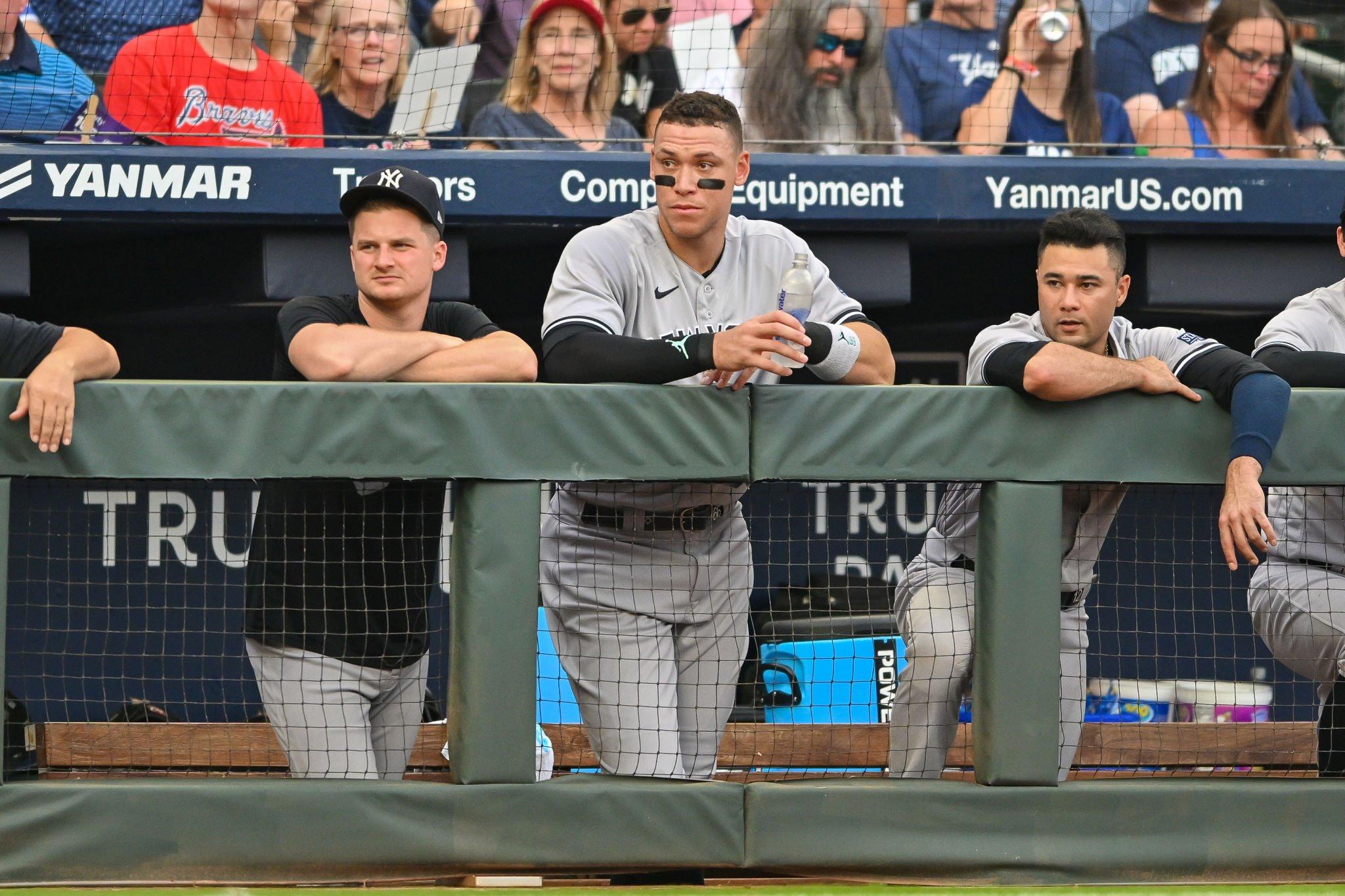
That offensive collapse followed a 93-win regular season and a two-game wild-card sweep of Boston. It also came without Aaron Judge, whose rib and calf injuries limited him to 66 regular-season games and kept him out of the postseason. Ben Rice provided much of the Yankees’ remaining threat.
The contrast leaves New York with a familiar problem. Its pitching can keep postseason games within reach, but the batting order has not consistently produced the contact, depth or timely offense required to win them. The Yankees have not won a World Series since 2009.
A short series exposed problems built over a long season
The Yankees brought back most of their established roster after their 2025 elimination against Toronto. They retained Grisham, re-signed Cody Bellinger and kept several familiar role players, favoring continuity over a more extensive overhaul.
The approach delivered another winning season but could not insulate the lineup from Judge’s absence. Bellinger went 1 for 12 against Tampa Bay. Grisham finished the finale 0 for 5 with three strikeouts. The offense had little margin despite a rotation and bullpen that generally kept the series close.
The deciding moments also differed by game. New York managed one hit in the opener. Four errors damaged its chances in Game 2, including three in the first inning. The final game was closer, but the Yankees again failed to deliver the hit needed to extend their season.
The three defeats combined for five Yankees runs. The club allowed 10. That gap offers a clearer account of the elimination than any single lineup choice or individual misplay.
Michael Kay questions standards behind results
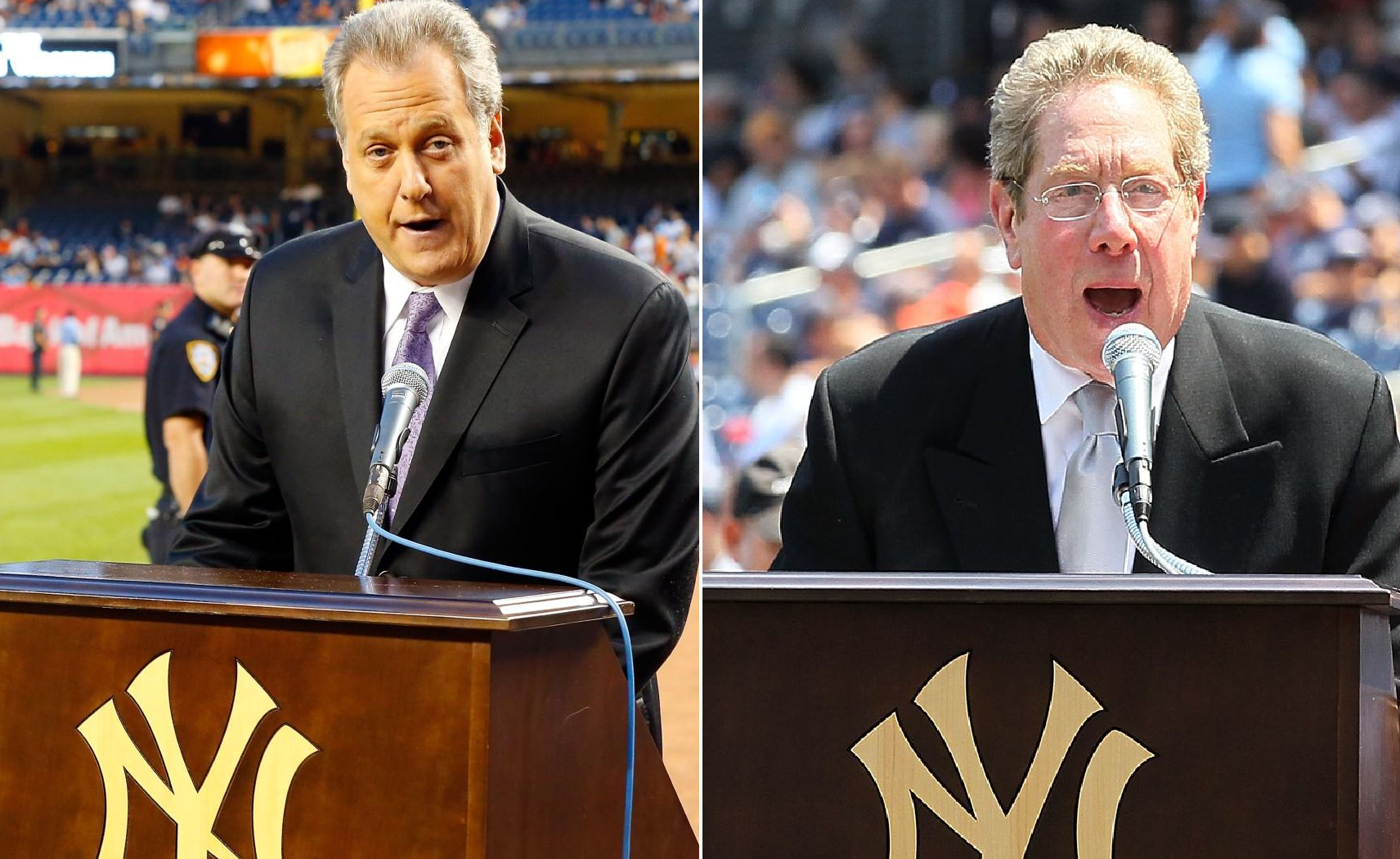
The discussion has now moved beyond the final at-bats. On his Friday radio show, longtime Yankees broadcaster Michael Kay challenged the organization’s approach to evaluating players and enforcing accountability, even if the same executives and coaches remain in place.
“They’ve got to change what they value,” Kay said.
Kay also questioned how the organization assesses competitive temperament and how it treats players after disappointing results. His remarks did not amount to a demand for a wholesale personnel purge.
Judge delivered his own message after watching the Rays celebrate. The captain said regular-season success cannot serve as the finish line for a franchise that has gone 17 consecutive seasons without a championship.
“But that’s not good enough here in New York,” Judge said. “We’re the Yankees. You have to go out there and expect championships and go all-in every year.”
The infield presents a measurable roster problem
General manager Brian Cashman faces more than a choice between keeping familiar players and finding replacements. The 2026 Yankees struggled to arrange their infield without sacrificing either offensive production or defensive stability.
Third baseman Ryan McMahon hit .213 with 11 home runs and a .635 OPS. He remains owed $16 million for 2027. Jazz Chisholm Jr. hit .231 with 19 home runs and 41 stolen bases but is approaching free agency. Amed Rosario and Paul Goldschmidt also are headed toward the open market.
At shortstop, rookie George Lombard Jr. emerged after José Caballero and Anthony Volpe shared time earlier in the season. Volpe’s eventual utility assignment gives the Yankees options, but it does not resolve who should play second and third next year. Luis García Jr.’s arrival further complicated the allocation of first-base and designated-hitter at-bats alongside Rice, Goldschmidt and Giancarlo Stanton.
One especially revealing comparison: the Yankees’ third-base combination of McMahon and Rosario produced a combined minus-0.1 wins above replacement by one published accounting. The problem was not merely that several players had similar defensive assignments. The production from an everyday position was close to replacement level.
Cashman must decide which strengths to protect
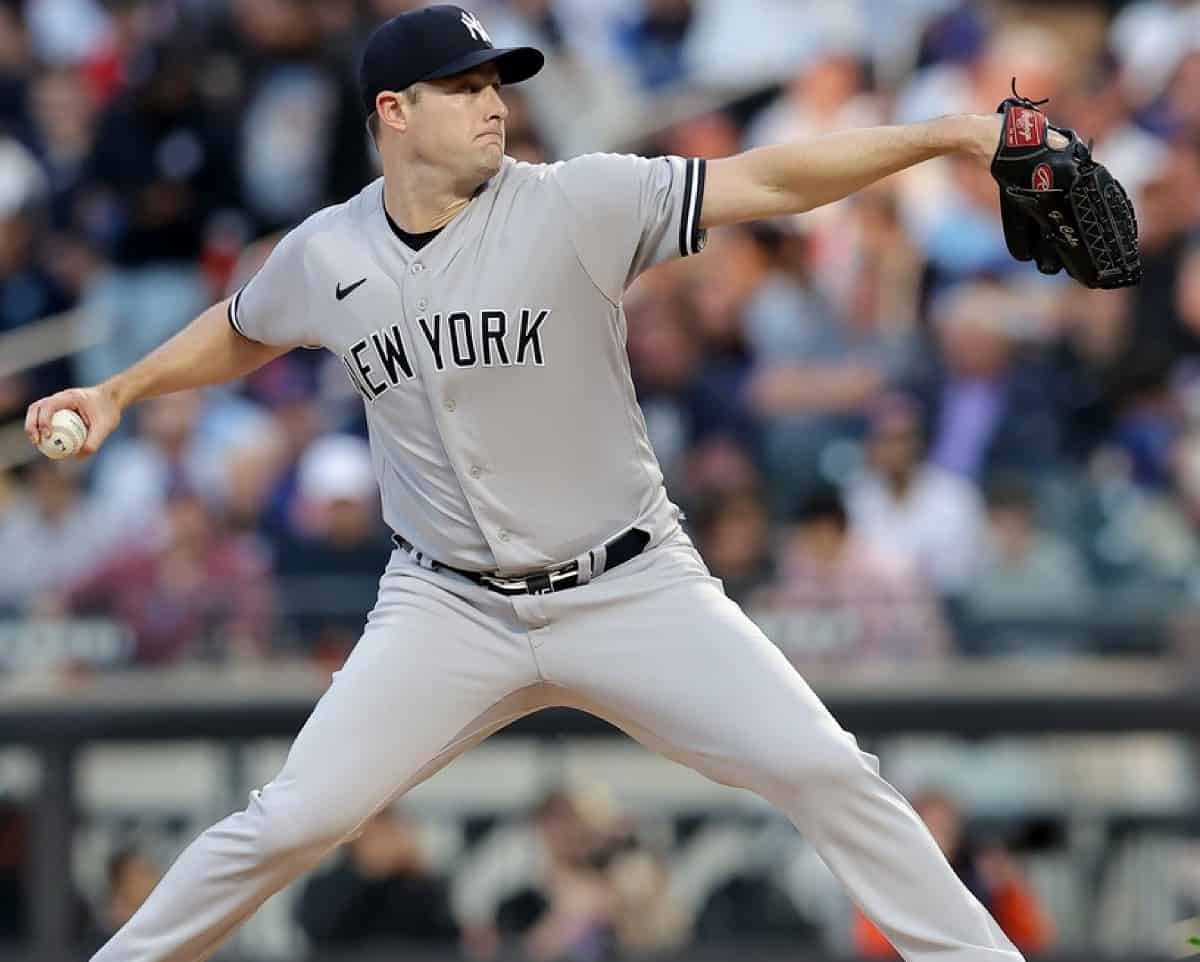
The club’s pitching offers a foundation for 2027. Cam Schlittler emerged as a frontline starter, and the bullpen posted a 3.15 ERA during the regular season, second-best in MLB. That success also creates a financial question: closer David Bednar and reliever Paul Blackburn are eligible for free agency.
Catcher remains another decision. Austin Wells improved in the second half, but the Yankees received little offensive depth behind him. Finding a dependable right-handed catching option could address one roster weakness without displacing Wells entirely.
The larger market will not be straightforward. Cody Bellinger could exercise an opt-out clause. Several regulars can leave in free agency, and baseball’s collective bargaining agreement expires Dec. 1. Uncertainty over the next agreement could shape how aggressively clubs negotiate before then.
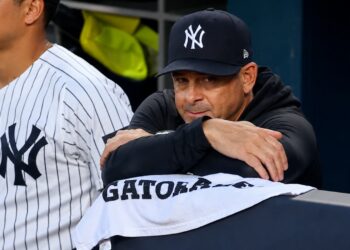
Manager Aaron Boone has one year remaining on his contract. Cashman has publicly backed him, and no managerial change had been announced as of Oct. 11. The more immediate work involves identifying a reliable infield alignment, replacing lost offense and deciding which free-agent relievers to retain.
For now, New York enters the winter with a successful pitching staff, a captain seeking more support and another postseason result that has sharpened questions about how the Yankees assemble their lineup.
What do you think? Leave your comment below.