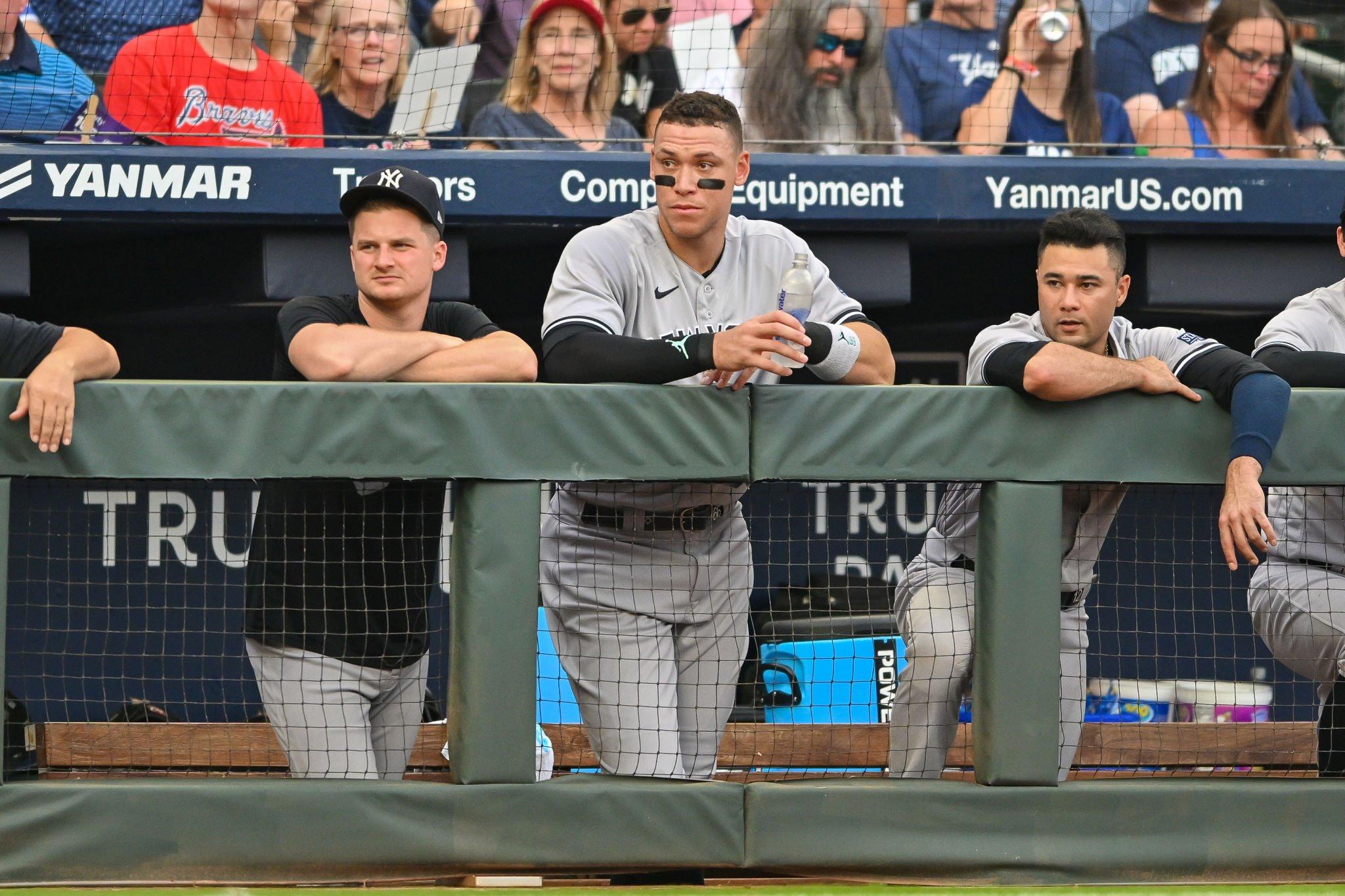
NEW YORK — The Yankees finished October with their captain watching from the dugout and their offense unable to extend the season. Aaron Judge’s absence became harder to overlook with each missed opportunity, leaving the organization to explain another early exit without its most dangerous hitter.
Tampa Bay completed an American League Division Series sweep with a 4-3 victory Wednesday at Yankee Stadium. Victor Mesa Jr.’s two-run homer in the sixth inning broke the tie. Bryan Baker struck out Trent Grisham for the final out, leaving the Yankees with five runs and 12 hits across three losses.
Judge remained a spectator through all five postseason games. The Yankees swept Boston in the Wild Card Series without him, producing 18 runs in two games. Against another AL East opponent, the same roster struggled to generate enough offense to keep October alive. The contrast made his empty lineup spot a central part of the aftermath.
The captain’s health had already shaped much of the season. A fractured rib cost him more than three months before a September return. He played seven games before a right calf strain interrupted that comeback. Batting practice offered fans hope, but the Yankees left him off the division series roster.
That sequence created questions about both the immediate decision and the roster’s ability to withstand his absence. A team can have legitimate reasons to protect an injured player and still face scrutiny over the alternatives available when he cannot play. Those questions now follow general manager Brian Cashman into the offseason.
Judge’s importance is hardly in dispute. The issue is what the Yankees could reasonably have expected from him in October, and what they must demand from the rest of the club. The answers matter beyond one series because the captain’s availability and the front office’s roster decisions will remain connected when New York tries again in 2027.
Cashman and Judge give conflicting accounts
Cashman presented Judge’s exclusion as a physical necessity. Judge’s account after elimination emphasized his desire to return and the discussions that failed to put him back on the roster.
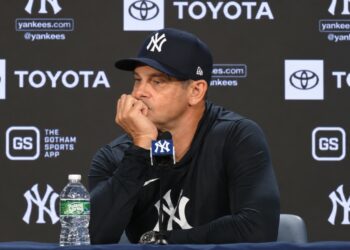
Speaking before Game 3, Cashman acknowledged the captain’s determination but said his body would not allow him to participate.
“Physically he just couldn’t. It wasn’t a choice,” Cashman said.
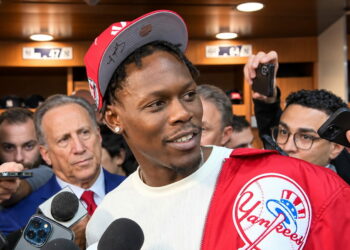
After the loss, Judge described a more encouraging personal assessment. Asked about his calf, he explained why he had sought a place in the series.
“Feeling great, that’s why we were pushing for it,” Judge said.
Judge also described meetings and exchanges over his return. Those comments establish differing accounts of his readiness. They do not establish that he received medical clearance or that Cashman disregarded such clearance.
Judge directs his offseason expectations toward management
The Yankees captain’s message extended beyond the injury decision. He urged owner Hal Steinbrenner and the front office to address weaknesses through players or personnel, connecting that expectation to his own commitment to pursuing a championship.
Judged called out Cashman to act so that no such misfirtune fell again on the Yankees.
“It’s tough to say,” he said. “I want to trade for everybody, sign everybody every single year, but I know that’s not realistic. They give us a winning team every single year, but that’s not good enough here in New York. We’re the Yankees. You’ve got to go out there and expect championships and go all-in every year. I’m excited to see what they do.”
Asked whether the organization had fully committed to that goal, Judge acknowledged that acquiring every available player was unrealistic. He nevertheless drew a distinction between qualifying for October and satisfying the franchise’s ambitions.
Judge also warned that opponents improve through additions, coaching and new approaches. His point was that reaching this postseason did not guarantee a return to the same position next year.
That challenge applies directly to Cashman’s work. It was not, however, a public demand to dismiss him. Judge continued to support manager Aaron Boone’s return.
Two postseason rounds expose separate roster question
A calculation using the Yankees’ series totals shows how sharply the production changed: nine runs per game against Boston, followed by 1.67 against Tampa Bay. That is an 81.5% decline across two short series.
Judge was absent for both. His absence therefore cannot, by itself, explain why the Yankees scored so differently against the two opponents. The comparison does not show that New York needed him any less against Boston. It shows that the roster’s success without him did not carry into the next round.
Ben Rice supplied four of the Yankees’ six postseason home runs and nine RBIs. Four defensive errors in Game 2 compounded the offensive problems. Judge’s return might have strengthened the lineup, but it would not automatically have corrected those mistakes.
The small samples limit broader conclusions. Still, the results give management a concrete question beyond whether its captain should have played: how to build a more dependable offense when he cannot.
Disagreement remains specific as offseason begins
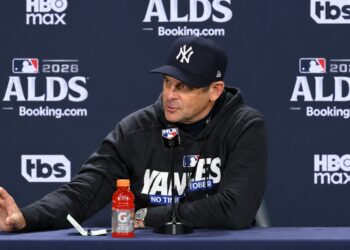
Boone defended the decision to keep Judge out after the series ended. Judge, despite disagreeing about his availability, praised the manager’s handling of an injury-disrupted season.
That distinction matters when assessing the state of the Yankees. Frustration over a roster decision and dissatisfaction with another elimination are documented. A broader personal rupture between Cashman and Judge is not established by their public remarks.
As of Oct. 9, the unresolved issue is how their differing assessments will inform the next steps. Cashman said Judge could not play. Judge believed he could contribute and wants stronger support from the front office. The Yankees enter the offseason with those positions publicly on record.
What do you think? Leave your comment below.