NEW YORK — A trade rumor raced across social media on deadline day, and by the time it settled, the New York Yankees looked like the aggressor in a deal that never happened. The details, though, do not hold up the way the first version suggested.
The story landed Sunday night. It said the San Diego Padres had turned down a Yankees offer for a valued left-handed reliever. On its face, it read as a swing-and-miss by general manager Brian Cashman, one more example of New York chasing bullpen help and coming up empty.
The reliever at the center of it is Adrian Morejon, San Diego’s lefty setup man. He is a pending free agent, which makes him a two-month rental for any buyer. The pitcher the Yankees supposedly offered is starter Will Warren, who is controllable for years, not months. That gap is where the report starts to wobble.
Because the terms, as first reported, do not track with how Cashman operates or how the market values these two players. Trading four and a half years of a rising young starter for a rental setup man is not a move that fits the Yankees’ pattern. Within hours, a second account emerged that flipped the entire premise.
That contradiction is the story. What looked like a clean piece of deadline news is now a dispute over who offered what, and it matters because the two versions paint opposite pictures of the Yankees’ front office. One casts them as reckless. The other suggests the opposite.
The Yankees entered deadline day at 63-49, second in the AL East and two games behind Tampa Bay. They spent the weekend hunting bullpen depth after dealing Camilo Doval and Yovanny Cruz, so the interest in a San Diego reliever fit their needs. The question is what the actual proposal looked like.
What the first report claimed
The initial version came from USA Today’s Bob Nightengale, who framed the Yankees as the losing side of a rejected swap. His post spread quickly and set the tone for the coverage that followed.
“The San Diego Padres rejected a deal that would have sent Yankees starter Will Warren for valuable left-handed set-up man Adrian Morejon,” Nightengale wrote.
Read literally, that means the Yankees offered Warren to get Morejon, and San Diego said no. Several outlets took it at face value and ran with the idea that Cashman had tried to overpay for a rental, only to be rebuffed by Padres president of baseball operations AJ Preller.
On the surface, the rejection itself was not shocking. The Padres sit at 58-54 and are playing to win now, with a bullpen-heavy formula built around Morejon and closer Mason Miller. A contender does not part with a key late-inning arm unless the return is overwhelming. So the notion that San Diego held firm made sense, even if the specifics did not.
Why the terms drew immediate pushback
The pushback focused on the imbalance. Warren is not a throw-in. He is 27, in the middle of a strong season, and under club control for years to come. Morejon, for all his value in high-leverage innings, is weeks from free agency. Offering the former straight up for the latter would be a lopsided deal in San Diego’s favor, not New York’s.
That is why Ryan Garcia of Empire Sports Media challenged the framing directly. Responding to the original report, he argued the players had been listed in the wrong order.
“Other way around,” Garcia wrote.
The implication is significant. If Garcia is correct, the rejected proposal had Morejon going to the Yankees as the headline piece, with the Padres seeking Warren or more in return, and New York declining to meet that price. In that telling, the Yankees are not the desperate party. They are the club that walked away from an overpay.
Why Warren’s value sits at the center
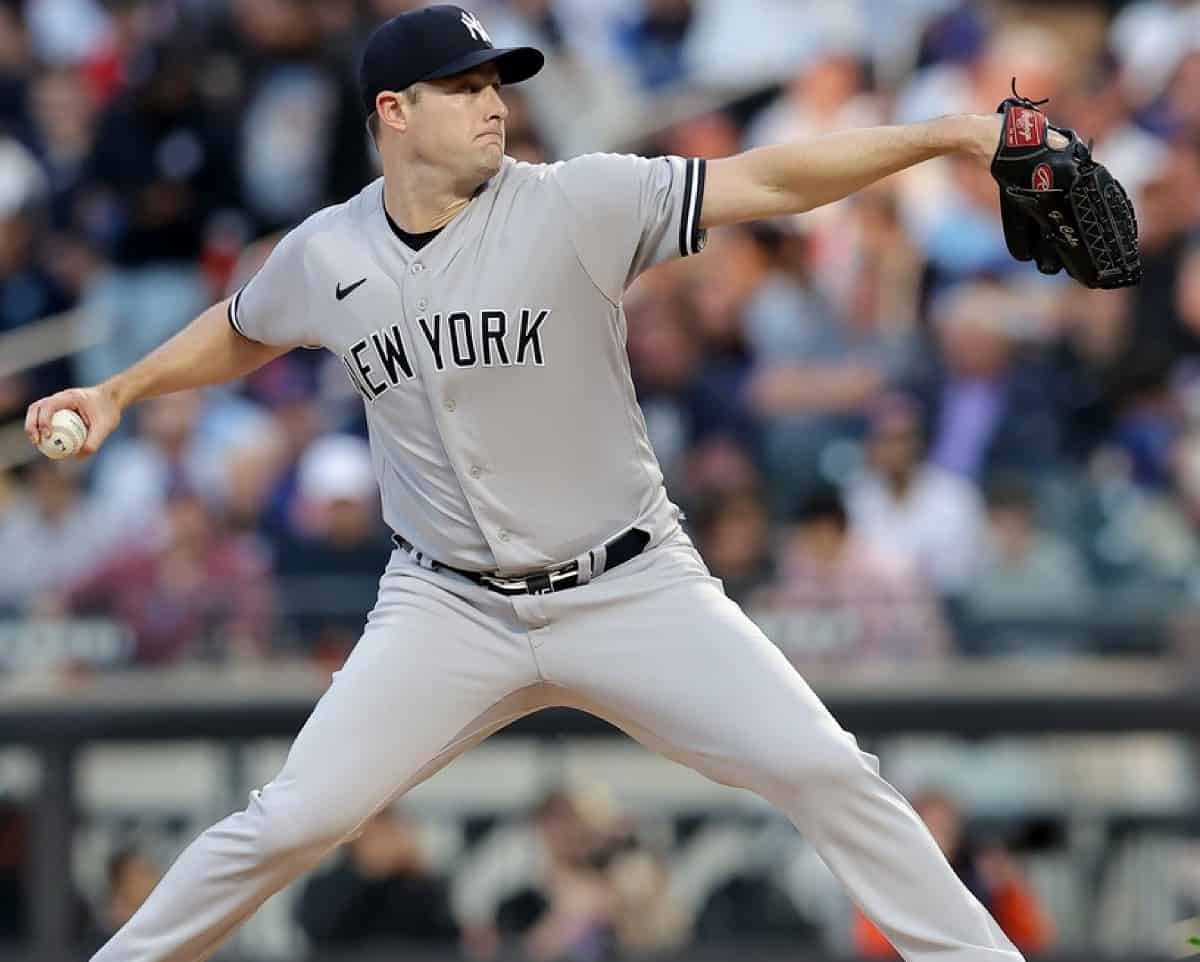
Warren’s season explains why the direction of the deal matters so much. He carries an ERA around 4.00 across his starts and has trimmed his walk rate sharply from a year ago while missing more bats. He also delivered the best outing of his career on Friday, throwing 6 2/3 shutout innings against the Cubs at Wrigley Field.
For a Yankees rotation that has leaned on its arms all season, that kind of controllable starter is an asset, not a chip to spend lightly. Moving him for a rental reliever would run counter to how the front office has valued young pitching. Keeping him, or demanding real value in return, aligns much more closely with Cashman’s history.
The Padres, for their part, gave every signal they were holding their relievers. Morejon addressed the deadline after Sunday’s win in San Diego, and his words did not sound like a player expecting to be moved.
“Everyone knows that I want to be here, everyone knows I want to stay here,” Morejon said. “I’ve been proud to be a member of the Padres, hopefully that will continue.”
Where the story stands now
As of deadline morning, no Warren-Morejon trade exists in any form. What remains is a reporting conflict. One account has the Yankees offering a valuable young starter for a rental and getting turned down. The other has the direction reversed, with New York on the sensible side of a proposal it declined.
The distinction is not trivial for a fan base trying to judge its front office in real time. The same set of names produces two very different verdicts depending on who was asking whom. Until one version is confirmed, the safest read is the one the math already supports. The Yankees giving up four and a half years of Warren for two months of a reliever does not pass the sniff test, and the people questioning it are betting the original framing got flipped.
What do you think? Leave your comment below.