NEW YORK — The Yankees left the trade deadline with their biggest question still intact, even after reshaping the lineup and promoting one of the organization’s top prospects. The concern did not disappear because New York won Tuesday night. It remains embedded in a postseason race where one short bench and one poor matchup can decide a series.
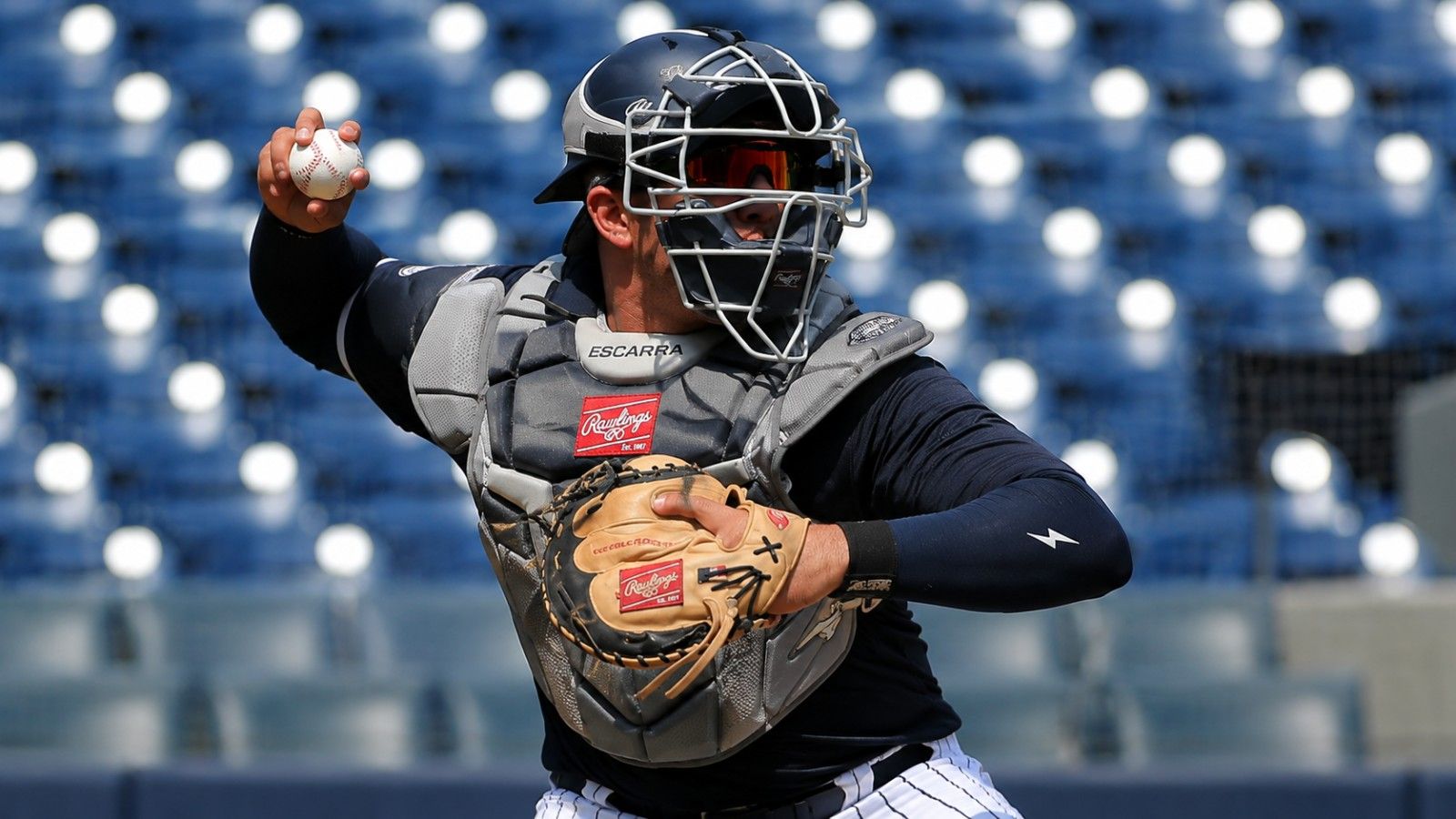
Austin Wells has retained the starting job, and his receiving remains an important part of the Yankees pitching plan. The bat has been harder to absorb. After going hitless in two at-bats during a 2-0 victory over the St. Louis Cardinals at Yankee Stadium, Wells carried a .166/.267/.287 line with seven home runs and 14 RBIs into Wednesday.
Ali Sanchez has supplied a steadier average in limited work, batting .273/.305/.364, but the Yankees have treated him as a traditional backup. His presence has not created the right-handed counterweight Aaron Boone could deploy when a difficult left-hander starts or when Wells’ spot comes up in a late leverage inning.
That gap matters for a Yankees club that improved to 64-50 and remained 3.5 games behind Tampa Bay in the AL East. New York held a seven-game cushion in the wild-card standings, according to MLB’s official table, but the roster still contains the same catching imbalance that pushed the front office to explore upgrades before the deadline.
The Yankees checked a thin catching market but finished deadline day without changing the position. Their two major additions, Luis García Jr. and Heliot Ramos, addressed other lineup needs. The catching decision was pushed into August, when trades are closed and the available paths become narrower.
That leaves waiver claims, free agents and internal depth as the remaining tools. It also places more weight on any veteran who becomes available without a prospect cost, especially one who can bat right-handed and cover the position during the final seven weeks.
A post-deadline opening appears
Mitch Garver is now available after the Seattle Mariners released the 35-year-old catcher Tuesday in a post-deadline roster shuffle. The 2023 World Series champion gives the Yankees a possible low-cost stopgap without surrendering a prospect, an advantage that did not exist while the trade market was open.
Seattle replaced Garver with Jhonny Pereda after adding several deadline acquisitions. Garver had returned to the Mariners on a minor league deal in February and earned a guaranteed $2.25 million after making the major league roster. His playing time dropped sharply once Cal Raleigh returned from the injured list June 18.
The production explains why Garver reached the open market. He finished his Seattle stint with 22 hits, four home runs and 15 RBIs in 50 games. Baseball Savant listed a .177/.297/.298 slash line and a .595 OPS across 145 plate appearances. He went 4-for-36 with one homer and 17 strikeouts after Raleigh returned.
That is not the profile of a clear upgrade. It is the profile of a specialist the Yankees could evaluate for a narrow role. Garver batted .229 with a .351 on-base percentage against left-handed pitching this season, while Wells has produced little in the same matchup.
The fit comes with a defensive cost
Garver’s value has always leaned toward offense. He won the 2019 American League Silver Slugger Award after hitting .273 with 31 home runs and a .995 OPS for Minnesota. His recent defensive record is less convincing. Baseball Savant credited him with minus-three framing runs in 2026, and Seattle viewed Pereda as the stronger receiver.
That makes this less about replacing Wells and more about managing the roster around him. Wells remains the Yankees’ best defensive option and a strong pitch framer. Garver could start against selected lefties, pinch-hit for Wells without leaving Boone without a catcher and give the clubhouse another veteran who has handled October pressure.
The Yankees would still need to decide whether that matchup value outweighs the drop behind the plate. Their pitching staff ranks among MLB’s best in run prevention, and catcher continuity carries extra weight with Gerrit Cole, Max Fried, Cam Schlittler and a bullpen often protecting narrow leads.
October experience adds another layer
The strongest case for Garver goes beyond handedness. He hit .226 with three home runs and 14 RBIs in 14 games during Texas’ 2023 postseason run. He drove in the winning run in the World Series-clinching Game 5 against Arizona, experience that would carry weight on a Yankees bench containing rookies and players seeking their first deep October run.
MLB postseason rules allow players in an organization by Aug. 31 to remain eligible for October consideration. That gives the Yankees time to assess Garver, but it also creates a deadline before September removes him as a normal postseason option.
Any major league agreement would require corresponding moves on the 40-man roster and active roster. The direct comparison would be Sánchez, who has hit better than expected but offers less established power and no comparable postseason résumé. A minor league agreement could preserve flexibility, though another contender may offer Garver a faster route to playing time.
Yankees must decide what kind of insurance they need
Still, the Yankees no longer need to weigh his cost against prospects or trade capital. The question is whether a veteran right-handed bat, championship experience and occasional catching work are worth one roster slot for the stretch run.
For a club that pursued catching help and emerged from the deadline without it, the opportunity deserves a quick review. Garver is available, the Yankees’ platoon weakness remains visible, and the Aug. 31 postseason eligibility date has started the clock.
What do you think? Leave your comment below.