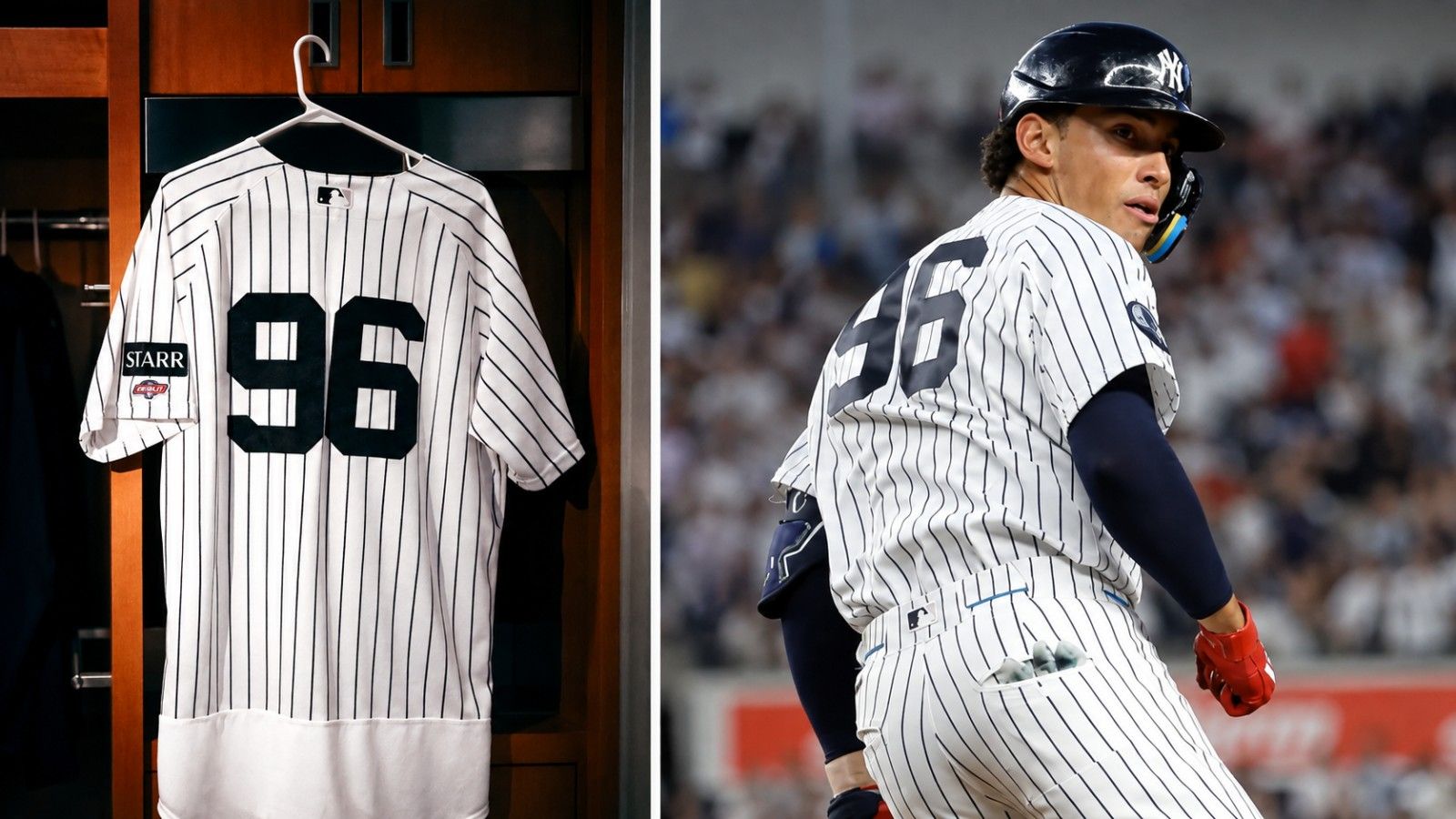
NEW YORK — The Yankees have retired 22 numbers, more than any franchise in baseball. Their single digits belong to legends. Their most famous stars carry numbers fans can recite by heart. So when the organization’s top prospect took the field for the first time, the number on his back stood out for how little history it held.
George Lombard Jr. did not wear a classic Yankees digit in his major league debut. He wore one that no position player in Yankees pinstripes ever had.
The number is so high it looks like a spring training assignment, the kind handed out by the dozen in February and returned before Opening Day. Position players almost never carry it into a regular-season game, let alone a debut in the Bronx.
Yet there it was Tuesday night, stitched across the shoulders of the shortstop the Yankees believe could anchor their infield for years. The contrast was impossible to miss.
Lombard made his debut wearing No. 96, one of the rarest numbers ever to reach the field for the Yankees. Just one player had worn it before him in the Bronx, a pitcher whose stay lasted only a handful of appearances, which makes Lombard the first position player in franchise history to wear it. And the reason he kept it is the twist: there was no grand plan behind it at all.
For a player carrying enormous expectations, the story of his number is refreshingly ordinary.
A number that barely exists in the Bronx
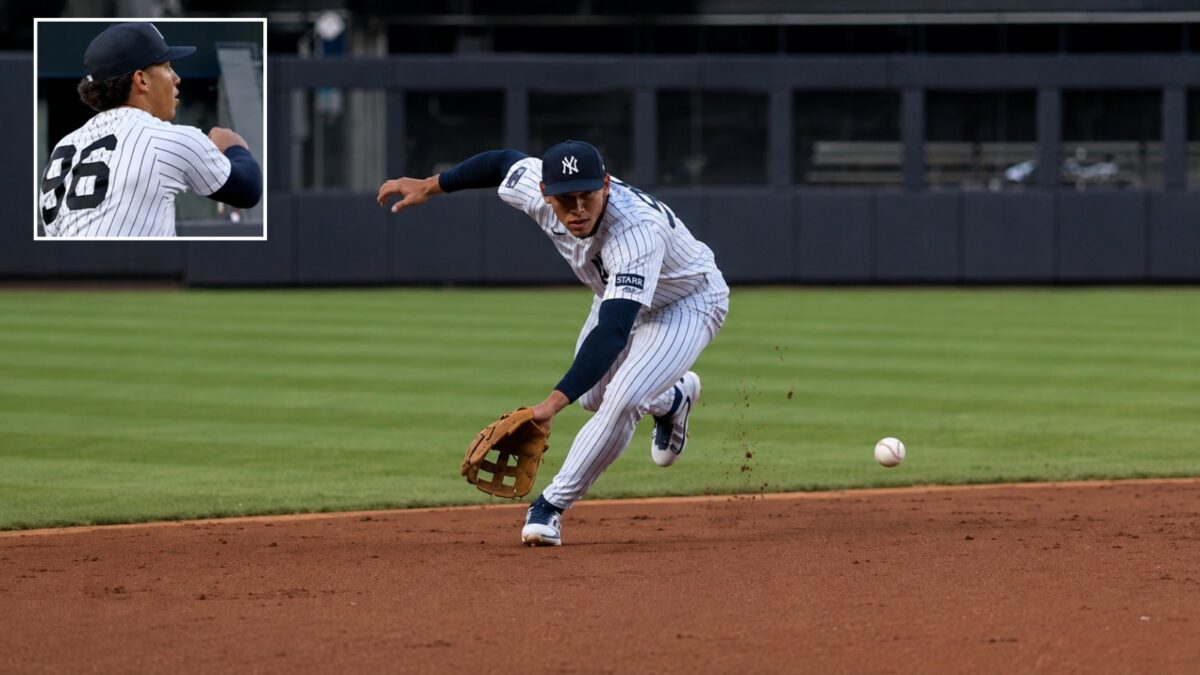
Numbers in the 90s are rare across baseball, and rarer still for the Yankees. The franchise built its identity on low digits, from Babe Ruth’s 3 to Derek Jeter’s 2, and reserves the high numbers mostly for players trying to make the team in spring training.
Aaron Judge is the exception that proves the rule. His No. 99 became iconic only after he did, and even that arrived by accident, handed to him at his first big league camp. Beyond Judge, high numbers in the 90s rarely survive past March in New York.
That is what makes 96 on a debuting position player so unusual. It is a number fans associate with names on the back of a jersey they will never see again, not with a top prospect stepping into a pennant race. Lombard turned it into a headline the moment he pulled it on.
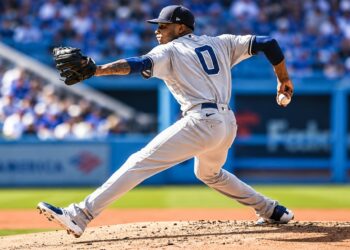
Only one Yankee had worn No. 96 before him, and barely. Right-hander Yovanny Cruz carried it for a brief cup of coffee, appearing in just four games and throwing 5 1/3 innings, a stay so short the number scarcely had time to stick. Cruz was one of the four pitchers the Yankees sent to the Washington Nationals in the Luis García Jr. trade this week, which left No. 96 open for Lombard almost on cue.
The Yankees have long been the team where rare numbers surface. In 2020, they issued No. 89, at the time the only number from 0 to 99 that had never appeared in a big league game. Lombard’s 96 fits that quirky lineage, a high digit showing up where you least expect it.
The simple reason behind the number
The explanation is not sentimental or strategic. Lombard was asked why he chose 96 for his debut, and his answer removed any mystery. The number was simply waiting for him in his Yankees locker.
“I just walked in and that was in my locker,” Lombard said. “I’ve always been 96, but yeah, that’s what I got for now. Who knows down the road.”
The number has followed him for years. He wore it throughout his climb in the minors and again this spring, so keeping it in the majors required no thought at all. He took what was there.
Lombard, the son of a former big leaguer, said his baseball upbringing made the whole debut feel less overwhelming, the jersey number included.
“Being around it gives you that level of comfort, like, OK, you know what some stuff will be like,” Lombard added.
The door is open to a change later. Lombard’s “who knows down the road” left room for a more traditional number if he sticks. For now, though, 96 is his, and it is already part of his Yankees story.
A debut that made the number memorable
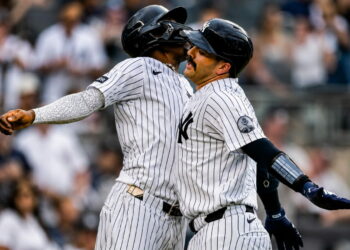
Whatever the number, Lombard made sure it would be remembered. The 21-year-old homered in his first game, driving a fifth-inning pitch off Cardinals starter Hunter Dobbins for his first major league hit in a 2-0 Yankees win at Yankee Stadium.
He added a walk and helped turn two double plays, flashing the all-around game that made him the top prospect in the organization and the No. 20 talent in the sport. The Yankees promoted him Monday night, optioning Anthony Volpe to Triple-A to clear the path at shortstop.
The night carried a family echo, too. Lombard’s younger brother, Jacob, drafted 14th overall by the Marlins this year, made his own professional debut the same day. Their parents rearranged travel plans so they could watch George’s milestone first.
Lombard reached the majors after a strong minor league season, batting .284 with a .411 on-base percentage, 12 home runs and 14 stolen bases across three levels. The Yankees held onto him at the trade deadline rather than deal him, a sign of how highly they value him.
Where the number stands now
For now, No. 96 is more than a quirk. It is the number a franchise chasing the American League East handed to a rookie it hopes will help define its future. The Yankees, at 64-50 and trailing the Tampa Bay Rays, are counting on Lombard to grow into a fixture.
If he does, the number that looked like a spring training leftover could become one of the more unusual digits to gain real meaning in the Bronx. Lombard has not promised to keep it, and history suggests high numbers rarely last on players who stick. But he has already made 96 matter, at least for one unforgettable night.
The rookie left the door open on the number’s future the same way he left it open on his own. For a debut built on a homer, a pair of slick double plays and a number almost no Yankee has ever worn, the ordinary reason behind it only added to the charm.
What do you think? Leave your comment below.