NEW YORK — The Yankees entered October with two leadership clocks running on different schedules. One is attached to a general manager whose contract expires after this season. The other belongs to a manager guaranteed to remain under contract through 2027.
That arrangement looked manageable when the Yankees finished the regular season with 93 wins, secured the American League’s top wild-card position and then swept Boston. The roster had survived injuries, a difficult summer and an AL East race that Tampa Bay ultimately won. New York still reached October with a path to another deep run.
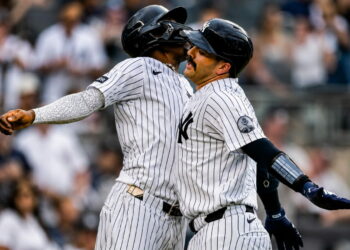
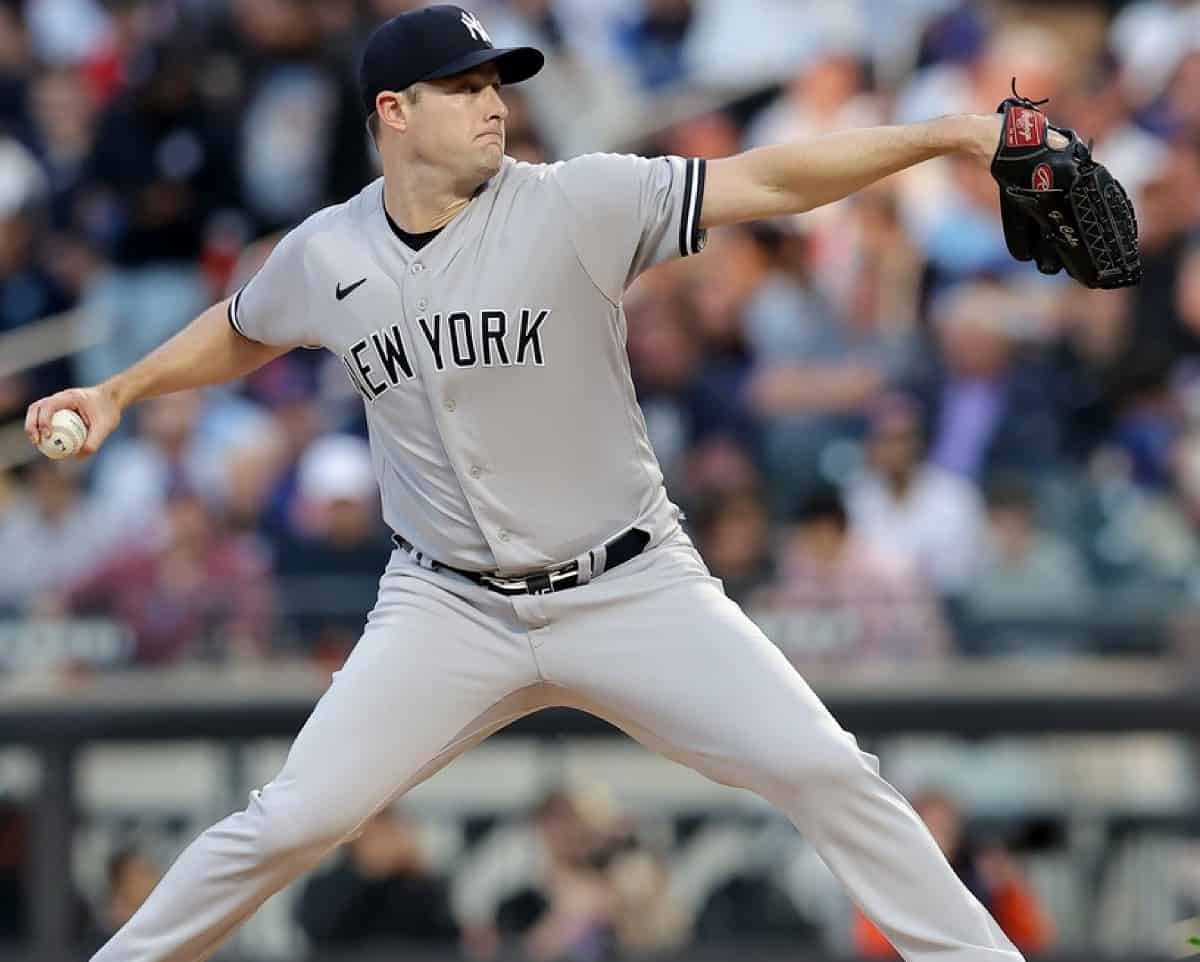
The first two games of the AL Division Series have changed the temperature. The Yankees were held to one hit in a 1-0 Game 1 loss at Tropicana Field. Drew Rasmussen earned the win, Gerrit Cole took the loss and Bryan Baker saved it. New York then committed four errors in a 5-2 Game 2 defeat. Cam Booser earned the win, Cam Schlittler took the loss and Baker picked up another save. Ben Rice hit two solo homers, but the Yankees still left Florida one loss from elimination and with roster construction, defense and leadership decisions back under scrutiny.
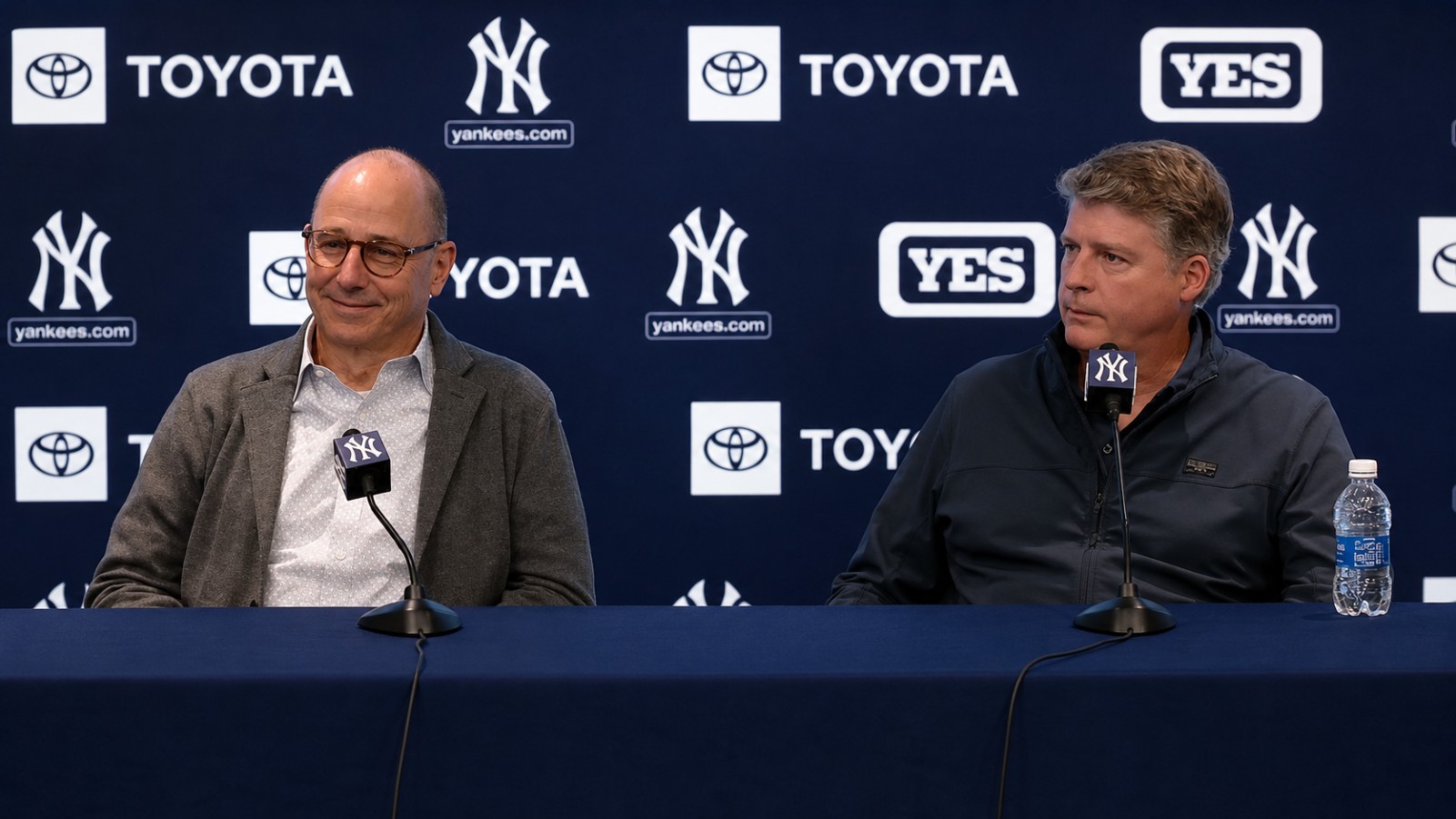
For Brian Cashman, the timing could hardly be more consequential. His four-year deal ends after 2026, making this postseason the final on-field evaluation period before ownership must decide whether the longest-serving general manager in Yankees history should receive another contract. Unlike most seasons, that decision is not merely theoretical or years away. The Yankees are also attempting to reverse a postseason position that has historically been unforgiving: MLB records show teams taking a 2-0 lead in a best-of-five series have advanced 83 of 93 times.
Internal resistance makes Cashman decision less automatic
People familiar with discussions inside the Yankees organization have said there is no unanimity among decision-makers about extending Cashman. Public expectations have generally leaned toward continuity, but the internal picture has been more complicated.
There has been no indication through Oct. 6 that the Yankees have opened a formal search for a successor or selected an alternative head of baseball operations. Hal Steinbrenner retains the final authority, and Cashman has spent decades building trust with ownership. The significance is that another extension no longer appears to carry universal internal support.
Cashman has made clear that he remains interested in the work. Before the season, he described both his competitive drive and the condition that ultimately determines whether he stays.
“I enjoy what I do,” Cashman said. “I like competing.”
He also acknowledged that longevity depends on ownership continuing to believe he is helping the organization move forward.
“You have to have somebody wanting you to do it, and you have to be contributing,” Cashman said.
Cashman’s record gives both sides of Yankees debate ammunition
Cashman became general manager in 1998. The 2026 season is his 29th in charge of baseball operations, a span almost unmatched in modern professional sports. Under his leadership, the Yankees have produced winning seasons every year, reached the postseason in 24 of 29 seasons and won four World Series championships.
The strongest argument for keeping him is institutional stability. The Yankees have repeatedly rebuilt portions of the roster without collapsing into a prolonged losing cycle. Their 93-win 2026 season and plus-138 run differential, according to MLB standings, again showed the organization can build a strong regular-season club.
The argument for change is concentrated in October. The Yankees have not won the World Series since 2009. They returned to the Fall Classic in 2024 but lost to the Dodgers in five games. As of Oct. 6, this year’s club is down 0-2 to Tampa Bay and must win three straight games to keep the season alive.
Yankees have a contract mismatch at the top
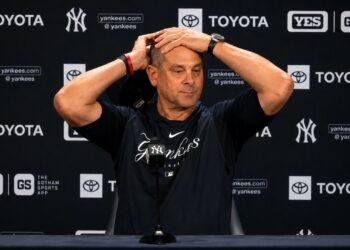
The most unusual element in the decision is the mismatch between Cashman’s contract and Boone’s. The Yankees extended Boone in February 2025 through the 2027 season. Cashman, Boone’s most consistent public defender, can become a free agent from the front office after this season.
That creates a structural question that goes beyond whether ownership likes either man individually. If the Yankees retain Cashman, the organization can continue with the leadership pairing that has defined the club since Boone replaced Joe Girardi before the 2018 season. If ownership changes general managers, a new baseball operations leader would inherit a manager already under contract for another year.
A review of the contract timelines shows why the Cashman decision could shape far more than one executive office. It could determine whether the Yankees enter 2027 with full continuity, a new front office supervising Boone, or a broader restructuring that carries additional financial and organizational cost.
Next generation adds another layer to ownership debate
The Steinbrenner family is also gradually bringing a younger generation closer to the organization. Family members including Stephen Swindal Jr., George Michael Steinbrenner IV and others do not share the same decades-long working history with Cashman that Hal Steinbrenner does.
That does not establish that younger family members are pushing for Cashman’s removal. It does mean the Yankees’ future leadership structure will eventually be evaluated by people whose relationship with the general manager was formed later than Hal Steinbrenner’s.
For now, the Yankees remain focused on avoiding elimination. But the events at Tropicana Field have intensified a decision already waiting at season’s end. Cashman’s record makes another extension easy to defend. The absence of internal unanimity makes it impossible to treat as automatic.
What do you think? Leave your comment below.