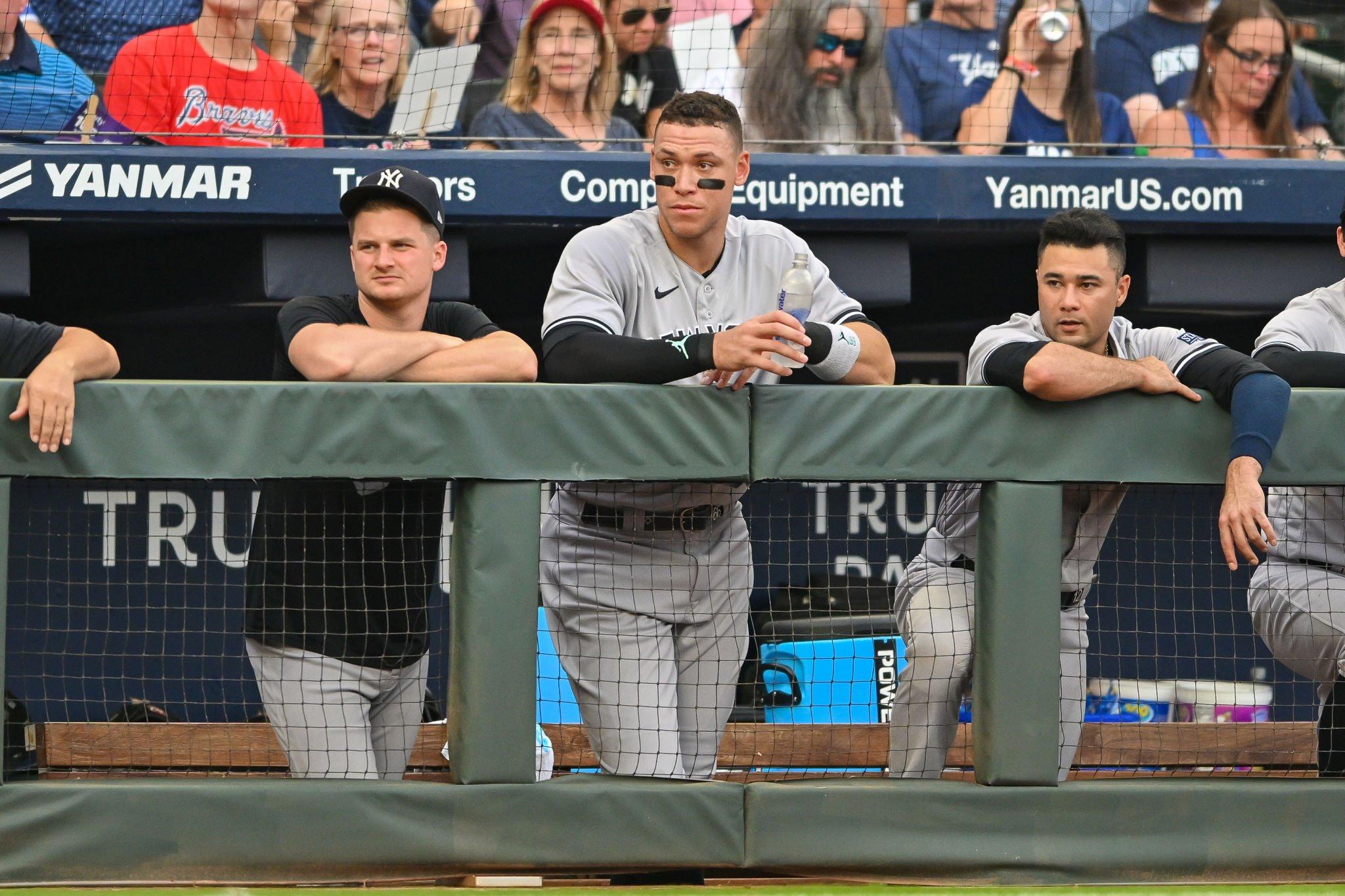
KANSAS CITY, Mo. — The plan was supposed to be simple. Jose Caballero would get hurt, Anthony Volpe would fill in, and the Yankees would hand shortstop back to Caballero the moment he was healthy. Volpe had other ideas.
The young infielder has played so well in his stand-in role that manager Aaron Boone has publicly reversed course. Boone had suggested Caballero would simply reclaim the job. Now he is admitting that Volpe forced a rethink. The Yankees no longer have a clear-cut shortstop. The Yankees have a problem most teams would envy.
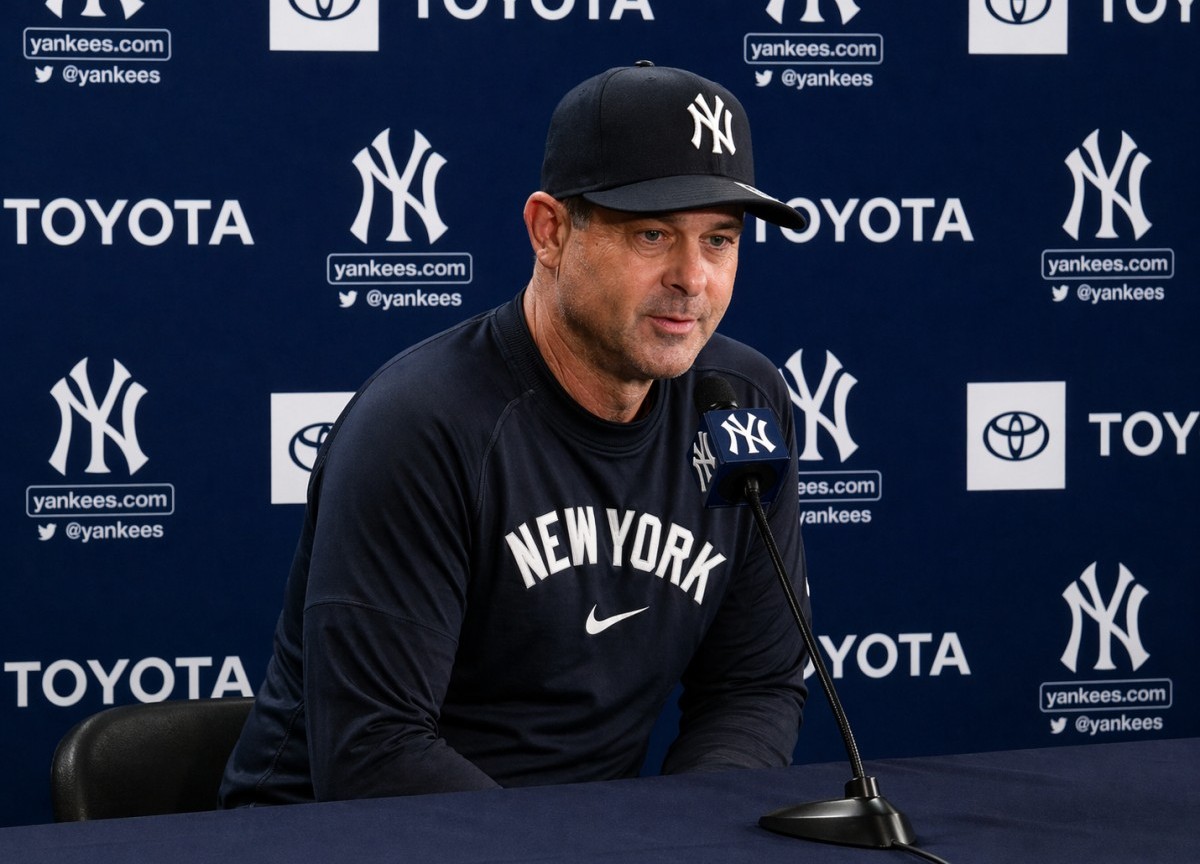
Boone laid it out on a recent episode of “Talkin’ Yanks.” He acknowledged that the two infielders have earned a way to share the field. The manager pointed to a game in which both made an impact as proof the arrangement can work.
“I certainly believe there’s a way that, you know, for those guys to coexist and bring different skill sets that, you know, help us win and they were both in the middle of it yesterday,” Boone said.
That admission carries weight because of where the Yankees stood a few weeks ago. Caballero, acquired from Tampa Bay last July, had seized the starting job with steady defense and a pesky bat. He started 39 of the Yankees’ first 41 games at shortstop. Then he broke a finger diving back to first base in Milwaukee on May 10. Volpe, optioned to Triple-A earlier this season after offseason shoulder surgery, came back up to fill the gap.
He has not let go of the Yankees job since. Volpe has turned the opening into a genuine case for more playing time.
Boone reverses course on the shortstop job
Here is the heart of the matter. The Yankees thought they had settled their shortstop question. Volpe’s bat has unsettled it all over again, and Boone is now openly searching for ways to keep both gloves in the lineup. The math that once pointed cleanly to Caballero no longer does.
A sharper bat and a calmer approach at the plate
Volpe has produced for the Yankees since his return. In 11 games covering 32 at-bats, he is batting .281 with a home run, seven RBI, a .425 on-base percentage and an .894 OPS. The on-base number stands out most to the Yankees. He is drawing walks at a high clip and chasing far fewer pitches outside the zone. The approach looks calmer and more controlled than it did a year ago.
The new look at the plate has not gone unnoticed inside the Yankees clubhouse. Jimmy O’Brien asked Boone whether Volpe’s steadier two-strike approach was a mechanical fix or something deeper. Boone’s answer was blunt. He said the change is mental, not physical.
“I don’t think there’s any change, I think it’s just focus and he’s in a good place and he’s getting in good position to make good swing decisions,” Boone said. “When you make your move and you’re early and you’re in a strong position to hit, usually you make the right swing decision, which he’s doing.”
The improvement has shown up in big spots. On Monday against the Royals, Volpe stayed back on a two-strike slider and delivered a go-ahead two-run single in the ninth. He followed that the next night with a near cycle, going 3-for-6 with a home run, a double, a single and two RBI in a 15-1 rout. He has lowered his hands in his stance and leaned into a flatter, line-drive swing.
Caballero’s versatility unlocks a two-man plan
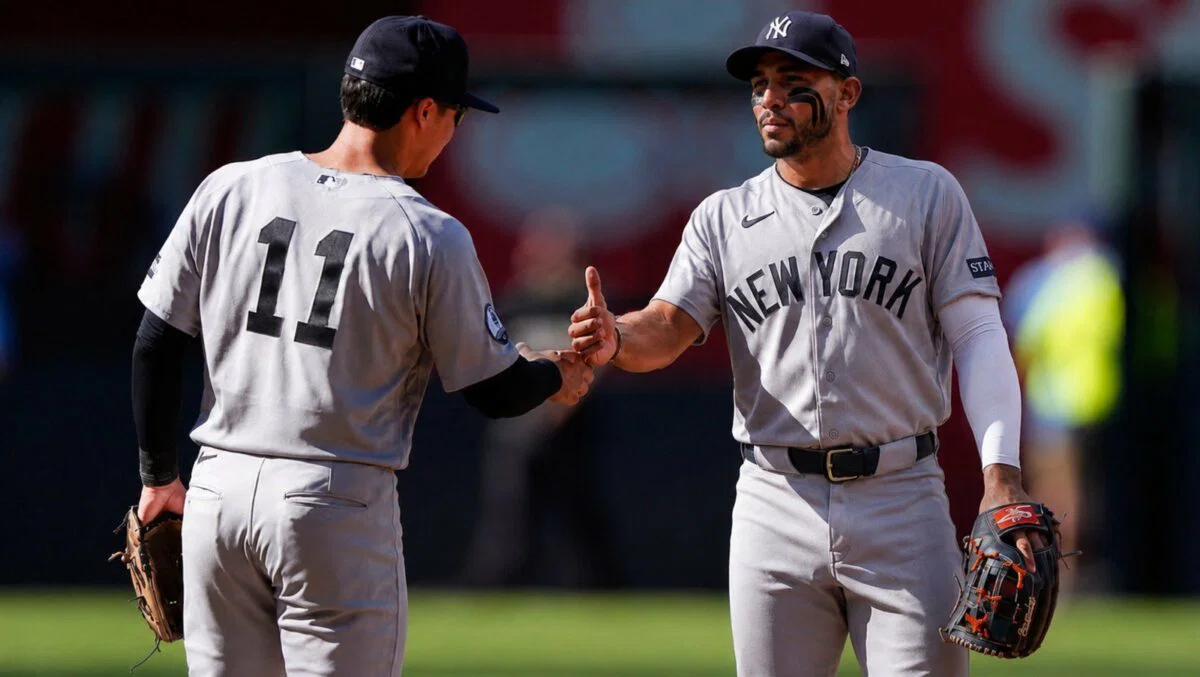
For the Yankees, Caballero’s flexibility is what makes a two-man solution realistic. He is not just a shortstop. He can play all over the diamond, and that versatility opens doors for both players. Boone explained that Caballero’s ability to move around is effectively what gives Volpe room to stay in the lineup.
“(Caballero’s) versatility kind of serves as Volpe’s versatility, too, you know, because (Caballero), you can put anywhere when they’re both on the field together,” Boone said. “You know, where the open spot is, you can move (Caballero) real easy because he’s so experienced in so many different spots.”
The Yankees have already tested the pairing. On Memorial Day, Boone started Volpe at shortstop and slid Caballero to third base against Royals right-hander Michael Wacha, who has been tougher on left-handed hitters. That meant Ryan McMahon, a lefty bat, went to the bench. Boone said he wanted more right-handed presence and athleticism in the lineup that day.
The decision pointed to the real squeeze on the Yankees roster. Some observers argue the lost at-bats should come from McMahon rather than Caballero. McMahon has posted a 70 OPS+ with a strikeout rate above 32 percent in his first 104 games as a Yankee, while ranking near the bottom of the league in swing decisions. By contrast, Volpe has graded out near the top of the league in the same metric since the Yankees recalled him.
Volpe is also taking ground balls at second base before Yankees games. Boone has framed it as a way to add flexibility down the road. It is another sign that the Yankees are trying to manufacture room for a bat they did not expect to need this much.
None of this guarantees Volpe the everyday job. The sample remains small, and he has had hot stretches fade before. His 2025 season was a rough one, marked by regression at the plate and in the field before the shoulder injury that required surgery. He knows the work is not finished.
For now, though, the Yankees have a welcome dilemma. Volpe keeps hitting, Caballero keeps fielding, and Boone keeps mixing and matching. The shortstop picture that looked closed in early May is wide open again. That is exactly how the Yankees drew it up, even if they did not see it coming.
What do you think? Why McMahon, not Caballero, should fear Anthony Volpe’s surge?