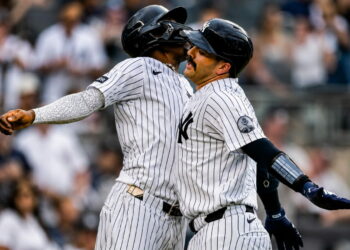
NEW YORK — The Yankees reached Monday’s off day with a lineup that still looks temporary. Their 4-3, 10-inning win over the Toronto Blue Jays on Sunday at Rogers Centre showed how much the current group is being asked to carry. Ben Rice answered a ninth-inning fielding error by hitting his 33rd home run in the 10th. David Bednar earned the win, Braydon Fisher took the loss and Tim Hill recorded the save as New York avoided a sweep. The victory moved the Yankees to 69-55, 5 1/2 games behind Tampa Bay in the AL East.
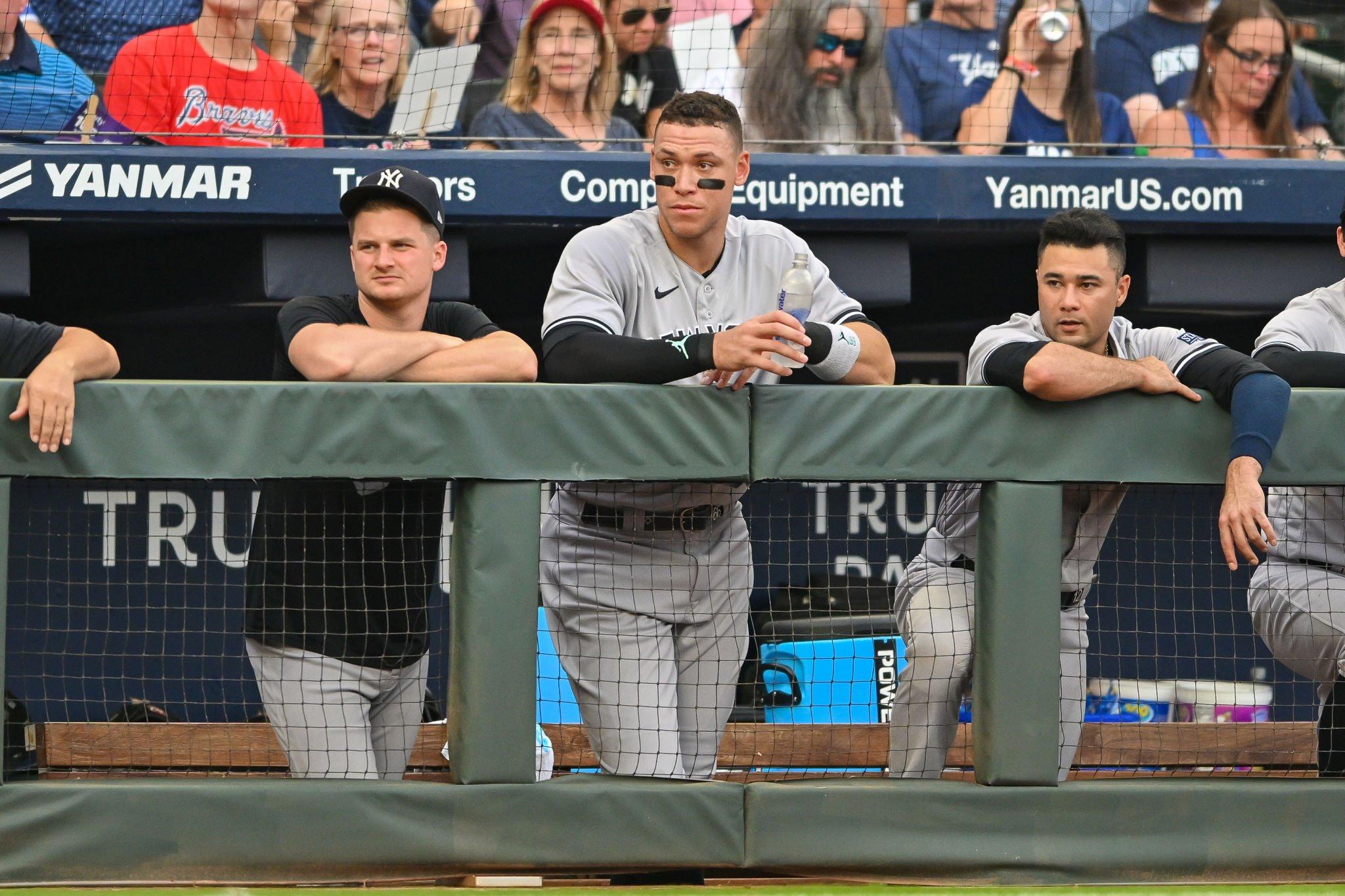
The bigger Yankees problem is shifting from survival to subtraction. Aaron Judge, Cody Bellinger and Giancarlo Stanton remain on the injured list, but all three are progressing. Bellinger is closest to a minor league rehab assignment after a Grade 2 left hamstring strain. Stanton has resumed running. Judge played catch and ran Friday after imaging showed enough healing in his fractured right rib to advance his program. None has a firm activation date, and Judge appears furthest away.
Those returns will collide with a roster reshaped at the trade deadline. The Yankees added Luis García Jr. from Washington and Heliot Ramos from San Francisco while continuing to use rookies Spencer Jones and George Lombard Jr. Rice has become one of the club’s most important bats. García now handles significant first-base work. Healthy veterans no longer simply slide back into empty spots. Every activation threatens somebody else’s playing time or roster status.
September will soften the squeeze, but not erase it. MLB rules expand active rosters from 26 to 28 on Sept. 1, with a maximum of 14 pitchers. If three injured position players return while the Yankees stay healthy, two extra spots still leave one roster decision. An earlier return would force room sooner. The sequence matters, but the arithmetic does not.
Veteran has become clearest pressure point
That arithmetic has put Paul Goldschmidt at the center of the Yankees roster debate. The 38-year-old first baseman returned on a one-year, $4 million contract with incentives, a deal MLB.com reported in February. His purpose was to punish left-handed pitching, defend first base and give Aaron Boone an experienced clubhouse presence.
The role narrowed after García arrived Aug. 2. Reuters reported when the trade was completed that García had 23 home runs, 76 RBIs and a .560 slugging percentage in 104 games for Washington. New York quickly used the left-handed hitter at first base against right-handed pitching, pushing Goldschmidt toward the short side of a platoon.
That usage was visible Sunday. García started against right-hander Dylan Cease and hit a third-inning sacrifice fly. Goldschmidt did not start. He pinch-hit in the seventh after Cease exited and was intentionally walked. The Yankees can still use Goldschmidt without an everyday role.
A veteran’s name may no longer protect his roster spot
The roster crunch has prompted a sharper argument outside the clubhouse. According to sportswriter Sal Maiorana, the Yankees should protect Jones rather than default to the easiest optionable player when Judge, Bellinger and Stanton return.
“I would keep Spencer Jones up.”
He then identified Goldschmidt as the veteran he would remove if the Yankees had to choose between experience and keeping the rookie.
“I- what I would do most likely, I hate to say it, but to me the most logical guy to get lopped off the roster is Paul Goldschmidt.”
Maiorana ultimately framed the choice as Goldschmidt versus Jones and pointed to Amed Rosario’s defensive versatility as another reason to preserve him.
“I just don’t I mean, they, they will never do that because he’s Paul Goldschmidt, but I would, I would rather DFA Goldschmidt than send down Spencer Jones”
Yankees have an easier move, but not necessarily the best one
Spencer Jones is the simpler transaction. He has minor league options, so the Yankees can send him to Triple-A without waivers. Goldschmidt cannot be handled that way. MLB transaction rules allow players with more than five years of service time to reject an outright minor league assignment. If the Yankees designated Goldschmidt for assignment and he cleared waivers, he could decline the assignment and become a free agent.
A Goldschmidt decision would be more consequential than an ordinary roster shuffle. The Yankees would be choosing between a specialized veteran bat and the flexibility or upside of Jones, Rosario or another position player.
Goldschmidt still has a case to stay. His success against left-handed pitching remains the foundation of his role. Boone planned to use him against difficult lefties and as a late defensive replacement. García’s arrival reduced that role, but did not eliminate it.
Injured stars will force Yankees to choose what they value
The Yankees do not have to decide Monday. Bellinger is moving toward a rehab assignment. Stanton still lacks a firm rehab schedule, while Reuters reported Saturday that Judge had only recently resumed on-field work. New York can keep the current alignment while it learns more about each return date.
The pressure is already visible. García has reduced Goldschmidt’s starts against right-handers. Rice’s power makes his bat difficult to remove. Jones adds left-handed power and outfield athleticism. Ramos and Rosario add right-handed matchup options. Once Bellinger, Judge and Stanton return, the Yankees will have more healthy hitters than clean everyday roles.
Goldschmidt remains on the Yankees roster and no move is imminent. But the veteran brought back for matchup value is now competing with younger, more flexible pieces for fewer at-bats. New York resumes its AL East schedule Tuesday in Baltimore, with the next injury activation still capable of turning that competition into a roster decision.
What do you think? Leave your comment below.