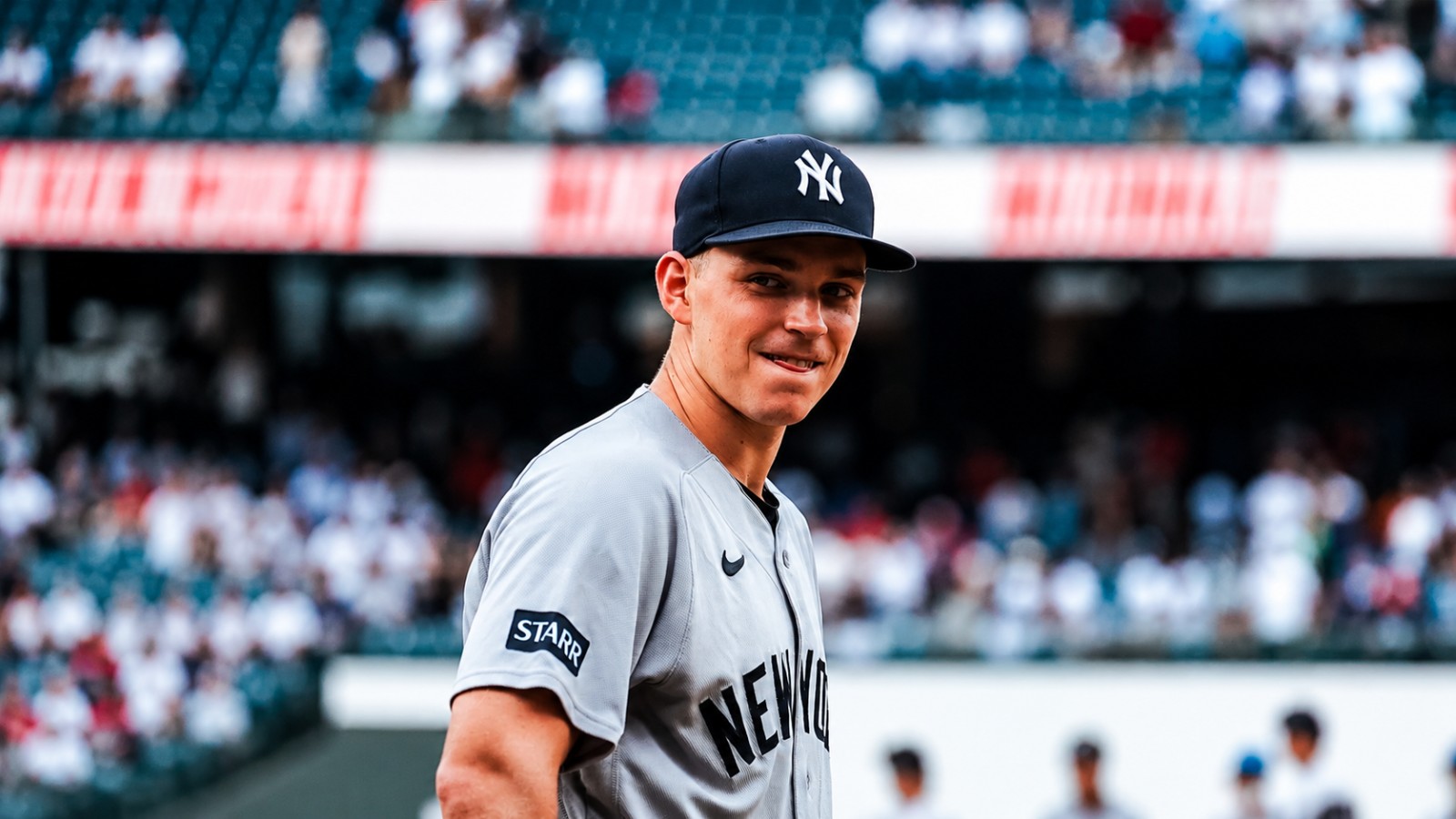
WASHINGTON — Ben Rice’s bat hogged the limelight in the Yankees’ 5-3 comeback win over the Nationals. But his glove too added a hidden layer.
Rice entered the final afternoon before the All-Star break carrying the expectations that now follow every trip he makes to the plate. The Yankees needed one more late answer at Nationals Park, and their first-time All-Star supplied it with two outs in the eighth inning.
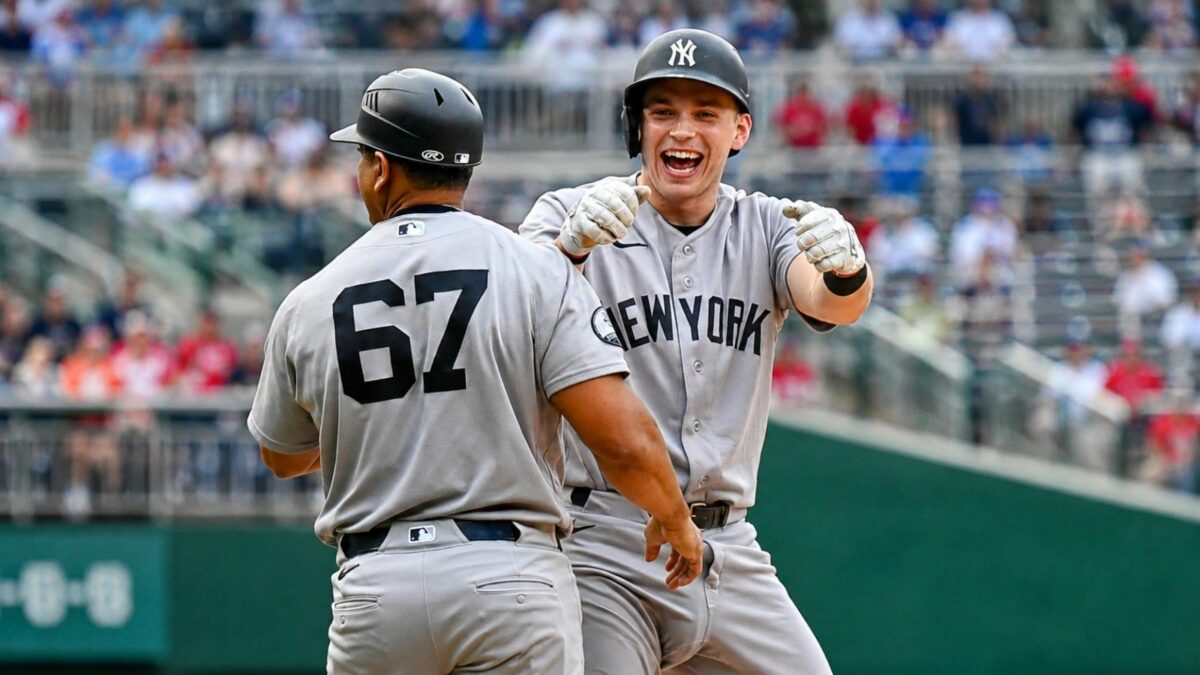
New York trailed Washington by a run when Max Schuemann singled and Trent Grisham walked against left-hander Andrew Alvarez. Rice then drove a 100.8 mph fly ball toward the wall in left-center field. Dylan Crews could not secure it near the padding, and the ball rolled away as both runners scored. Rice reached third with his third triple of the season and a 4-3 Yankees lead.
Ben Rice finished 1-for-4, but the decisive hit extended his hitting streak to eight games and his on-base streak to a season-high 12. He reached the break batting .279 with 29 home runs, 68 RBIs and a .968 OPS. Those numbers already made his bat the clearest part of his rise. His work several innings earlier showed why his value in the Yankees lineup and roster has become broader than power alone.
Rice’s glove erased Washington threat
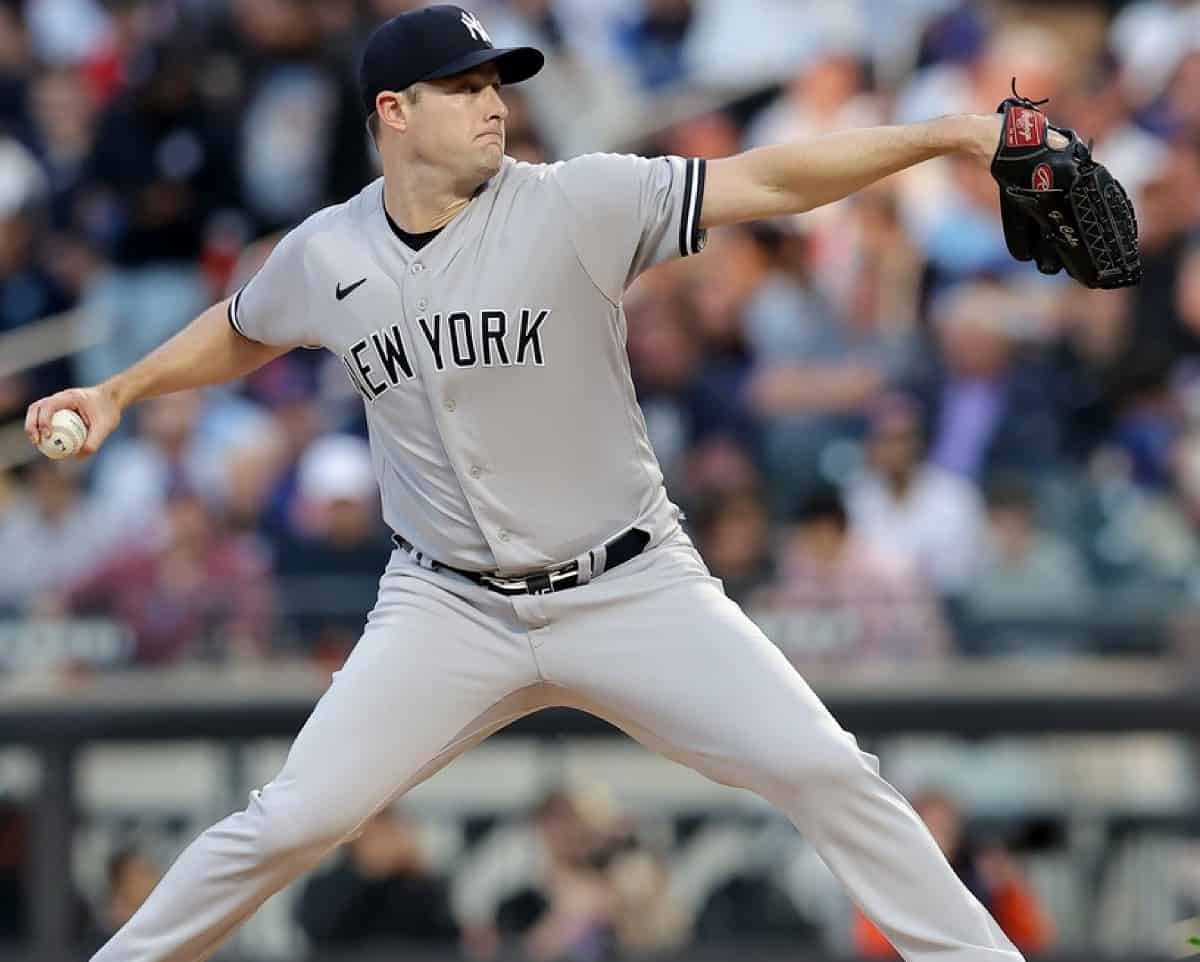
The less obvious turning point came in the bottom of the fourth, before the Yankees had scored and while Will Warren protected a 1-0 deficit. Washington opened the inning with runners at first and third and nobody out.
Warren struck out Dylan Crews. Daylen Lile then lined the ball directly to Rice at first. Rice caught it and stepped on the bag before CJ Abrams could return. The unassisted double play ended the inning and stranded a runner at third.
The sequence kept the deficit at one. Warren completed five innings with one run allowed, leaving the Yankees close enough to change the game later.
Why the glove work remains unusual
An unassisted double play means one defender records both outs without a teammate touching the ball. Rice’s play was scored 3U because the first baseman handled the catch and the putout himself.
The route is recognizable but uncommon. A runner must leave on contact, the line drive must stay up and the fielder must beat the runner back to the base.
MLB Film Room shows more than a dozen such plays in 2026 through July 13. Ty France, Jonathan Aranda, Jared Young, Vladimir Guerrero Jr. and Luis Garcia Jr. made similar plays at first. Arizona left fielder Jake McCarthy turned a much rarer 7U version in May.
Rice’s play was not unique across MLB. His two-way impact was. He erased a scoring threat in the fourth and drove in the winning runs four innings later.
Yankees history offers scattered precedents
The Yankees have produced several memorable unassisted double plays, although their paths differed from Rice’s.
Oswaldo Cabrera turned one in Game 5 of the 2024 American League Championship Series. He fielded Steven Kwan’s grounder, stepped on first and tagged a runner between bases.
Alfredo Aceves supplied a stranger version against Baltimore on Sept. 20, 2008. He caught Adam Jones’ popped-up bunt and carried the ball to second to double off Brian Roberts. MLB notes that it was the first by a major league pitcher since 2007.
Jorge Posada turned two as a catcher in 2000, matching Frank Crossin’s 1914 record for the most by a catcher in one season.
Rice reaches break as lineup centerpiece
Rice’s triple supplied the louder image. Statcast projected the drive at 383 feet, but Rice was not convinced it would escape the outfielders.
“No, I didn’t think I got it quite right. But I saw it kept going, so I think wind must have been helping it just enough to make it tough wall ball play there,” Rice said. “I was happy that it didn’t get caught.”
The hit completed a first half in which Rice moved from an emerging hitter to a central figure in Aaron Boone’s lineup. His 29 home runs placed him among MLB’s leading power threats, while his work at first gave the Yankees more roster flexibility.
New York reached the break at 54-42, three games behind Tampa Bay in the AL East and holding the American League’s top wild-card position. The sweep was the franchise’s first in a series of at least three games while trailing in the eighth inning or later each day since May 1910, according to the Elias Sports Bureau.
Rice framed the comeback streak as a standard the clubhouse must carry into the postseason race.
“That’s the mentality we got to have,” Rice said. “We go down in those later innings just knowing that we still got some at-bats left. That’s the kind of mentality we need to carry in after the break.”
His triple will remain the play attached to the final score. The fourth-inning double play explains how the Yankees stayed close enough for that swing to matter.
What do you think? Leave your comment below.