NEW YORK — The Yankees have reached the stage of September when every inning can double as an October rehearsal. Their American League Wild Card matchup is set. Boston comes to Yankee Stadium on Tuesday. New York owns the No. 4 seed, and the remaining regular-season work is about deciding which combinations Aaron Boone wants available when one postseason matchup can change a game.
The Yankees’ infield remains unsettled. George Lombard Jr. has taken over at shortstop and Jazz Chisholm Jr. is back at second. At third, Jose Caballero now leads the October options. Ryan McMahon, despite recent extra-base hits, is no longer an option in the preferred postseason plan. Amed Rosario remains a matchup bat, while Volpe gives Boone another movable piece.
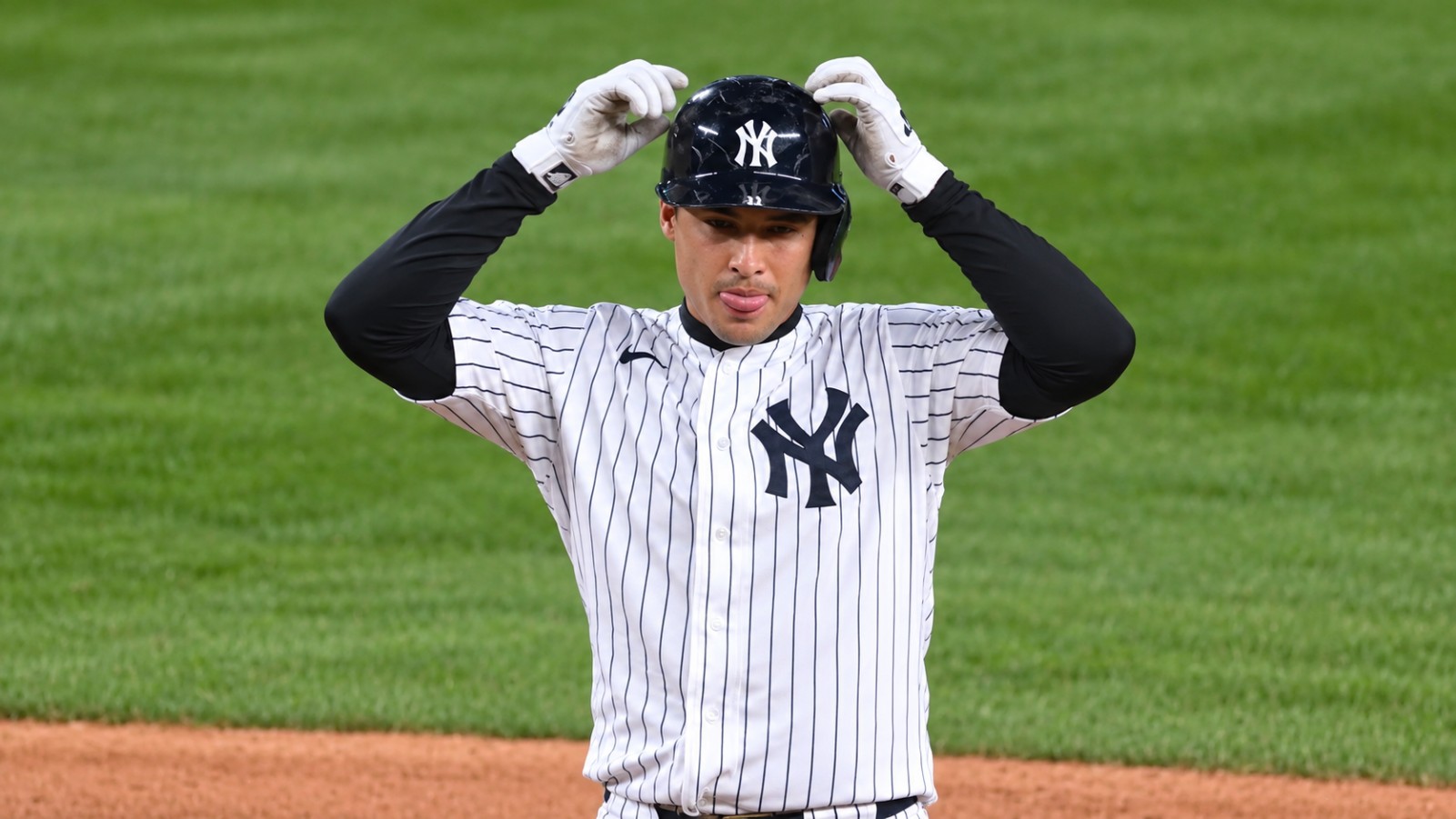
Friday’s doubleheader against Baltimore captured that uncertainty without resolving it. The Yankees lost the opener 10-2 at Yankee Stadium, then won the nightcap 6-3. Anthony Volpe collected three hits across the two games, including a two-run ground-rule double in the sixth inning of Game 2. Will Warren earned the win with 3 2/3 scoreless relief innings, while Orioles starter Brandon Young took the loss.
Volpe’s presence in that puzzle would have seemed unlikely seven weeks ago. The Yankees optioned him to Triple-A on Aug. 4 after Lombard replaced him at shortstop. Volpe had no guarantee of returning. He responded by batting .284 with 10 homers and 21 RBIs in 28 games at Scranton/Wilkes-Barre while learning new defensive responsibilities. Since his Sept. 10 recall, the Yankees have treated that versatility as a potential October asset rather than restoring his old everyday role.
Boston makes that flexibility more valuable. The Red Sox can pressure the Yankees with left-handed pitching, while New York may need to mix right-handed bats and defensive replacements more aggressively than it would over a longer series. That makes every extra position on one roster spot meaningful.
Yankees finally test Volpe at third, then learn almost nothing
That plan produced its strangest test Friday when the Yankees started Volpe at third base for the first time in his major league career.
They wanted a live-game look before setting their Wild Card roster. Baltimore gave them almost no defensive evidence.
The only ball hit toward Volpe came in the ninth inning. Christian Encarnacion-Strand sent a grounder toward third, but it struck the bag and jumped over Volpe, leaving him no realistic play.
Boone still considered the game useful because Volpe had to handle positioning and the responsibilities of the new spot.
“Not a lot of action over there, but there’s something to be said for being in there and thinking through the situations and moving and setting up how you’re supposed to,” Boone said.
Volpe said he felt comfortable despite the lack of chances.
“I felt comfortable,” Volpe said. “No matter where you play, you got to anticipate and know where you got to be. I feel like I’ve picked it up.”
Boone’s explanation makes experiment bigger than third base
The Yankees are not searching for a new everyday third baseman. Jose Caballero has emerged as the leading option. Boone’s Volpe experiment is instead preparation for the substitutions that can pile up in a short postseason series.
“With how we set our roster, there could be a lot of moving parts within it within a game,” Boone said.
“So, having more flexibility with guys hopefully puts us in a position to take advantage of a good matchup within the game.”
Boone said he specifically wanted Volpe exposed to third before October because a late-game sequence could force him there.
“And again, we could find ourselves in the sixth inning of an important game, and I don’t want to hold back on this guy being able to come into the game [at third if necessary]. Having that flexibility is really valuable.”
One roster spot can now cover three infield positions
Volpe’s Triple-A work makes the roster math more interesting than the single failed audition suggests.
During his demotion, he made 19 starts at second base, 15 at shortstop and three at third. Since returning, he has played second regularly, made Friday’s first major league appearance at third and then shifted back to shortstop for the nightcap.
That nightcap supplied an offensive argument, too. In his first appearance at shortstop since Aug. 1, Volpe lined his two-run double during New York’s four-run sixth inning. Through Friday, he was hitting .265/.308/.388 in September with one homer and nine RBIs.
Volpe’s three-position flexibility gives Boone more freedom to pinch hit, pinch run or rearrange the defense. With Caballero leading at third, Volpe becomes the contingency that can keep those moves available in a best-of-three series.
Caballero leads third-base plan as Volpe becomes contingency
Friday still did not show how Volpe would handle repeated hard chances, charging bunts or long throws across the diamond, leaving his reliability as Caballero’s late-game contingency largely untested.
Caballero is the leading third-base option, with speed and defensive flexibility that fit October. McMahon is no longer an option in this postseason calculation. Rosario remains a matchup bat, while Volpe gives Boone a defensive bridge if substitutions force the Yankees to move pieces.
The audition accomplished one objective. Volpe experienced third base in a major league game, and Boone gained another movable piece for the Wild Card roster. If Caballero starts there, Volpe can preserve Boone’s freedom to adjust after a matchup change.
Friday was supposed to provide evidence. Instead, one ground ball hit the bag and jumped over Volpe, leaving Boone to judge how much he can trust that contingency in October.
What do you think? Leave your comment below.