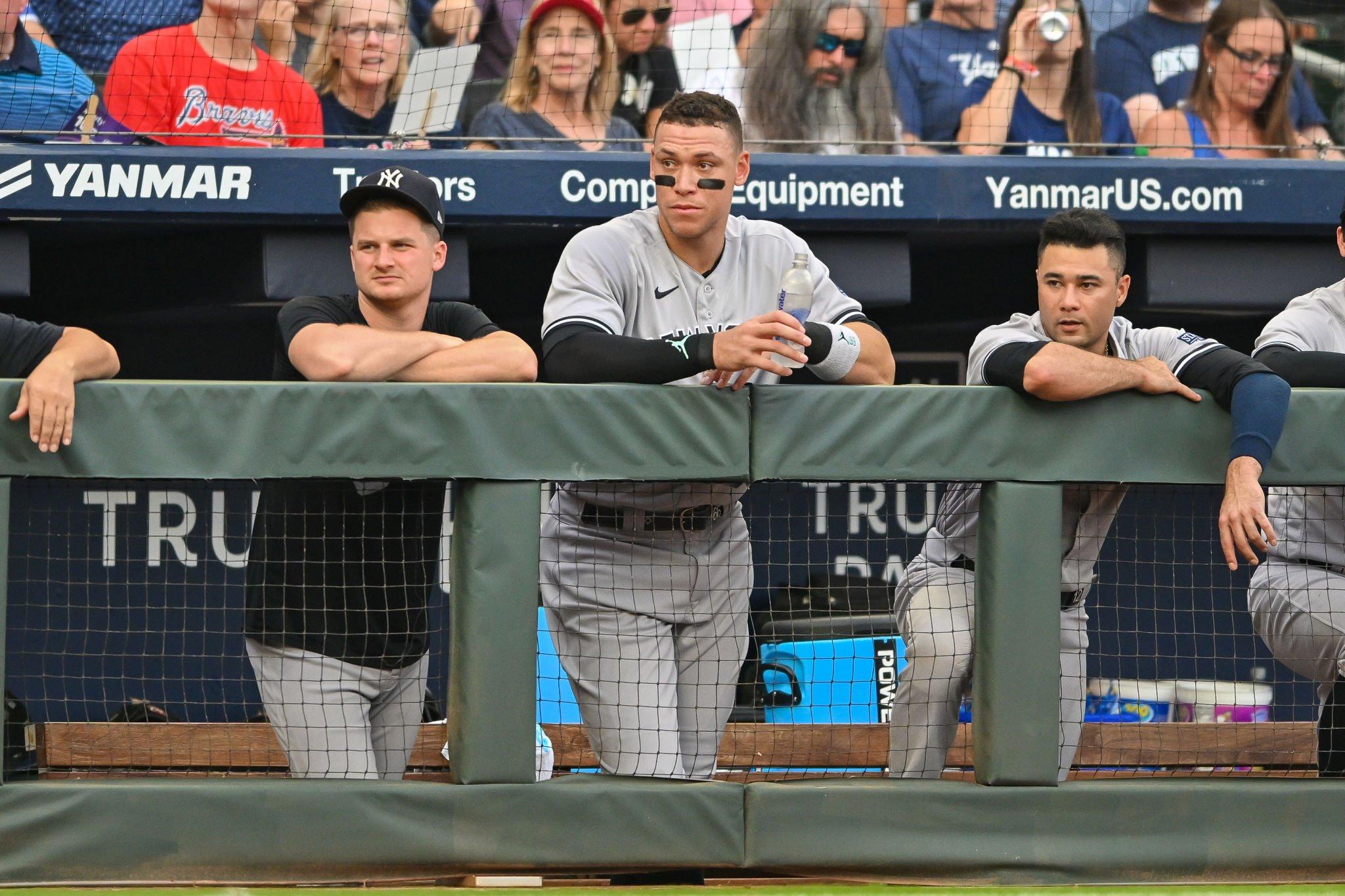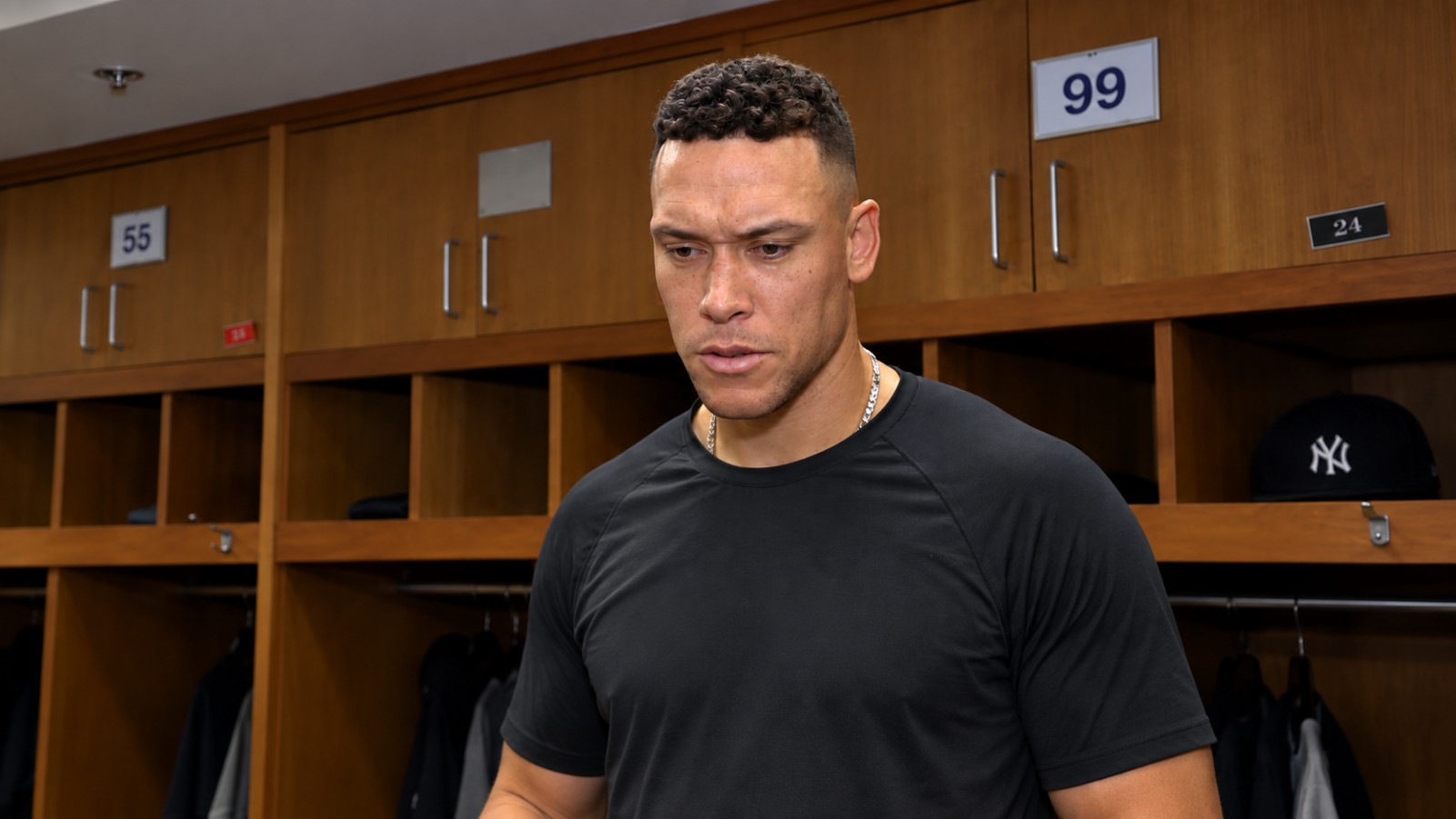
NEW YORK — Aaron Judge has turned a medical timetable into an October argument at exactly the moment the Yankees can least afford uncertainty.
The Yankees captain is publicly pushing to make himself available for Tuesday’s American League Wild Card Series opener against the Boston Red Sox. The club is preparing for the opposite. Aaron Boone has described Judge’s right calf strain as moderate, and New York has spent the week planning as if its best hitter will not be on the active roster when the postseason begins.
That split has fed a second debate around the Yankees. Judge skipped a minor league rehab assignment when he returned Sept. 8 from a fractured right rib, played seven games, then landed back on the injured list after straining the soleus muscle in his right calf Sept. 16 in Minnesota. His determination to accelerate another comeback has brought criticism that competitive urgency could again get ahead of medical caution.
Judge has not said the Yankees should ignore their doctors. He has said he intends to do everything possible to become an option. The distinction matters. The Yankees still control the roster decision, and the slugger’s body still controls whether there is a decision to make.
The stakes are clear. New York is 92-67 through Thursday and has secured the top AL Wild Card position, according to official MLB standings. Boston is coming to Yankee Stadium for a best-of-three series beginning Sept. 29. Judge has played only 66 games this season, but removing him immediately changes the lineup the Red Sox must navigate.
Until Thursday, nearly every public signal favored caution. Boone had said the Yankees were not expecting Judge for the Wild Card Series, while former ace CC Sabathia warned that the long-term cost of playing hurt can surface years later. The medical outlook remained guarded.
Sabathia warns what same gamble can cost
Sabathia’s warning carries a different kind of authority.
The former Yankees ace pitched through knee and shoulder problems late in his career. He understands the clubhouse pull Judge feels, but he also lives with the physical consequences of repeatedly competing through pain.
Sabathia’s message was not that Judge lacks the toughness to return. It was that toughness cannot erase risk.
“He wants to get back for the guys. You feel like you owe that to the guys. But I would want him to be careful,” Sabathia said.
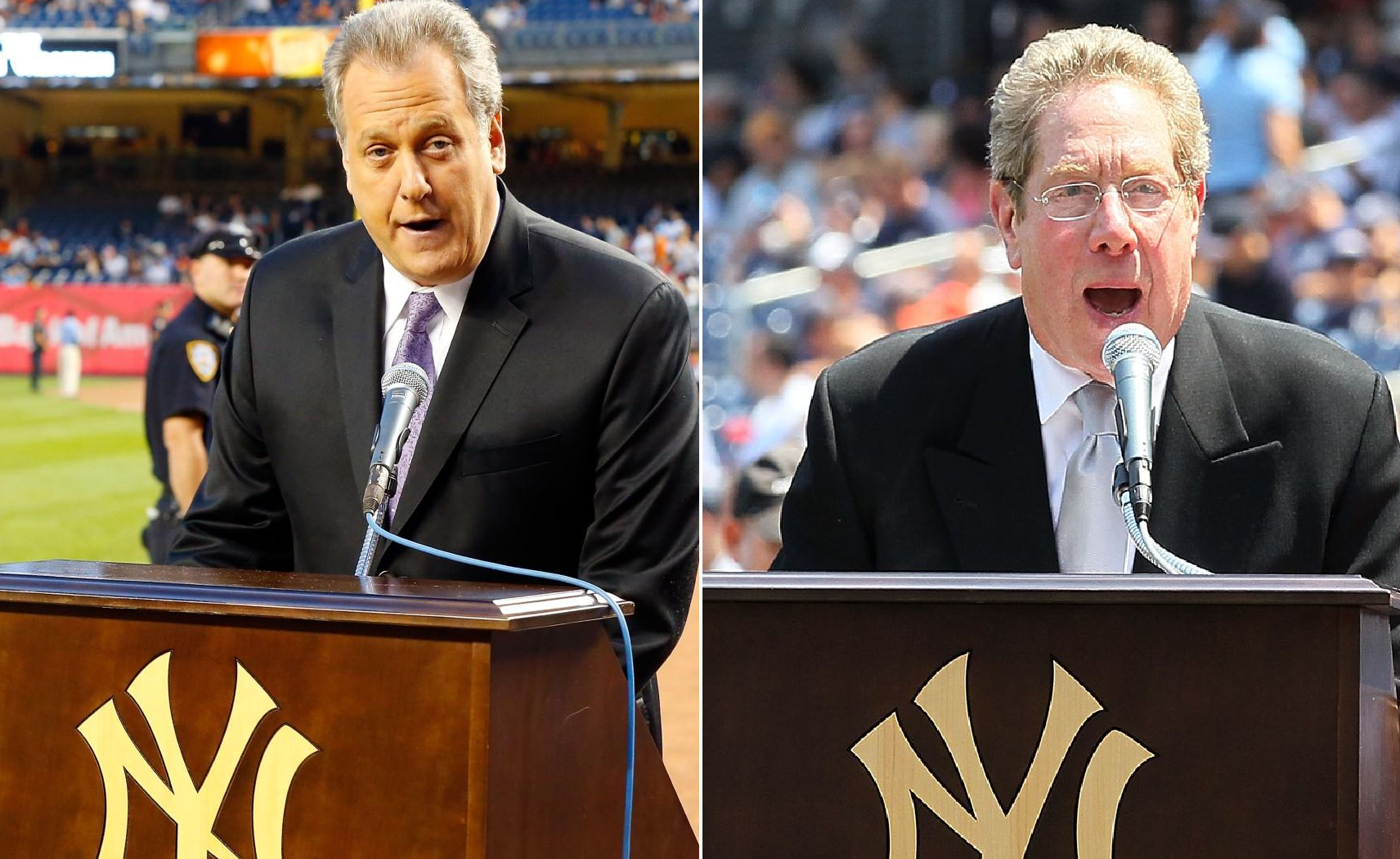
Sabathia has since needed a knee replacement and shoulder reconstruction. His example gives the Yankees the other side of Casey’s history: a player can push through injury and still pay for that decision later.
Sean Casey offers rare counterexample
Then came the first compelling counterexample supporting Judge’s belief that an accelerated return is not automatically impossible.
Former Yankees hitting coach Sean Casey tore the fascia muscle in his left calf during the 2006 AL Championship Series with Detroit. He returned for Game 1 of the World Series less than two weeks later and hit .529 with two home runs and five RBIs against St. Louis.
Casey’s injury was not identical to Judge’s. His strain involves the soleus, a muscle important to running and hitting. Still, Casey understands why a postseason player might push against a normal recovery timeline.
Casey said Judge’s toughness is the reason he will not dismiss the possibility of a rapid return.
“He’s one of the toughest guys I’ve ever met in my entire life. If he can go, he’s gonna go,” Casey said.
That does not amount to medical clearance. It does give the Yankees a real-life example of a hitter returning from a significant calf injury on an unusually short schedule and producing immediately.
Yankees record explains urgency on both sides
Judge’s value remains measurable even in an injury-shortened season.
He is batting .241/.360/.511 with 18 home runs and 41 RBIs in 66 games. After returning from the rib fracture, he went 4-for-23 with one homer and 13 strikeouts before the calf injury stopped his comeback after seven games.
New York’s 92-67 record through Sept. 24 shows the Yankees are 41-25 in games Judge has played and 51-42 in games he has missed. That is a .621 winning percentage with Judge compared with .548 without him.
The split does not prove Judge alone created the difference. It does show why both sides feel pressure. Even a limited Judge can alter how Boston attacks the Yankees lineup. A setback, however, could eliminate him from later postseason rounds if New York advances.
Judge received a platelet-poor plasma injection Monday. He is eligible to come off the injured list for Sunday’s regular-season finale, but eligibility and readiness are separate questions.
Yankees still hold final decision
The Yankees do not need to choose between Casey’s optimism and Sabathia’s warning. They need to determine whether Judge can run, hit and play right field without creating an unacceptable chance of worsening the strain.
Judge’s insistence on trying to beat the timetable is consistent with the captain the Yankees know. It does not force Boone or the medical staff to activate him.
For now, Casey has supplied the rare ray of hope that Judge’s side of the debate lacked. Sabathia has supplied the warning that prevents the Yankees from treating that hope as a green light.
What do you think? Leave your comment below.