NEW YORK — The Yankees spent Tuesday night grabbing leads on the Houston Astros and watching them slip away.
New York twice punched back with power through Cody Bellinger and Luis Garcia Jr. They led 3-2. They led 5-3. They led 6-5.
Houston answered every time.
By the time a back-and-forth night reached the eighth inning at Yankee Stadium, the difference was no longer simply which team could produce another big swing. It also became a test of how aggressively each manager would chase the game.
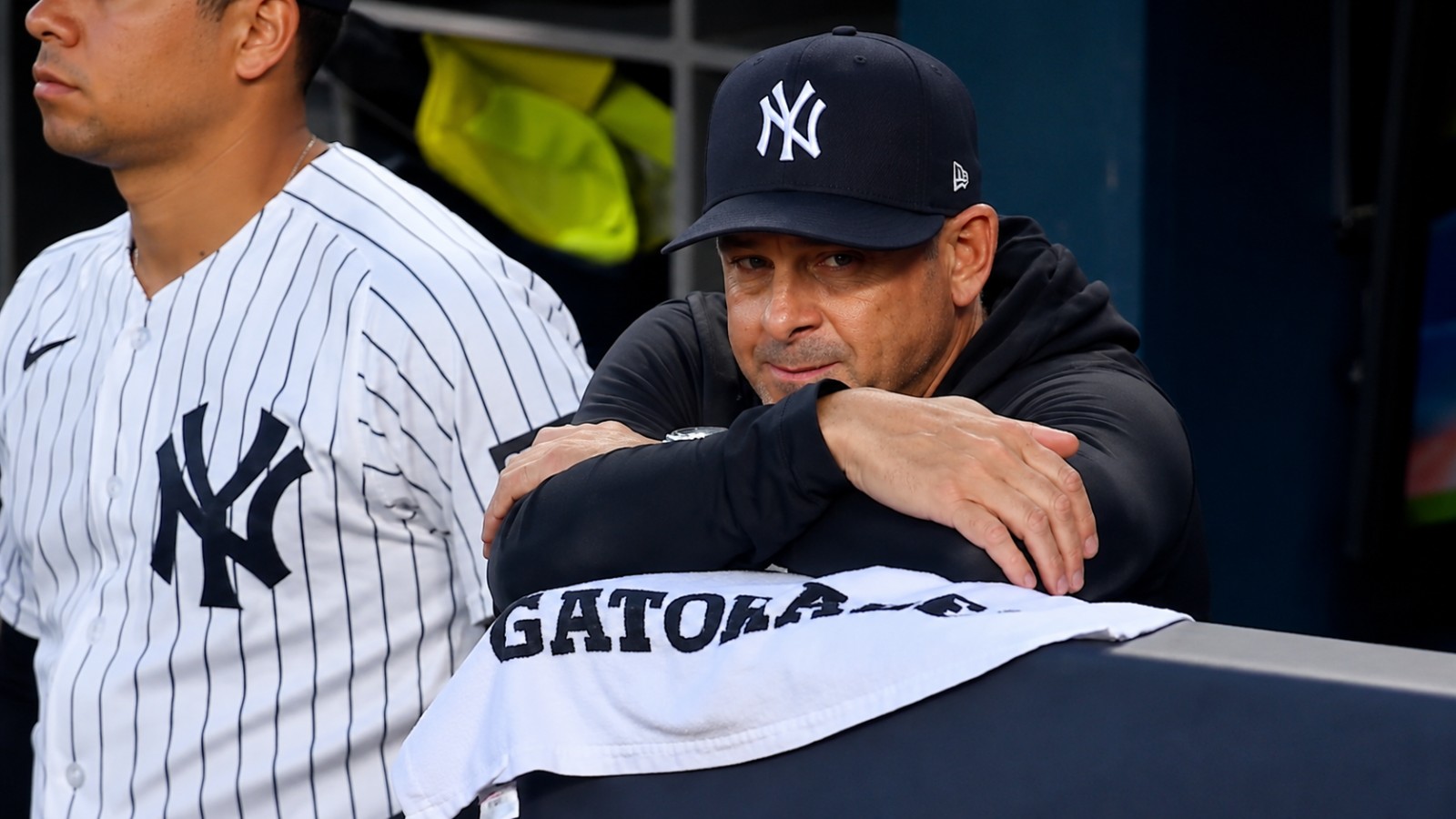
Astros manager Joe Espada made his intentions unmistakable. Yankees manager Aaron Boone left considerably more room for debate.
Three late choices stood out in the Yankees’ 9-7 loss: allowing a struggling Austin Wells to hit in the eighth, declining to use Paul Goldschmidt or Heliot Ramos when Josh Hader entered to face Trent Grisham, and electing to pitch to Yordan Alvarez with two outs and second base open.
None alone decided the game. Together, they created a sharp contrast with Houston’s approach during the highest-leverage stretch of the night.
The Yankees fell to 74-57, remained 3.5 games behind Tampa Bay in the American League East and saw Boston move within 1.5 games of them for the American League’s top wild-card position.
Boone stays with Wells as Yankees rally
That 6-5 lead did not survive the top of the eighth. Diaz homered off Brent Headrick to tie it 6-6, his second solo shot of the night. Pena then singled, Alvarez tripled him home and Isaac Paredes followed with an RBI single. Houston suddenly led 8-6.
New York responded immediately. Spencer Jones doubled off Bryan Abreu. Jazz Chisholm Jr. then singled Jones home, trimming Houston’s advantage to 8-7 with nobody out.
That brought Wells to the plate. He was 0-for-2 with a walk to that point and had entered the night batting .179 with a .274 on-base percentage, .297 slugging percentage and .571 OPS.
The slump was not limited to one night. In his previous 10 appearances from Aug. 13 through Aug. 23, Wells went 4-for-24 (.167) with no home runs and two RBIs.
Boone’s bench included Goldschmidt, Heliot Ramos, Amed Rosario and backup catcher Ali Sanchez. He stayed with Wells against the right-handed Abreu. Wells grounded into a double play.
The decision was not as simple as exploiting a platoon split. Goldschmidt and Ramos have done their best work against left-handers. Pinch-hitting for Wells also would have forced Boone to make a catching decision for the ninth, with Ali Sanchez available as the backup.
But the Yankees were down one run with nobody out, the tying run aboard and a hitter enduring a difficult season at the plate. Boone chose continuity. Houston got two outs.
Hader creates matchup Yankees built bench to attack
The next decision came moments later and presented a much clearer platoon opportunity. Jose Caballero singled with two outs. Espada did not wait for the ninth. He summoned Josh Hader to face Grisham.
It was an unusually aggressive deployment. It was only Hader’s second outing of more than three outs this season. Houston nevertheless wanted four outs from him with the tying run on base.
Boone had an opportunity to counter. Goldschmidt entered Tuesday carrying a .993 OPS across 152 plate appearances against left-handed pitching. Ramos had a .769 OPS against lefties, compared with .653 against right-handers. Grisham carried a .725 OPS against southpaws.
Ramos represented another purpose-built choice. When the Yankees acquired him from San Francisco at the trade deadline, general manager Brian Cashman explicitly described why his bat mattered.
Boone kept both right-handed hitters on the bench. Hader struck out Grisham to end the eighth. He then returned for the ninth and completed the four-out save, his 19th in 19 opportunities. Abreu earned the win and Headrick took the loss.
Yankees challenge Alvarez instead of removing bat
Boone’s pitching decision against Alvarez came before either offensive choice, and it set the eighth inning in motion. Diaz’s homer had tied the score at 6-6. Headrick recorded another out before Pena singled.
Two outs. Pena at first. Second base unoccupied. Alvarez stepped in.
There may not have been a more obvious hitter in baseball to consider avoiding. Alvarez entered Tuesday batting .320 with a .436 on-base percentage, .613 slugging percentage and a major league-leading 1.050 OPS. He had 36 home runs and 90 RBIs.
Two days earlier, Oakland intentionally walked Alvarez three times in a single game. The third gave him 28 intentional walks for the season, breaking Jeff Bagwell’s Astros franchise record of 27, set in 1997.
Boone could have intentionally walked Alvarez, moving Pena to second and forcing Paredes to produce the go-ahead hit. Instead, the Yankees challenged Alvarez. Alvarez attacked Headrick’s first pitch and drove it into the right-center-field gap for the go-ahead triple, his first since July 21, 2024.
Paredes then singled Alvarez home, a reminder that an intentional walk would not have guaranteed an escape. Still, the sequence underscored the choice. Other teams had repeatedly decided Alvarez was too dangerous to face. The Yankees gave him something to hit in a tied game in the eighth. He made them pay.
Boone’s bullpen explanation adds another layer
Boone did address Headrick after the loss. In the publicly available postgame comments reviewed, he did not address the Wells, Grisham or Alvarez decisions. He acknowledged the Astros simply did more damage.
“They beat our guys tonight, so you got to give them some credit,” Boone said.
The more notable detail involved Headrick. Boone said he had been reluctant to use the left-hander because of his workload. Tuesday marked Headrick’s 68th appearance, second-most in the majors, and he had allowed only three runs over his previous 21 appearances entering the game. He was charged with three earned runs in two-thirds of an inning Tuesday.
The Astros attacked. Then Espada reacted to the Yankees’ rally by using Hader earlier than usual. That may be the clearest contrast from the night.
Houston treated the eighth inning as if there might not be another opportunity. The Yankees had Wells at the plate with nobody out, two right-handed matchup bats available when Hader entered, and the option of removing Alvarez’s bat from the equation.
Three times, Boone stayed with the matchup already in front of him. On a night when Houston erased three New York leads and Diaz beat the Yankees with two homers, those decisions became part of what the home team left behind. The Yankees host the Astros again Wednesday, with the rest of a three-game series still to play.
What do you think? Leave your comment below.