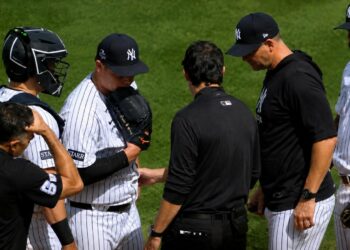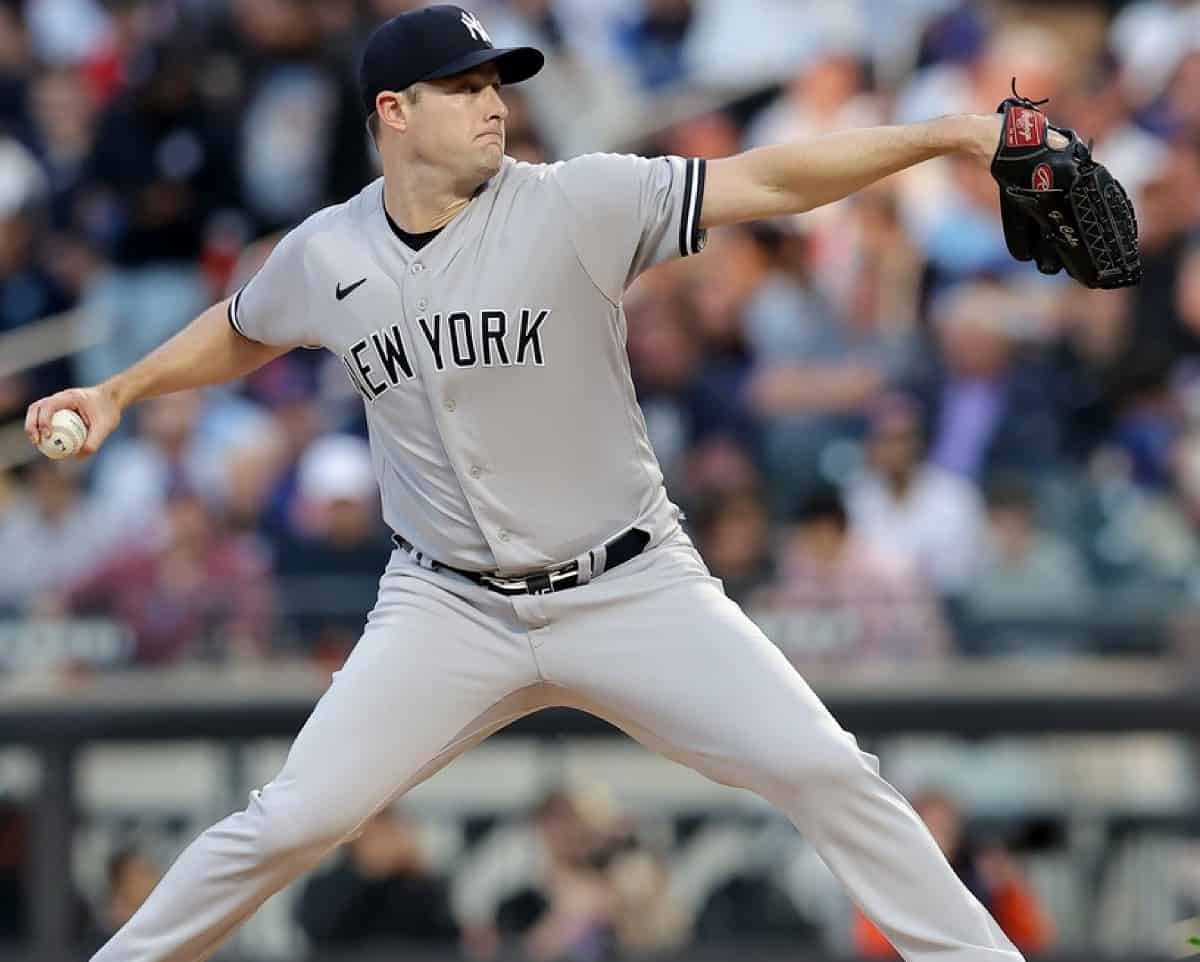
WASHINGTON, D.C. — Ryan Weathers spent Friday night doing something the Yankees badly needed. He was holding the highest-scoring offense in baseball to one run. Then the ground ball came, and the night got harder than it had to be.
A routine grounder to third turned into extra bases. Then another play went wrong. Weathers, already grinding, had to work around damage that had nothing to do with the pitches he threw.
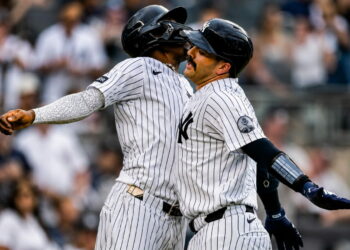
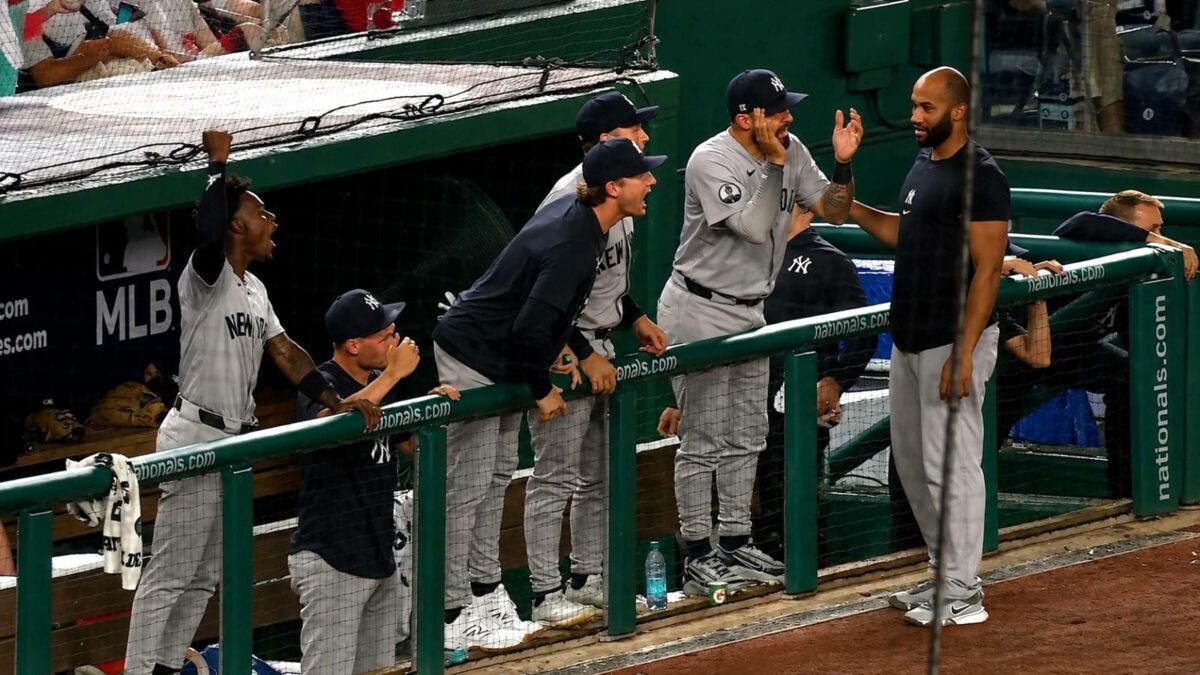
The Yankees still won, 5-3 over the Nationals at Nationals Park, on late homers from Jazz Chisholm Jr. and Austin Wells. But the box score carried a familiar line under fielding, and it pointed back to a position the Yankees have not solved all season.
Third base has become a problem with two faces, and neither one is easy to hide.
Two errors, and a pitcher left to clean up
Amed Rosario made two errors Friday, one throwing and one fielding, according to the game’s official records. Neither directly cost a run, but both stretched innings and forced Weathers to throw extra pitches at a time when the Yankees pitching staff can least afford waste.
The most glaring miscue turned a routine grounder to third into a triple, the ball skipping past first base and into foul territory along the right field wall. Rosario also went 0-for-2 with two strikeouts before manager Aaron Boone lifted him for a pinch-hitter in the fifth, a quick hook that spoke to the club’s frustration.
Weathers still delivered, holding Washington to one run over 5 1/3 innings while scattering six hits and walking none. The defense behind him did not match the effort.
The trouble is not new. Rosario is a career utility man, not a natural third baseman, and the metrics have followed him for years. He posted minus-16 defensive runs saved in one stretch with Cleveland, and once committed three errors in three innings when the Guardians experimented with him in the outfield. Asked this year to hold down third every day, he has been exposed.
The bat that keeps him in the lineup
What complicates the picture is that Rosario can hit, which is exactly why the Yankees keep writing his name down. He entered the weekend batting .276 with a .436 slugging mark across his time with Washington and New York, and he has crushed left-handed pitching at a .302 clip.
That production is real, and in a lineup that spent three weeks as the worst offense in baseball, it is not something the Yankees can casually discard. Rosario is a respected teammate and a genuinely useful bat off a bench or in a platoon, the kind of role his profile was built for.
The problem is the trade the Yankees keep making to get that bat into the game. Every start at third invites the kind of night Weathers endured. In front of a pitching staff that has labored through the summer, defense that turns outs into base runners is a cost the club feels immediately.
Rosario’s glove, in short, is undoing part of what his bat provides. The Yankees have been willing to live with that math, but Friday was a reminder of how thin the margin is.
McMahon’s glove, and a bat that has gone quiet
The natural fix is already on the roster. Ryan McMahon is a legitimate defender at third base, the kind of glove that would have turned Friday’s misplays into routine outs. The Yankees acquired him from Colorado at last year’s deadline precisely for that stability.
His bat has not cooperated. McMahon entered the weekend hitting .210 with eight home runs, 23 RBIs and an on-base-plus-slugging figure stuck near .610, numbers that make him hard to justify in an everyday role.
His struggles against left-handed pitching are the sharpest edge of the problem. Boone has repeatedly sat the left-handed-hitting McMahon against southpaws, sliding Rosario to third on those days. At one low point this season, McMahon went 0-for-23 across a stretch of starts and saw his average sink to .183, a slump deep enough to raise questions about his everyday standing.
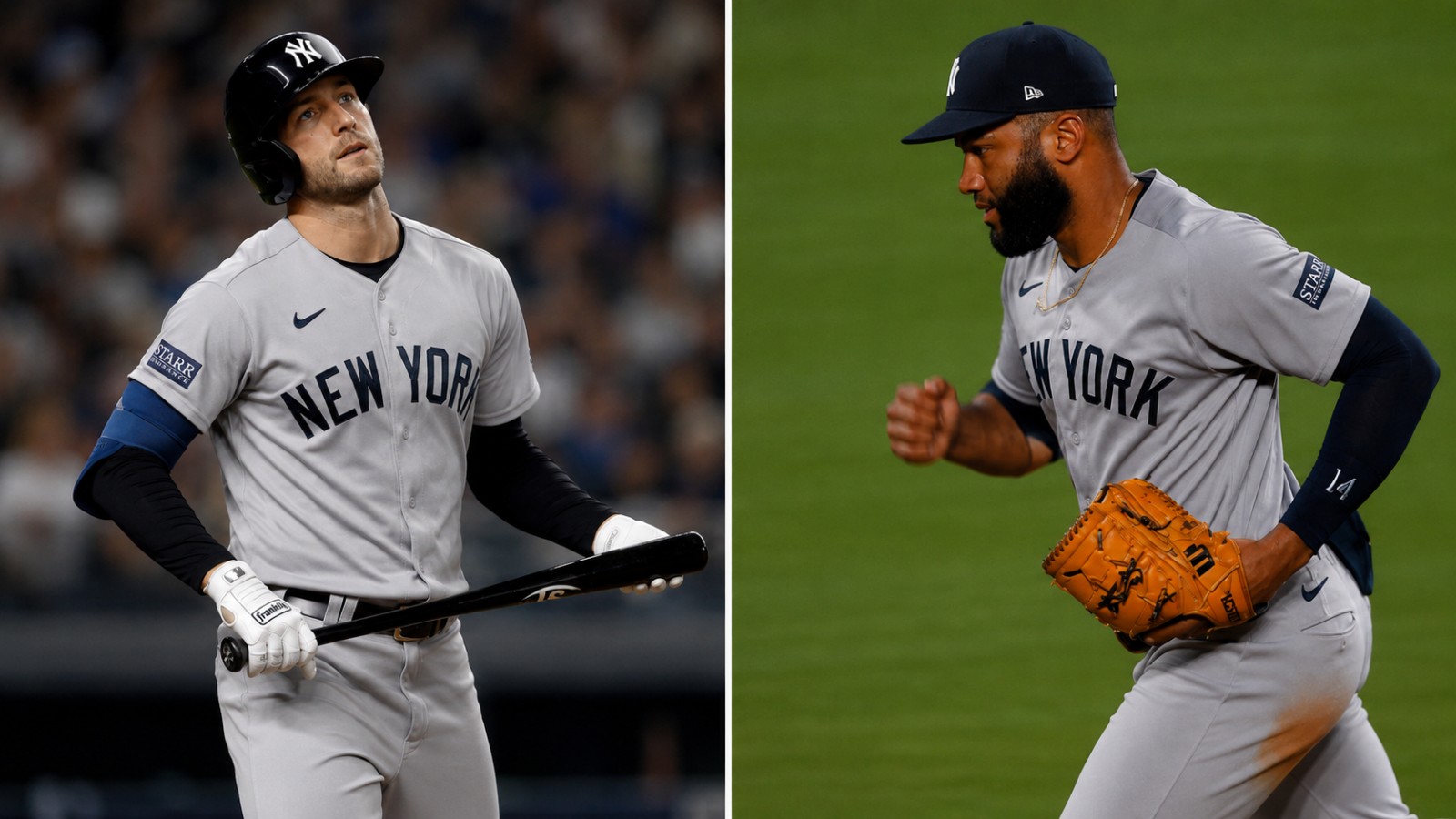
So the Yankees are left choosing between halves. McMahon gives them the glove and takes away the bat. Rosario gives them the bat and takes away the glove. Neither has offered both, and the platoon that tries to split the difference leaves a hole no matter which name is in the lineup.
A deadline need with the clock running
The position has quietly become one of the Yankees’ clearest deadline needs. The club has been tied in reports to a right-handed-hitting catcher and bullpen help, but the infield corner has generated just as much internal frustration, even if it draws fewer headlines.
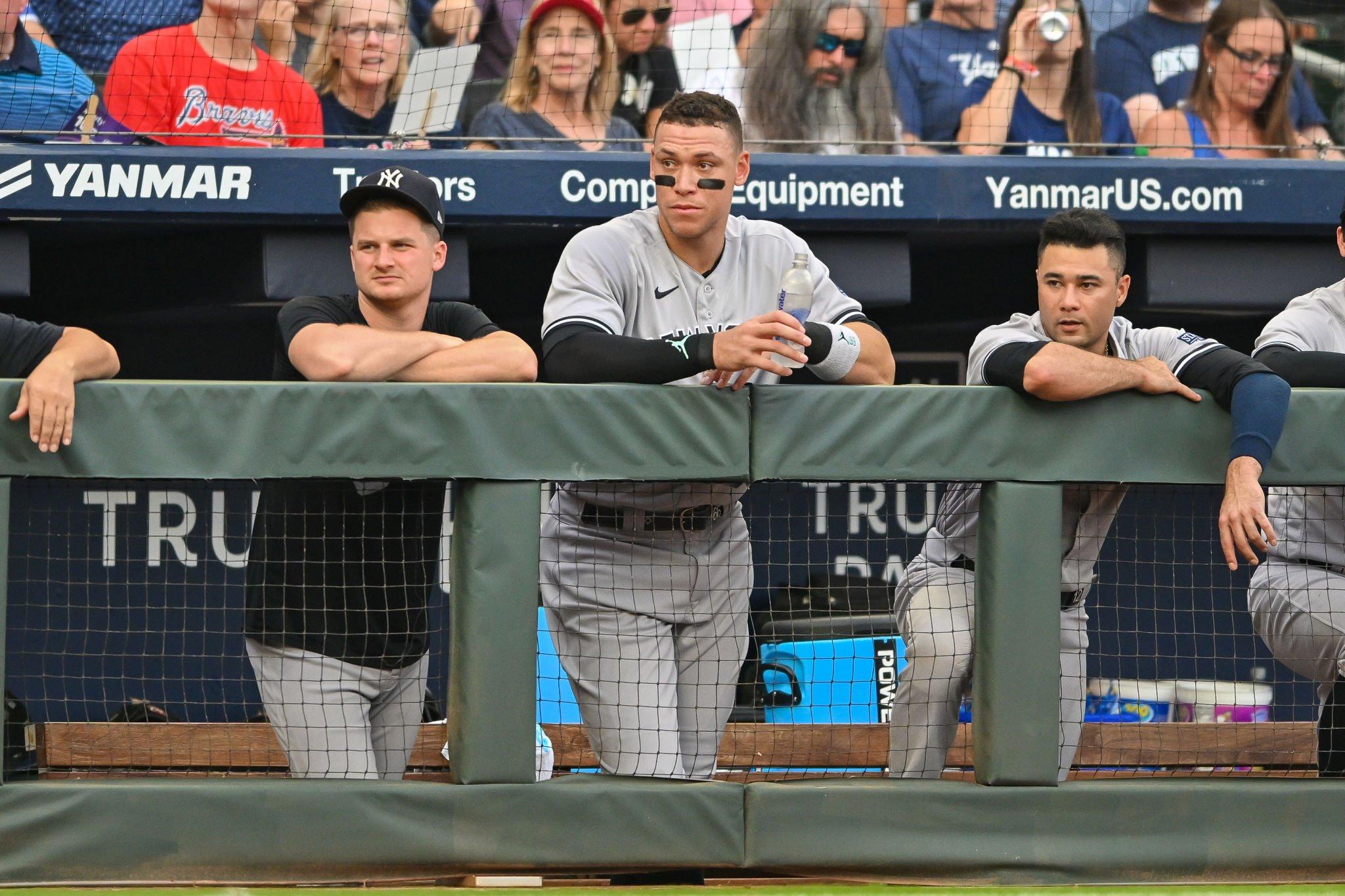
The Aug. 3 trade deadline offers a path to a cleaner answer, a third baseman who can field the position and hit enough to stay in the lineup against all arms. Until then, Boone is left mixing and matching, hoping the bat covers the glove on some nights and the glove survives the bat on others.
The Yankees are four games behind Tampa Bay in the AL East and cannot spare many more nights like Friday, when a strong start nearly drowned under its own defense. They won anyway, rescued by two swings in the late innings, but the escape masked a flaw that will not stay hidden much longer.
The next time the offense goes quiet, the third-base math may not balance so kindly. For now, the Yankees keep choosing which flaw to carry, one game at a time, with no version of the position that hides both.
What do you think? Leave your comment below.