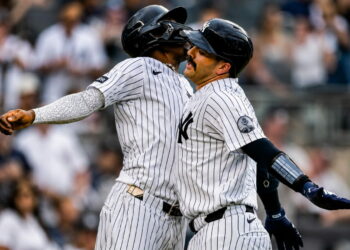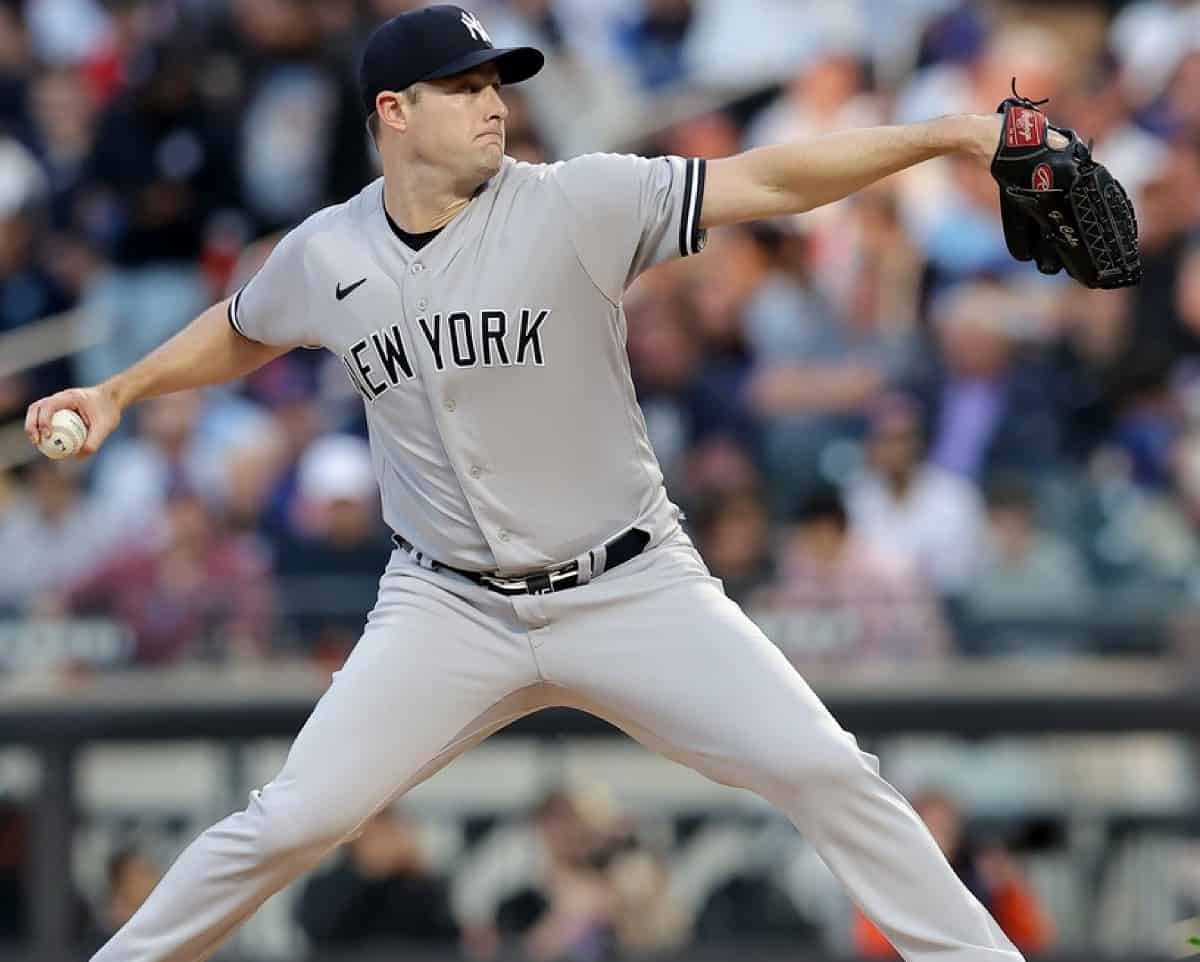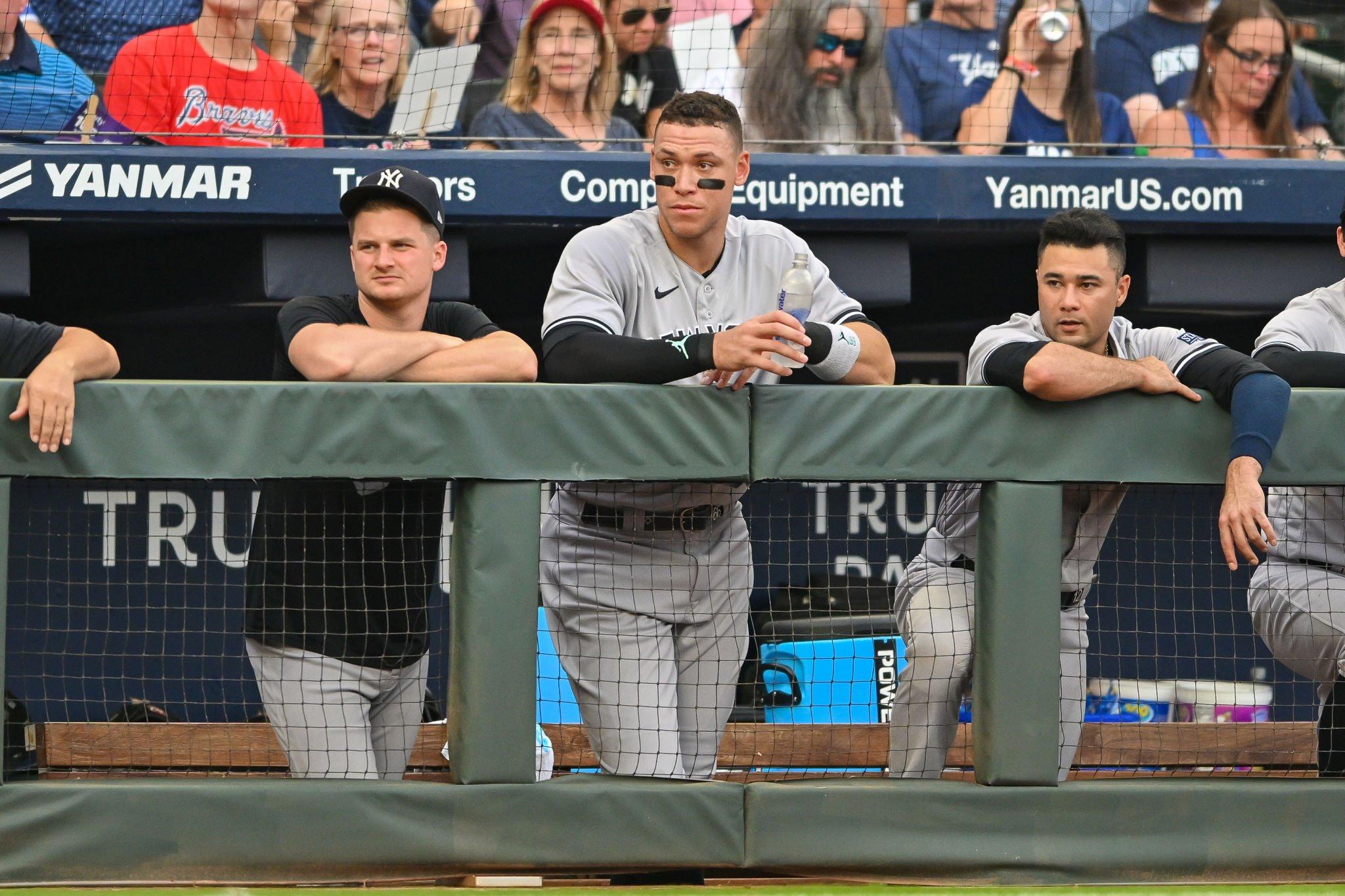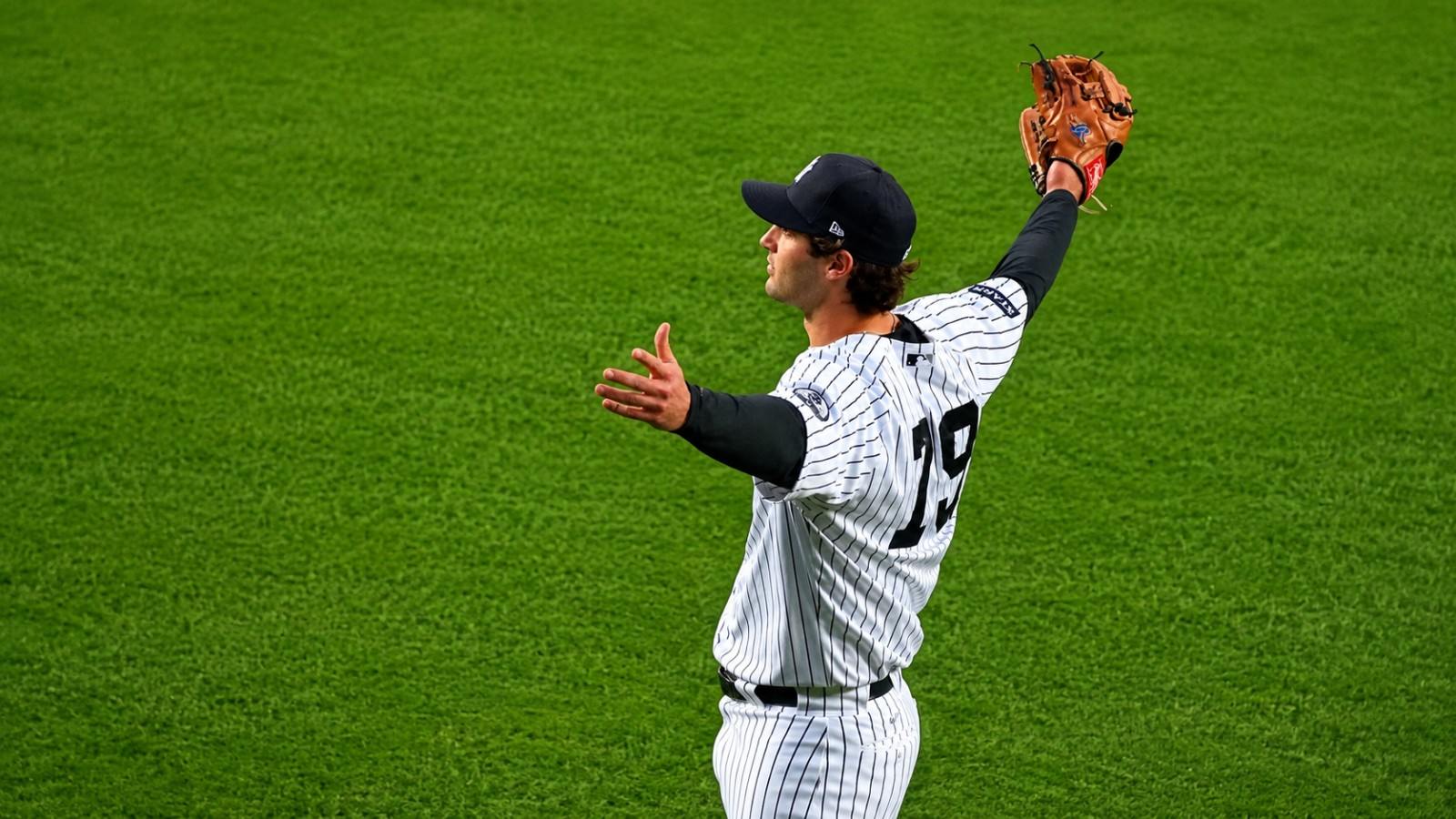
NEW YORK — Spencer Jones and Aaron Judge share more than a locker room and a Yankees uniform.
They stand the same 6-foot-7. They carry the same rare mix of size and power. And early in their careers, both Yankees sluggers shared the same flaw: too many strikeouts, too much swing and miss.
Judge solved his version of that problem and became a three-time American League MVP. Jones, a 25-year-old rookie, is now trying to follow the same path, and he went looking for the same guide.
The Yankees need him to figure it out. With their lineup gutted by injuries, Jones has carved out a role. Keeping it long-term is a different challenge, and the way he has approached it traces directly back to the man he is chasing.
Over the offseason, the Yankees rookie traveled to Missouri to work with Richard Schenck, the private hitting instructor behind Judge’s swing overhaul.
Learning the language of the game’s best hitter
Richard Schenck, 71, is known for a swing philosophy called the High Level Pattern, and he has worked with big leaguers including the Yankees captain. Jones had spent years piecing together information with his own coaches, Will Haynie and Justin Wilson, much of it gathered online. Seeing Schenck in person changed that.
Jones said the visit helped him think about hitting the way the Yankees’ captain does, and that shared vocabulary matters.
“They knew what they were doing,” Jones told The Athletic. “But we’re learning everything via the Internet. Then this offseason, we actually went out and saw Rich in Missouri. That helped a lot. Being in communication with Judge, too, helps us speak the same language as hitters. That’s what it’s all about.”
The mechanical fix centered on his lower half. Jones added an exaggerated toe tap with his right foot, a move that now mirrors Dodgers star Shohei Ohtani and is meant to keep his weight back and his timing in sync. He credits the Yankees’ director of hitting, Jarret DeHart, with helping build the foundation of it.
Jones said the real key was his back leg, the part of his swing that had left him late for years.
“For me, I was really out of sync and not on time a lot in past seasons,” Jones said. “Part of that had to do with my leg and not being where it needed to be. I think the training I’ve been doing is focused more on the back leg alone. That’s what needs to be on time and in sync with the pitcher.”
A mental reset built on slowing down
The swing was only half of it. When Jones returned to Triple-A after his first taste of the majors in mid-May, he decided his biggest need was mental. He wanted to stop trying to do everything at once for the Yankees.
He summed up the approach with a phrase that quickly spread among his family. He described himself in a way that has become a clubhouse favorite.
“The first time around, you try so hard to do a lot of things, and for me, I’m a chill bird,” Jones said. “I just need to relax it and allow myself to do as I do, and not try and force anything.”
Teammates have noticed the calm. Yankees infielder Ben Rice said the poise has stood out since Jones settled in.
“He’s always super composed,” Rice said, “but I feel like that’s really evident right now.”
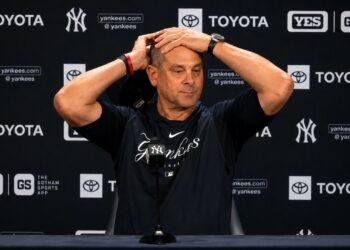
Manager Aaron Boone has pointed to the same growth, crediting Jones with turning big league reps into a better plan at the plate. Boone has repeatedly praised his adjustability over the past few months.
“He’s really benefited from the experience,” Boone said. “He’s shown an aptitude, and that’s from that experience. He’s taken in what goes on every day, and I feel like he applies it to his gameplan.”
The numbers and the coming roster crunch
The results have been uneven overall but sharp in the clutch. Jones is hitting .218 with a .715 OPS, five home runs and 18 RBIs on the season. Since his June 5 recall, he has batted .230 with a .785 OPS, six doubles and four stolen bases.
With runners in scoring position, though, he has been a force, hitting .318 with a 1.035 OPS in those spots. That production peaked Wednesday, when Jones went 2-for-4 with two doubles and three RBIs in the Yankees’ 10-5 win over the Seattle Mariners. He cooled the next day, going 0-for-3 with two strikeouts in a 1-0 loss.
The bigger question is where he fits with the Yankees. Cody Bellinger, Giancarlo Stanton and Judge are all expected back from injuries before the season ends. Jones has minor league options, and he could be sent down when Bellinger, likely the first to return, is activated. He said he is not letting that cloud his focus.
“You can’t be thinking about what’s ahead while also trying to play in the games today,” Jones said. “So no, I haven’t really thought much about it. We’ll see what happens, but my job is to do my job every day.”
A path to a bigger Yankees role
Even a demotion may be short. As a defender with speed and power, Jones could earn a postseason bench role, when teams trim their pitching staffs and value versatility.
The longer-term opening may be in center field. Trent Grisham is set for free agency after the season, and his defense has slipped. He entered Thursday with minus-7 Defensive Runs Saved and ranks as the slowest center fielder in baseball. Jones, younger, faster and cost-controlled, profiles as a natural successor for the Yankees.
For now, the Yankees rookie is focused on consistency, on staying out of bad counts and punishing pitches in the zone. He believes his best baseball is still ahead.
“There’s a lot more in the tank,” Jones insisted. “I got a lot more to prove.”
The Yankees, sitting at 68-53 and holding a wild-card spot, will keep giving him the chance to prove it, at least until their stars come home. What Jones does with these weeks may decide how long he stays.
What do you think? Leave your comment below.