NEW YORK — The New York Yankees scored five runs in three Division Series games against Tampa Bay. Their lineup batted .130. Their season ended Oct. 7 with a 4-3 loss at Yankee Stadium.
Nearly three weeks later, the infield is where the Yankees’ repair work starts.
Ryan McMahon hit .213 with a .642 OPS at third base and is owed $16 million in 2027. Moving that contract would likely require the Yankees to eat money. Jazz Chisholm Jr. is headed for free agency, opening second base. Manager Aaron Boone has floated moving Luis Garcia Jr., a first baseman in 2026, to second or even third.
Then there is the balance problem. McMahon bats left. Garcia bats left. Ben Rice, the 41-homer first baseman, bats left. The Yankees’ infield core leans heavily to one side of the plate.
The internal fixes carry questions of their own. Garcia’s career defensive totals at second base sit at minus-18 outs above average, and he has never played third in the majors. Moving him shuffles an existing left-handed bat rather than adding a new one to the Yankees’ lineup.
The budget picture adds another layer. Managing general partner Hal Steinbrenner backed the owners’ bargaining proposals, which include a payroll ceiling, with the labor deal expiring Dec. 1. A nine-figure infield signing looks unlikely in that climate. For the Yankees, cost-controlled talent carries extra value this winter.
That leaves the Yankees shopping the trade market this offseason for a specific kind of target: right-handed, cheap, under control and capable of playing more than one infield spot.
One name fits all four boxes on the Yankees’ wish list. He was the first player taken in his entire draft class. He has looked like a budding star in stretches. And his current club is openly weighing his future.
A former No. 1 pick at a crossroads
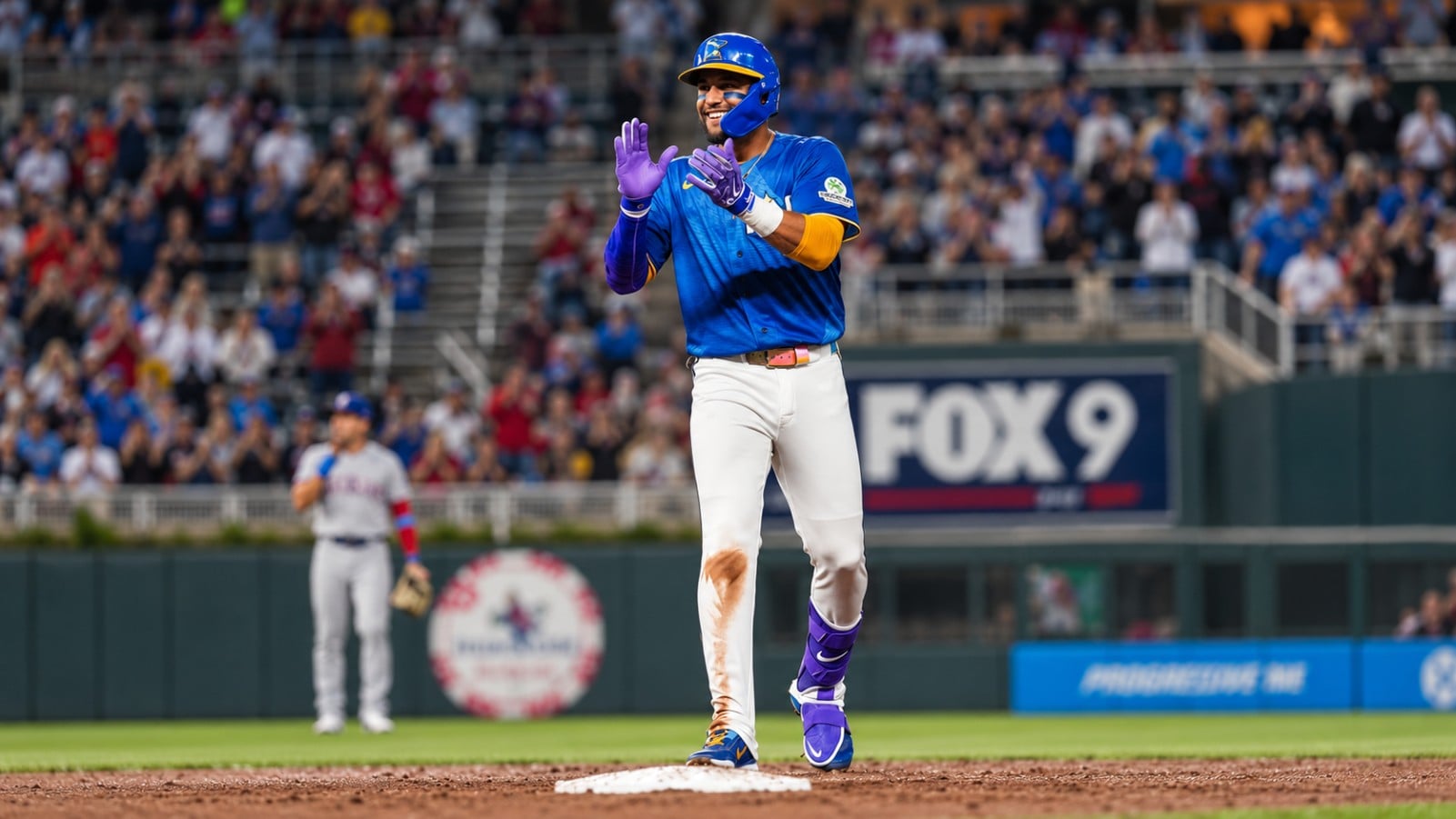
Royce Lewis, the top overall pick in the 2017 draft, has emerged as a buy-low trade idea for the Yankees. SNY’s Phillip Martinez made the case recently, pointing to Lewis’ right-handed bat and his experience at third and first base.
“With experience at third and first base, and being a right-handed bat to complement Ryan McMahon and Ben Rice/Garcia Jr., the Yankees should see whether he’s available,” Martinez wrote.
Minnesota general manager Jeremy Zoll did not include the 27-year-old among the young position players the club considers its core: Luke Keaschall, Brooks Lee, Walker Jenkins, Emmanuel Rodriguez and Kaelen Culpepper.
Lee took over third base after Lewis was demoted in May and earned a Gold Glove nomination there. Lewis spent most of the second half at first base.
Asked at his end-of-season news conference whether Lewis still fit the core, Zoll credited the infielder’s health but stopped short of a commitment.
“His performance on the field, obviously, had ups and downs,” Zoll said.
Lewis on the chase and the switch
Lewis hit .227/.287/.380 with 15 homers, 57 RBIs and 16 stolen bases in 125 games. His OPS+ was 86. He opened the season so poorly that the Twins sent him to Triple-A St. Paul, where he hit .333 with 10 homers in 15 games.
He returned in early June and caught fire. Then pitchers stopped giving him strikes. Lewis was blunt about what went wrong.
“I was feeling good, I’m seeing the ball good and, unfortunately, I chased,” Lewis said.
The position change came on the fly. Lewis, a former shortstop, said he embraced the move.
“I never thought I’d be a 27-year-old first baseman, but it is what it is. You do what’s best for the team,” Lewis said.
He also made clear he is not looking to leave Minnesota.
“I see myself as a Twin for a lot longer than that,” Lewis said.
Three seasons inside one season
Lewis’ 2026 season splits into three sharply different players.
He opened the year hitting .163 before his May demotion. In his first 59 games after his recall, he hit .280 with 28 extra-base hits and an .842 OPS. Over his final 35 games, he hit .187 with six extra-base hits and a .468 OPS.
That middle stretch is the version the Yankees would be betting on. An .842 OPS is exactly 200 points better than McMahon’s full-season mark at third base.
The counting numbers stand out against McMahon, too. Lewis drove in 57 runs to McMahon’s 23 and nearly doubled his 8 homers. Lewis also stayed healthy, playing 140 games between Minnesota and St. Paul, the most of his career.
The cost gap is wider still. Lewis projects to earn about $5.1 million in his first year of arbitration. That is less than a third of McMahon’s 2027 salary, with a second year of control after that.
The red flags are real. Lewis has hit .232 with a .689 OPS over his past three seasons and struck out 284 times in 313 games. His early career was derailed by two torn ACLs in his right knee.
The ceiling is real, too. In 2023, he hit .309 with 15 homers, four of them grand slams, in 58 games.
Where the Lewis idea stands
Minnesota needs starting pitching, outfield help, relievers and a starting catcher. Martinez noted the Yankees can supply pitching and outfield depth.
Lewis remains under Twins control through 2028.
For the Yankees and general manager Brian Cashman, the question is whether a right-handed infielder with a $5 million price tag is worth the gamble before free agency and the trade market heat up in November.
What do you think? Leave your comment below.