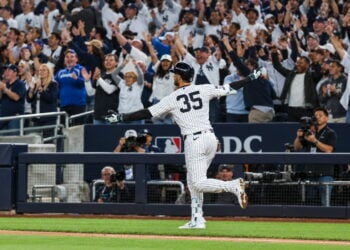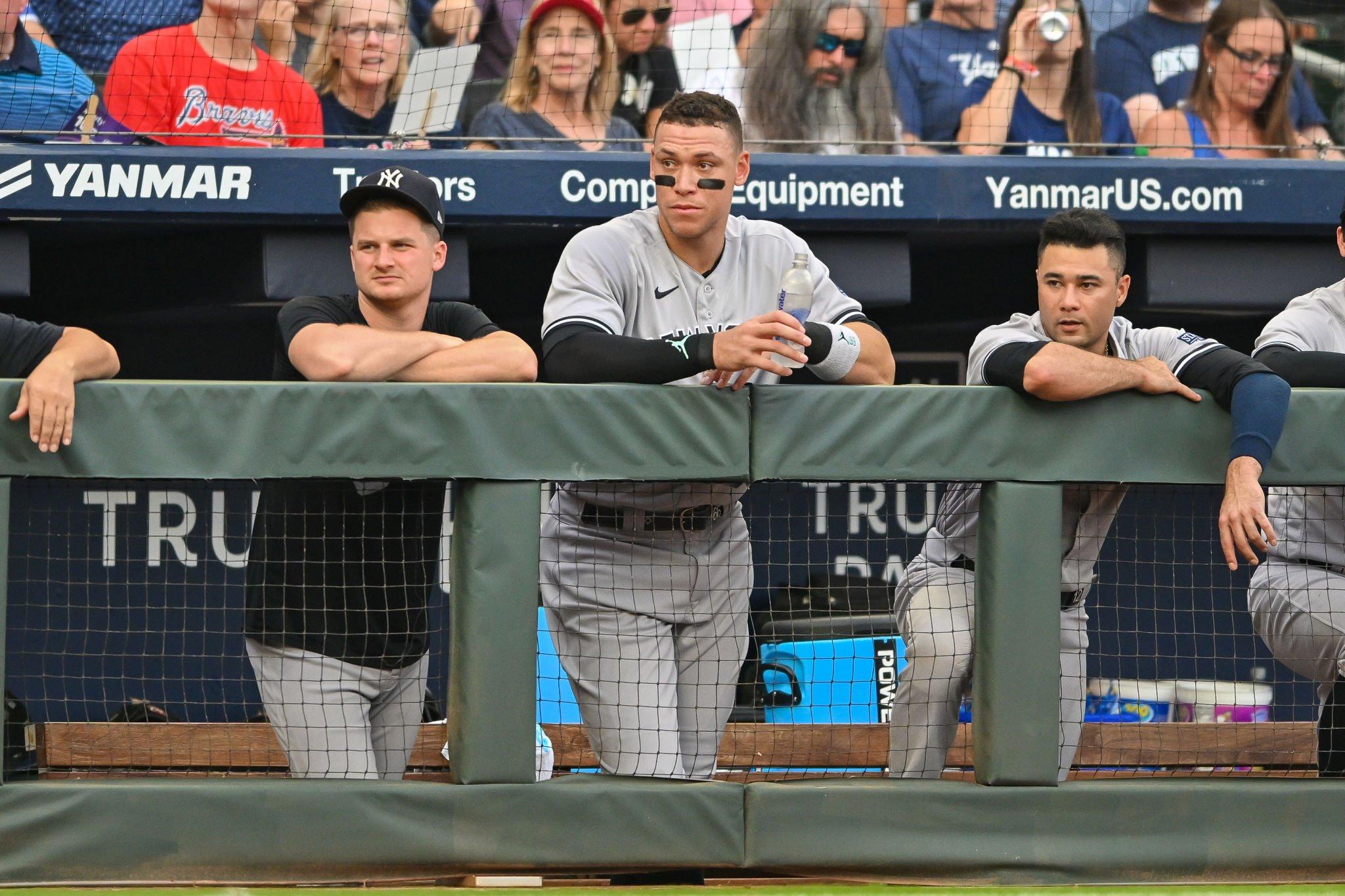
NEW YORK — The quiet inside the Yankees clubhouse Sunday matched the box score.
The Yankees have stumbled to a 2-9 record in extra-inning games, matching a level of late-game futility rarely seen in franchise history. The only other seasons in which New York lost nine times during an 11-game stretch of extra-inning contests came in 2011, 1933 and 1912.
Their offensive problems were just as glaring against Atlanta. The Yankees went 3-for-25 with runners in scoring position during the series and stranded 23 runners, repeatedly creating chances without producing enough damage.
But their hitting coach is not worried at all. Instad, he backed it with a logic.
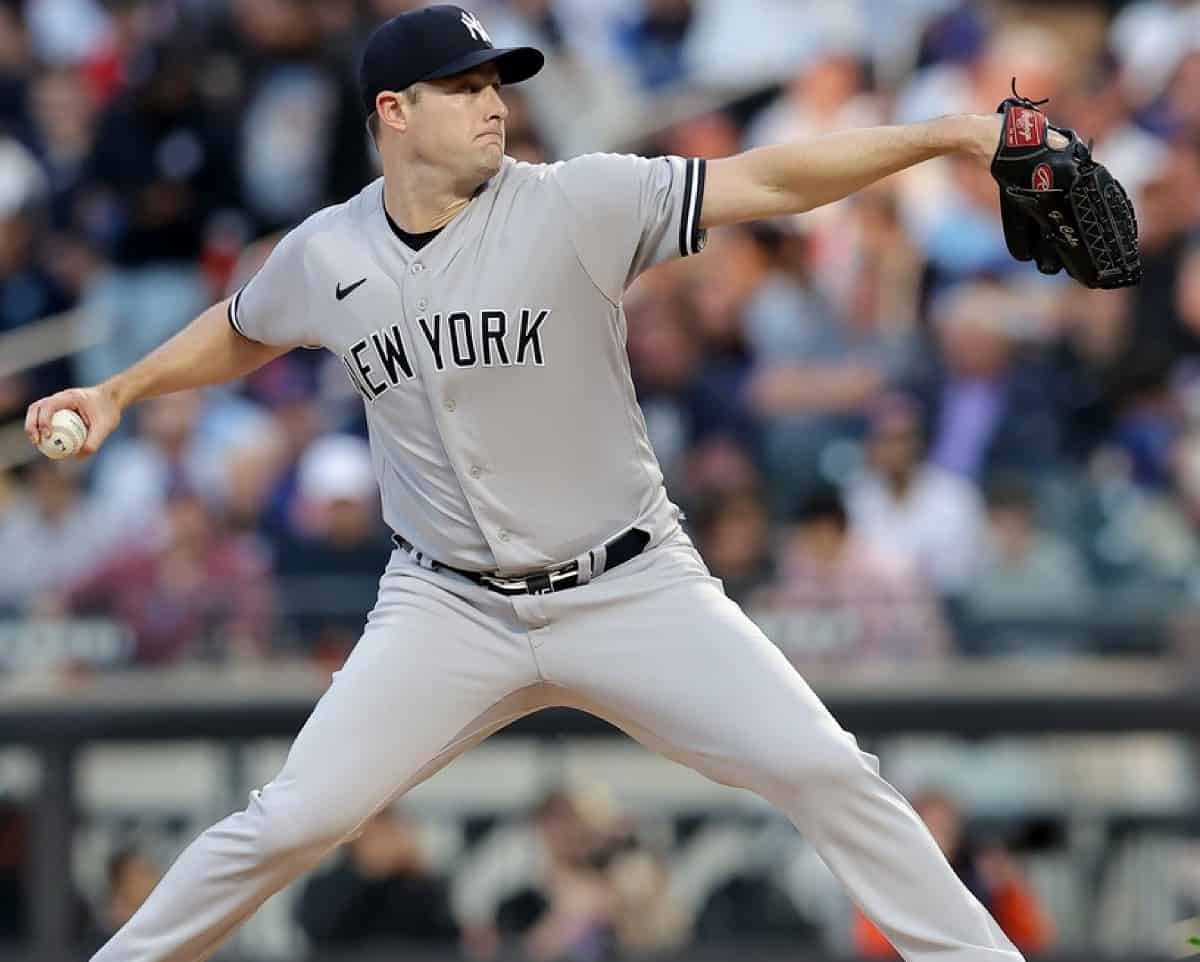
New York had just wasted another dominant start, this time a seven-inning, 11-strikeout performance from Cam Schlittler. Atlanta won 2-1 in 10 innings at Yankee Stadium after the bats failed to score in the 10th.
Trent Grisham supplied the Yankees’ only run with a solo homer in the eighth. The rest of the lineup produced little resistance. New York finished with four hits and went 0-for-6 with runners in scoring position.
That result landed inside a much larger offensive slide. The Yankees have scored two runs or fewer in seven of their last 12 games and averaged 2.83 runs over that span. In 22 games since the All-Star break, they have been held to one run or fewer five times, two or fewer 12 times and three or fewer 16 times.
The timing has made the drought more damaging. Yankees starters have allowed two runs or fewer in 10 of the last 12 games. In those 10 starts, the rotation produced a 0.85 ERA and 0.76 WHIP, yet the club went only 6-6 across the full 12-game stretch.
The gap between the two sides of the roster now frames one of the Yankees’ central questions entering the final seven weeks of the regular season: How long can elite run prevention compensate for a lineup that has stopped producing consistently?
Rowson’s confidence meets an 88 wRC+
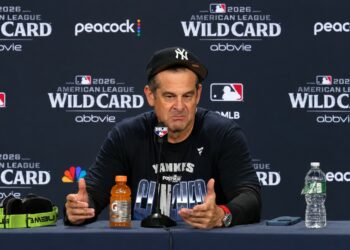
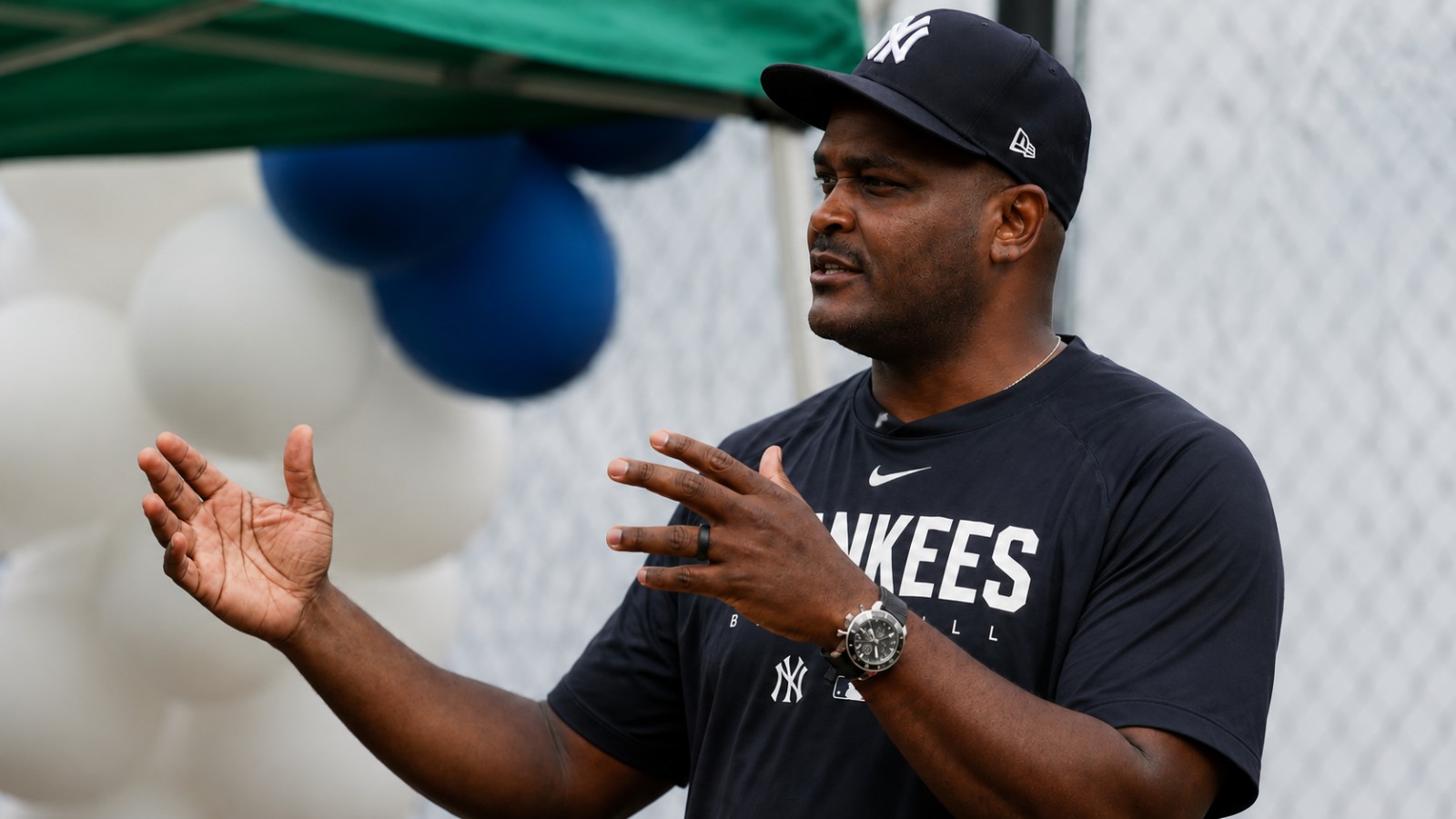
That is where hitting coach James Rowson’s assessment stands out. While acknowledging the offensive problems, Rowson has resisted the idea that the Yankees should view the slump as a crisis.
“I’m not worried about us offensively at all,” Rowson said to the Post.
“I do think when you look at where we’re trying to go, we’re at the time of year where our mindset is on trying to get wins,’’ he added. “The end goal is not that we get the most hits. The end goal is that we score the most runs in the game. Whether we do that 3-2 or 9-3, I feel if we stay focused on winning games and not have tough days offensively as a distraction, we’ll be better for it.”
The numbers through Sunday make that position increasingly difficult to separate from the results. Since Aaron Judge last played May 31, the Yankees have produced an 88 wRC+, the worst mark in the majors over that span.
The downturn has also intensified in August. The Yankees scored just 12 runs over the five games from Tuesday through Sunday, despite a lineup that had already received deadline additions Heliot Ramos and Luis García Jr.
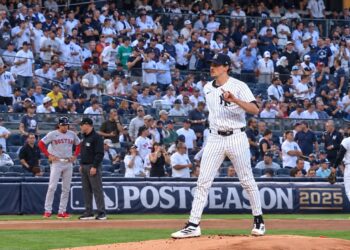
Sunday offered another example. Schlittler allowed one run on three hits, struck out 11 and did not walk a batter. He lowered his ERA to 2.21. It was his 11th start without a walk and his 15th allowing one run or fewer, both major league highs.
The Yankees still lost.
Chisholm slump adds pressure without Judge
Jazz Chisholm Jr. has become one of the clearest examples of the lineup’s inability to replace the production lost with Judge, Cody Bellinger and Giancarlo Stanton unavailable.
Chisholm finished Sunday batting .216 with a .691 OPS through 109 games. He went 1-for-3 with a walk in the loss, but manager Aaron Boone acknowledged that the prolonged impact stretch the Yankees have seen from Chisholm in previous seasons still has not arrived.
Chisholm is not alone. Grisham’s game-tying homer Sunday provided a badly needed moment after he entered the Cardinals series batting .113 over his previous 20 games. Ryan McMahon, meanwhile, carried a .211/.271/.373 line with nine home runs and 26 RBIs into the latest stretch.
The problem is no longer easy to explain as poor situational hitting. New York went 0-for-6 with runners in scoring position Sunday, but its 88 wRC+ since Judge’s last game measures the offense across every situation. The Yankees are struggling to create enough offense before late-game execution even becomes the deciding issue.
Even the bright spots have not lifted the lineup
There have been individual signs of improvement. Austin Wells followed a .468 OPS over his first 62 games with a .973 OPS and four home runs over his next 16 games through Aug. 4.
Ben Rice has supplied the lineup’s most consistent power for much of the season, but even he has cooled. Rice entered Sunday 2-for-22 in his first seven August games, then went 0-for-4 against Atlanta. That left him 2-for-26, a .077 average, through his first eight games of the month.
Those swings illustrate the difficulty Rowson faces. A hitter can emerge from a slump, but the Yankees have not had enough hitters surge at the same time to restore the lineup’s earlier depth.
The pitching staff has limited the damage. Yankees pitchers carried a 3.30 team ERA into the current stretch, the best mark in the majors. The rotation has repeatedly turned games into contests in which three or four runs should be enough.
Too often, they have not been.
Rowson sees adversity as preparation
Rowson’s broader point is that the Yankees may benefit from being forced to win differently. Without Judge’s ability to change a game with one swing, the offense has had to place greater value on baserunning, productive outs and extended at-bats.
He also believes the difficult stretch can “give us some calluses” for the postseason.
That argument carries more weight when the Yankees find ways to win close games. They took two of three from an Atlanta club leading the National League East despite another uneven offensive series.
But Sunday also showed the limit of that formula. New York’s pitchers can keep games close. They cannot manufacture the missing runs themselves.
The Yankees entered Monday five games behind Tampa Bay in the AL East and 1.5 games ahead of Boston in the wild-card race. With the division and postseason positioning still at stake, the offense has less room for a prolonged wait.
Rowson remains convinced the lineup will emerge better from the struggle. Through Aug. 10, the most current numbers still point in the other direction.
What do you think? Leave your comment below.